

Opposing Mayor, Council Members Back Boulevard to Replace I-794
'The mayor is only one part of local government; his position does not reflect that of the entire city.'
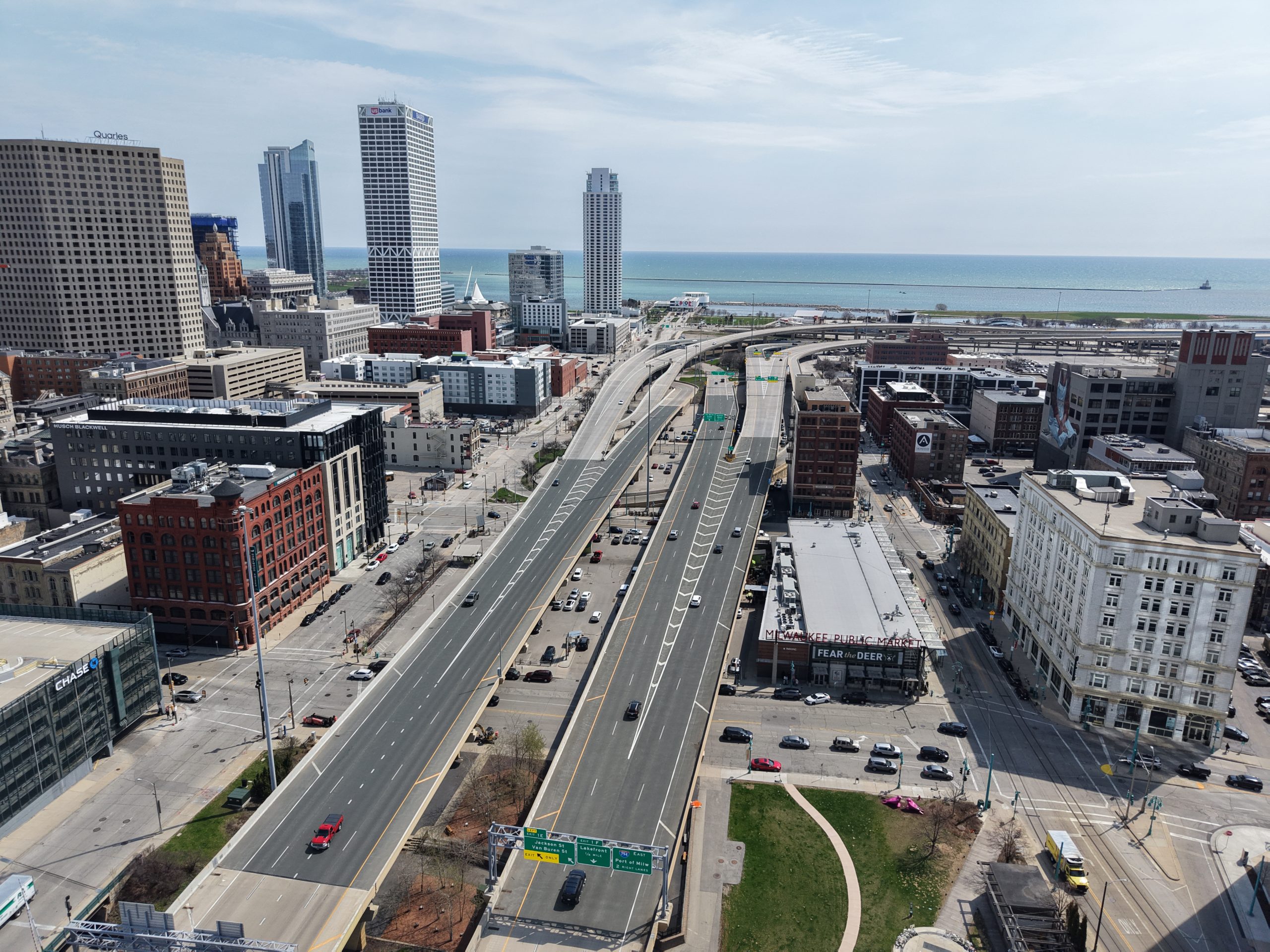
Interstate 794 between Downtown and the Historic Third Ward. Photo by Jeramey Jannene.
Three Milwaukee Common Council members are pushing back against Mayor Cavalier Johnson’s support for preserving an elevated freeway through Downtown.
Council members Alex Brower, Robert Bauman and Sharlen P. Moore issued a joint statement Monday calling on the Wisconsin Department of Transportation to remove Interstate 794 between the Marquette Interchange and the Hoan Bridge and replace it with a street-level boulevard.
“The mayor is only one part of local government, and importantly, his position does not reflect that of the entire city,” said the council members.
Johnson announced July 8 that he prefers a “freeway improvement” alternative that would shrink the highway’s footprint and eliminate or consolidate several ramps, but retain an elevated freeway connection through Downtown.
The council members said the state should instead pursue the more transformative boulevard alternative, which WisDOT estimates would create approximately 16 acres of developable land.
“Removal of the freeway would bring numerous long-term benefits to Milwaukee,” they said. “Namely, it would create 16 acres of developable land that could support additional housing, attract new residents, grow the city’s tax base and support local businesses.”
They said redevelopment of the highway land should include affordable and accessible housing, citing Johnson’s designation of 2026 as Milwaukee’s “year of housing.”
“The highway-to-boulevard vision is clearly the best option to provide jobs, housing options and increase the tax base to support city services,” said the council members. “Again, we do not support reconstructing an elevated highway through downtown Milwaukee.”
The statement reveals a split within city government as WisDOT moves toward selecting a preferred alternative for the aging freeway. The elevated structure, constructed in the early 1970s, is in need of replacement.
WisDOT held its final public open house on the project’s design concepts in May. The agency is expected to select a preferred alternative in 2027, with construction potentially beginning in 2030.
The freeway improvement alternative supported by Johnson would create an estimated 5.1 acres of developable land and could generate approximately $280 million in new development, according to WisDOT.
Depending on the ramp configuration, the improvement plan is expected to cost between $675 million and $1 billion.
The boulevard alternative would cost an estimated $850 million to $1.25 billion, according to WisDOT, but could make approximately 16 acres available for development and generate an estimated $790 million in new investment.
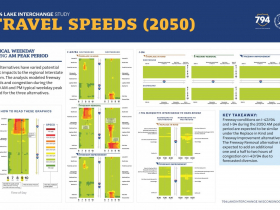
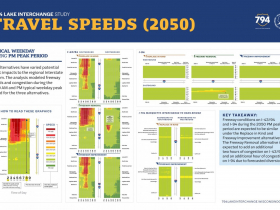
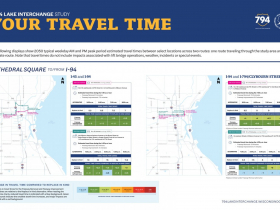
Johnson said last week that the potential traffic consequences of removing the freeway outweighed the additional development benefits. He cited concerns about congestion, downtown lift bridges and the possibility that port traffic would be diverted onto streets in residential neighborhoods.
“Given the decades of established traffic patterns here, I think it makes it a little more difficult for us to be able to accomplish what some have imagined could be accomplished with taking the freeway down,” said Johnson.
Brower, Bauman and Moore rejected the idea that existing traffic patterns should dictate the corridor’s future.
“We should not bristle at the idea of freeway removal simply because it represents the greatest departure from the current status quo,” they said. “We should embrace the change that will yield the greatest long-term benefit for Milwaukee, rather than settling for less because of established traffic patterns.”
The council members pointed to the removal of the Park East Freeway in the early 2000s as evidence that Milwaukee residents and commuters could adapt to the loss of an urban freeway segment.
The former Park East corridor has subsequently attracted hundreds of millions of dollars in development, including Fiserv Forum, Deer District, The Moderne and several apartment and office projects. Some parcels created through the freeway removal remained vacant for years before development occurred.
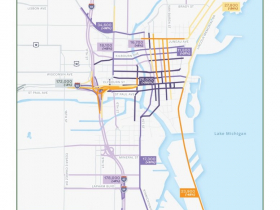
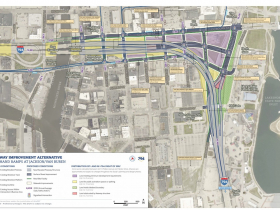
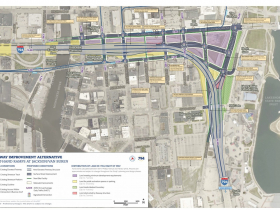
Under the “freeway improvement” alternative, the Broadway and Milwaukee Street ramps would be removed, while the Jackson and Van Buren street ramps would be consolidated. The lakefront ramps would also be simplified or shifted south, with access centered around an extended E. St. Paul Avenue.
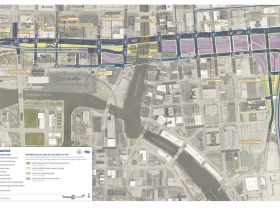
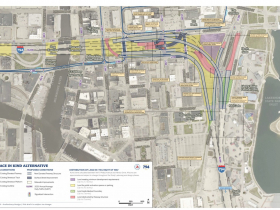
The boulevard option, initially advocated for by the Rethink 794 coalition, would have the elevated structure replaced by a boulevard on Clybourn Street between the Hoan Bridge and N. 6th Street. A new lift bridge would need to be constructed over the Milwaukee River.
The final decision rests with state and federal transportation officials, though city support could carry substantial influence as WisDOT evaluates the alternatives.
Johnson acknowledged that dynamic when announcing his position. “I’m the mayor of the city, so hopefully it carries a lot,” he said of his opinion.
The freeway runs through Bauman’s district, with Brower representing the district just northeast of Downtown and Moore representing the area generally west of N. 35th Street.
The Wisconsin State Legislature will ultimately need to fund the project, with rebuilding the freeway as is remaining the cheapest option available.
April/May 2026 Selected Display Boards
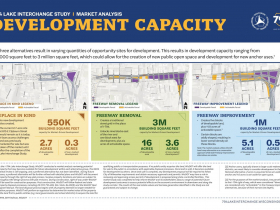
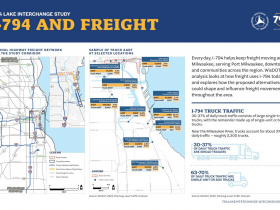

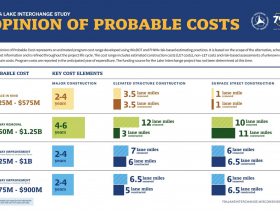
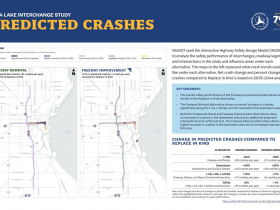
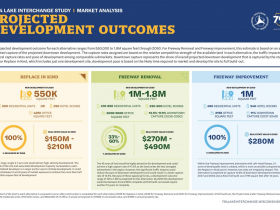
Full slides are available on the WisDOT project website.
WisDOT Meeting Video
November 2025 Meeting – Selected Project Display Boards
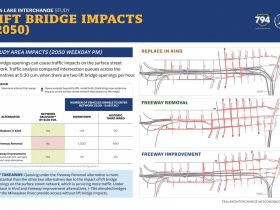
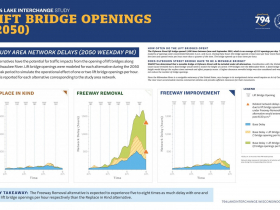
April 2025 Design Alternatives
If you think stories like this are important, become a member of Urban Milwaukee and help support real, independent journalism. Plus you get some cool added benefits.
More about the Interstate 794 Rebuild
- Murphy’s Law: Mayor’s I-794 Stance Betrays His Grow Milwaukee Goal - Bruce Murphy - Jul 22nd, 2026
- Opposing Mayor, Council Members Back Boulevard to Replace I-794 - Jeramey Jannene - Jul 13th, 2026
- I-794 Highway-to-Boulevard Option is Best for City of Milwaukee - Ald. Bob Bauman - Jul 13th, 2026
- MMAC Supports Mayor’s Recommendation for I-794 Lake Interchange Project - Metropolitan Milwaukee Association of Commerce - Jul 8th, 2026
- Mayor Opposes Replacing I-794 Connection With Downtown Boulevard - Jeramey Jannene and Sophie Bolich - Jul 8th, 2026
- See Costs, New Details For 794 Replacement Options - Jeramey Jannene - May 1st, 2026
- State To Reveal New I-794 Cost Estimates - Jeramey Jannene - Apr 7th, 2026
- 794 Teardown Advocates To Host Walking Tour - Jeramey Jannene - Mar 30th, 2026
- Real Estate Group Casts Doubt on I-794 Removal Plan - Jeramey Jannene - Nov 11th, 2025
Read more about Interstate 794 Rebuild here
Political Contributions Tracker
Displaying political contributions between people mentioned in this story. Learn more.
- March 4, 2016 - Cavalier Johnson received $35 from Sharlen P. Moore
- February 20, 2016 - Cavalier Johnson received $250 from Robert Bauman


Transportation
-
Wisconsin Wins $218 Million Grant To Extend Hiawatha To Madison
 Oct 16th, 2026 by Jeramey Jannene
-
MCTS Reports Rising Fare Collection
 Oct 15th, 2026 by Graham Kilmer
-
$80 Million Air Cargo Center Takes Off At Mitchell Airport
 Oct 15th, 2026 by Graham Kilmer




















Glad to see members of our Common Council fighting for what’s best for the city. Urban highways primarily exist for the benefit of suburban commuters, at great expense to city residents. Encouraging growth and investment in the city center will give us a better footing to make city-wide investments in roads, transit, education, and more.
I think you need to re-title this to “Three Council Members…”. You make it look like the whole Common Council took this position.
Proponents of the freeway to boulevard conversion suggest that this land will open up for new businesses and housing to open up, and increased tax revenue. Pipe dreams? As mentioned in previous URBAN MKE articles, there are several building projects downtown that are suspended and remain empty and unfinished. Do we have a population base that will support such proposed development when existing spaces remain undone?
Mayor Johnson, what about all of the CITY residents who live south of 794? Even if we are dismissing “suburbans” as somehow not worthy of benefitting from a continuous 794 (a concept to which I do not agree), what about your South Shore and Southside constituents?
I’m a longterm resident of Bay View – the north part of which has been part of Milwaukee since 1896, and the former Town of Lake, which has been part of the City of Milwaukee since 1954.
Bay View votes in high numbers. Bay View is full of professionals with money and young families with children. Aren’t we valuable contributors to the Milwaukee economy?
Disconnecting Cudahy, Saint Francis, Bay View, and the Garden District from downtown and the western part of Milwaukee will only hurt Milwaukee’s desirability and economic success.
Let me edit my comment. Of course 794 would connect the South Shore to downtown. But it would prevent us City residents from having easy access to the rest of the City of Milwaukee and make it even more reasonable for us to do ALL of our business and leisure activities in Oak Creek, for example.
We need more council members to oppose Johnson. This stretch of freeway is just a glorified on/off ramp which is nearly empty even during rush hour. The extra 3 minutes of commute time from South Milwaukee, Cudahy and Bayview residents shouldn’t carry much weight
I must have written these comments before my morning coffee. I appreciate Mayor Johnson’s considering ALL of the City when supporting keeping the elevated freeway. My comments were more appropriately directed at the 3 council members who want the freeway removed. Who are they serving? Often, aldermen only care about their district and ignore the rest of us.
As a Bay View resident of 40 years, I don’t feel like this would cut us off. There’s I94, which is conveniently accessible for Bay View residents at multiple points, even during construction. Additionally, the 15 and the Green line provide easy bus access to downtown in less than 30 minutes, and the KK River trail is also quite convenient as a pedestrian and a biker. Since the Hoan would be remain standing, I really don’t see an issue here. While I do appreciate the convenience (and the view) when driving, I don’t think my convenience should come at the cost of economic and housing development.