
Mayor Opposes Replacing I-794 Connection With Downtown Boulevard
Johnson backs compromise: modernized freeway with smaller footprint, some development.
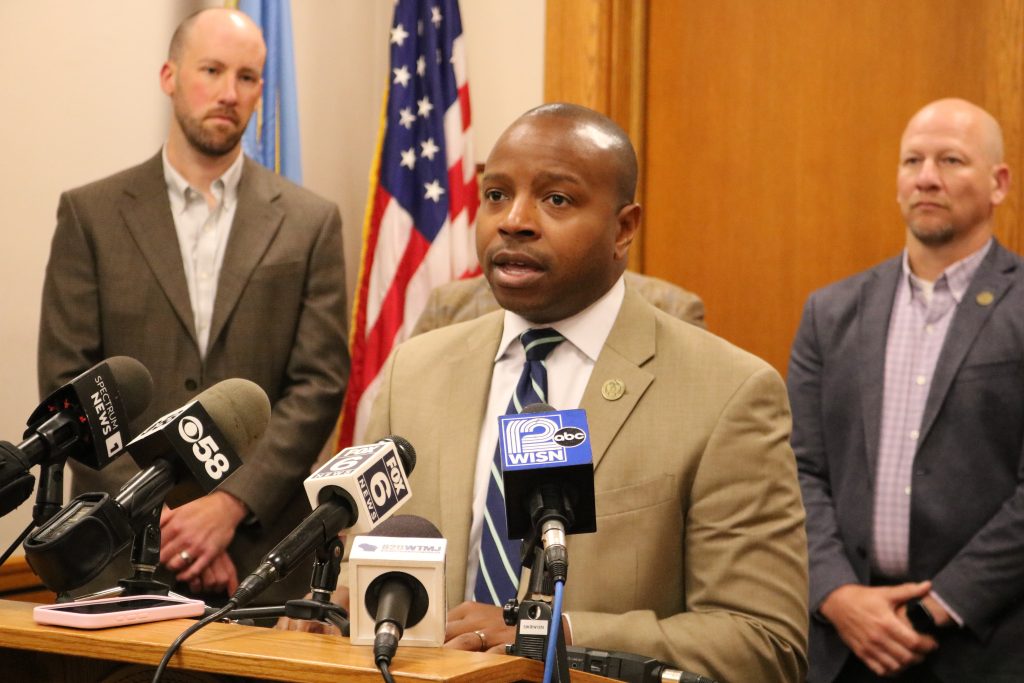
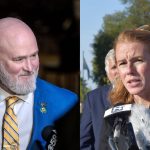
Mayor Cavalier Johnson during a press conference on 794. Photo taken July 8, 2026 by Sophie Bolich.
Mayor Cavalier Johnson wants changes on Interstate 794, but he doesn’t want to see the elevated freeway replaced with a boulevard.
“I prefer an option that will improve the existing road, maintaining the elevated portion of Interstate 794,” Johnson said at a Wednesday afternoon press conference.
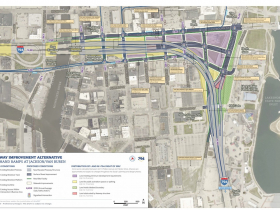
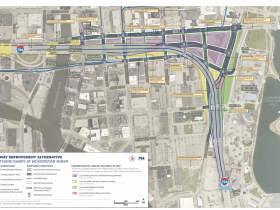
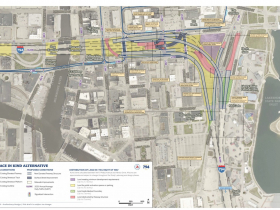
Johnson is supporting a “freeway improvement” plan that would shrink the east-west freeway’s footprint and reduce the number of ramps, but still maintain an elevated connection between the Marquette Interchange and the Hoan Bridge.
His announcement marks a significant milestone in the years-long process to identify a replacement plan for the aging freeway segment between the Milwaukee River and the Hoan Bridge. The freeway structure was built in the early 1970s and is in need of replacement.
In May, the Wisconsin Department of Transportation held its final open house meeting on the various design concepts under review. The agency is expected to pick a preferred alternative in 2027. Construction could begin in 2030.
While the final decision lies with state officials, Johnson said he hopes his perspective holds sway. “I’m the mayor of the city, so hopefully it carries a lot,” he said.
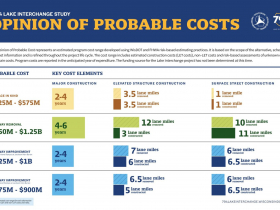
The “freeway improvement” plan endorsed by Johnson is expected to cost $725 million to $1 billion for right-side ramps or $675 million to $900 million for left-side ramps. City Engineer Kevin Muhs said the city does not have a preference between the two options and views the decision as a discussion with the state.
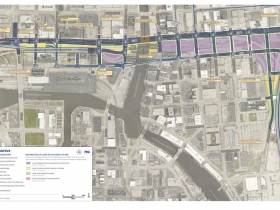
Rebuilding the freeway as is would cost between $425 million and $575 million. The improvement plan is estimated by WisDOT to be less costly than the boulevard option, which would affect a longer stretch of the freeway and cost between $850 million and $1.25 billion, but result in less development.
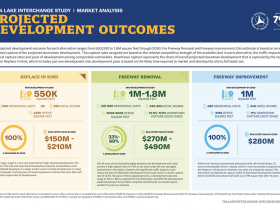
Reconfiguring the roadway would create 5.1 acres of developable land, which WisDOT estimates could result in $280 million in new development. The boulevard option could ultimately yield $790 million in new development on 16 acres of land.
Johnson pointed to a “very, very attractive site” just south of The Couture, which he said could accommodate a large-scale company. “There will be land that is available with the option I’ve discussed here,” he added, also noting that developable land already exists downtown in the form of surface-level parking lots. “We’ve already got dozens and dozens of acres that are ready for redevelopment.”
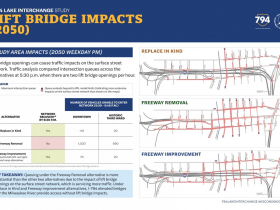
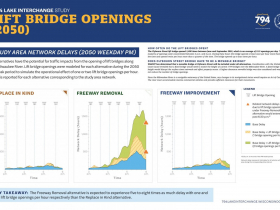
Though he previously considered bringing the highway to ground level, Johnson said the negative consequences of that alternative could outweigh its benefits, citing the potential for gridlock — especially during warmer months when lift bridges are active — as well as the rerouting of port traffic that could bring additional noise and disruption into residential neighborhoods.
“Given the decades of established traffic patterns here, I think it makes it a little more difficult for us to be able to accomplish what some have imagined could be accomplished with taking the freeway down,” Johnson said.
Under the freeway improvement option, the lakefront ramps, rebuilt as part of the Lakefront Gateway project, would be simplified or shifted south, with access pushed toward an extended E. St. Paul Ave. The existing Milwaukee Street and Broadway ramp pair would be removed, and the Van Buren and Jackson Street ramp pair would be consolidated on Jackson Street. The Hoan Bridge would remain, as would the freeway segment west of the Milwaukee River.
By backing an option that preserves a freeway connection, Johnson is avoiding conflict with his south suburban peers. The governments of St. Francis, South Milwaukee and Cudahy each passed a resolution opposing a freeway teardown.
He also stays aligned with a broad statement he made in April 2024, shortly after being reelected. “I support a reconfiguration of Interstate 794 in downtown Milwaukee,” Johnson said during his inauguration. “It offers a chance to maximize growth and maximize investment while keeping transportation connectivity here in the city.”
The mayor’s stance also fits within the broad language included in the 2024 Downtown Plan, adopted in 2023. “If full removal is not feasible via this current project, any interim alternative should prioritize modernization of the infrastructure to reduce the footprint, activation of the public spaces and streets under the bridges, improvements to the ramp connections and increased safety for pedestrian crossings,” says the plan.
Rethink 794, a coalition advocating for a boulevard option, questioned the state’s assumptions about the cost of the boulevard option and said the rebuild-as-is option does not meet modern safety standards.
“We think it’s short-sighted,” said Taylor Korslin, a Rethink 794 volunteer, calling the plan “a compromise option.”
The group was successful in advocating for WisDOT to fully study the boulevard option. In 2025, Muhs said the process was also being delayed because the city was asking a substantial number of questions to collect as much data as possible on the impact.
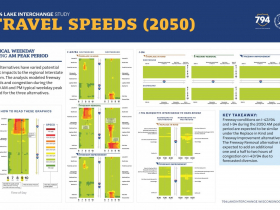
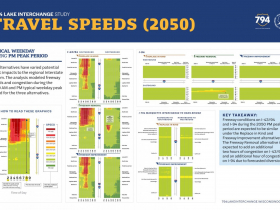
WisDOT held open house meetings that featured refined design options; estimated traffic impacts, including on a Milwaukee River bridge; and cost and development potential.
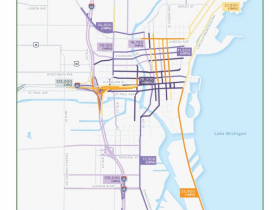
A project traffic study estimates that 26,600 vehicles make an end-to-end trip across the entire study area each day. More than double that total enter or exit the study area via a ramp and do not make an end-to-end trip, presumably to start or end a trip downtown.
Korslin criticized WisDOT’s data on gridlock and traffic patterns, which the mayor cited in his decision. “The DOT is going to overestimate those things,” he said. “Today is not the end. There’s still a lot of discussion to be had, and our group is going to keep pushing for an aspirational, transformative vision for this corridor, because it is so key to the success of Milwaukee.”
April/May 2026 Selected Display Boards
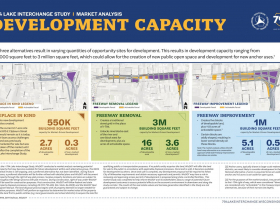
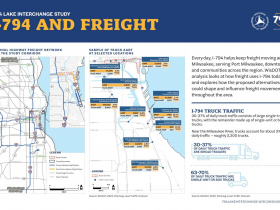
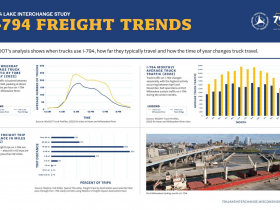
Full slides are available on the WisDOT project website.
WisDOT Meeting Video
November 2025 Meeting – Selected Project Display Boards
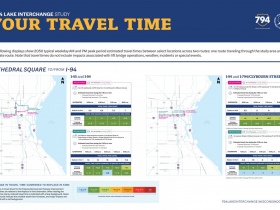
April 2025 Design Alternatives
If you think stories like this are important, become a member of Urban Milwaukee and help support real, independent journalism. Plus you get some cool added benefits.
More about the Interstate 794 Rebuild
- Murphy’s Law: Mayor’s I-794 Stance Betrays His Grow Milwaukee Goal - Bruce Murphy - Jul 22nd, 2026
- Opposing Mayor, Council Members Back Boulevard to Replace I-794 - Jeramey Jannene - Jul 13th, 2026
- I-794 Highway-to-Boulevard Option is Best for City of Milwaukee - Ald. Bob Bauman - Jul 13th, 2026
- MMAC Supports Mayor’s Recommendation for I-794 Lake Interchange Project - Metropolitan Milwaukee Association of Commerce - Jul 8th, 2026
- Mayor Opposes Replacing I-794 Connection With Downtown Boulevard - Jeramey Jannene and Sophie Bolich - Jul 8th, 2026
- See Costs, New Details For 794 Replacement Options - Jeramey Jannene - May 1st, 2026
- State To Reveal New I-794 Cost Estimates - Jeramey Jannene - Apr 7th, 2026
- 794 Teardown Advocates To Host Walking Tour - Jeramey Jannene - Mar 30th, 2026
- Real Estate Group Casts Doubt on I-794 Removal Plan - Jeramey Jannene - Nov 11th, 2025
Read more about Interstate 794 Rebuild here
Political Contributions Tracker
Displaying political contributions between people mentioned in this story. Learn more.
- July 8, 2025 - Cavalier Johnson received $250 from Kevin Muhs
- September 19, 2023 - Cavalier Johnson received $500 from Kevin Muhs


















Absolutely depressing, Mayor Johnson. Although I do agree with: “(…) developable land already exists downtown in the form of surface-level parking lots. ‘We’ve already got dozens and dozens of acres that are ready for redevelopment.'” So yes, let’s develop those, too. Build housing!
The boulevard is the BEST option for the movement and safety of people of all modalities, and would lead to an increased tax base. Change is progress. Reunite downtown with the Third Ward.
Boulevard or bust!
What a short sighted and fear driven mayor; Why compromise over the most valuable real estate in WI? With all due respect to the southern suburbs, they don’t have a freeway cutting through their downtowns – Convenience to them should not come at a cost to the quality of life for people in Milwaukee. Johnson continues to disappoint. The problem now is finding political will from other politicians of equal notoriety. The next governor will ultimately decide the fate of I-794. Norquist was the main catalyst in the park east removal. Johnson taking some pathetic compromising approach after WISDOT force fed the 8 lane expansion at the millerparkway is just a sad sign on the times. Milwaukee is owed better. This city continues to accommodate transient suburbanites at the cost of itself. Its pathetic. If this city wants 1 million residents then attractive land needs to be opened for development. The Marquette interchange already eats up huge swaths of land downtown. Johnson; who are you working for?
There is a plot hole to the development opportunity that comes with the boulevard option; someone actually has to develop on it.
We can all discuss how great all this development would be, but without a developer building on this space, its a waste. I believe that is the point of bringing up this developable land that already exists. If the demand is really there, someone would be developing these spaces already!
I would love to have the boulevard option, but fear that the created space would remain empty for years to come.
Disappointing and I hope the next governor disregards this short sighted option.
Probably a wise choice, all things considered. I generally support freeway reduction, but there are legitimate access concerns for residents of South Milwaukee, Cudahy, and St. Francis, which are diverse working-class communities whose residents would lose the most efficient way of getting to and from workplaces elsewhere in the metro.
Hey Mayor Johnson, have you considered the reason that you have dozens and dozens of acres of land ready for redevelopment – a lot of it directly adjacent to 794 – is because people don’t want to live next to an elevated freeway? Anyone ever see someone outside on their balconies at Commission House on St. Paul and Broadway? No? Me neither. Because no one wants to live next to an elevated freeway.
What a massive disappointment.
@WPDZ the space next to 794 is empty BECAUSE of 794.
@Jimmy I agree. I was referring to the other lots throughout the city that could be redeveloped. Parking lots, vacant lots, etc.
Small time thinking for Milwaukee. The cars win. Just like they do everywhere else in the US.
Man, this is disappointing.. Mayor Johnson seemed to recognize the impact that car dependancy has on a city with Milwaukee’s recent push in street safety policies. Hearing his take on I794 is a hard pill to swallow, and a frustrating one at that.
Rebuilding I794 is a generational commitment. Seeing as other cities around the world have figured out how to move people in and out of a city without carving out their downtowns, I don’t understand how this could be viewed as progress for Milwaukee. In fact, it’s regressive.
In 2026, the Mayor of Milwaukee has decided to endorse a plan that perpetuates a half-baked 1960s concept for another 50 years. Apparently, there is no other way.
P.S. – If it isn’t too much to ask for, could the next billion dollar transportation project be focused on overhauling the county bus system? Or any form of public transit for the city? Heck, I’d settle for $500 million.
I am disappointed in the mayor. We had a chance to do something special in Milwaukee and took the typical conservative approach.
My guess is that most of these commentators do not live anywhere that involves them in using 794 to travel to work or other locations. I don’t regularly use I-43 and wouldn’t be that inconvenienced if that scar though the North Side were gone. But I understand that it’s an important part of getting around town. I think the Mayor struck the right tone in his endorsement of the compromise solution.
Those who grew up in Milwaukee in the 50s were forced, in the late ’60s and early ’70s, to watch the tentacles of a national freeway system expand into downtown by leveling neighborhoods. They must remember the “little pink church,” centerpiece of a founding Italian neighborhood and demolished without conscience in the march of the freeway, I also remember running a race on the Hoan Bridge, which ended then in a portion hanging into space. Somehow, drivers managed to get around.
The idea of a boulevard harkens to Milwaukee’s floral boulevards, once blooming throughout the city and celebrated globally, since dramatically cut back by politicians claiming (as always) budget constraints. I-794, never easy to navigate, was a travesty from the get-go. This is a city of neighborhoods, not of speeding. Slow down and smell the flowers.
So then what was the point of all the community feedback if he was just going to ignore it anyway? No one even uses this stupid freeway.
Clarification: The article states “The freeway structure was built in the early 1970s and is in need of replacement.”.
Only the eastern end of the road (roughly from Broadway/Milwaukee to the Hoan Bridge) dates from the 1970s. Everything west from Broadway/Milwaukee (including the Milwaukee River bridge) was rebuilt at the same time as the Marquette interchange (circa 2008).
I recall there was a debate about boulevard conversion at that time, but the status quo prevailed.
@samowen62 – you are not correct
Extremely disappointing. Everyone, send Mayor Johnson mail. Postcards, email, flood the boxes.
@CraigR – Believe it or not, it’s possible to support something that may inconvenience oneself. This isn’t about what’s best for me. It’s about what’s best for the future of the city and it’s people. Our downtown shouldn’t have to be saddled with 50 more years of 1960’s era freeway design so that commuters can save 10 minutes on their drive.
@julia o’connor the amount of cars and trucks that use this expensive, elevated freeway to bypass downtown is the same as the number that use Layton, College, Rawson or Drexel east of 94. Not put together – in total.
The number does not justify it at all. The removal option includes completely rebuilding on-ramps and off-ramps to better disperse traffic coming from the Marquette Interchange as well as from the Hoan. It also includes rebuilding the Clybourn bridge that’s over 50 years old.
This YouTube video features a ton of very good, relevant research into what we can expect from traffic after rebuilding or removing 794 downtown:
https://bit.ly/794removal
I’m afraid that powerful CEOs who don’t live in the City — and don’t vote in any City of Milwaukee elections including for Mayor —have put heavy thumbs on the scale. Johnson has backed down. Sadly. The boulevard is the best option for the City’s future. Forget about the suburbs. They all fled Milwaukee in the 70s because of integration. The best and right thing to do for Milwaukee is the boulevard option. Do the right thing, Mayor Johnson. You’ve made many good decisions, but this isn’t the decision of a wise man. Mayors and politicians come and go, but their mistakes live on for decades. As a reference, see failed Governor Scott Walker. What a shame.