How Evers ‘Fixed the Damn Roads’
He got help from Republican legislators and federal pandemic funding.
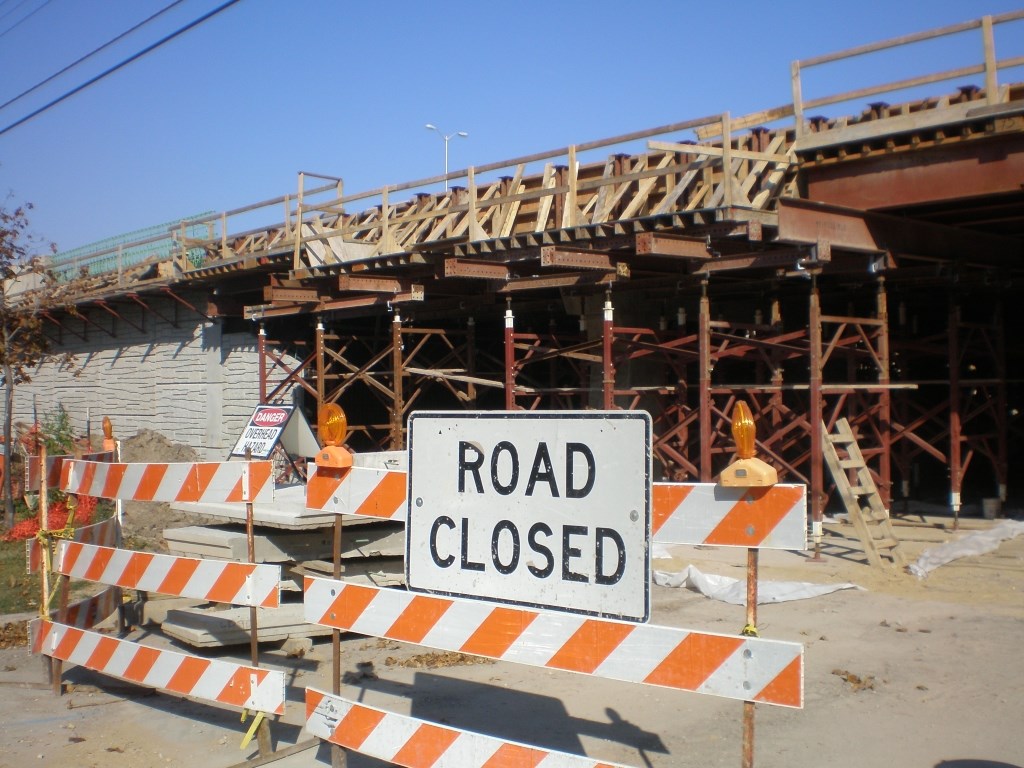
Road Closed. Photo by Dave Reid.
In 2018, candidate Tony Evers promised that, if elected governor, he would “fix the damn roads.” Last week, as he finished his last “pothole patrol” as governor on Wyoming Avenue in Superior, the Democrat said he had done just that.
“I’ve worked tirelessly with state and local officials to fix the darn roads and ensure improved and reliable streets, bridges and highways for every community, neighbor and visitor to our great state,” Evers said in a press release. “That’s included securing historic investments in our transportation infrastructure …
“The state has improved more than 9,600 miles of roads and 2,400 bridges statewide since 2019. Wisconsinites could drive from Wausau, Wisconsin, to Disney World in Orlando, Florida, and back three times with miles to spare on the miles of roads fixed.”
Evers had a partner in that progress. Republicans controlled the Legislature, which drafts the next state budget, during the Democrat’s two terms as governor.
What did fixing those roads cost? Where did the money come from?
According to the nonpartisan Legislative Fiscal Bureau, total spending on major state highways increased by 33.7% during the governor’s eight years in office — from $3.37 billion in the pre-Evers 2017-19 budget to $4.52 billion in the 2025-27 budget Evers signed into law.
One reason for that was an increase in federal funds, prompted by a COVID-19 stimulus package that raised federal aid for Wisconsin’s highway system by $178 million over two years — a 24% increase — between 2019 and 2021.
There was also a 27.8% increase in general transportation aids to local governments over Evers’ eight years in office. That brought state aid to $447.2 million for cities, villages and towns, and to $140.3 million for counties.
Besides more federal cash, a $555.5 million transfer from the state’s general fund helped pay for highways in the 2023-25 budget, and a similar transfer of $580 million will occur in the current two-year budget.
These transfers diverted income and sales tax collections to roads statewide and reduced the amount of long-term borrowing.
Wisconsin has 115,867 miles of roadways, including 61,524 miles of town roads; 21,122 miles of municipal streets; 19,709 miles of county trunk highways; 11,746 miles of state highways and connecting highways; and 1,766 miles of park, forest and miscellaneous roadways.
Decades ago, Capitol fights over how to pay for roads held up passage of a new state budget. Legislators disagreed over whether to raise the state gas tax, to continue adjusting that gas tax for inflation (a process called “indexing”), to raise car and truck registration fees, to borrow to pay for highway construction and maintenance, or to divert general fund taxes for that purpose.
Former Republican Gov. Tommy Thompson made upgrading state roads a priority, getting legislators in the 1990s to approve a Corridors 2020 plan that would crisscross the state with four-lane highways.
Corridors 2020 has since become Corridors 2030, focused on upgrading and maintaining highways in and around Wisconsin communities with populations of more than 5,000. One major expansion widened I-39/90 between Madison and Rock County.
Inflation in the construction industry caused an explosion in costs to maintain and build highways and bridges in the last decade. Another strain on the state Transportation Fund has been a recent trend to increase aid for local highway construction. One example was a new $150 million fund for agricultural roads created in the 2023-25 budget.
How much did transportation-related taxes and fees go up to “fix the damn roads”? That’s complicated.
The state cost to register a car was raised from $75 to $85 in the fall of 2019 in the first budget Evers signed into law. But many Wisconsin counties and local governments levy wheel taxes, which vary from $10 to $50 per year.
Last October, the cost to obtain a car title was raised by 30% — from $164.50 to $214.50. It had been increased by $95 in Evers’ first budget.
The state gas tax has been 30.9 cents per gallon since 2006; indexing that gas tax for inflation annually ended in 2006.
The governor and legislators elected on Nov. 3 will face new challenges in paying for highways. One example: An estimate of the cost of widening I-94 between 16th and 70th streets in Milwaukee is $1.74 billion.
Steven Walters started covering the Capitol in 1988. Contact him at stevenscotwalters@gmail.com.
If you think stories like this are important, become a member of Urban Milwaukee and help support real, independent journalism. Plus you get some cool added benefits.


The State of Politics
-
Lt Governor Race Offers Stark Contrasts
 Oct 19th, 2026 by Steven Walters
-
Will Fox Valley Voters Disappoint Democrats?
 Oct 12th, 2026 by Steven Walters
-
Will Voters Reject Three Constitutional Amendments?
 Oct 5th, 2026 by Steven Walters
Transportation
-
Wisconsin Wins $218 Million Grant To Extend Hiawatha To Madison
 Oct 16th, 2026 by Jeramey Jannene
-
MCTS Reports Rising Fare Collection
 Oct 15th, 2026 by Graham Kilmer
-
$80 Million Air Cargo Center Takes Off At Mitchell Airport
 Oct 15th, 2026 by Graham Kilmer