

See Costs, New Details For 794 Replacement Options
Boulevard option could produce $16 million in annual property tax revenue.
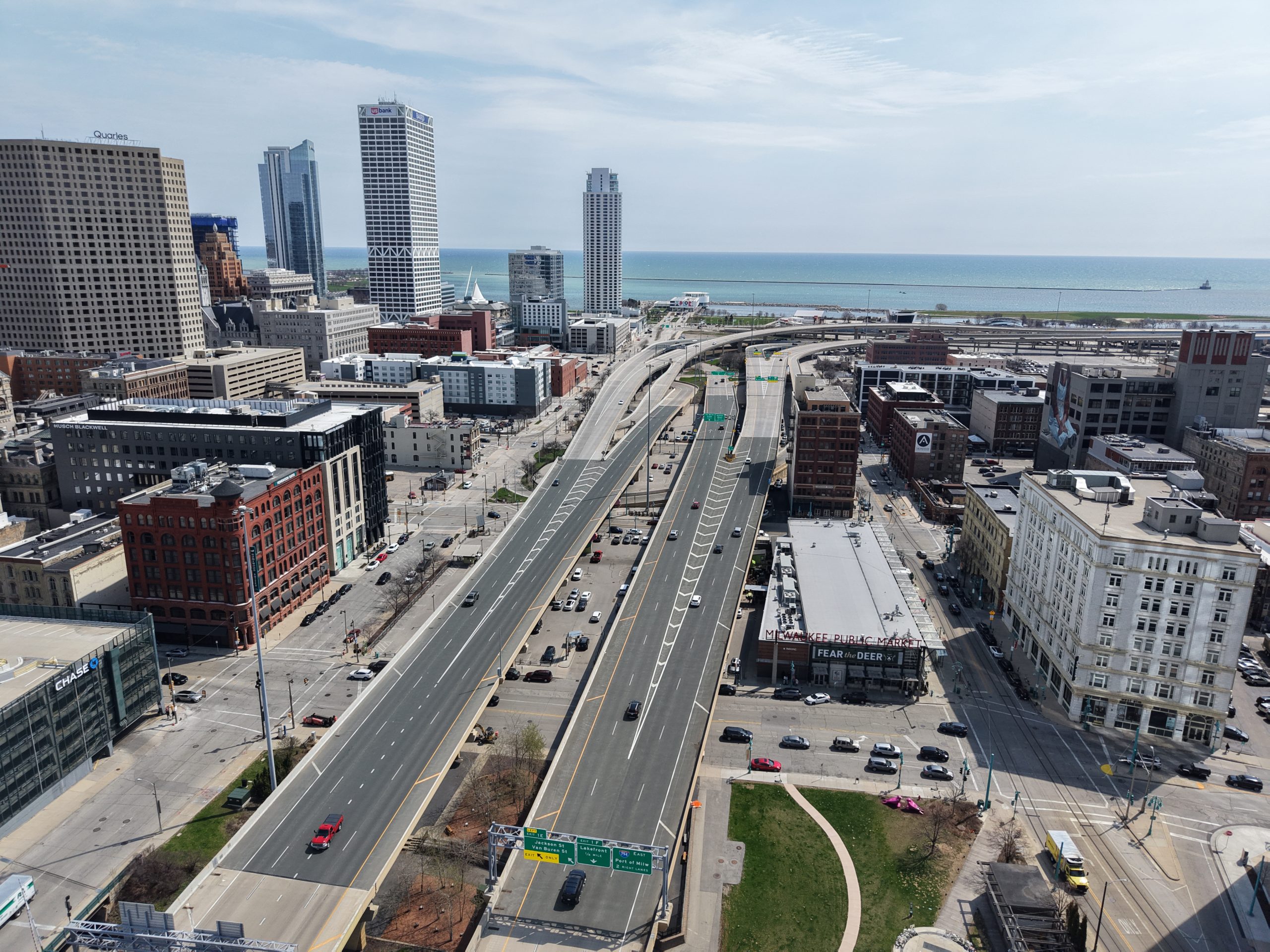
Interstate 794 between Downtown and the Historic Third Ward. Photo by Jeramey Jannene.
Major new information on possible replacement options for Interstate 794 was released Thursday at an open house meeting hosted by the Wisconsin Department of Transportation.
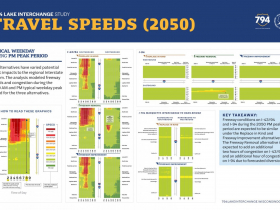
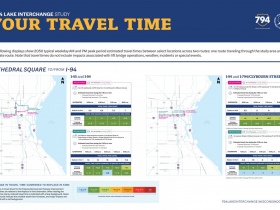
For the first time, data about the estimated cost, safety and development potential of the three different options under study for the elevated freeway segment between the Marquette Interchange and Hoan Bridge was presented. Earlier meetings included traffic models on estimated traffic impacts from the rebuild-as-is, slimmed-down freeway and freeway-to-boulevard options.
WisDOT is pursuing the project, which would begin construction in 2030 at the earliest, because it believes the elevated freeway east of the Milwaukee River is nearing the end of its useful life and will require replacement regardless of the design option selected. The concrete structure was constructed in the 1970s.
The state, in consultation with cooperating agencies, regional stakeholders and the Federal Highway Administration, will recommend a preferred alternative in 2027. David Pittman, WisDOT study manager, said he expects a public hearing, where formal comment is accepted on the proposal, would be held in early 2027.
Even though a design will be selected in 2027, the earliest construction could start is 2030. And that could be delayed. “Right now, we’re not currently funded for construction. So once we determine what the preferred alternative is, we’ll go to the Legislature and ask for those funds to be encumbered, and then we’ll determine what our construction date is,” said Pittman during Thursday’s meeting at the Milwaukee Marriott Downtown. Construction on the nearby Interstate 94 expansion and reconstruction project is expected to last until 2033.
A second public meeting, with the same content from Thursday, is being held on May 5 at St. Francis High School from 4 to 7 p.m. A comment form and more information is available on the WisDOT website.
Development potential
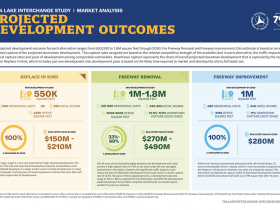
WisDOT worked with SB Friedman and other stakeholders to develop its real estate estimates based on a 2050 timeline and past market demand. Based on market data, the analysis concluded that a mix of hotels, residential units and office space would be developed.
- Rebuild as-is: $150 million to $210 million on the 2.7-acre site created in the earlier Hoan Bridge/Lake Interchange reconfiguration
- Slim improvement: $280 million on 5.1 acres of developable land
- Boulevard: $790 million ($270-$490 million by 2050) on 16 acres of land. The analysis assumes a full buildout by 2060, since initial development wouldn’t occur until construction finishes in 2038. Full buildout, according to the estimates, would produce $16 million in annual property tax revenue.
Costs vary across options
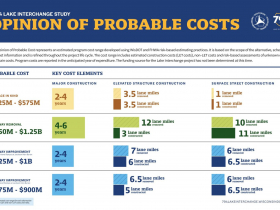
Newly released estimates show significant differences in cost among the three primary alternatives:
- Rebuild as-is: $425-$575 million
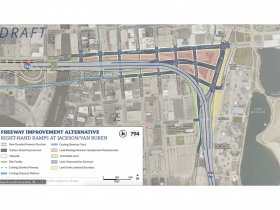
- Slim freeway with right-side ramps: $725 million-$1 billion
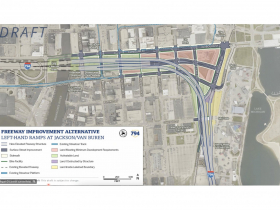
- Slim freeway ramps: $675-$900 million
- Boulevard: $850 million-$1.25 billion
The high cost of the boulevard option can be attributed in part to the design options WisDOT has selected. It includes the greatest amount of new surface street construction, at 11 miles, compared with 6.5 miles for the improvement options, while also requiring three miles of elevated structures.
The cost estimates are “year of expenditure” figures that estimate inflation for the year of construction and include engineering, utility relocation and related real estate acquisition.
Crash data and safety impacts
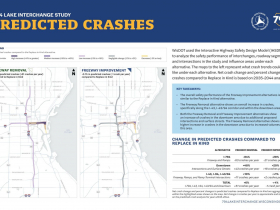
Officials also presented updated crash data for the corridor, emphasizing safety as a key factor in the decision.
The display boards did not include data on the estimated severity of crashes.
- Slim freeway: 1% reduction in annual crashes, driven by a 28% reduction on 794 but a 20% increase on Downtown streets
- Boulevard: 6% increase in crashes, driven by an 84% reduction in the broader 794 study area, but a 48% increase on downtown streets and, based on traffic models, a 10% increase on neighboring freeways
Freight analysis
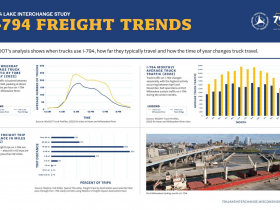
A detailed freight usage analysis was available for the first time. Data was displayed on monthly totals and, based on cellphone data, estimated trip patterns. Truck traffic is largely consolidated to the daytime hours and peaks during summer months because of agricultural traffic to the port.
Rethink 794 Reaction
Members of the Rethink 794 coalition, which successfully advocated for WisDOT to study the boulevard option, raised concerns with some of the assumptions in the latest proposal.
“A clear option is less obvious than leaders assume. Replace-in-kind doesn’t meet DOT’s safety standards, freeway improvement makes traffic worse east of the river, removal integrates with the grid surprisingly well,” said architect Taylor Korslin, a Rethink 794 volunteer.
“I don’t understand how it’s 10 times more expensive than Park East removal (in today’s dollars),” said real estate consultant Montavius Jones. “The costs of highway projects are baffling; at least in removal you have offsetting redevelopment value.”
Advocates with the Rethink 794 coalition have argued a boulevard could reconnect downtown to the lakefront and spur redevelopment, while opponents warn of increased congestion and diverted traffic. In a press release in advance of the meeting, the group cited the Park East Freeway removal process from two years ago that resulted in a second study of the freeway removal option showing that trips would be diverted differently than WisDOT assumed. Travel times to many downtown destinations were reduced because of new options created by an expanded street grid.
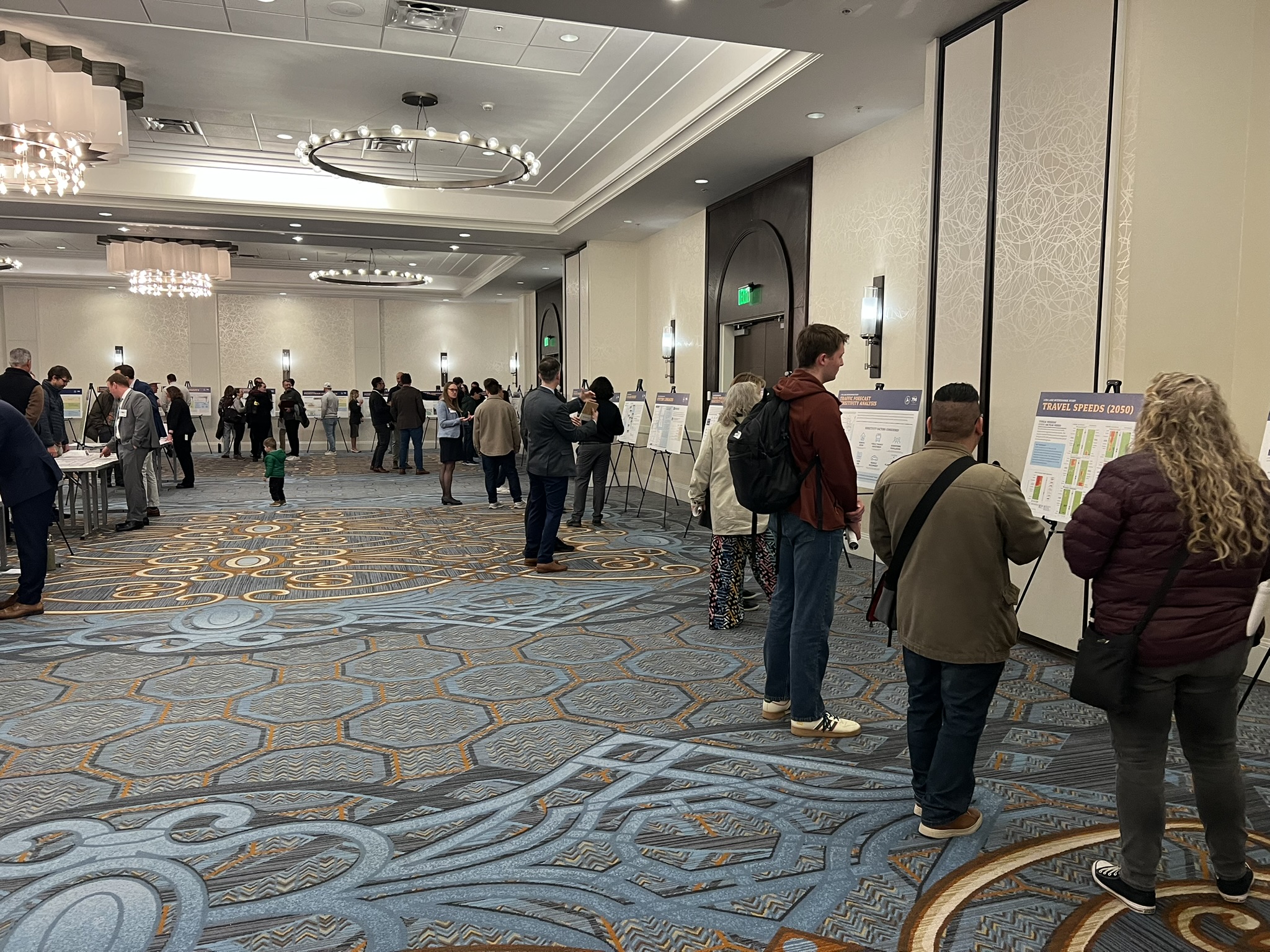
April 2026 I-794 project meeting. Photo by Jeramey Jannene.
Key New Display Boards
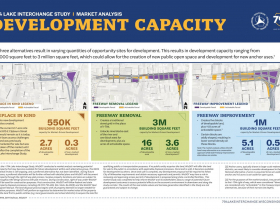
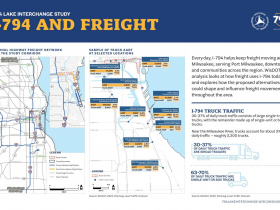
Full slides are available on the WisDOT project website.
WisDOT Meeting Video
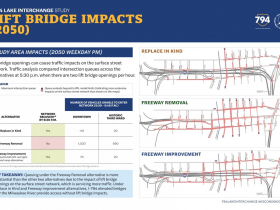
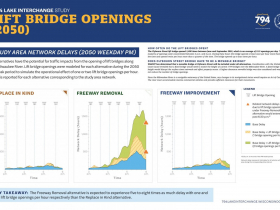
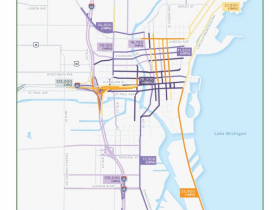
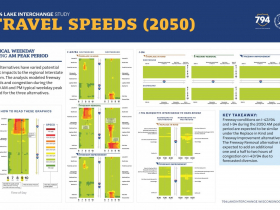
November 2025 Meeting – Selected Project Display Boards
April 2025 Design Alternatives
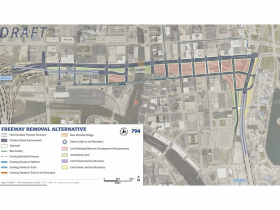
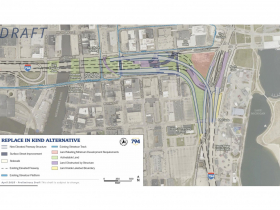
UPDATE: The location of the May 5 hearing was updated
If you think stories like this are important, become a member of Urban Milwaukee and help support real, independent journalism. Plus you get some cool added benefits.
More about the Interstate 794 Rebuild
- Murphy’s Law: Mayor’s I-794 Stance Betrays His Grow Milwaukee Goal - Bruce Murphy - Jul 22nd, 2026
- Opposing Mayor, Council Members Back Boulevard to Replace I-794 - Jeramey Jannene - Jul 13th, 2026
- I-794 Highway-to-Boulevard Option is Best for City of Milwaukee - Ald. Bob Bauman - Jul 13th, 2026
- MMAC Supports Mayor’s Recommendation for I-794 Lake Interchange Project - Metropolitan Milwaukee Association of Commerce - Jul 8th, 2026
- Mayor Opposes Replacing I-794 Connection With Downtown Boulevard - Jeramey Jannene and Sophie Bolich - Jul 8th, 2026
- See Costs, New Details For 794 Replacement Options - Jeramey Jannene - May 1st, 2026
- State To Reveal New I-794 Cost Estimates - Jeramey Jannene - Apr 7th, 2026
- 794 Teardown Advocates To Host Walking Tour - Jeramey Jannene - Mar 30th, 2026
- Real Estate Group Casts Doubt on I-794 Removal Plan - Jeramey Jannene - Nov 11th, 2025
- See How State Thinks Traffic Would Change With I-794 Removal - Jeramey Jannene - Nov 5th, 2025
Read more about Interstate 794 Rebuild here


Transportation
-
Rising Fuel Costs Slamming Wisconsin School Districts
 May 5th, 2026 by Corrinne Hess
-
See Design Concepts for 30th Street Corridor Trail
 Apr 30th, 2026 by Graham Kilmer
-
Why Milwaukee’s Potholes Are So Bad, And What’s Changing
 Apr 28th, 2026 by Jeramey Jannene


















The state wants to do a rebuild weather in kind or slim. You can totally tell from their subtle corralling of benign concerns into a pen of overt doubt. The idea of a surface street option turns the junk science they do with traffic studies on its head. A boulevard option would look better and I don’t doubt that land would get developed quickly, especially near the Milwaukee market. Will the rents be high? Probably. Would they add to the housing stock we desperately need, yes. Convenience for the southern suburb commuters shouldn’t come at a cost to Milwaukee.
Does the DOT look into or give any weight to air and noise pollution? Less pollution could offset some of the fatalities from increased crashes.
@B – That would come up in the final environmental impact statement. I don’t see it in the data presented yesterday. Nor is the severity of crash data included (there are of course unusual situations where things like roundabouts are known to generate more crashes but of a less severe variety than the t-bone crashes they eliminate)
I love the idea of the freeway removal, but even if the boulevard option can fit all the traffic (which I think it can), the traffic from the lift bridge would be absurd. I can imagine a backup all the way to Marquette every time it needs to lift. The lift is also likely where a large amount of the removal cost could be from; lift bridges are not cheap.
@WPDZ federal law allows the bridges to stay closed for two hours during morning and evening rush hour.
I was not able to attend the presentation and I regret it. It seems that the DOT has been against the boulevard option from the get go. This city is too dependent on automobiles and the discussion reflects that. We need to start promoting more and better public transportation and using it. Hello suburbanites. I’m not alone in finding the cost projection for the boulevard option preposterous.
Will Urban Milwaukee do some follow up? How can the rebuild as-is be less than the boulevard option???
Is the rebuild as is option reusing existing piers etc.???
It would seem that none of the above comment authors use this strech of 794 on a daily basis. This highway serves more than the south suburbs ( Bay View is a part of the city and generates tax revenue as well) and I’m a bit tired of these elitest views that put Downtown above anywhere else in the city. If you don’t like cars then all of this wonderful potential development should occur on the existing surface lots that are dead zones Downtown.
It would have been great if people had the foresight 80 years ago to save the interurban trains so we didn’t need freeways but that opportunity is long gone.
@PantherU I did not know that, thank you for sharing! That could be huge for the removal option
….and I don’t doubt that land would get developed quickly, especially near the Milwaukee market.
A more logical assumption is that any new available parcels will become parking lots.
If there was some pent up demand from developers seeking land to develop, the developers would have already acquired and constructed their projects on the currently existing parking lots in the vicinity of the MPM.