
Mayor Demands Restrictions on Milwaukee’s Flock Cameras
New policies come after Common Council escalated issue and third officer investigated for abuse.
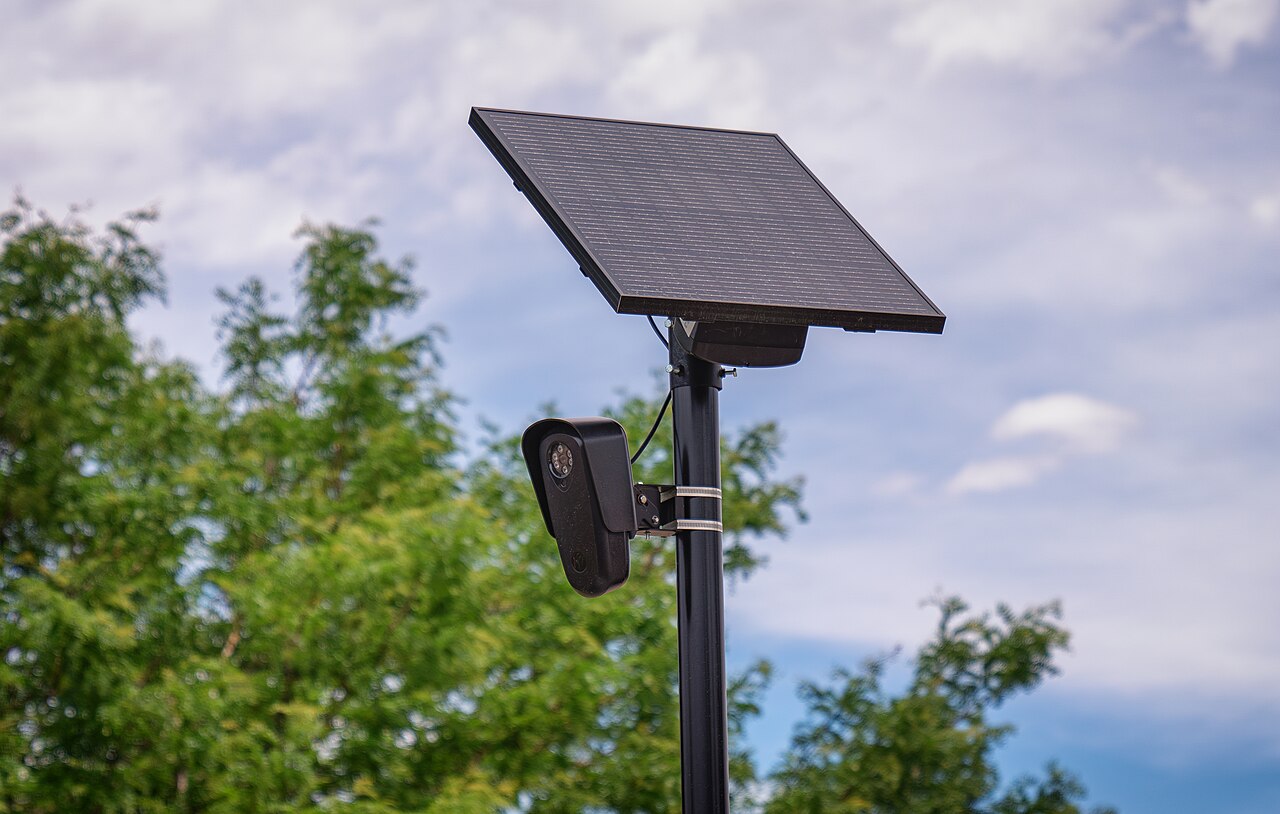
A Flock Safety automated license plate reading camera. Photo by Tony Webster, CC BY 2.0, via Wikimedia Commons.
Rank-and-file Milwaukee police officers and detectives will lose direct access to the city’s Flock camera system under a series of restrictions announced Monday by Mayor Cavalier Johnson.
“In consultation with the Chief of the Milwaukee Police Department and the Executive Director of the Fire and Police Commission, along with communications with Milwaukee County officials, I am insisting on significant policy adjustments,” the mayor’s statement declared, making clear he expects Police Chief Jeffrey Norman to carry out the changes as outlined.
Under the new policy, only supervisors will be allowed to use the automated license plate-reading system, and searches will be limited to a narrower list of crimes and investigations. The Milwaukee Police Department (MPD) will also stop sharing access to its camera data with outside agencies, create a public dashboard and undergo independent audits twice a year.
The Aug. 31 announcement comes as the city is being forced to grapple with the benefits and potential dangers of the expanding surveillance system following allegations that three MPD members misused it.
“Changes in the way the Milwaukee Police Department uses Flock cameras are necessary and appropriate,” Johnson said in a statement.
The changes come six days after 12 of the Common Council’s 15 members signed a letter demanding that MPD and the Fire & Police Commission review the system and consider a lengthy list of safeguards.
The number of signatures is politically significant. State law requires 10 votes for the council to impose procedural changes on the police department. The council members also threatened to scrutinize funding for Flock during deliberations on the city’s 2027 budget.
Johnson said technology has made police more effective in investigations, communications and accountability, but acknowledged that it also presents dangers to individual rights.
“At all times, law enforcement must fully protect the rights of individuals so that devices such as automated license plate reader technology, through Flock cameras, do not compromise the liberties we all embrace,” he said.
Flock cameras photograph passing vehicles, automatically read their license plates and preserve information that can be searched by law enforcement. The cameras can be linked into a broader network, allowing agencies to search information collected by cameras they do not operate.
Milwaukee has contracted with Flock Safety since 2022. MPD currently operates 31 fixed cameras, and other public agencies and private businesses operate additional cameras in the area.
Johnson said the cameras have helped locate missing people and apprehend individuals suspected of violent crimes. But he also acknowledged “several notable instances” of misuse in Milwaukee and elsewhere.
The mayor said he nailed down the new restrictions in discussions with Police Chief Norman and FPC Executive Director Leon W. Todd III.
Under the new policy, only MPD supervisors will be permitted to access the Flock system. Officers and detectives will no longer have access “at this time,” Johnson said.
Searches will be limited to Part I crimes, critical missing persons, abductions and investigations involving drug trafficking organizations. Part I crimes include homicide, rape, robbery, aggravated assault, burglary, larceny, motor vehicle theft, arson and human trafficking.
MPD will also restrict access to information collected by Milwaukee’s cameras to the department itself. Outside law enforcement agencies will no longer be permitted to access MPD’s Flock data, allowing auditing and oversight to remain under the department’s control, according to the mayor.
The department, said Johnson, will create a publicly accessible dashboard detailing its use of the technology.
The FPC has already launched an audit of the system. Johnson said he directed Todd, the executive director, to arrange independent audits every six months, with the results provided to the mayor’s office and released publicly.
“My office will continuously monitor the use of Flock cameras on a regular basis,” Johnson said. “I am committed to regularly reviewing our use of Flock cameras and will make further decisions when and if necessary.”
Three Misuse Investigations
The policy changes follow allegations that multiple MPD members abused their access to the system.
Former officer Josue Ayala was criminally charged in February after investigators alleged that he repeatedly used Flock to track a romantic partner and another individual. He subsequently pleaded guilty to misconduct in public office.
In July, Detective Tehrangi Chapman was charged with felony misconduct in public office and misdemeanor misuse of a GPS device. Chapman, who was assigned to investigate Ayala’s conduct, is accused of using Flock to track two people for an unauthorized purpose.
A third MPD member is now under investigation for potential misuse of the system.
In May, following the Ayala case, MPD said it reduced the number of system users from approximately 370 to 100 and established a data-driven auditing process intended to flag potentially improper searches. The latest changes go substantially further by eliminating access for officers and detectives.
Council Forced Issue
The council’s Aug. 25 letter was led by Alderwoman Marina Dimitrijevic and represented a sharp increase in concern over the technology.
Only four council members had signed a similar letter in March. The new request last week drew support from Dimitrijevic, Common Council President José G. Pérez, Alex Brower, Sharlen P. Moore, Andrea Pratt, Mark Chambers, Jr., Robert Bauman, Lamont Westmoreland, Milele A. Coggs, DiAndre Jackson, JoCasta Zamarripa and Scott Spiker.
The members asked for independent auditing, restrictions on interagency access, automated misuse detection, better documentation of searches and regular public reporting. They also sought protections against the system’s use for civil immigration enforcement and immediate suspension of access when credible evidence of intentional misuse emerges.
Several of those demands are addressed by Johnson’s announcement. But unanswered questions remain, including whether MPD will shorten its retention period for routine license plate information, require case or computer-aided dispatch numbers for every search and provide the council with a complete history of searches by MPD and outside agencies.
The council’s letter gave MPD and the FPC until Sept. 30 to respond.
The Common Council is expected to consider the matter again during budget deliberations in October. Members have specifically raised concerns about the waivers used to execute Flock contracts without direct council approval.
Police Union Urges Balance
The Milwaukee Police Association responded Monday by supporting safeguards against misuse while defending Flock as an important investigative tool.
“We do not condone the misuse of law enforcement tools for personal, improper, or unauthorized purposes,” said MPA President Alexander Ayala in a statement. “Officers entrusted with access to these systems have a responsibility to use them only for legitimate law enforcement purposes, and those who violate that trust must be held accountable.”
Ayala said the cameras have helped officers solve crimes and protect Milwaukee residents. He praised the city for distinguishing between individual misuse and legitimate use by officers who follow department rules.
“Reasonable safeguards and accountability can coexist with giving police officers the technology they need to do their jobs effectively,” he said. “The MPA believes that is the appropriate balance.”
UPDATE: An earlier version of this article misstated the number of votes required to modify MPD policy.
If you think stories like this are important, become a member of Urban Milwaukee and help support real, independent journalism. Plus you get some cool added benefits.
Political Contributions Tracker
Displaying political contributions between people mentioned in this story. Learn more.
- October 23, 2024 - DiAndre Jackson received $75 from Sharlen P. Moore
- March 4, 2016 - Cavalier Johnson received $35 from Sharlen P. Moore
- February 20, 2016 - Cavalier Johnson received $250 from Robert Bauman
- May 5, 2015 - José G. Pérez received $10 from Cavalier Johnson
- May 5, 2015 - José G. Pérez received $100 from JoCasta Zamarripa