70 School Districts Seek $1.6B The Referendums Nov. 3
Declining enrollment, inflation squeezing education budgets.
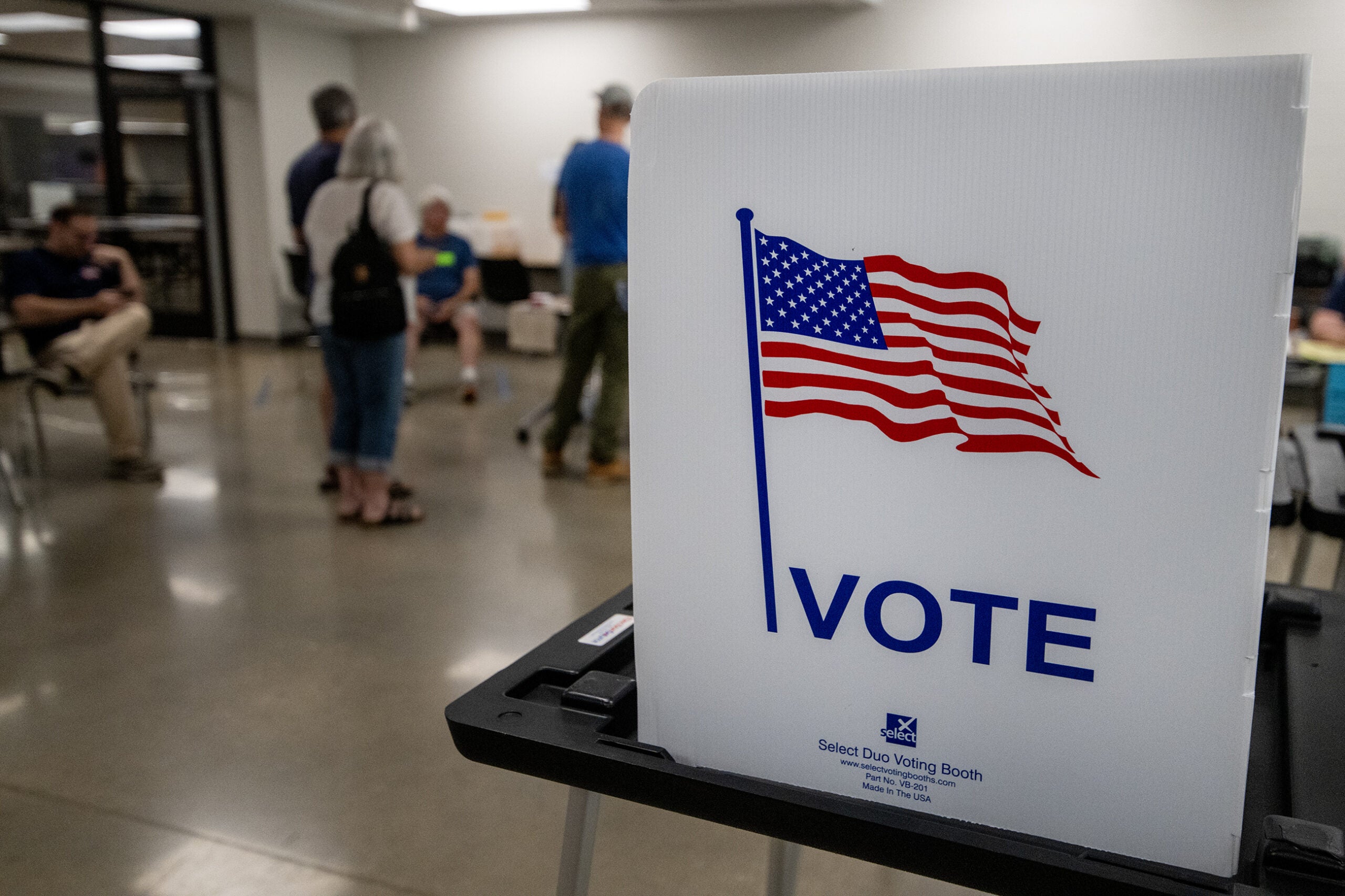
Voters stand in line before filling out a ballot in the partisan primary election Tuesday, Aug. 11, 2026, at Madison East High School in Madison, Wis. Angela Major/WPR
Many Wisconsin voters will again be asked to approve tax increases for their local public schools on Tuesday’s ballot.
There are 79 school referendums on the Nov. 3 ballot in 72 different school districts. In total, they will decide on $1.6 billion in operational and capital referendums.
In April, there were 75 school referendums across Wisconsin, which means that this year voters in more than one-third of the state’s public school districts have had to decide if they are willing to raise their property taxes to support the schools.
Public school officials say state-imposed revenue limits make it impossible for districts to fund day-to-day operations. But opponents say school districts receive more than $18,000 per pupil — slightly above national averages — so the problem is how that money is being spent.
Green Bay, Middleton-Cross Plains and Janesville have the three largest operating referendums on the ballots this year at $158 million, $119 million and $98 million, respectively. All three are non-recurring.
There are 16 school districts that had a failed referendum in April and are trying again on Tuesday.
Damian LaCroix, executive director of the Wisconsin Association of School District Administrators, and Dan Rossmiller, executive director of the Wisconsin Association of School Boards, penned an op-ed this week saying schools aren’t asking for a “blank check.”
“Critics talk about ‘tightening our belts’ when it comes to spending,” they wrote. “Here’s what that phrase often leaves out: Inflation erodes purchasing power, so a dollar appropriated today buys less than it did two, four, or six years ago. The gap keeps growing, especially because per-pupil adjustments in school funding have failed to keep pace with inflation.”
In Middleton-Cross Plains, diesel prices for the district’s fleet of school buses have gone from about $20,000 in September 2025 to $44,000, said Assistant Superintendent of Operations Jerrud Rossing. Health insurance costs have gone up 15 percent.
Rossing said the cost of educating children has changed too.
“We have over 60 languages that are spoken in our school district,” Rossing said. “And we know there are so many different mandates that are coming from the federal and state government.”
In Green Bay, spokesperson Lori Blakeslee said the school district did a significant amount of work to address rising costs, but inflationary increases made it impossible to keep up.
Those cuts include reducing staff by 100 full-time equivalent employees, consolidating six schools and closing a virtual school and canceling some vendor contracts.
“I think it really points to the fact that we continue to struggle with a funding system that’s been in place for over 30 years,” Blakeslee said. “While school funding has increased from the state, it has not kept up with inflation.”
Public schools are funded through a combination of state aid, local property taxes and a small percentage of federal funds. State aid is based on several factors including student enrollment, district property values and district spending.
The 2025–27 Wisconsin state budget kept general school aid flat at $5.58 billion for the third consecutive year, providing zero inflationary increase for public schools. At the same time, declining enrollment has hit nearly every district in the state.
Will Flanders, research director with the Wisconsin Institute for Law and Liberty, says districts will have to reconcile that enrollment increases are not likely to happen anytime soon.
“So in many instances there is going to have to be more severe belt tightening than we usually consider,” Flanders said. “We have districts that are on the very high end of spending that are going to referendum, and we have districts that are at the opposite end of the low end of spending, going to referendum.The nice thing in Wisconsin is that we leave it up to voters to decide.”
In April, more than 60 percent of school districts saw their referendums approved. But polling shows voter fatigue.
In March, when the Marquette Law School Poll asked if people would be inclined to vote for or against a school referendum, 51 percent said no, while 48 percent voted yes. That changed from June 2025 when 46 percent of people said no and 52 percent said yes.
More than 70 Wisconsin school districts seek $1.6B total in referendums Nov. 3 was originally published by Wisconsin Public Radio.
If you think stories like this are important, become a member of Urban Milwaukee and help support real, independent journalism. Plus you get some cool added benefits.