

Led By Dimitrijevic, Council Demands More Control Over Flock
Concerns about privacy, other issues with police use of cameras. Council could consider funding cuts.
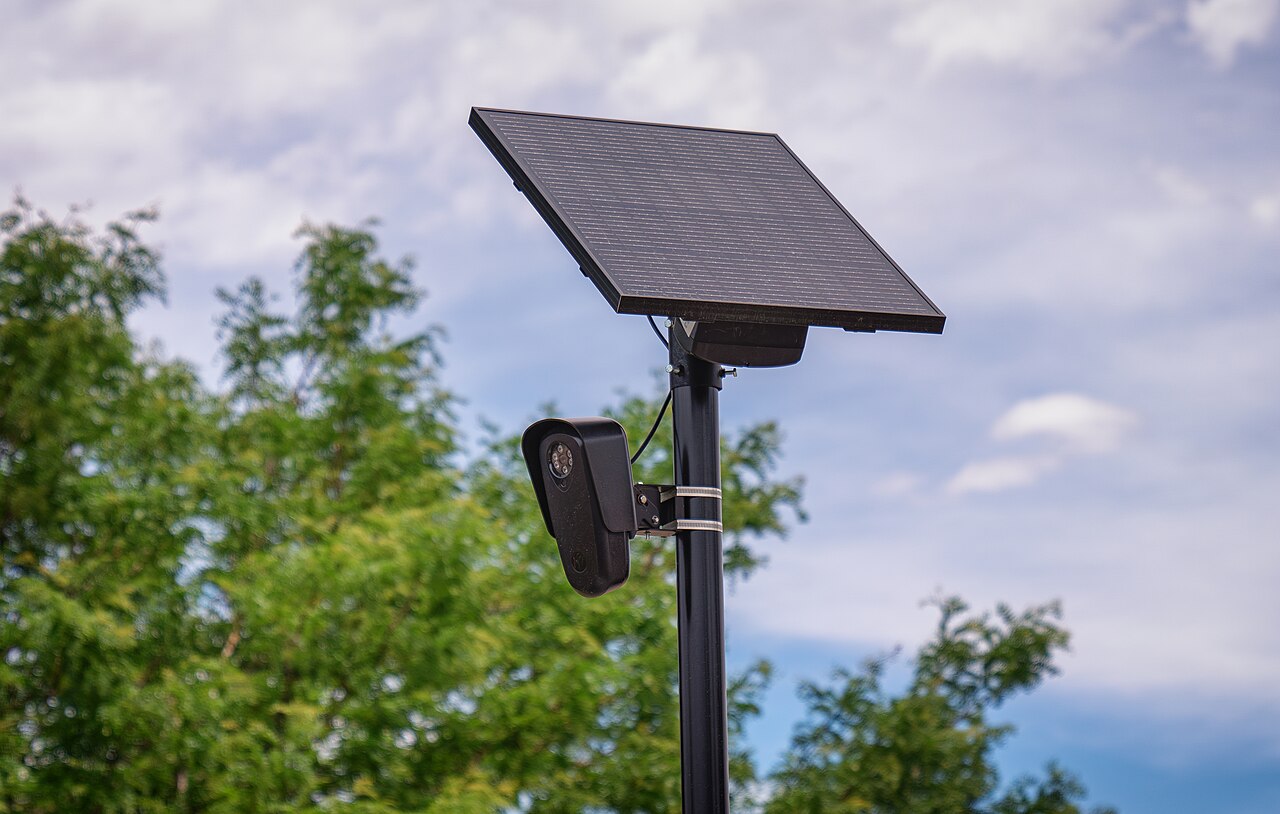
A Flock Safety automated license plate reading camera. Photo by Tony Webster, CC BY 2.0, via Wikimedia Commons.
A push to tighten oversight of the Milwaukee Police Department’s use of a controversial license plate-reading camera system is gaining significant support on the Common Council.
Led by Alderwoman Marina Dimitrijevic, 12 of the council’s 15 members signed an Aug. 25 letter asking the Fire & Police Commission and Police Chief Jeffrey Norman to review the MPD’s use of Flock Safety license plate-reading cameras and respond to a series of proposed safeguards before the council begins deliberating the city’s 2027 budget.
The letter represents a substantial expansion of council concern. A March letter raising concerns about Flock was signed by only four members: Dimitrijevic, Common Council President José G. Pérez, Alex Brower and Sharlen Moore.
The new letter, which is more explicit in its request, includes those four and eight additional council members: Andrea Pratt, Mark Chambers, Jr., Robert Bauman, Lamont Westmoreland, Milele A. Coggs, DiAndre Jackson, JoCasta Zamarripa and Scott Spiker.
It also indicates that there may be political support — with 10 votes required under state law — to modify the police department’s use of Flock technology.
The growing scrutiny follows a series of alleged abuses involving MPD personnel and a growing national backlash against the technology.
“In March of this year, members of the Common Council raised concerns about… use of Flock Safety technology after an MPD officer was charged with misconduct,” says the new letter. It notes that a second officer, an Internal Affairs Division member assigned to investigate the first case, was charged in July and that MPD has since opened an investigation into a third officer for potential misuse of the system.
Former officer Josue Ayala was criminally charged in February after investigators alleged he repeatedly used Flock to track a romantic partner and another individual. Ayala ultimately pleaded guilty to misconduct in public office.
Then, in July, Detective Tehrangi Chapman was charged with felony misconduct in public office and misdemeanor misuse of a GPS device. Chapman was one of the investigators assigned to the Ayala case and is alleged to have improperly used Flock to track two people.
A third, more limited, investigation is underway.
The council members say the incidents expose broader concerns about a surveillance system that can track vehicle movements across a network of cameras.
“These incidents of abuse, which pose serious risks to the safety and privacy of civilians, as well as to their First and Fourth Amendment rights, are not limited to Milwaukee,” says the letter. It notes that other Wisconsin governments, including Dane County, Oshkosh and Sturgeon Bay, have severed ties with Flock.
Public perception of Flock and its potential for abuse has shifted dramatically in the past year, including among members of the Common Council. In April 2025, Dimitrijevic and Spiker supported Flock: they were part of a group of council members asking MPD to explore partnering with area business improvement districts and neighborhood associations to expand the use of the camera system.
Adding more fuel to the change in views, the cameras have become a target for vandalism.
Milwaukee has contracted with Flock since 2022. MPD currently operates 31 fixed cameras, while private businesses and other public agencies operate additional cameras. The cameras can function as a network, with users able to access data from others’ cameras.
Flock cameras photograph passing vehicles and automatically read their license plates, creating a database searchable by law enforcement.
MPD officials have defended the technology as a valuable investigative tool. In May, after the Ayala case, the department said it had reduced the number of users with access to Flock from 370 to 100 and implemented a data-driven audit system intended to flag potentially improper searches.
But the council members say they have not received an adequate response to the recommendations made in March.
“It does not appear that these concerns have been heard as no substantive changes have been made or response offered,” says the new letter. “We therefore again request that the Commission review these proposed reforms and provide recommendations relating to them.”
MPD, via a statement, said it is working to respond to the council’s concerns.
The only council members who did not sign the new letter are Ald. Larresa Taylor, Ald. Peter Burgelis and Ald. Russell W. Stamper, II.
Council Wants Data
The council members are asking MPD and the commission for substantially more information about how the system is used and shared.
Among other things, they want a list of every agency that shares automated license plate data with MPD and every agency with which MPD shares its own information. They are also seeking a complete history of searches conducted by outside agencies using MPD camera data, or by MPD personnel acting on behalf of an outside agency, including the reason provided for each search, the agency involved and the number of matches returned.
The council is also requesting a list of all system users and their searches, including timestamps, and information on whether MPD has implemented Flock’s new recommendation to retain routine license plate data for only seven days.
And the letter proposes a broader set of policy changes.
Among them are requirements for case or CAD numbers and specific justifications for every search, automated misuse detection and independent auditing, restrictions on interagency and federal access, a prohibition on use for civil immigration enforcement without a judicial warrant or other legal requirement, and regular public reporting to the Fire & Police Commission and council. The members also want immediate suspension of Flock access when there is credible evidence of intentional personal or unauthorized use.
Another proposed change would generally restrict access to department-managed devices, require multifactor authentication and log session information.
The March letter had raised many of the same issues, calling for independent auditing, better documentation of searches, real-time flagging of suspicious activity, protections against use for immigration enforcement, recurring oversight hearings and greater public reporting. It warned that the alleged misuse of Flock demonstrated “a systemic oversight gap rather than an isolated failure.”
At that time, the four council members said the technology could be used to track movements and store sensitive location data and warned that inadequate safeguards could allow it to be weaponized against domestic violence survivors, journalists, advocates and other residents.
Budget Fight Looms
The new letter gives Norman and the commission a Sept. 30 deadline to respond, explicitly tying the request to the upcoming city budget.
“This is an urgent moment, and a problem that will not correct itself,” the council members wrote.
They noted that the Common Council has the authority to make procedural changes itself, but said such changes would be better informed with input from the FPC. They said they want the response in time for the findings and recommendations to be considered during deliberations on the 2027 budget.
The council is scheduled to debate the budget in October, with final approval expected in November.
The letter also puts the future of the Flock contracts themselves on the table.
“One of the issues certain to arise in our deliberation of the budget is the manner in which these cameras have been funded in recent years,” the members wrote. “The multiple waivers granted for these contracts and future funding will be discussed.”
Council records show that MPD most recently approved a $30,000 Flock Safety contract in 2025 for 10 cameras. The contract was executed as a single-source commodity contract with a waiver, bypassing the need for council approval.
“[MPD] respects and values the concerns and positions of our elected officials. We will work with the FPC to address our Council members’ concerns and respond to the Council after we have carefully reviewed their request and can provide a factual and thoughtful response. The exchange of information, positions and ideas between MPD and our elected officials is important as we both serve the same community. MPD is committed to transparency and engaging in important dialogue such as this,” said MPD in a statement.
Legislation Link - Urban Milwaukee members see direct links to legislation mentioned in this article. Join today
If you think stories like this are important, become a member of Urban Milwaukee and help support real, independent journalism. Plus you get some cool added benefits.
More about the Use of Flock Cameras
- MKE County: Sheriff Will Replace Flock With Other Cameras - Graham Kilmer - Oct 15th, 2026
- MKE County: Supervisors Pass Flock Ban - Graham Kilmer - Oct 3rd, 2026
- UWM Removing Its Flock Cameras - Jeramey Jannene - Sep 11th, 2026
- WILL Sues 11 Waukesha County Communities Over Flock Cameras - Evan Casey - Sep 10th, 2026
- MKE County: Crowley May Kill Funding for Flock Cameras - Graham Kilmer - Sep 9th, 2026
- Both Attorney General Candidates Dump on Flock - Jeramey Jannene - Sep 8th, 2026
- Council Says Mayor’s Flock Changes Don’t Settle Debate - Jeramey Jannene - Sep 3rd, 2026
- MKE County: Crowley Calls for Restrictions on Sheriff’s Flock Cameras - Graham Kilmer - Sep 1st, 2026
- Mayor Demands Restrictions on Milwaukee’s Flock Cameras - Jeramey Jannene - Aug 31st, 2026
Read more about Use of Flock Cameras here
Political Contributions Tracker
Displaying political contributions between people mentioned in this story. Learn more.
- October 23, 2024 - DiAndre Jackson received $75 from Sharlen P. Moore
- April 23, 2019 - JoCasta Zamarripa received $100 from Peter Burgelis
- February 13, 2016 - Milele A. Coggs received $10 from Larresa Taylor
- May 5, 2015 - José G. Pérez received $100 from JoCasta Zamarripa























Good for Marina to identify this as an important city policy issue. The fixes proposed are modest and implementable.