

The Rationale for Rebuilding Milwaukee County’s Public Safety Building
County Supervisor Shawn Rolland argues Milwaukee can't afford to wait.
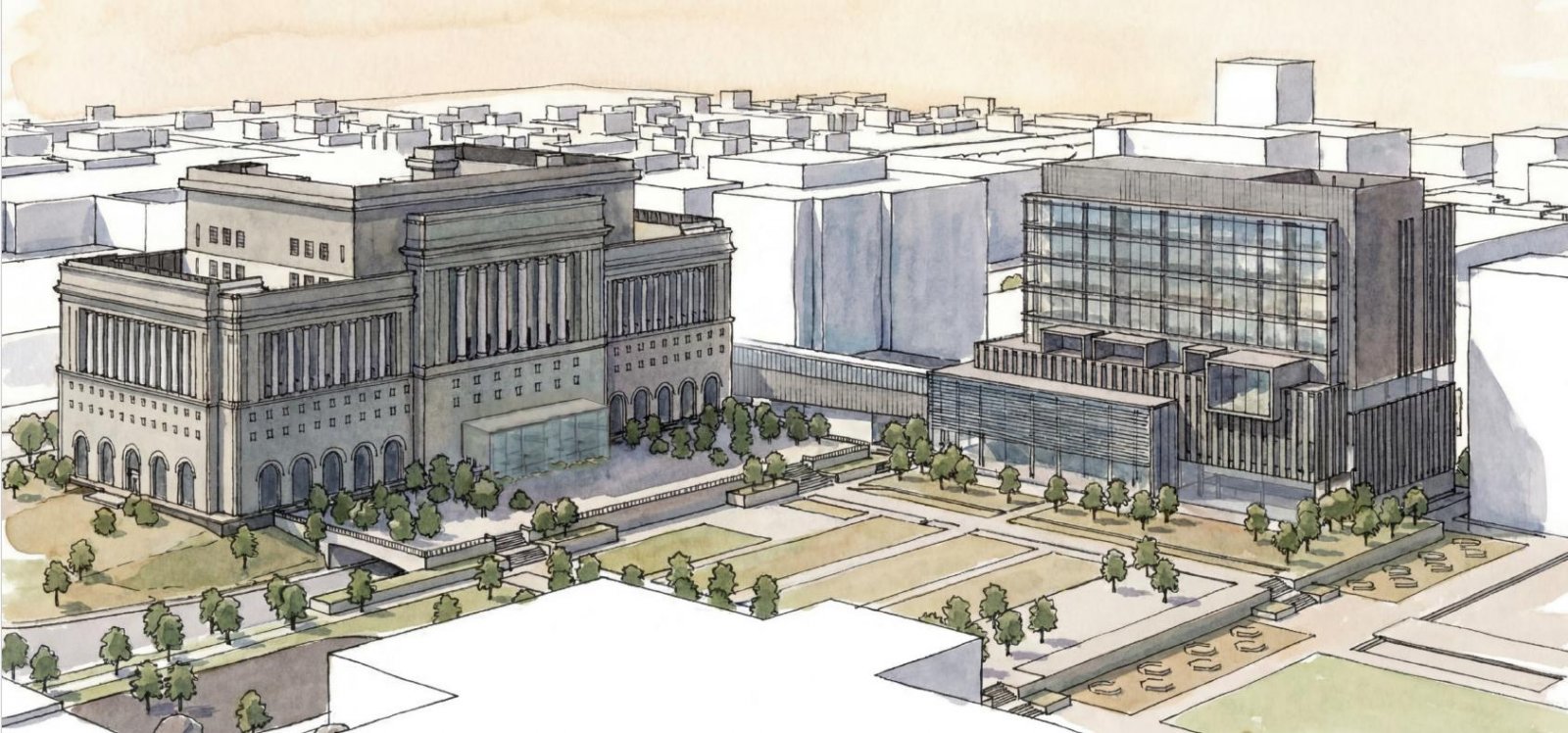
Conceptual rendering of new courthouse and historic courthouse with new entrance on MacArthur Square.
The Milwaukee County Board of Supervisors will soon decide when and how we will rebuild the Public Safety Building. I want to walk you through this project step-by-step because there is a significant price tag that will impact your life and your wallet.
Currently quoted, it’s expected to cost $897 million plus interest.
That is a lot of money. I don’t say that lightly.
But our justice system matters. The right to a speedy and fair trial is one of the few things that separates an orderly society from one where people take justice into their own hands. We have to get this right. And right now, the people who depend on our justice system (all of us) are not set up for success.
What is the Public Safety Building & Why Is It Falling Apart?
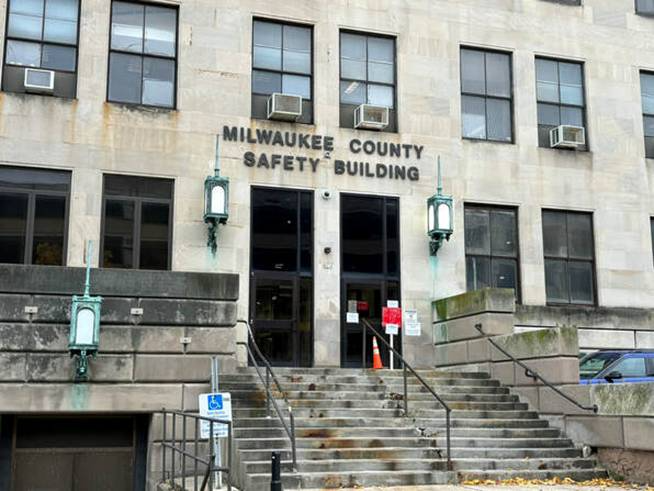
Photo courtesy of Shawn Rolland.
The Public Safety Building is a gigantic, 450,000-square-foot building at 821 W. State Street that houses the Milwaukee County District Attorney’s Office, the Sheriff’s Office, pretrial services (JusticePoint), the court coordinators’ office, and criminal courtrooms. But when it was constructed nearly 100 years ago, it was not the backbone of a modern metropolitan justice system.
After nearly a century of existence, the building is badly falling apart. Rooftops are failing. Broken water pipes have flooded offices. Courtroom air conditioners are breaking down. In fact, on July 15, WISN 12 News reported that temperatures in courtrooms, jury rooms, and holding cells pushed up between 80 and 90 degrees.
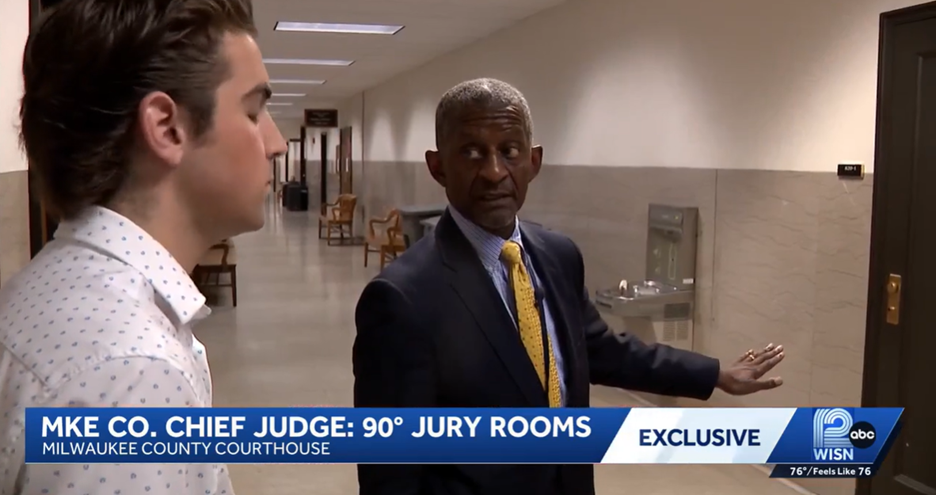
Screenshot
In this interview above, Chief Judge Carl Ashley is justifiably outraged about the high temperatures impacting courtrooms across our complex.
The county spends more than $500,000 annually on maintenance on this one building, and as systems age and deteriorate, those costs are rising.
Long story short, there is about $350 million in deferred maintenance that needs to be addressed.
Why Can’t We Just Replace What’s Broken for $350 Million?
That’s a fair question. As a guy who is generally pretty cheap (with all due apologies to my wife and kids), this question crossed my mind many times.
But, there are major drawbacks to just “replace what’s broken.”
I took a behind-the-scenes tour of the Public Safety Building this week, and I’ll show you some of the photos I took. When you step into the building, you immediately realize that this facility was never designed to provide the services it’s struggling to deliver today.
It’s not ADA compliant, and there are ADA issues everywhere you look. For example, some jury deliberation rooms are located up staircases without any other options for people with mobility needs.
This week’s wildfire smog effortlessly seeped in through the old windows and poorly designed HVAC systems, and the whole building smelled and tasted like an ashtray.
The building does not have central air. Hundreds of window air conditioners do their best, but they’re no match for the summer, and they are really loud. I toured one of the jury deliberation rooms and could barely hear myself think over the whirr of the air conditioning unit. I have no idea how juries can deliberate in a room like this.
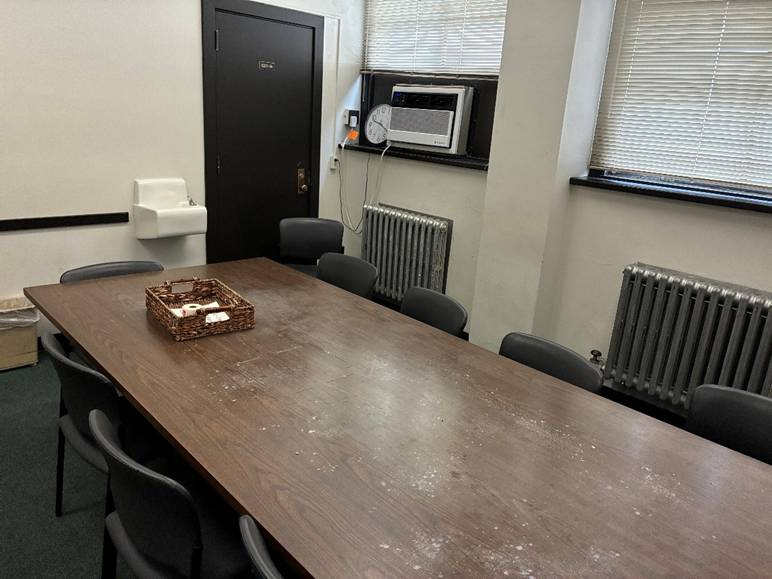
Photo courtesy of Shawn Rolland.
Welcome to the jury deliberation room, where it’s somehow 80+ degrees but you can’t hear your own thoughts over the whirr of the air conditioner. How long would you deliberate here? Is this a suitable environment for jurors to render a fair verdict?
An in-custody holding area – sometimes called a “bullpen” – is located between the courtroom and this jury deliberation room. Layouts like this can bias a jury – and have caused mistrials in Milwaukee County when jurors passed by and saw an in-custody defendant in an orange jumpsuit.
In winter, the insulation is so poor that last year a District Attorney’s Office staffer recorded an office temperature of 38 degrees. If you were a talented attorney with a law degree, would you choose to work in a building that is 38 degrees?
The lack of office space splits the DA’s office across three different areas on different floors, creating ongoing communications and culture challenges.
There are no private areas for attorneys and clients to huddle anywhere in the building. Attorneys often stack their case files and legal papers on top of hallway garbage cans because there is no dedicated space for them to prepare for trial. Victims, witnesses and their loved ones sit on benches in the public hallways to process the trauma of court proceedings because the building does not have any respite spaces anywhere.
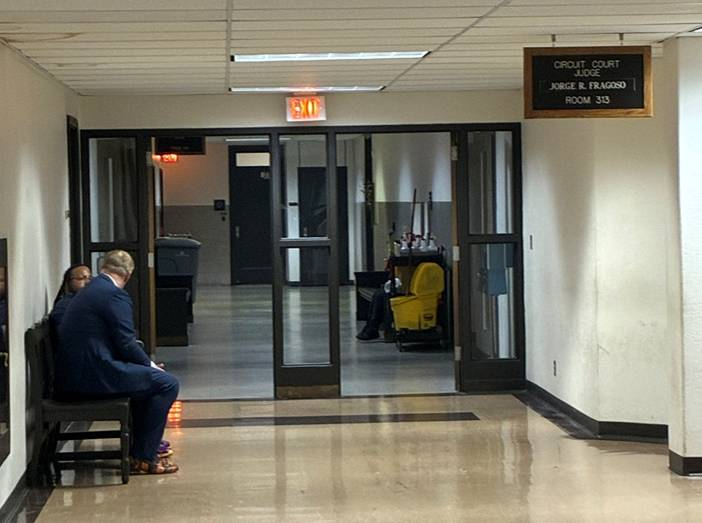
Photo courtesy of Shawn Rolland.
During my tour, I walked past a gentleman and his attorney debating the best legal strategy sitting on a bench in a public hallway – because there is nowhere private for them to go. You and I should not be able to eavesdrop on these conversations.
A whopping 60,000 square feet of the Public Safety Building is vacant, most of which is former jail space. Jail cells are gathering dust, because that model of incarceration was deemed dangerous and ineffective for both occupants and correctional officers a long time ago. In today’s county jail, large pods hold approximately 60 people in our care – a layout that’s proven to reduce conflict, better protect correctional officers and create an environment that’s more conducive for rehabilitation.
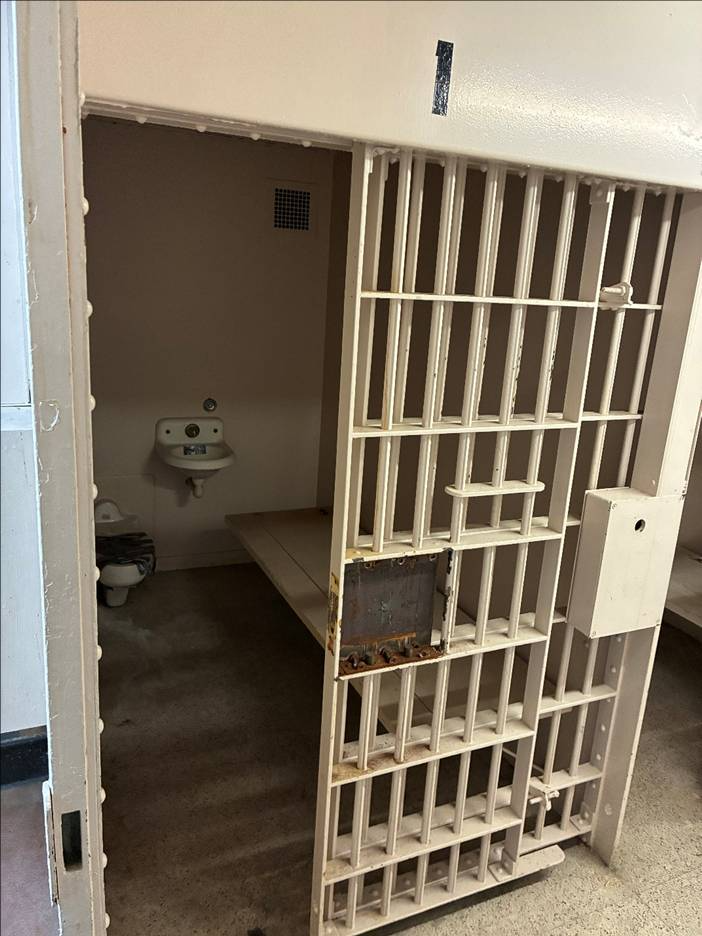
Photo courtesy of Shawn Rolland.
On my tour, I got to see this long-abandoned cell that once housed Jeffrey Dahmer. I won’t be sad to see it go.
The worst problems are the way the building’s design interferes with our justice system and the victims, defendants, families and jurors participating in it.
Many courtrooms have been shoe-horned badly into rooms that were never meant to be courtrooms – and fail Wisconsin Supreme Court standards. Judges, court reporters, juries, prosecutors, defense attorneys, victims, families and media are jammed into spaces that simply cannot fit them. Electrical cords are strewn everywhere. Frankly, I’m surprised some of it is not a fire hazard.
These cramped courtrooms can become volatile. Families assault other families. Jurors are slapped. Chaos erupts regularly. Last year, more than 900 incidents requiring law enforcement occurred.
This isn’t just annoying. Incidents affect the entire justice system. When an incident occurs, nearby bailiffs are often the fastest first responders. When those bailiffs leave their courtrooms, those courtrooms often pause until order is restored and the bailiff returns.
In other words, one incident can throw a wrench into the gears of justice everywhere.
When that happens multiple times per day, trials get delayed and a backlog grows. Defendants who are presumed innocent sit in jail waiting for their case to be heard. Our county jail population surges and overcrowding concerns arise. To address the overcrowding, some people in our care awaiting trial are sent to the Community Reintegration Center (formerly the House of Corrections), putting pressure on that facility while adding people with a higher risk profile to their ecosystem.
Weirdest, worst, and most wasteful of all, most areas in the Public Safety Building and our County Courthouse are not secure. As a result, shackled defendants are escorted through the same public hallways as the general public, victims and families – many of whom are retraumatized by the unexpectedly up-close interaction. Delays and mistrials can occur when these groups cross paths in shared corridors. During the tour, an example was given about a juror being removed from jury duty because they encountered a defendant in the hallway while searching for a restroom. Moreover, presumed-innocent defendants are walked down a public hallway full of people who may be extremely hostile to them.
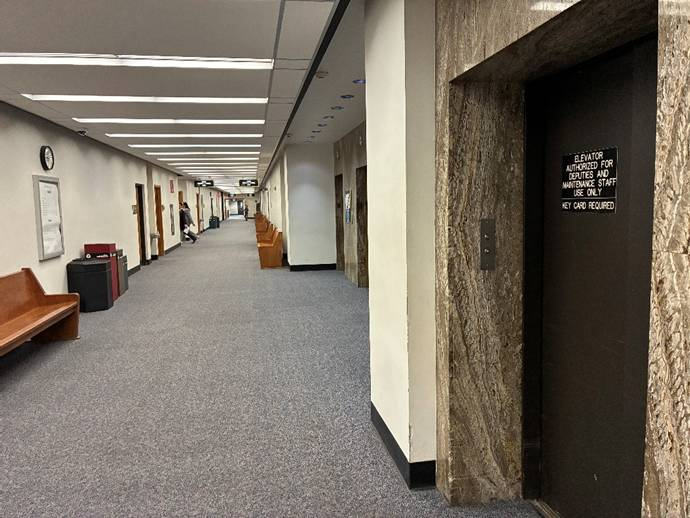
Photo courtesy of Shawn Rolland.
Defendants are brought to court by a freight elevator and then escorted down a long public hallway. In this example, the courtroom might be all the way down the public hallway – creating hundreds of feet where incidents can and do occur.
These unsecure hallways require significantly more from our bailiffs. In a secure hallway, protocol says one bailiff could safely escort five defendants. In an unsecure hallway, protocol calls for a 1:1 ratio between bailiffs and defendants being escorted to trial. If bailiffs are not available because of a police issue somewhere in Milwaukee County, the courthouse slows down significantly as courtrooms wait for their defendants to arrive.
Done over and over, this inefficient process spikes the amount of overtime our bailiffs generate. In fact, the second-biggest contributor to our Sheriff’s Office multi-million-dollar annual budget deficit is court bailiff overtime.
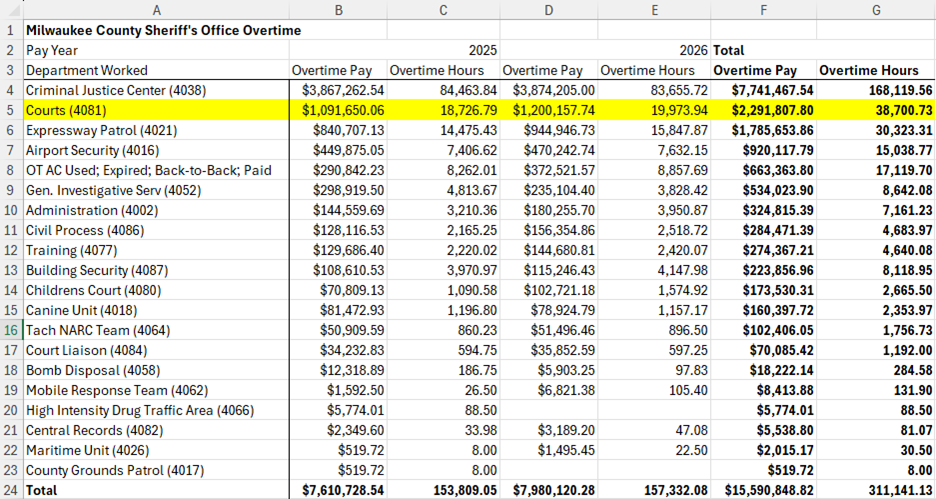
Here’s a chart showing the key drivers of Sheriff’s Office overtime. “Courts” ranks #2.
The bottom line is this: if we just “replace what’s broken” for $350 million dollars, all of these dangerous, inefficient and fiscally irresponsible structural issues will remain.
Can We Put It to Public Referendum?
Well, that’s been suggested. We could. But I’m not sure what it would solve. There is no alternative plan that solves all these systemic issues for less money.
And delay comes with a real cost. About a decade ago, this project carried a price tag estimate of ~$500 million. After years of inflation, project costs now approach $900 million. Project managers estimate that each month of delay could add $4 million in extra costs.
So yes, we could pause for seven or eight months (or more) to consider the results of a referendum – but that would add about $30 million to the price tag – the same amount Milwaukee County is spending to restore the Domes. You can come to your own conclusion, but that seems like a bad idea to me.
Can We Build It Somewhere Cheaper on Some Farmland in the Suburbs?
I’ve heard that idea, too. If we headed down that path, we would still need to spend hundreds of millions of dollars to construct a new building, we would have to buy the land, and worse, our ongoing costs would explode. Remember when I talked about how expensive it is for a bailiff to escort defendants from one connected building to another? Imagine if they had to drive these defendants across town all day in a secure vehicle on a secure route. In 2025, Milwaukee County spent $3.1 million in transportation costs moving occupants from the Community Reintegration Center (formerly the House of Corrections) in Franklin to our Criminal Justice Facility downtown. If we moved the courthouse further away, that number would increase exponentially.
County staff toured a facility in Will County, Illinois – where they chose to keep their jail facility and courthouse separate. Every day, that county has to shut down the streets between the two facilities to safely transport people in custody.
This is not a cheaper or smarter system. The building needs to be close to the Criminal Justice Facility, our pretrial jail facility.
It also matters where the building is located. Many of the people in our care do not live in the suburbs. That is not a provocative statement; it’s just what the data tells us. If we want to make it simple for people to visit folks awaiting or sitting on trial, the location should be centrally located, and easily accessible by public transit. That’s what today’s courthouse location offers.
Can We Just Stop Fixing Other Things in the County and Focus on This?
This was another question that many of us had. In reality, there are many state-mandated things that we cannot just decide to delay fixing. We are obligated to fix them. Moreover, if we stop fixing what’s broken elsewhere in the county, our deferred maintenance backlog will explode.
And even if we did decide to stop fixing what’s broken for a few years in a row, the impact on people’s property taxes would be relatively insignificant: savings of a few bucks here and there, not anywhere near the total cost.
Why Can’t the State Pay for This?
That’s an interesting question. The justice system is a state-mandated function. You could make the argument that they should help us. After all, our Milwaukee County court system processes more cases than Dane, Waukesha and Brown counties combined.
But state legislators have previously told us they do not want to help fund the project because, if they pay for Milwaukee County’s new facility, every county in Wisconsin may ask for the same treatment.
Thanks to the persistent advocacy of County Executive David Crowley and his administration, Governor Tony Evers struck a gentleman’s deal with legislative Republican leaders to provide Milwaukee County with an extra $20 million annually to reimburse us for expressway patrol – which Milwaukee County leaders could use to offset some of this project’s costs.
Some people believe that leadership change in Madison will provide us with greater opportunity for state support. I hope that is true, but I am not especially optimistic. I do not hear any candidate running on a platform of sending more state money to Milwaukee County to fix this building. Do you?
And again, every month we delay, the project price tag grows by $4 million.
In Conclusion
I’m not asking anyone to be happy about this. I’m not happy. It will cost a lot of money. The average $400,000 home in Wauwatosa, for example, will be asked to pay an additional $200 per year in property taxes over 20 years. That is real money. And this project is about as fun as replacing the transmission of a car.
But it is just as necessary. And it’s endorsed by a wide array of victim advocates, law enforcement leaders, community leaders, unions, and community justice organizations.
This project will better serve people seeking justice, reduce conflicts and disruptions, move cases more efficiently, protect victims, reduce pressure on our jail, and help the county lower annual operating costs.
It will also allow Milwaukee County to use the newly available space, cancel leases with other building owners, and reunite departments that have been split apart for more than 30 years.
Here’s the truth: communities are judged by what they choose to invest in when the choice is hard, expensive and unavoidable. This project is not about building something shiny. It is about building something functional, safe and worthy of the people who depend on it – victims, families, jurors, attorneys, judges, deputies, defendants and taxpayers. We can keep pouring money into a failing building and pretend that patchwork is a plan. Or we can finally solve the problem in front of us and build a justice system that works the way Milwaukee County deserves.
Shawn Rolland is a member of the Milwaukee County Board of Supervisors. A resident of Wauwatosa, Rolland has served on the part-time board since 2020.
Existing members must be signed in to see the interactive map. Sign in.
If you think stories like this are important, become a member of Urban Milwaukee and help support real, independent journalism. Plus you get some cool added benefits.
More about the New Courthouse Project
- MKE County: Supervisors Authorize $851 Million Courthouse Project - Graham Kilmer - Oct 2nd, 2026
- MKE County: Supervisors Cut Tens of Millions From Courthouse Project Budget - Graham Kilmer - Sep 24th, 2026
- MKE County: Key County Committee Approves Courthouse Project - Graham Kilmer - Aug 26th, 2026
- MKE County: Committee Squashes Courthouse Referendum - Graham Kilmer - Jul 24th, 2026
- Op Ed: The Rationale for Rebuilding Milwaukee County’s Public Safety Building - Sup. Shawn Rolland - Jul 23rd, 2026
- MKE County: Finance Chair Moves To Block Courthouse Referendum - Graham Kilmer - Jul 18th, 2026
- MKE County: Supervisor Wants Referendum on Courthouse Project - Graham Kilmer - Jul 10th, 2026
- MKE County: Courthouse Project Cost Explodes - Graham Kilmer - Jul 2nd, 2026
- MKE County: New Courthouse Expected to Hike Property Taxes - Graham Kilmer - Jul 2nd, 2026
- MKE County: See Designs for New Courthouse - Graham Kilmer - Apr 9th, 2026
Read more about New Courthouse Project here
Political Contributions Tracker
Displaying political contributions between people mentioned in this story. Learn more.


Op-Ed
-
MMSD’s Record Shows A Clear Path For Milwaukee’s Water Future
 Jul 16th, 2026 by Michael Murphy
-
Joel Brennan Will Be Ready on Day One To Be Governor
 Jun 30th, 2026 by Tom Barrett
-
Former Wisconsin Governor Announces Endorsement
 Jun 25th, 2026 by Martin Schreiber

















Has Milwaukee County explored other court house / jail / public safety projects done in the U.S. in the last 10 – 20 years?
Are there best practices to follow?
How were they funded?
It is difficult to understand how this project would cost this much. The 37 story NML building was constructed over 10 years ago, but wasn’t that done for under $1B? High rises like that are extremely expensive to build.
What are the key factors driving the costs for this project?
Who is in charge? Do they have the necessary expertise and background?
Is this being handled by county government employees or was the design put out to bid?
Or by organizations looking to make a lot of money dealing with inexperienced folks in the county when it comes to big construction projects?
Inquiring minds would be interested in more details on how we got to this point, and once again, why it takes so many years to accomplish the front end work on these projects, especially with the county.
Will we find out after the fact about the key items that were missed, overlooked or ignored. Health insurance contract renewal and MCTS budget issues are two prior issues that come to mind.
Thank you for your detailed report and leadership, Supervisor Rolland!
I appreciate this thoughtful, thorough explanation.
In the category of “What do Counties in Wisconsin do?”, this building is probably at the top of the list.
To be trying to make this 100 year old facility perform all of the functions that are required of it is nightmarish.
Thank you, Supervisor Rolland, for your vivid and detailed summary of the crisis that the County and each of its residents and businesses is facing.
To mkeumkenews09, The NWL building was built 10 years ago. There has been significant inflation, especially around construction costs. Comparing NWL building construction 10 years ago, to the County Courthouse construction today, is to compare apples to Brazil nuts.
Supervisor Rolland noted the initial cost of replacing the building was around $500 million. The estimated cost today is $897 million. The delay has already cost the county $397 million. Rolland stated that every month the project is delay adds and additional $4 million. That means that postponing the project for a year cost Milwaukee County residents an additional $48 million. Add that is on top of the cost of work arounds in the current building.
The research you suggest has already been done. Repeating the process again does nothing but adding additional cost to the project. To your point, the County Board of Supervisors should be much more transparent with projects of this magnitude.
After the November 3 Election our State Legislators will be Sworn In January 4, 2027.
Fair maps will result in change. Shared Revenue will become shared daily..
To mkwagner, I did not recommend starting over, I had questions on how did this get to where it is at today and how confidently can we trust the people and process that resulted in today’s situation.
I made a similar statement about the NML building. It is still an accurate statement that high rises are extremely more expensive to build than shorter buildings. There have been several articles within the past year, or less, with the $500M number. Once again, why do we now get a surprise that the cost is doubled from the last numbers provided That is a bad look for the county to be that off with numbers to the public within such short time frames. Is that a lack of transparency or competency? Maybe that is a county issue or a news reporting issue, or a news reading problem on my part? 🙂
The research I suggested may have already been done, but I do not remember seeing that information provided, which is what I was asking about.
Additionally, and I haven’t found it on a brief search, but there was a recent article on a similar project in a city larger than Milwaukee, where they built a building, I believe that was 4 times the size of this proposal, for less than half this cost. I am not sure when it was built but thought it had been within the last 5 to 10 years. If that is accurate, even with the problematic inflation we are experiencing, that brings this $1B project cost into question with possibilities to re-think it with a result that maybe the cost can be kept to half of this number.
Admittedly, with the issues at the County government, recently, in the past 10 years and the past 30 years, it is difficult not to be wary of proposals that appear to conflict with other real world examples.