Crowley Calls for Restrictions on Sheriff’s Flock Cameras
County executive calls for new policy limiting use of controversial Flock surveillance cameras.
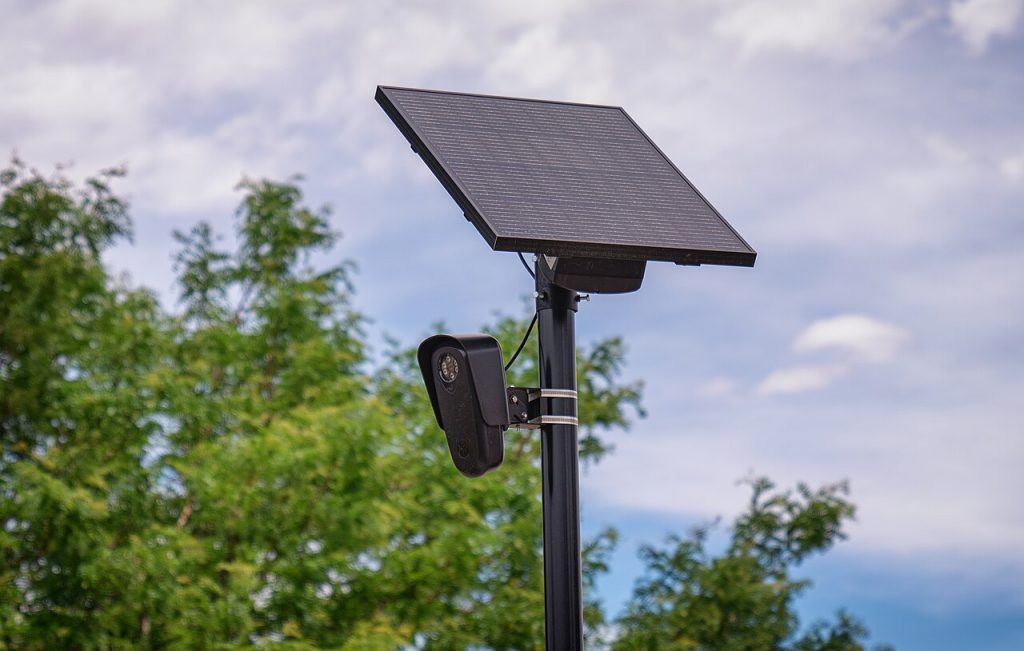
A Flock Safety automated license plate reading camera. Photo by Tony Webster, CC BY 2.0, via Wikimedia Commons.
Milwaukee County Executive David Crowley is seeking limits and a policy framework for the county’s use of controversial Flock surveillance cameras, which passively capture license plates for all passing vehicles and store them in a searchable database.
The county executive sent a memo Tuesday to county government leaders, law enforcement and court officials calling for the development of a policy framework for Flock surveillance cameras that limits when they are used, who can use them, how long data is stored and who has access to the data. Crowley’s memo comes a day after Mayor Cavalier Johnson released new rules for Flock cameras, eliminating access for rank-and-file Milwaukee Police Department (MPD) officers.
The memo went out to Sheriff Denita Ball, District Attorney Kent Lovern, Wisconsin State Public Defender Regional Manager Angel Johnson, County Board Chairwoman Marcelia Nicholson-Bovell and county department heads.
“Public safety partners should have the right tools to keep Milwaukee County safe, but unchecked surveillance isn’t the answer,” Crowley said in a statement Tuesday. “We have seen what can happen when this technology operates without clear rules, transparency and accountability. Protecting our residents’ privacy and maintaining the public’s trust is a responsibility I take seriously. That is why I am directing all county departments to limit the usage of all Flock camera systems and establish safeguards proactively, before a breach of public trust can occur.”
Flock cameras capture and store license plate numbers in a searchable database, recording the time and place the plate was captured. Law enforcement can track the movement of a particular vehicle by searching it in the Flock database. The company Flock Safety owns the cameras and sells access to their system and data to local governments and law enforcement agencies.
Law enforcement officers have been caught using the system to stalk people, including ex-girlfriends and wives, across the country, including in Milwaukee. The technology has also engendered significant pushback and criticism from the public and increasingly from elected officials.
In his memo, Crowley noted that there has not yet been a documented instance of the Milwaukee County Sheriff’s Office (MCSO) misusing Flock cameras, but said it is important to put guardrails on use of the technology “before a breach of public trust can occur.”
Two MPD officers have been charged for misusing the cameras and a third is currently under investigation.
There are 42 Flock cameras permitted for use on county parkland. Another six cameras are set up on county roads and equipment, but they are being used by local municipal police departments and permitted by the Milwaukee County Department of Transportation (MCDOT), according to the county executive’s office.
Crowley does not have the authority to direct MCSO policy. Under state law, only Sheriff Ball has the discretion to change and establish departmental policies. His memo asks the MCSO to develop a policy for Flock use that puts restrictions on permissible uses, authorized personnel, data retention and data sharing.
The contract for the county’s Flock cameras is held by the county’s technology and IT department, called the Information Management Services Division (IMSD), Crowley’s memo noted. The cameras are owned by Flock and the sheriff’s office has access to the data they collect.
The county executive has asked IMSD to evaluate the MCSO policy for any conflicts with a previously adopted framework for the department’s use of facial recognition technology. In February, Ball backtracked from plans to acquire and deploy facial recognition technology.
The county executive is also calling for a publicly accessible portal “to provide residents with information regarding the deployment and use of Flock camera systems.” He also called on municipalities in the county to “reevaluate their own use of this technology.”
Under the city’s new policy, only supervisors will be allowed to use the automated license plate-reading system, and searches will be limited to a narrower list of crimes and investigations. MPD will also stop sharing access to its camera data with outside agencies, create a public dashboard and undergo independent audits twice a year. The mayor issued the new guidance following a public letter from Alderwoman Marina Dimitrijevic and a majority of the Milwaukee Common Council expressing concern.
Flock cameras have become a flashpoint in U.S. politics. In Wisconsin, several communities have already canceled contracts with the company Flock Safety, including Dane County and the City of Oshkosh. Recently, the City of Sheboygan moved to end its contract with Flock after the company allegedly violated the terms of their agreement, according to Sheboygan Mayor Ryan Sorenson.
Crowley is running for governor against Republican U.S. Rep. Tom Tiffany. During his primary campaign, he responded to questions about Flock use with a response similar to the one he issued Tuesday, saying, “Law enforcement and public safety partners need resources to keep our neighborhoods safe. At the same time, those tools must not infringe on the rights and privacy of Wisconsinites,” as the Milwaukee Courier reported.
The sheriff’s office did not respond to a request for comment before publishing.
Legislation Link - Urban Milwaukee members see direct links to legislation mentioned in this article. Join today
If you think stories like this are important, become a member of Urban Milwaukee and help support real, independent journalism. Plus you get some cool added benefits.
Political Contributions Tracker
Displaying political contributions between people mentioned in this story. Learn more.
- August 13, 2015 - Cavalier Johnson received $25 from David Crowley