Questions for Wisconsin’s Next Governor
From a $2.36 billion surplus to child care, here are issues the nominees must answer for voters.
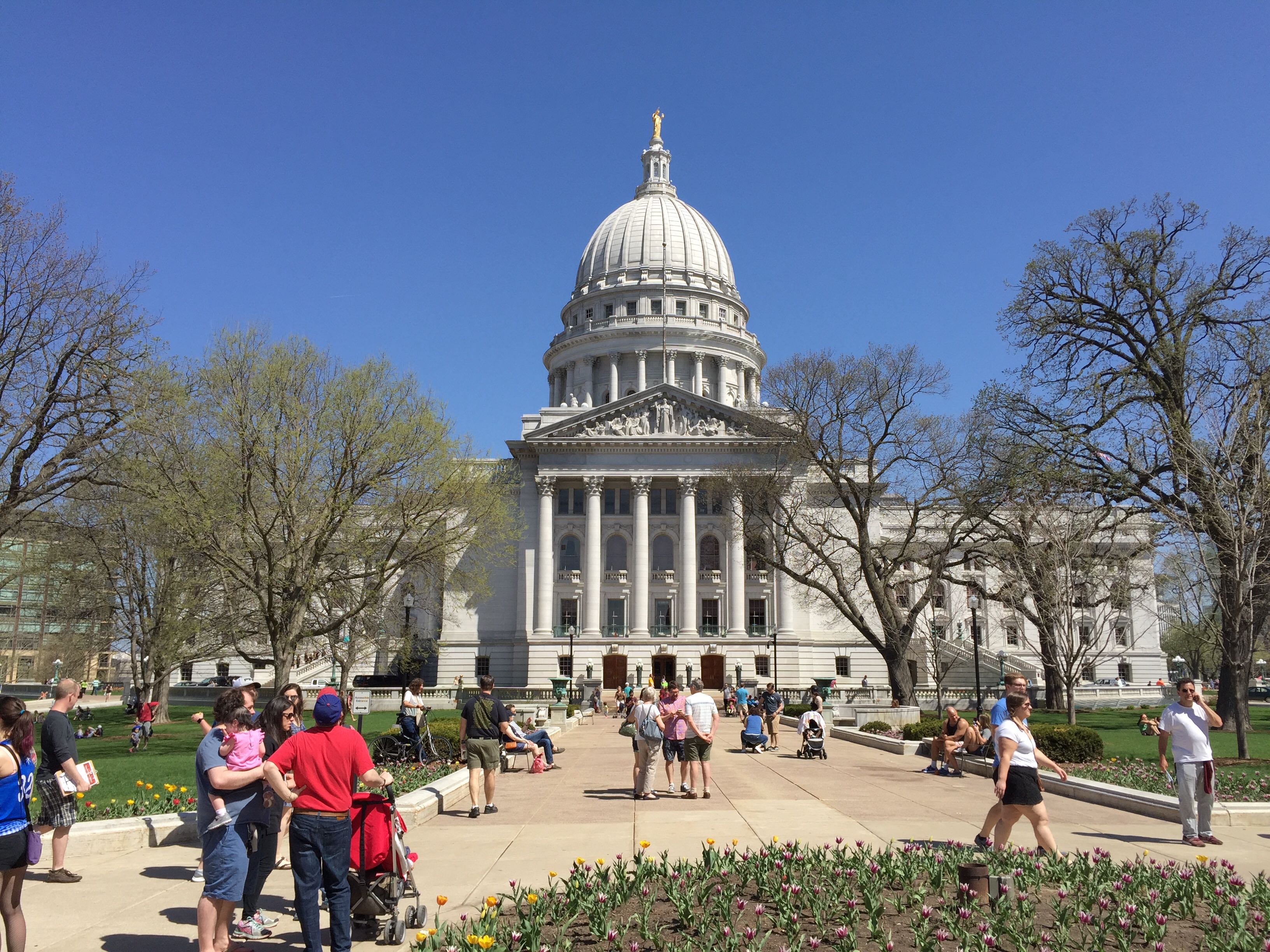
Wisconsin State Capitol. Photo by Dave Reid.
This week, Wisconsin voters will know the two major-party candidates for governor in the Nov. 3 general election. The chaotic Democratic primary for governor will be over, and Republicans will be unified around their candidate.
More than ever, those two gubernatorial candidates now have an obligation to tell voters where they stand on major issues — issues that go beyond campaign sound bites focusing on old social media posts or past votes. It’s time candidates share visions for the future, if they can.
You may only care about one or two of the many issues that separate the two candidates. But those one or two issues may determine how you vote on Nov. 3.
Here are some potential questions for those candidates.
Budget surplus: How should the state’s $2.36 billion surplus be spent? Would funding K-12 schools or controlling property taxes be your top priority for that surplus? (FYI: There is also $2.1 billion in the separate Budget Stabilization — or “rainy day” — Fund.)
Retiring Capitol leaders tried to send refund checks to taxpayers who paid income taxes and boost K-12 spending, but legislators from both parties killed that plan. Should part of the surplus be returned directly to taxpayers?
Health care: Does the state have an obligation to reduce the impact of federal cuts to Affordable Care Act subsidies and the Medicaid program that provides health care to elderly, disabled and low-income residents? Do you have any specific proposals to reduce health care costs in Wisconsin?
Housing: Does state government have a role in making housing more affordable in Wisconsin? If so, what is that role?
Child care: The end of federal subsidies is forcing child care centers to raise rates or close. Democratic Gov. Tony Evers repeatedly asked Republicans, who controlled the Legislature, to offset those federal cuts but they refused. Should state government offset those cuts?
Act 10: If the state Supreme Court rules the 2011 law that abolished collective bargaining for most public employees, and made them pay more for pensions and health care, is unconstitutional, what — if any — legislation would you recommend?
Workforce shortages: How does the availability of affordable housing and/or child care impact Wisconsin’s workforce shortage? What is the state’s role in supporting those two needs? Do you support providing cash or other incentives to individuals and families to get them to move to Wisconsin to meet workforce needs?
Local governments: Wisconsin’s system for funding state and local governments relies on three main sources of revenue: individual income taxes, state and local sales taxes, and local property taxes, with little revenue coming from corporate income taxes. Would you alter that balance, and, if so, how?
Property taxes: Evers’ approval of a $400-per-student annual increase in K-12 school spending, and the passage of local referendums, resulted in significantly higher tax bills on homes last year. How should property taxes be controlled in the next state budget?
Income taxes: The number of taxpayers with taxable incomes of more than $500,000 grew by more than 27% between 2022 and 2024, according to the nonpartisan Legislative Fiscal Bureau. Those taxpayers are only 1% of all tax filers, however. Will you recommend any changes in Wisconsin’s income tax rates?
Criminal justice: Do you support legalizing the medical and recreational use of marijuana? As governor, would your state budget close the outdated maximum-security Green Bay prison and include funding for a new prison? What, if any, changes would that budget include for the other 19th-century prison in Waupun?
Evers issued more than 2,200 pardons, which restore some rights but do not overturn convictions. Would you continue issuing pardons? Evers also created an advisory panel to review applications from prison inmates who have served dozens of years, and are not sex offenders, seeking commutations that could result in their release. Would you consider issuing commutations?
Data centers: Should state government enact basic standards, and environmental and utility protections, to regulate future AI data centers? Or should the current case-by-case practice of local communities deciding whether they should be built continue?
Election laws: Would you as governor seek any changes in election laws?
Stewardship program: The Knowles-Nelson Stewardship Program, created in 1989 to buy and preserve at-risk and recreation lands, has expired. Should it be renewed and, if so, with what level of funding?
They want to be governor, voters, so the candidates should have answers to these questions.
Steven Walters started covering the Capitol in 1988. Contact him at stevenscotwalters@gmail.com.
If you think stories like this are important, become a member of Urban Milwaukee and help support real, independent journalism. Plus you get some cool added benefits.


The State of Politics
-
What Explains Evers Endorsement of David Crowley for Governor?
 Jul 27th, 2026 by Steven Walters
-
Wikler Concedes Democratic Party’s Image Problems
 Jul 20th, 2026 by Steven Walters
-
How Evers ‘Fixed the Damn Roads’
 Jul 13th, 2026 by Steven Walters