Wikler Concedes Democratic Party’s Image Problems
The 'blob' of the Democratic Party organization is the problem, and solution, he says.

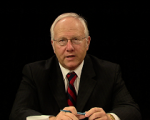
Ben Wikler. Photo from the Democratic Party of Wisconsin.
Ben Wikler was considered one of the most effective chairs of a state Democratic Party in the nation at the end of his six-year run leading Wisconsin Democrats.
On his watch, Wisconsin Democrats reelected Gov. Tony Evers, raised and donated millions to the winning campaigns of three state Supreme Court candidates, fought off Republicans’ push for legislative supermajorities and got new legislative district maps that give Democrats a chance to win control of the Legislature on Nov. 3.
Wikler’s stock among national Democrats was so high that he finished second in last year’s election for chair of the Democratic National Committee. The loss gave him a chance to return to Madison, spend time with his family and write a book, This is the Plan: How to End America’s Meltdown and Save Democracy.
Wikler is promoting the book on a 12-city national tour, scoring interviews on news networks and telling Democrats that year-round, neighbor-to-neighbor organizing on campaigns ranging from the school board to president can “unrig” the “boot of Trumpian oligarchy.”
“This is about unrigging the American system of government and then, through the democratic process, making life better for everyone,” Wikler writes.
But what Wikler has to say about the Democratic Party, which he considers the only organization capable of preserving the nation’s fragile democracy, is interesting. The book didn’t anticipate last week’s chaos among Wisconsin Democrats, when Lt. Gov. Sara Rodriguez quit the race for governor and ex-candidate David Crowley, the Milwaukee County executive, restarted his campaign with a surprising endorsement from Gov. Tony Evers.
“Let’s talk about the public’s opinion of the Democratic Party. It’s not good,” Wikler wrote. That was his introduction to the book’s chapter “It’s my party and I’ll cry if I want to.”
In that chapter, Wikler says, “When people talk about the Democratic Party, they’re often talking about very different things. The one commonality: They hate it. Why? … For some it’s too liberal. For others, it’s too moderate. For everyone, it has a messaging problem. For many, it’s too weak.”
He then tries to explain the confusion.
“While the ‘Democratic Party’ sounds like one thing, that phrase can actually have different meanings. It can refer to the amorphous ‘blob’ of everything related to Democrats. The 250,000-ish Democratic election officials in America, countless former elected officeholders, and the huge apparatus that goes into electing them: the Democratic Party’s volunteers and donors and strategists and operatives and consultants and insiders.”
“When there’s a Democratic president (or nominee), that person is the head of the ‘blob.’ When there isn’t, the ‘blob’ is headless,” he wrote, adding:
“The phrase ‘the Democratic Party’ … can also refer to the leftist activists blocking traffic as they protest a Democratic elected official, which is confusing to both the leftist activists and the elected official.
“When someone complains about the Democratic Party, they might mean any of those things — the activists, the annoying people online or the voters. Or, most of all, the ‘blob.’ They often think they’re talking about the Democratic National Committee. Usually, they’re not.”
Wikler notes what the “Democratic Party” doesn’t do.
“In general, the official entities with ‘Democratic Party’ in their name do not do the things that people accuse them of. They don’t set the message. They don’t control the money. They don’t buy the ads…The institutional Democratic Party doesn’t ‘run’ candidates; candidates decide to run themselves, often to the annoyance of party leaders.”
In discussions that are part of the blob of candidates, campaign advisors and party leaders, Wikler adds, “The disagreements can be intense.”
Still, he advises, “The front door to the Democratic Party … is wide open. The Democratic Party is one of our very last lines of defense against autocracy and the permanent MAGA free-for-all.”
And if you’re a door-knocking party volunteer, Wikler says there is something Democrats sometimes forget: “Voters paying the least attention to politics find arguments about processes and procedures to be mind-numbingly boring.”
Instead, talk about an issue like housing, Wikler says: “For most Americans, housing is their single biggest expense. When you can’t afford a roof over your head, every other problem fades into the background.”
Wikler sees this difference between Republicans and Democrats: “They win when they make people feel bad about other people. We win when we help people feel good about one another and about ourselves.”
The Democrats’ organize-your-neighbors plan isn’t lost on some Republicans.
One veteran Milwaukee-area Republican had this advice: “Make your phone calls to all the potential voters in your district. Follow up with a letter asking them to work for you and help with the campaign. Now you have some volunteers. Have them make phone calls to friends, donors, neighbors etc.”
Steven Walters started covering the Capitol in 1988. Contact him at stevenscotwalters@gmail.com
If you think stories like this are important, become a member of Urban Milwaukee and help support real, independent journalism. Plus you get some cool added benefits.
Political Contributions Tracker
Displaying political contributions between people mentioned in this story. Learn more.


The State of Politics
-
How Evers ‘Fixed the Damn Roads’
 Jul 13th, 2026 by Steven Walters
-
The Politics of Lt. Governor Position
 Jun 29th, 2026 by Steven Walters
-
Race for Wisconsin Attorney General Could Be Very Close. Again
 Jun 22nd, 2026 by Steven Walters