
How Street Layouts Shape Housing
All the city news you can use.
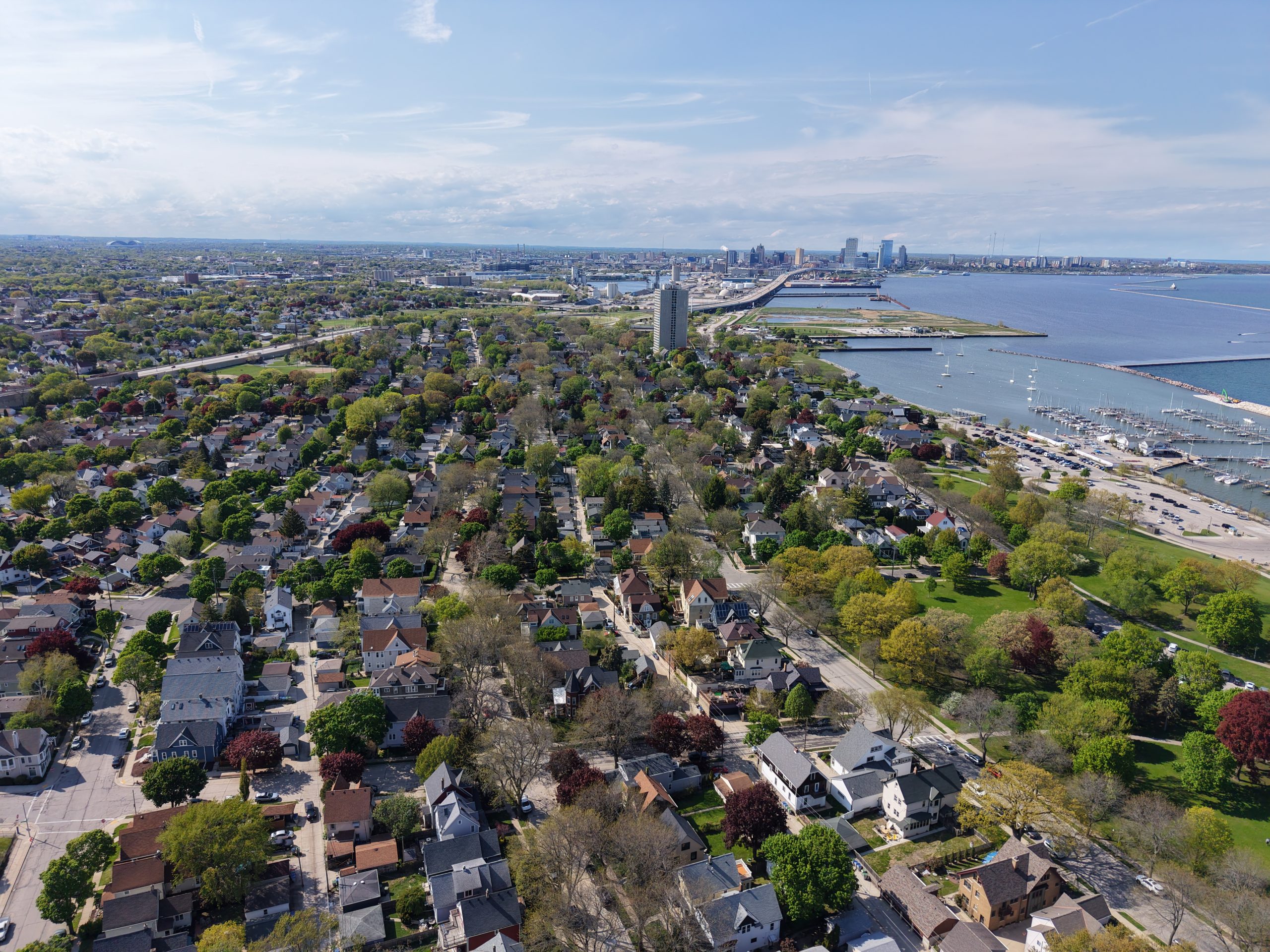
Bay View and the Milwaukee skyline. Photo by Urban Milwaukee staff.
Every day at The Overhead Wire we sort through over 1,500 news items about cities and share the best ones with our email list. Each week, we take some of the most popular stories and share them with Urban Milwaukee readers. They are national (or international) links, sometimes entertaining and sometimes absurd, but hopefully useful.
Making the case for a revolving housing fund: Maryland’s housing goals are big and the state has mostly used federal low income housing tax credits to invest in the sector. But to go even further in supporting housing production for different income levels, Montgomery County has shown the way with it’s revolving loan fund which gives developers more certainty and the county reinvestible revenue over the long term. Maryland could do the same with a $250m fund that builds more housing while seeding future needs. (Zachary Marks and Tom Coale | Maryland Matters)
Japan’s heritage houses: Kominka, or Japanese folk houses built using traditional methods, are becoming vacant at a fast pace due to population decline. Many of them are disappearing each year as young people can build homes they like for similar prices. To save these homes, people and companies have been deconstructing them and sending the materials, sometimes beams can be 200 years old, to the United States to be used for building projects. (Tim Hornyak | New York Times)
Street layouts impact housing numbers: One of the missed elements of the housing production discussion is how street network hierarchies and network designs determine what housing can be built where. Housing permissions are important, but filtered through subdivision development standards, they can be limited by roads that reduce the amount of housing development potential currently, and in the future. (Naama Blonder | Planetizen)
Reducing the stress of delivery drivers: New research shows that delivery drivers can benefit from curb management practices that reduce stress and improve working conditions. By allowing for 90 minute delivery windows with reserved space, Borough Market in London has been able to reduce increased driver miles. The study also found driver’s stress levels increased when looking for parking. (Tom Stone | Traffic Technology Today)
$200 to work from home: A California landlord included a $200 additional fee for people that would be working from home in a rented property. Some landlords around the country are adding more to rents in order to cover the cost of electricity and heating. But this particular listing has since been taken down after igniting a firestorm of criticism in an already expensive housing market. (Jessica Guynn | USA Today)
Quote of the Week
This idea was accompanied by another realization: while urban planning often focuses on walkability, the concept of permeability should be an accompanying goal in designing cities. Whereas walkability defines pedestrian ease and comfort, permeability addresses the physical layout and network connectivity of an environment, measuring characteristics like spatial geometry and intersection density.
–Blaine Brownell in Architect Magazine discussing the idea of permeability in pedestrian oriented transportation thinking.
This Week on the Talking Headways podcast we’re joined by Bill Fulton who has worn many hats including mayor, planning director, think tank director, publisher, professor and currently can be found writing on Substack at The Future of Where.
Want more links to read? Visit The Overhead Wire and signup.
If you think stories like this are important, become a member of Urban Milwaukee and help support real, independent journalism. Plus you get some cool added benefits.


Transportation
-
MCTS Running Extra Brewers Parade Buses
 Oct 29th, 2026 by Graham Kilmer
-
Toll Roads Becomes an Issue in Wisconsin’s Race for Governor
 Oct 26th, 2026 by Rich Kremer
-
Wisconsin Wins $218 Million Grant To Extend Hiawatha To Madison
 Oct 16th, 2026 by Jeramey Jannene
Urban Reads
-
How Miami Is Activating Space Under a Rail Viaduct
 Oct 25th, 2026 by Jeff Wood
-
How to Build a More Equitable Congestion Pricing System
 Oct 18th, 2026 by Jeff Wood
-
The Burden of Car Dependence
 Oct 10th, 2026 by Jeff Wood