How to Build a More Equitable Congestion Pricing System
All the city news you can use.
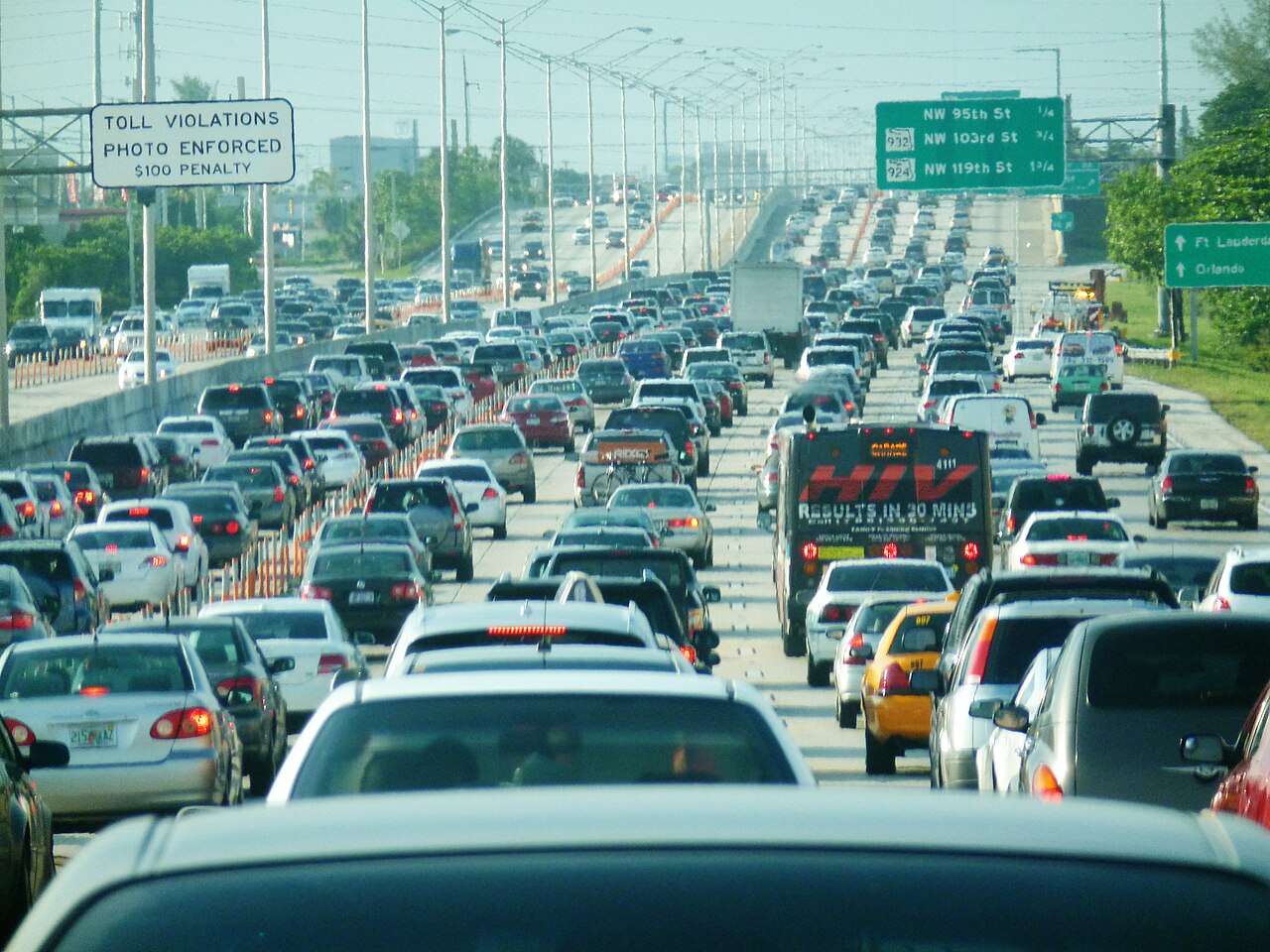
Congestion. File photo by B137, CC0, via Wikimedia Commons
Every day at The Overhead Wire we sort through over 1,500 news items about cities and share the best ones with our email list. Each week, we take some of the most popular stories and share them with Urban Milwaukee readers. They are national (or international) links, sometimes entertaining and sometimes absurd, but hopefully useful.
Progressives won’t always push stated priorities: Beth Osborne of Smart Growth America writes that even though progressives and liberals often claim to be the champions of safe streets and active transportation, their legislative actions often land far below their stated objectives. While governors like Inslee and Newsom or states like Oregon claim to be climate champions, their actions and actual budget spending on transportation often went against these stated goals. (Beth Osborne)
Can an urban development thrive in Utah’s sprawl? A new dense development on a former industrial site in Vineyard Utah is taking off next to a commuter rail stop. But newly elected leaders are trying to scale back the project to be more car oriented and don’t like the public subsidies helping the development move forward. The new mayor even claims no one wants density along the Wasatch Front. But former officials believe that it’s easy to get folks angry about things and tear something down that takes time to build. (Leia Larsen | Salt Lake City Tribune)
Tradeable mobility credits: David Hensher at the University of Sydney has created a system he believes is more equitable for building a congestion pricing system. By using tradeable credits that act similar to climate cap and trade programs, transportation system users would be given a base rate of mobility credits then be able to purchase or sell them to others based on increasing travel needs or savings. Instead of a system of disincentive alone, this one would create rewards in addition to constraint. (David Hensher | University of Sydney)
Stadiums to housing: As sports teams cajole cities to build new stadiums, the old ones and their usually urban land are being eyed for redevelopment as housing or other uses. While some like Candlestick Park in San Francisco were demolished for a completely new site plan, some are being flagged for partial preservation such as Salt Lake City’s which uses parts of the old stadium as part of the development plan. Larger projects like Houston’s Astrodome face headwinds from private investment but the potential is there to build something interesting. (Ben Ikenson | Dwell Magazine)
How China became rich: Works in Progress writers suggest that China’s cities played a large roll in the country’s wealth creation, acting as boosters and entrepreneurial enterprises trying to win at a great national level competition for resources and prestige. Some of the country’s most recognizable brands from electric cars to drones were encouraged through special economic zones or city investments. And bureaucratic officials are scored on their success meaning more economic wins will elevate them to higher positions. (Ben Southwood and Robin Rivaton | Works in Progress)
Quote of the Week
We need short-term welfare solutions so that no one lives in precarious conditions. But rather than tackling problems after they arise, governments need to shape the housing market in advance. Impose conditions on developers, curb speculators and build a social housing sector large enough to set construction terms, as Vienna has done.
-Italian American economist Mariana Mazzucato discussing in El Pais why housing is a human right and how she would approach the problem.
This week on the Talking Headways podcast we’re joined by the director of UNC Charlotte’s school of Architecture Blaine Brownell. We talk about the role architecture and urbanism play in population decline, the need for permeability in walkable neighborhoods, and a revolution in building materials.
Want more links to read? Visit The Overhead Wire and signup.
If you think stories like this are important, become a member of Urban Milwaukee and help support real, independent journalism. Plus you get some cool added benefits.


Urban Reads
-
The Burden of Car Dependence
 Oct 10th, 2026 by Jeff Wood
-
Philadelphia’s Green Street Projects Promote Walkability
 Oct 4th, 2026 by Jeff Wood
-
What Can Be Done About America’s Housing Crisis?
 Sep 27th, 2026 by Jeff Wood