
‘Beneath the Surface’ at the Milwaukee Art Museum
Exhibition charts four eras of American mining photography, from 19th century boosters to sharp modern critiques.
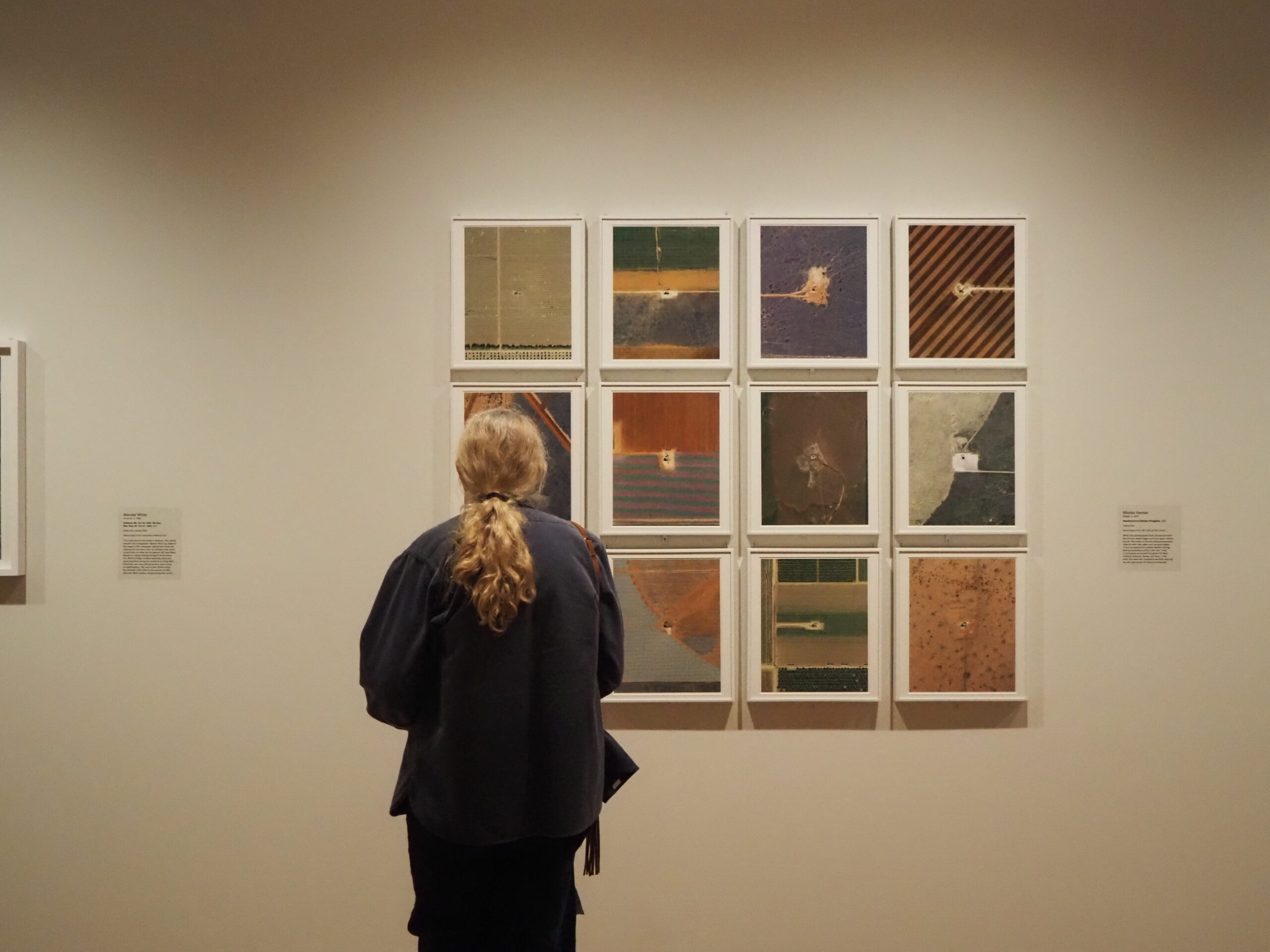
Visitor viewing selections from Mishka Henner’s Eighteen Pumpjacks at Beneath the Surface. Photo by Lauren Hafeman on Nov. 5, 2026.
How has photography shaped public understanding of mining? How have photographers considered and captured the environmental, social and human consequences of extractive activities over time?
These questions anchor “Beneath the Surface: Mining and American Photography,” a new exhibition at the Milwaukee Art Museum‘s Herzfeld Center for Photography and Media Arts.
Organized into four distinct sections by time period, “Beneath the Surface” walks visitors through 180 years of mining photography history, from photographs taken in the 1800s to contemporary works captured in the 2000s. It examines how photographers documented social and political issues related to extraction, as well as changing aesthetics and artistic attitudes around photography.
“What this show tries to do is celebrate, admire and maybe dream about the ways photographers have tried to show us extraction and how they’ve built our imagination around extraction,” said Kristen Gaylord, the show’s co-curator and the museum’s Herzfeld curator of photography and media arts, at a gallery talk on Nov. 5.
For those who are art- or photography-curious and perhaps skeptical of how interesting or accessible a show about extraction photography is, Gaylord told Urban Milwaukee, “We all look at photos every day, so my hope is always that photo is an entry point medium for people. There is no prior knowledge required, like there maybe is for abstract conceptual paintings.”
She added that the show is not just for art aficionados, but also for people interested in history and environmental issues. She said the show is especially relevant for those engaged in the ongoing environmental battles around mines and pipelines in northern Wisconsin.
Many of the 19th-century photographs in the first section, titled “Foundations, 1840-1900,” were taken by photographers commissioned by railroad and mining companies, who would use the photographs as marketing tools to solicit investments and funding.
“I think photographs are slippery,” Gaylord said, referencing photos where early mines are pictured interrupting untouched landscapes. “I think contemporary eyes look at these pictures with a very different lens. We might look at that picture and be really sad, or mournful, or imagine what could have been. But that is not what the pictures were meant to do at the time.”
The second section, “Expansion, 1900-1950,” is centered on photographs taken by social documentary photographers of the Great Depression era who were early explorers of the human and environmental costs of extraction. The works in this section document miners, child laborers, families, union workers and strikers contributing to, and impacted by, the American extraction industry.
“The people who make social documentary images want to change something. They are not neutral observers. They are trying to shift public opinion,” Gaylord said.
“A Lonely Job” by Lewis Wickes Hine, an acclaimed photographer born in Oshkosh and referred to as the father of documentary photography, is included in this section. It was taken in 1911 and documents Willie Bryden, a 13-year-old boy working in Pennsylvania as a nipper, a job that entailed sitting alone in the dark for hours to open and close mine doors for traveling coal carts. In a long caption, Hine described how the dampness of the mine affected the boy’s health.
Aesthetically, photographers of this era were largely concerned with “fidelity, accuracy, truthfulness and what the camera could do itself,” Gaylord said.
The exhibition’s third and fourth sections, titled “Consequences, 1950-2000” and “Connections, 2000 to Now,” respectively, offer visitors a look at how modern and post-modern photographers sharpened both their critiques of extraction and visual approaches.
“In this postwar era, we get away from picture-making based on commissions and enter a much more fine art realm, which means we’re also entering a much more critical realm where artists are driving political and social conversations,” Gaylord said. It’s in this era, she added, that many artists began to attract viewers through visual beauty, striking color and photographic size and then try teach them something about what is documented in the picture.
One of the exhibition’s largest and most striking works is located in section three, where photographer Richard Avedon captured Tom Stroud, an oil field worker in Oklahoma, in 1980, leaving the field covered in oil and dirt. The photograph captures Stroud is staring directly down the barrel of the camera lens against a strikingly white sky.
“It makes you confront the dignity of the worker,” Gaylord said of the piece. “We’re not just looking at him; he’s looking back at us.”
Another powerhouse photograph is located in section four. Taken by Mitch Epstein in 2004, it captures the Amos Coal Power Plant in West Virginia looming over a serene and colorful suburban backyard. It’s part of a larger collection by Epstein that links energy production sites across the U.S. to political, corporate and market powers.
“Beneath the Surface,” overall, is an endlessly fascinating exploration of American history and extraction photography. On Dec. 11, Gaylord will host a second gallery talk, where she walks visitors through the exhibition to explain its philosophy, mission and works in further depth.
Learn more about “Beneath the Surface” on the Milwaukee Art Museum’s website. It will be on display until Jan. 18.
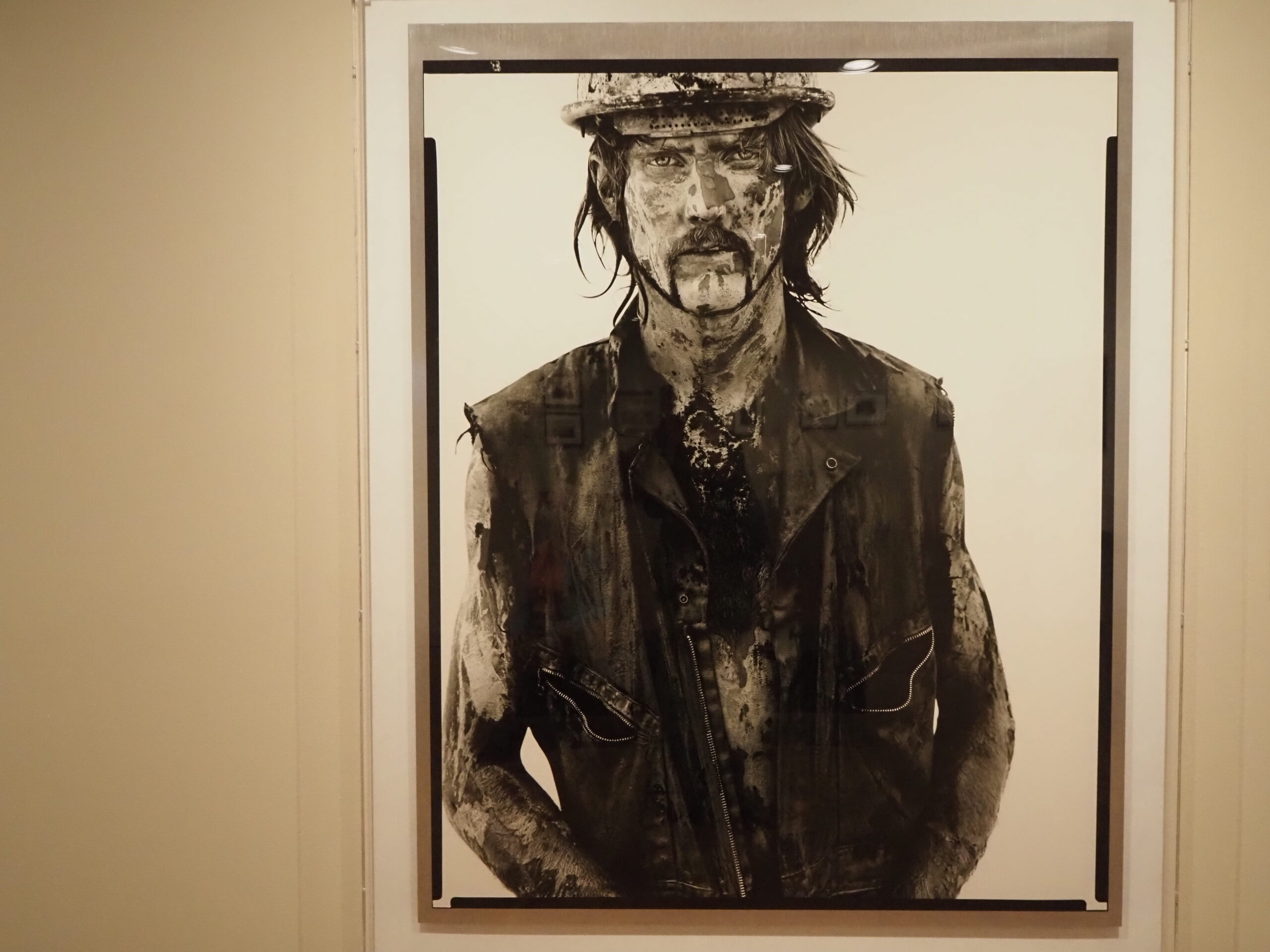
Richard Avedon’s photograph of Tom Stroud. Photo by Lauren Hafeman on Nov. 5, 2026.
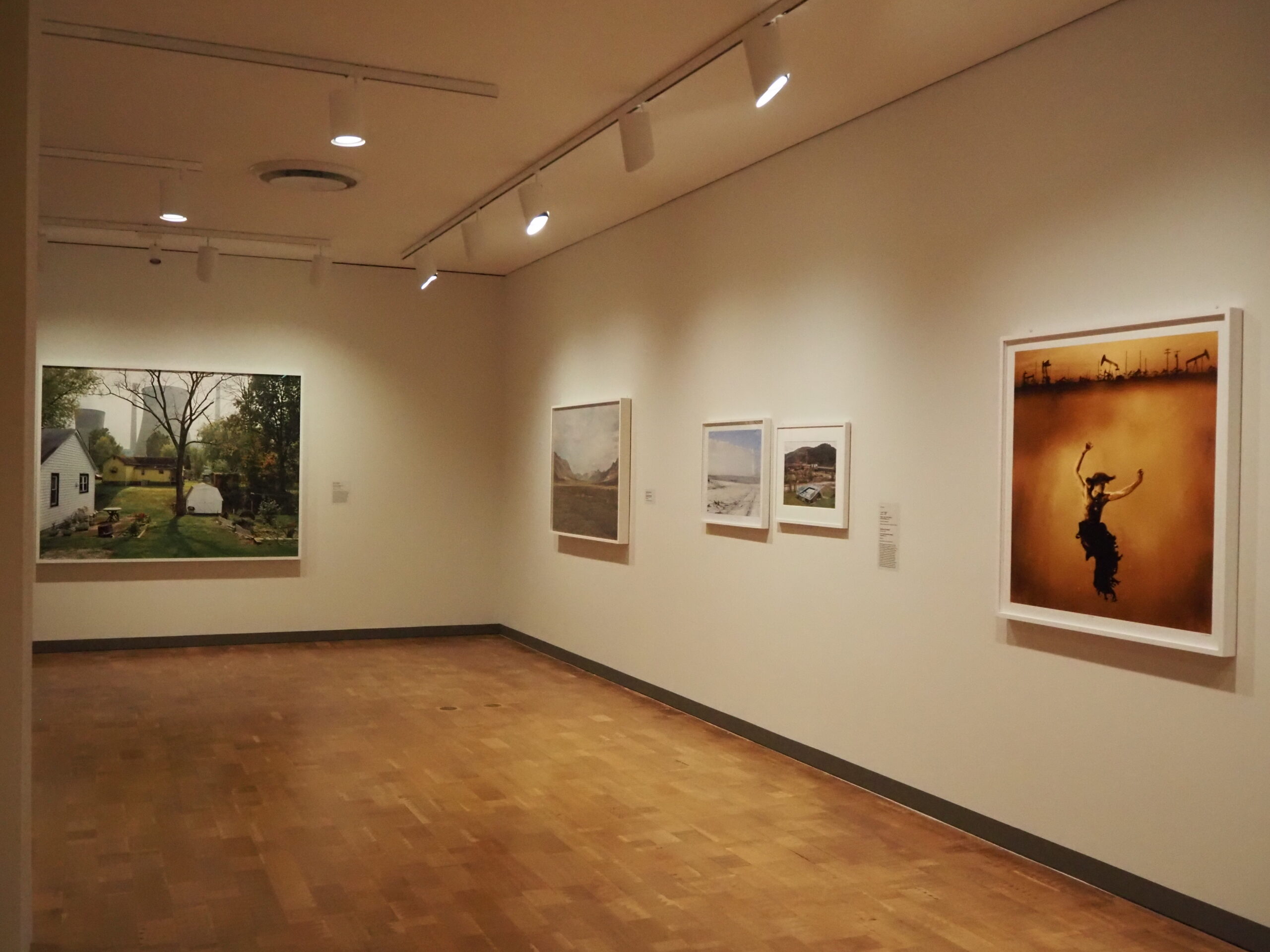
Beneath the Surface gallery shot. Photo by Lauren Hafeman on Nov. 5, 2026.
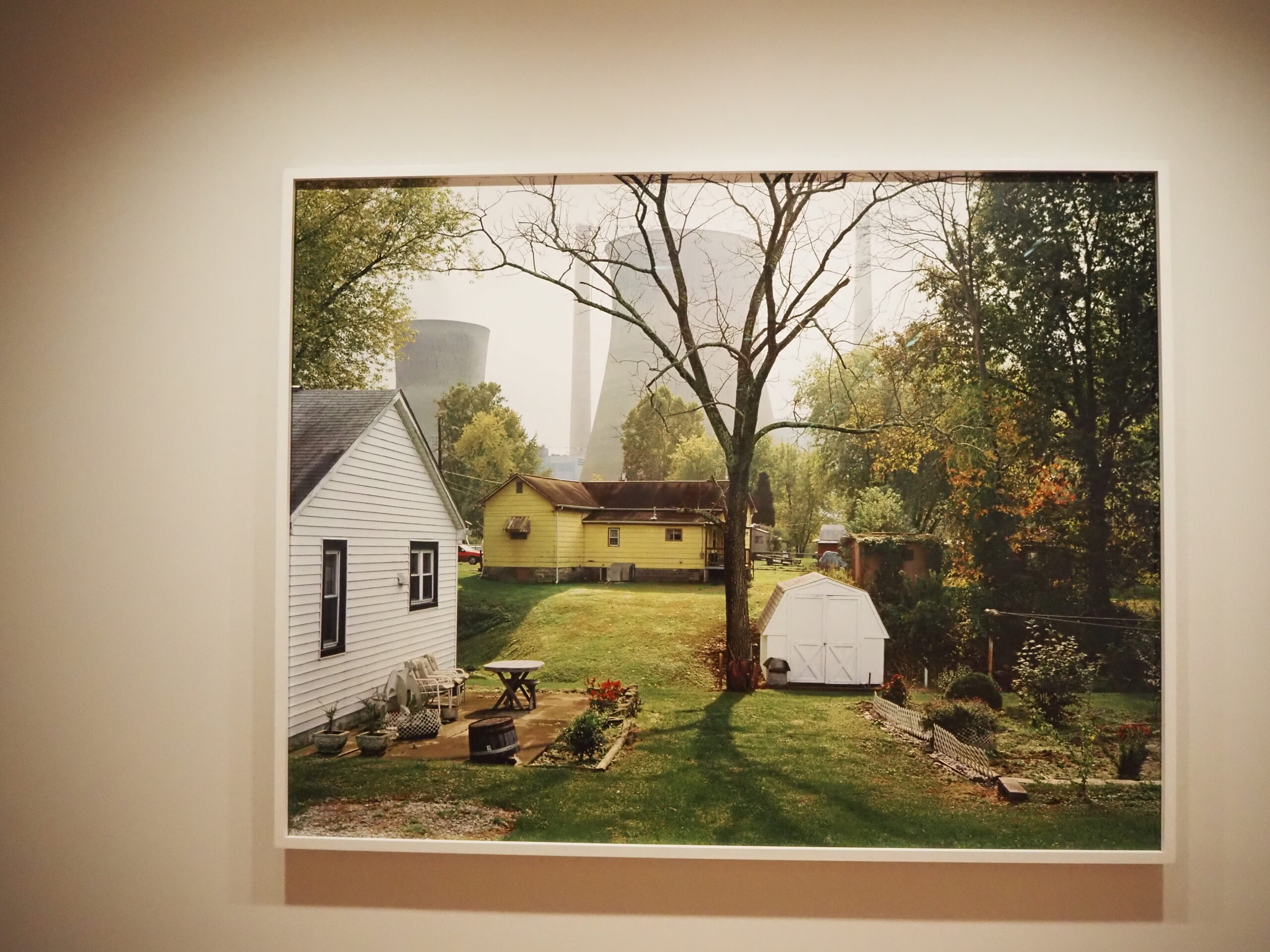
Mitch Epstein’s photograph Amos Coal Power Plant, Raymond City, West Virginia. Photo by Lauren Hafeman on Nov. 5, 2026.

Existing members must be signed in to see the interactive map. Sign in.
If you think stories like this are important, become a member of Urban Milwaukee and help support real, independent journalism. Plus you get some cool added benefits.