How Miami Is Activating Space Under a Rail Viaduct
All the city news you can use.
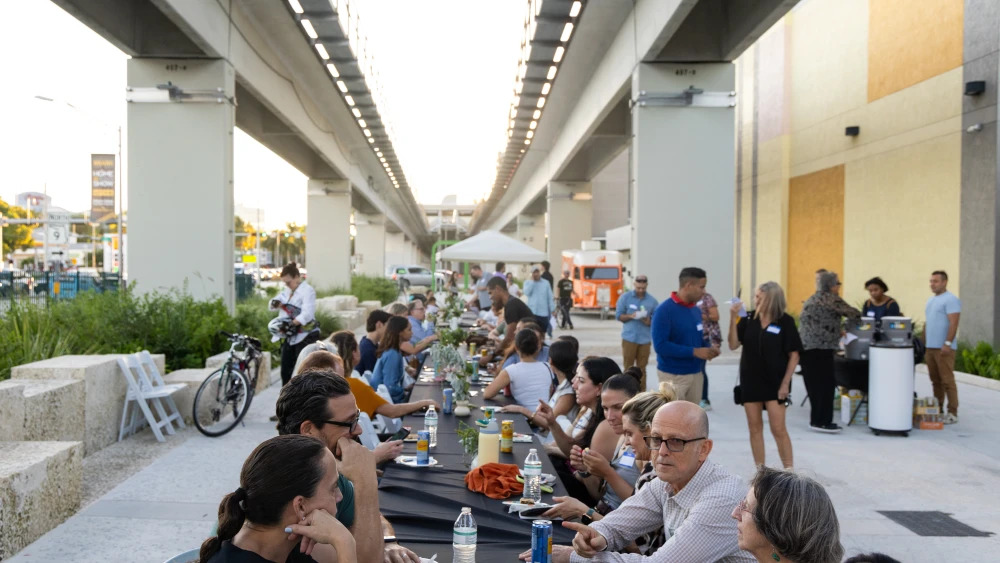
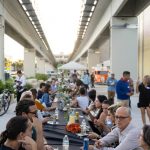
The Underline in Miami. Photo from Friends of the Underline.
Every day at The Overhead Wire we sort through over 1,500 news items about cities and share the best ones with our email list. Each week, we take some of the most popular stories and share them with Urban Milwaukee readers. They are national (or international) links, sometimes entertaining and sometimes absurd, but hopefully useful.
Miami’s Underline continues forward: Miami’s has taken vacant land left below a viaduct that carries trains and made it into a linear park with trails and activity spaces. While 4 km have been completed, 7 more are expected to open by the end of the year, which will make up the 120-acre linear park. The original implementation of the path was derided and suffered from under investment, but now the project has pushed forward thinking about a regional trail network. (Alby Gallun | Urban Land Institute)
The mobility of care: 800 caregivers in Barcelona were asked about their transportation burden and whether greater proximity reduced cognitive workload. The findings suggest that in addition to lower cognitive workload, proximity also reduced conflicts with personal needs and better trip integration. The authors also go on to say that we should move away from traditional accessibility measures and consider more organizational and cognitive metrics that supper giving care. (Serena Mombelli et al. | Journal of Transport Geography)
Don’t tax me bro: A tax revolt is growing around the country spurred by people who are frustrated at having to pay property taxes to fund government services during a time of decreased affordability. While many states are considering it, officials in the know wonder whether a successful campaign would wipe out local government services as we know them. Property taxes raise up to $800B a year for governments and account for 70% of local tax collections, while sales taxes largely make up the remainder. (This article may be behind a paywall) (Liam Dillon | Politico Magazine)
BQE’s gordian knot: Architect Viren Brahmbhatt wonders whether the current plan for the Brooklyn Queens Expressway (BQE) will perpetuate 20th century planning philosophy that has long gone out of style or effectiveness. The question then is not whether the BQE is safe or if the popular promenade should be saved, but what kind of New York do residents want to create for themselves over the next 50 years and whether replacing a highway with a highway is really a different system than the one that came before. (Viren Brahmbhatt | Architect’s Newspaper)
A TOD for horses: The City of Denver has released it’s plan for the redevelopment of the Burnham Railyard which would include a new stadium for the Denver Broncos football team. That plan provides space for affordable housing and inclusion of cultural heritage. But it’s just the start of a larger process towards rezoning, development agreements, and approval. And while the map looks nice, the Broncos still see several steps ahead including a community benefits agreement and a reorganization of the local water utility campus. (Elliott Wenzler | Boulder Daily Camera)
Quote of the Week
“It’s striking that the jumble of dedicated transit sales taxes that many other US jurisdictions rely on isn’t common in high performing transit systems abroad. Oregon transit advocates sometimes bemoan the state’s aversion to sales taxes, but a visitor from Europe might instead observe that we’ve solved the problem that has led other states to adopt those taxes.”
Fisher who writes at UrbanPDX discussing Oregon’s payroll tax that pays for transit operations.
This week on the Talking Headways podcast we are sharing Part 1 of a conversation with Reece Martin of The Transit Brief in Toronto at the Mpact Transit + Community Conference. We discuss the politics and impacts of fare policy, construction costs around the globe, the US’ existential crisis, and the material benefits of progress.


Urban Reads
-
How to Build a More Equitable Congestion Pricing System
 Oct 18th, 2026 by Jeff Wood
-
The Burden of Car Dependence
 Oct 10th, 2026 by Jeff Wood
-
Philadelphia’s Green Street Projects Promote Walkability
 Oct 4th, 2026 by Jeff Wood