
MIAD Students Design Clothing for People with Disabilities
Collaborative project centers Milwaukeeans with disabilities' comfort, style and independence in custom looks.
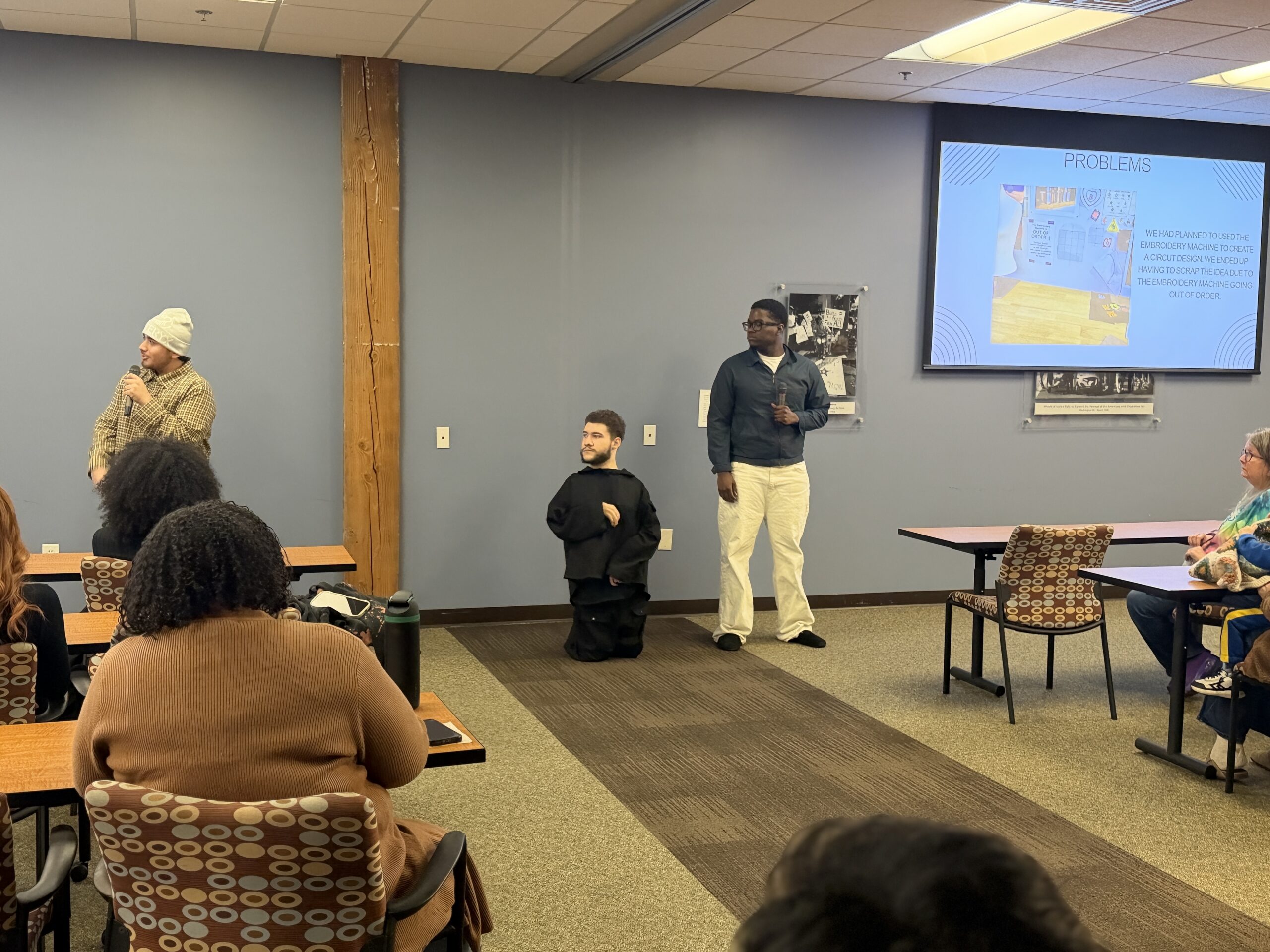
Israel Villafuerte (far left), Tyson Wenzel (center), Matthew Davis (right). Photo by Andrew Levinson.
In a community gathering room at Independence First, Tyson Wenzel stood front and center on Wednesday, wearing a sleek black jacket and matching cargo pants. Standing beside him were Israel Villafuerte and Matthew Davis, students at the Milwaukee Institute of Art & Design (MIAD) and the designers of his look.
The trio’s fashion-forward partnership was born out of a collaboration between Independence First, a nonprofit that empowers people with disabilities to live independently, and MIAD, where 12 students enrolled in a pattern-making and construction course were paired into six groups and connected to people receiving services from, or in some cases working for, Independence First.
The students were tasked with designing garments around the specific adaptive fashion needs of their partner, learning along the way the lived experiences of people who face a mainstream fashion industry that designs clothing for nondisabled bodies and seldom caters to people living with disabilities.
Wenzel lives with arthrogryposis multiplex congenita, a health status characterized by joint stiffness and muscle weakness, walks on his knees and has limited use of his upper limbs. During his group’s presentation, he explained how he uses a clothing hook to dress himself each morning and how his experience with fashion teeters between finding garments that are comfortable but not stylish and garments that are stylish but not comfortable.
Villafuerte and Davis sewed knee pads into the pants to make walking more comfortable for Wenzel. They placed cargo pockets near the neckline of the jacket because Wenzel uses his phone with his mouth. With these pockets, they explained, he does not have to extend his neck as far to access it. They used an elastic waistband to make the pants fit snugly and easier to take on and off. They placed magnetic closures on the front and down the back of the jacket for easier removal and breathability.
At the end of their presentation, Villafuerte said, “I learned a lot, honestly, about the importance of adaptive fashion. It’s something that is mistreated by the mainstream. You go to Target and you don’t find this kind of effective clothing. It’s something that needs to be brought to the front of fashion.”
In a conversation with Urban Milwaukee, Wenzel said, “Every time I mentioned what I wanted, how I wanted it to feel, how I wanted to look, Israel and Matthew were 100% lockstep with me.”
He noted that this was the first time he had clothing made specifically for him and the first time he could put his own fashion needs first.
“I had so much anxiety telling them what I wanted because I’ve never done that before,” he said. “I’ve never had those grounds to say, ‘Hey, this is exactly what I want.’ It was absolutely a wonderful experience.”
Another group included Andi Minster, who works at Independence First, and designers Ro Storrs and Z LaMere. Minster lives with cerebral palsy, a health status that affects her motor function, and was looking for an easy-to-put-on, fall-inspired outfit that made her feel “cool, pretty and fashionable” while at work and out to eat with her husband and friends.
Storrs and LaMere delivered, designing Minster a burgundy collarless blazer, asymmetrically tailored for her left-handedness, and pants made out of legging material designed to look sophisticated and elegant. Like Villafuerte and Davis, they also used magnetic closures, but for Minster, they hid them on the underside of the jacket.
“Things like fasteners get really hard. Putting in magnetic closures is great, but also having a fake button instead of just the ugly magnet thing, or not having the outside look like a magnet, is important for girl fashion,” Minster said.
One attendee in the audience made a statement to the room after all the presentations concluded:
“A lot of these workarounds, tips and tricks that you guys have found in order to fit the body more precisely and comfortably could be used ubiquitously across fashion. I want you all to grasp that things we do for people with disabilities are great for all people of all abilities. Hold on to those ideas, patent these ideas, protect what you guys are creating because some of these ideas are going to be so impactful.”
All six of the Independence First models have been invited to take the runway at MIAD’s 2027 Spring Fashion Showcase in May. Wenzel said he’s planning to join.
Learn more about Independence First’s services on its website.
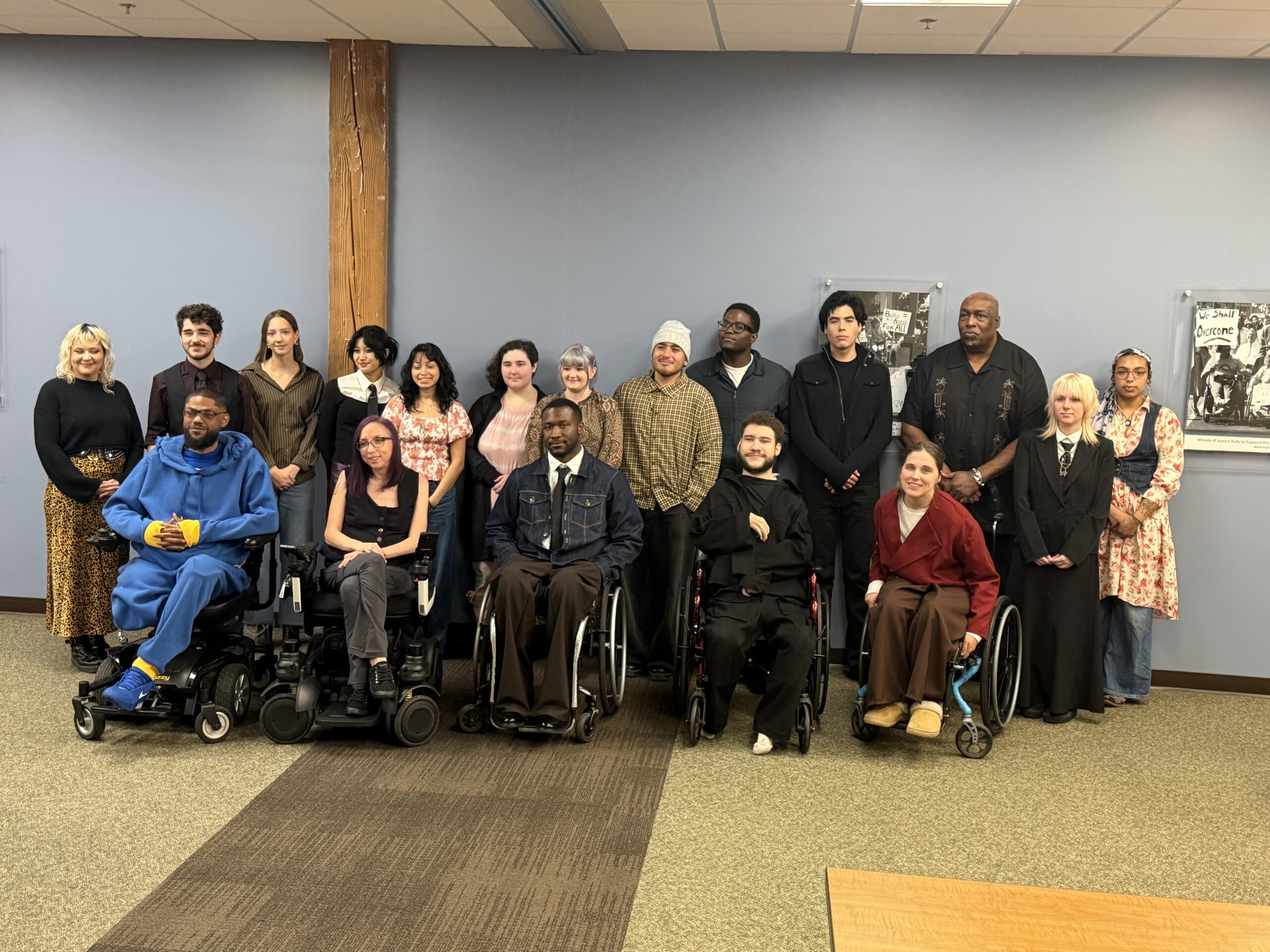
Independence First x MIAD Adaptive Fashion Cohort 2026. Photo by Andrew Levinson.
Existing members must be signed in to see the interactive map. Sign in.
If you think stories like this are important, become a member of Urban Milwaukee and help support real, independent journalism. Plus you get some cool added benefits.