
‘We Drained Our Savings,’ The Long Tail Of Milwaukee’s 2025 Floods
A year later, basements are largely rebuilt, but financial and emotional scars remain.
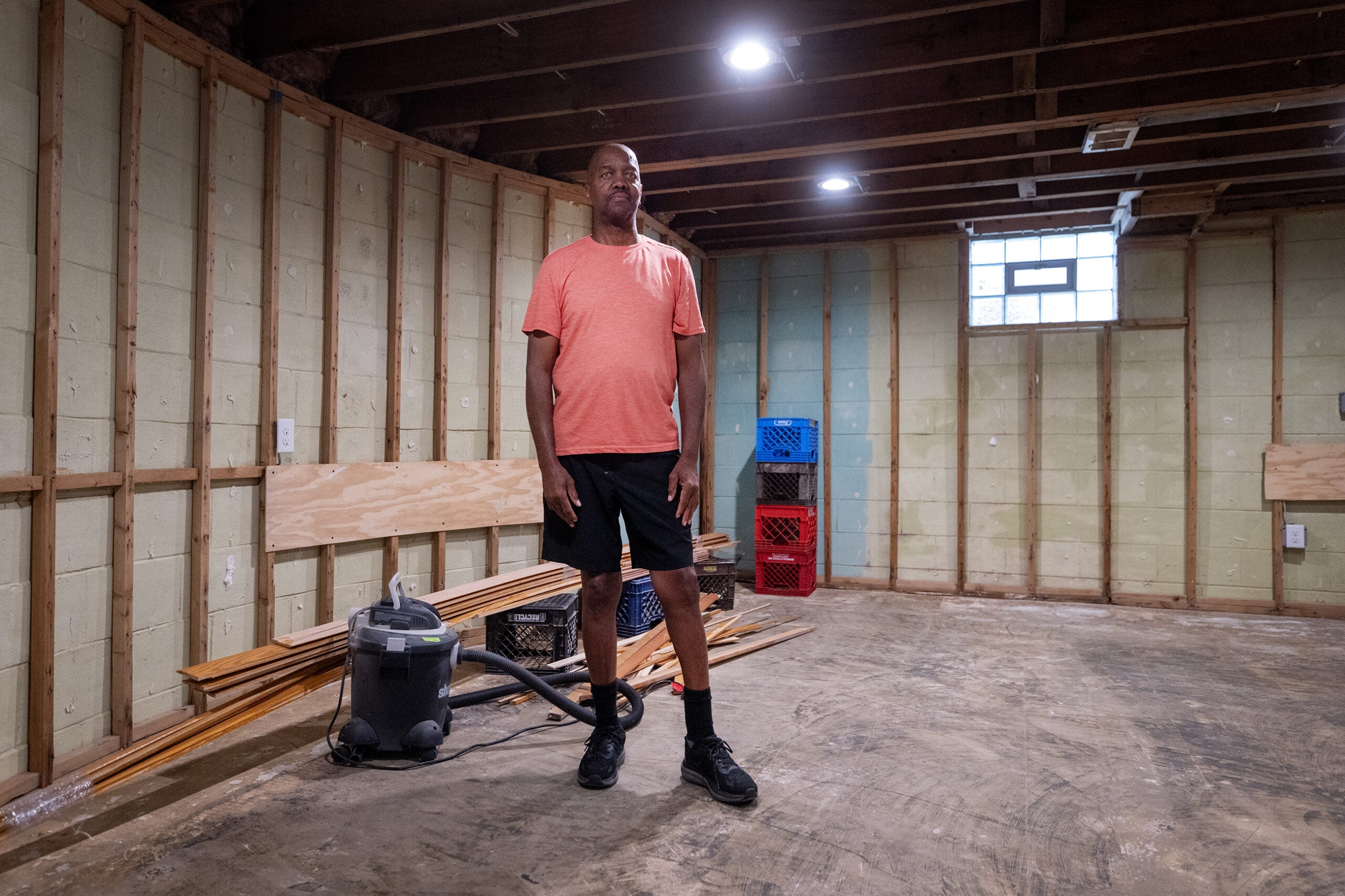
James Moore stands in his basement, which is still undergoing repairs from flood damage, Friday, Aug. 17, 2026, in Wauwatosa, Wis. Angela Major/WPR
James Moore will never forget Aug. 9, 2025.
His wife woke him up in the middle of the night to tell him there was water rushing into the basement of their Wauwatosa home. When he went to investigate, it was already up to his waist.
Outside, the water was up to the front porch of their home next to the Menomonee River.
“You see it on TV in other areas,” Moore said. “Well, now it’s here at our house.”
Moore and his wife decided they would flee their home of 15 years if the water started coming into the first floor of the house.
It eventually did.
“The water kept getting higher and higher and higher,” said Moore. “It stopped raining, then the water went down, and it started back to raining, and it just got worse.”
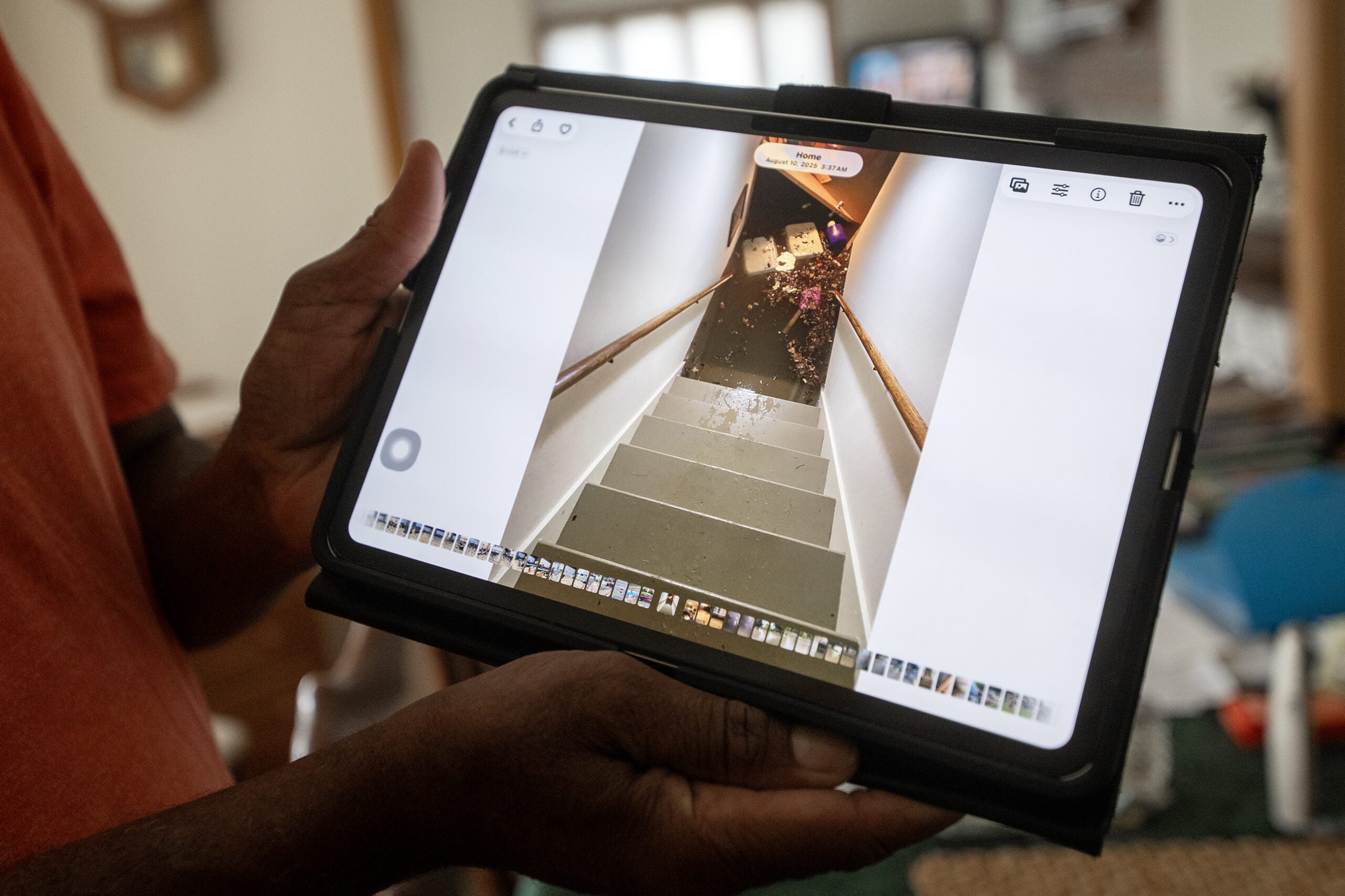
James Moore shows a photo taken in 2025 of flood water creeping up his basement stairs Friday, Aug. 17, 2026, in Wauwatosa, Wis. Angela Major/WPR

James Moore’s wife’s sewing equipment remains damaged from 2025 flooding Friday, Aug. 17, 2026, in Wauwatosa, Wis. Angela Major/WPR
Moore is one of thousands who were affected after a record-breaking rainfall dropped more than a foot of water over areas of southeast Wisconsin in 24 hours.
The storm caused widespread damage, flash flooding and sewer backups. About 70 people were rescued from flood waters in Wauwatosa. Roads were closed, basements and homes were flooded, businesses were shut down, events were canceled. People lost countless souvenirs and keepsakes, as well as washers and dryers, water heaters and furnaces. Some buildings were a complete loss.
The storm destroyed 51 homes, and caused “major damage” to another 1,500 homes in Milwaukee, Washington and Waukesha Counties, according to Gov. Tony Evers’ request for federal financial assistance.
In all, according to the governor’s FEMA request, the floods caused $43.2 million in damage across five counties.
The Federal Emergency Management Agency distributed more than $208 million in assistance to nearly 37,000 households recovering from the disaster.
However, the request for federal aid for public damages was denied, leaving some local governments on the hook for repairs to roads and public buildings.
Now, one year later, flood mitigation efforts are moving forward in the region as climate models predict heavier rainfalls will likely become more frequent in the state. Meanwhile, many residents who were impacted had to dip into their savings and take out loans to help cover repairs.
“The recovery is still ongoing,” Greg Engle, the administrator of Wisconsin Emergency Management, said. “The survivors who were affected by that flooding, many of them … still need assistance.”
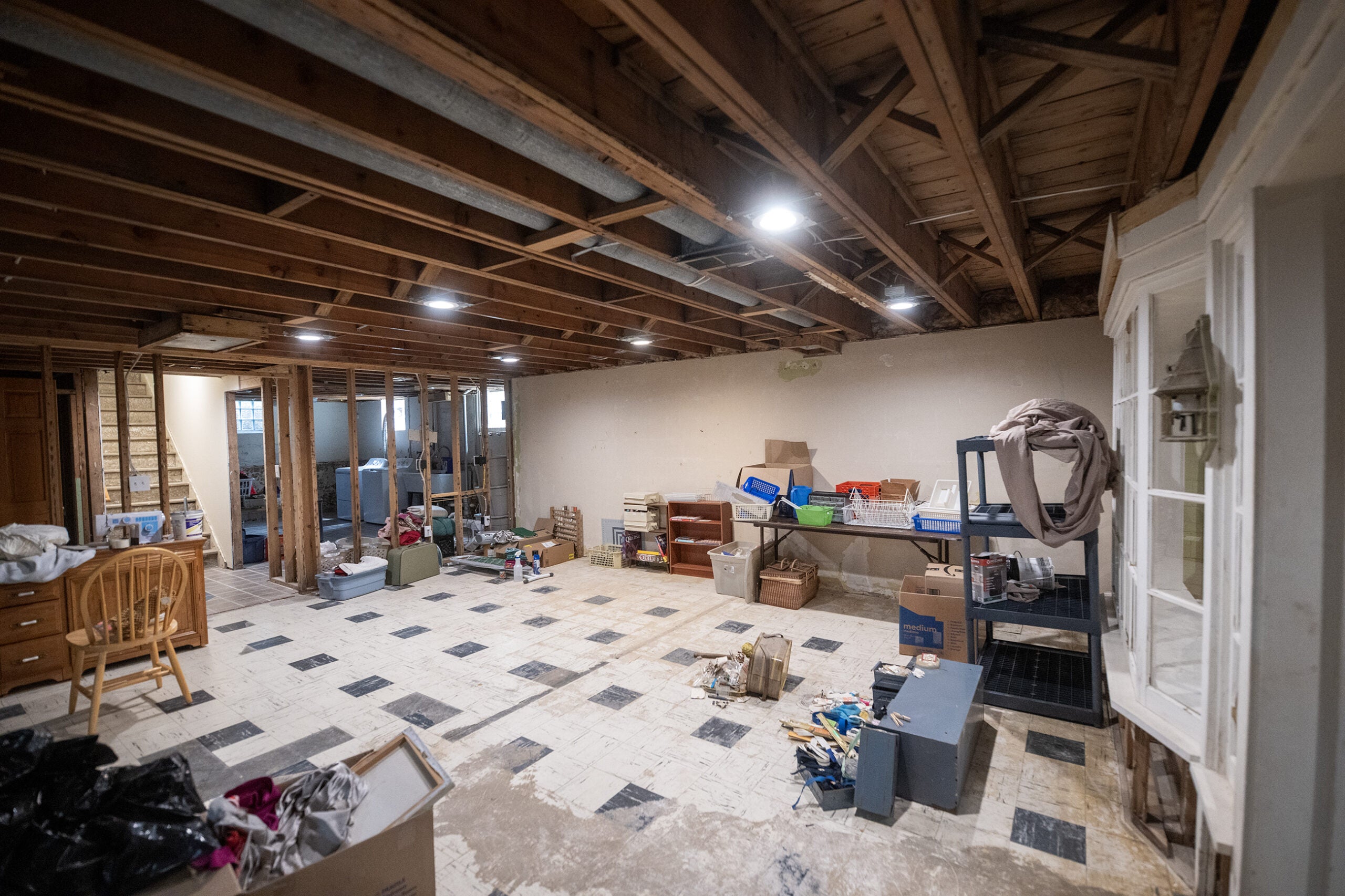
James Moore’s basement on Friday, Aug. 17, 2026, in Wauwatosa, Wis. It is still undergoing repairs after being damaged in a 2025 flood. Angela Major/WPR
‘There’s no system in the world that can handle that’
The rainfall record of 14.55 inches in 24 hours, recorded at James Madison High School in Milwaukee, beat the previous record of 11.72 inches. Elsewhere in the region communities had 6 to more than 12 inches of rain, according to the National Weather Service.
State Climatologist Steve Vavrus equated the totals to a tropical storm.
“This is what you would expect from a hurricane near the Gulf Coast, not in Southern Wisconsin,” Vavrus said.
Kevin Shafer, the executive director of the Milwaukee Metropolitan Sewerage District, said so much rain falling in just a few hours led to sewer overflows.
“There was water everywhere,” Shafer said. “Streets were flooded, basements were flooded, overflows were occurring. Our system got flooded out.”
“There’s no system in the world that can handle that,” he added.
The nonprofit Impact 211 was tasked by affected communities to collect damage reports and give referrals to residents. They collected more than 26,000 reports.
“So it was really, really kind of unprecedented to see that many reports filed for any kind of disaster, really in the whole state, going back many, many years,” said Bob Waite, senior account manager for Impact 211.
Residents of the 53218 ZIP code on Milwaukee’s northwest side filed 4,222 reports with Impact 211, the highest number in the region. According to the agency, an estimated 30.8 percent of households in that ZIP code are below the poverty line.
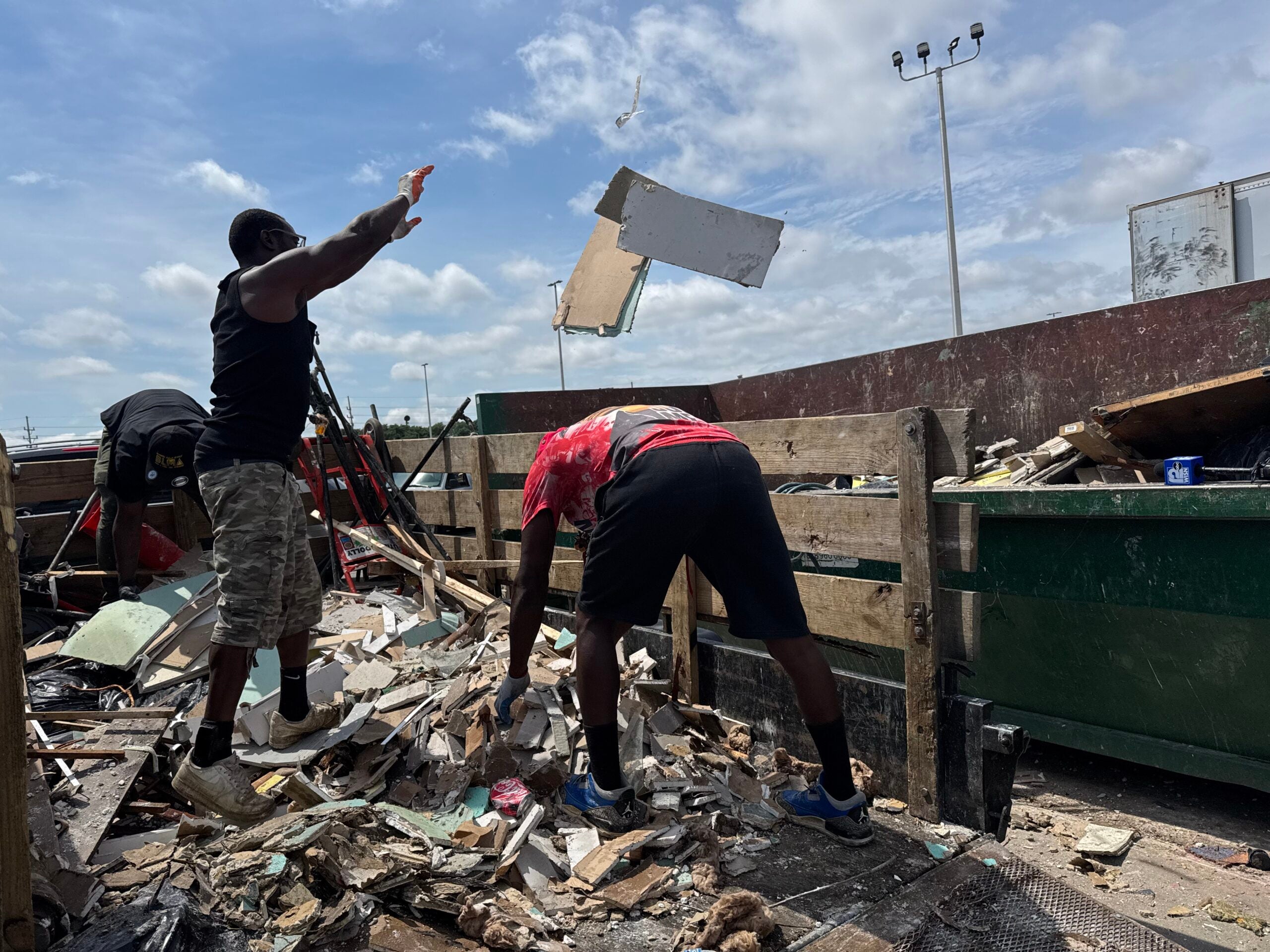
Milwaukee residents throw away items ruined by flooding at a drop off center in the city on Monday, Aug 11, 2025. Evan Casey/WPR
Residents living in the 53206 ZIP code on the city’s north side were also hit hard, with over 600 reports filed. Over 56 percent of households who reported damage in that area said they had no insurance.
“The impact of the event was really hitting people that were already struggling … just trying to get resources in their homes on a regular basis,” Waite said. “Now you throw an event like this in, and it really put people in a really difficult position.”
After the initial damage reports came in, Waite said there was a sustained period of people looking for help “just trying to get their basic needs met.”
Over 15,000 of the reports listed “financial assistance” as a need created by the flooding. People also reported needing help with mold remediation, vehicle repair, shelter or housing, food and major appliance repair or maintenance.
‘It was like a full-time job’
Eric Truss of Wauwatosa had around 6 feet of water in his basement. The water broke through his basement windows and destroyed everything he and his family had in the space — the furnace, electrical panel, washer and dryer, furniture.
“I work down here, so I had two desks, computer monitors, workout equipment, all of our personal items — Christmas decorations and Halloween decorations and pictures and old yearbooks,” Truss said. “Literally everything we have.”
Truss, 37, said the repair work in his basement was just completed this summer.
“It did almost take a full year to get everything fully functional,” he said. “Yeah, it’s been a long process.”
He and his wife have been living in the home for five years. They got around $20,000 from FEMA and around $5,000 from their insurance for the backup. But he estimated the total damages were around $85,000 to $100,000.
“We drained our savings,” Truss said, and took out three loans.
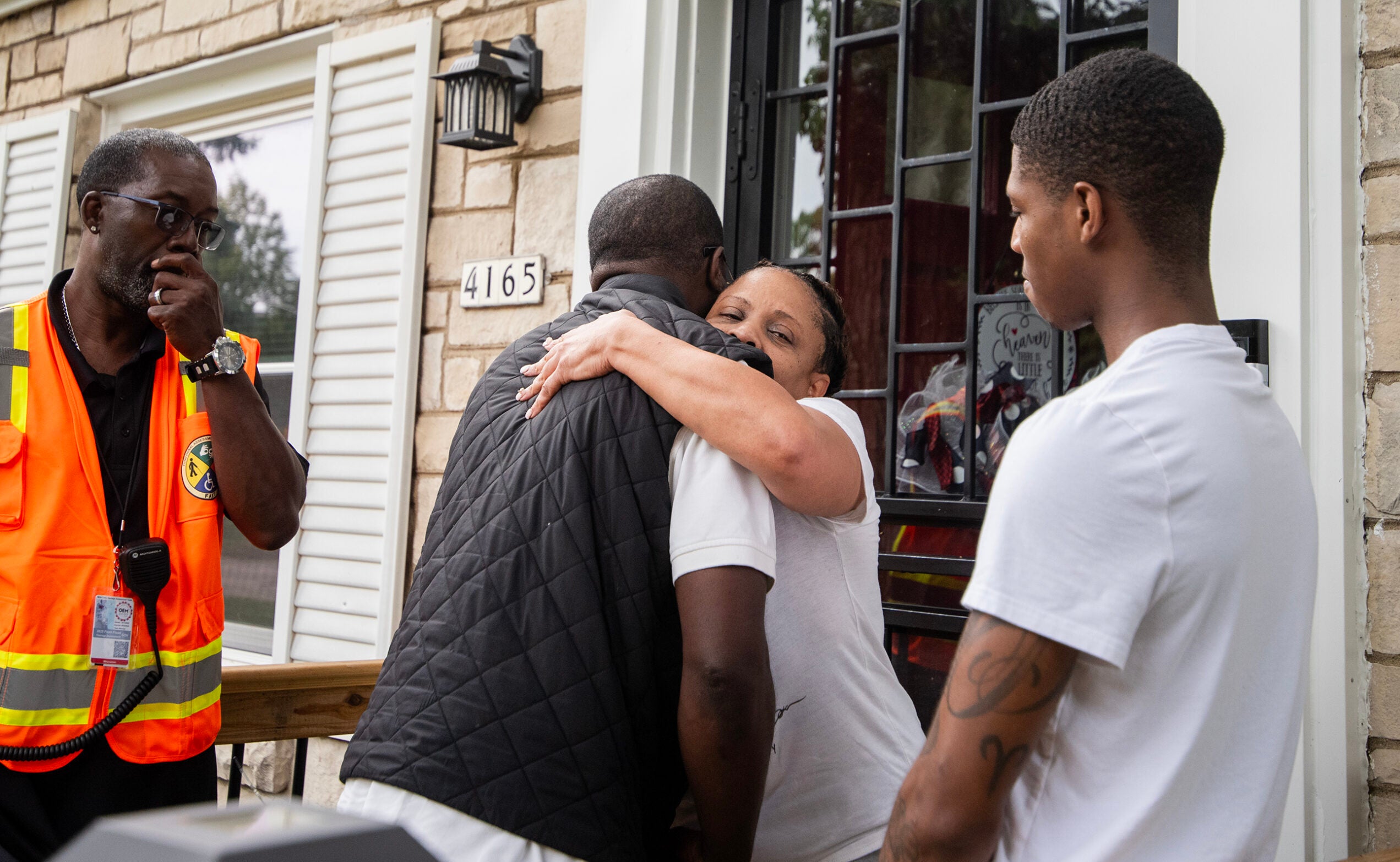
Milwaukee resident Collette Anderson hugs Milwaukee County Executive David Crowley as he visits her home in the wake of flooding throughout the city Tuesday, Aug. 12, 2025, in Milwaukee, Wis. Angela Major/WPR
Collette Anderson’s basement also flooded from the August storm. But this wasn’t the first time — her basement also flooded over a decade ago from a backup. She waterproofed her walls after that disaster, but she said the water got a few feet high during the August storm.
“I still lost just about everything down there,” said Anderson, a Milwaukee resident. “Had to replace that washer, dryer, water heater, furnace. So yeah, it was bad.”
She also had to throw away supplies for her side business making baskets for special occasions. She took two weeks off from her job to deal with the mess and the cleanup.
“It was like a full-time job, and every day I had somebody different coming over to help me throw out stuff or take stuff to a dumpster,” Anderson said. “I feel like I had to call a village because it was overwhelming.”
She said she received around $10,000 from FEMA. She also got $5,000 from her insurance. She said FEMA and her insurance was able to cover the costs.
“Now when it rains, I say, how heavy is the rain gonna be,” Anderson said. “Especially around this time, the summer, it’ll always get me.”
As of July 28, over $36 million in loans have been disbursed to businesses and homeowners by the U.S. Small Business Administration to people impacted by the disaster. Moore was one of the people who received that help.
After the storm, he needed to replace the walls and floors on the first floor of his house. Moore received around $50,000 from FEMA, around $15,000 in private donations and a loan from the U.S. Small Business Administration.
While some of the damage has been repaired, Moore said he no longer feels the same way about his property.
“The house is rebuilt, but it’s just not the same house,” Moore said. “I don’t have the same feeling that this is my home.”
‘We’re still recovering from that’
Cassandra Libal, the executive director of Milwaukee County’s Office of Emergency Management, said around $58 million in public damages and operating costs occurred in the county from the disaster. Libal said debris removal was also a major cost for local municipalities.
“So just the operating costs of removing debris and then processing that debris, extended manpower hours,” Libal said. “So all of those things all added up to part of this damage.”
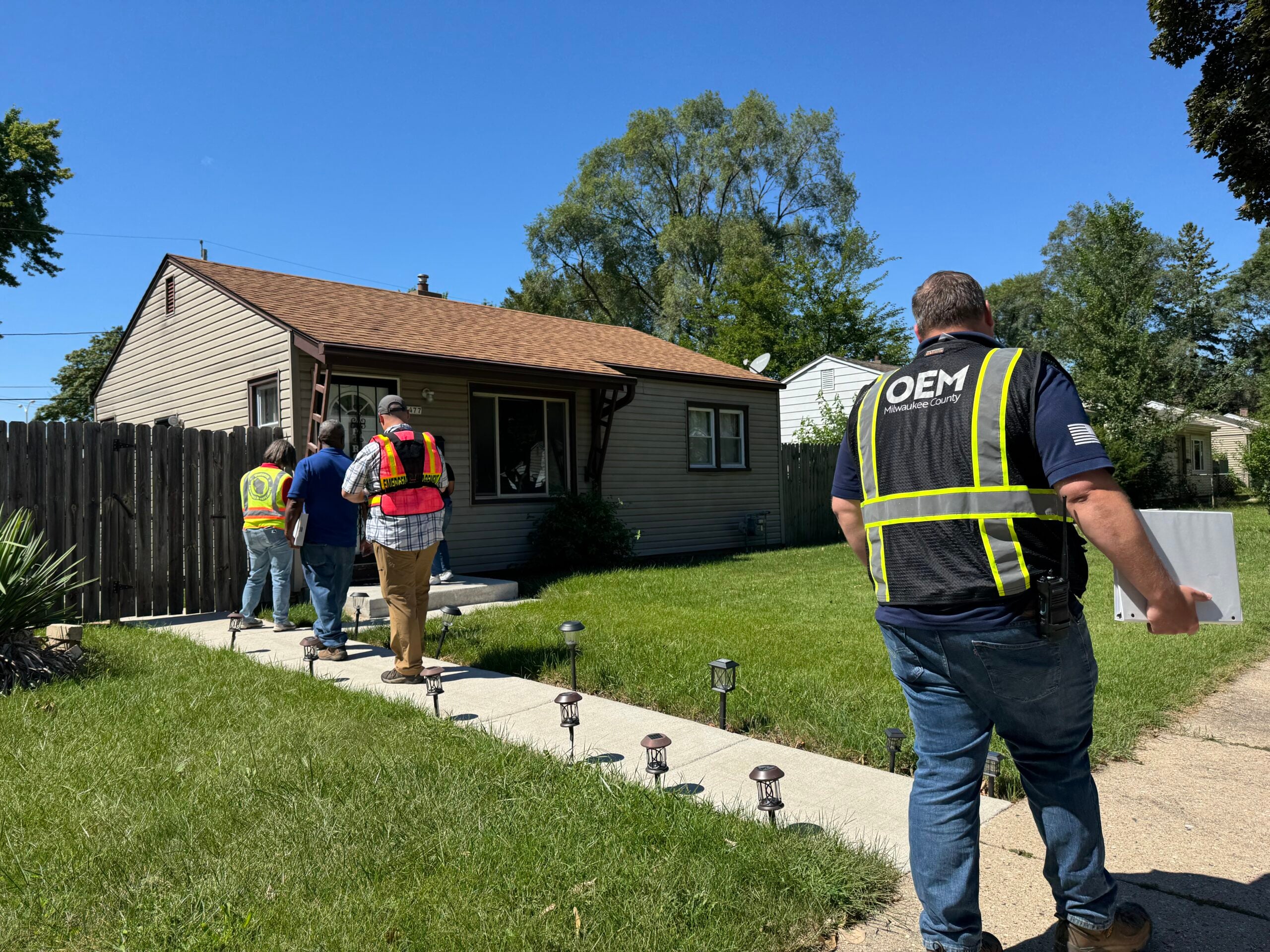
Staff with FEMA are seen here assessing storm damage in Milwaukee on Thursday, Aug. 21, 2025. Evan Casey/WPR
Waukesha County saw nearly $2.2 million in damages to public infrastructure, according to Alex Freeman, Emergency Management Coordinator for Waukesha County.
David Simpson, Wauwatosa director of public works, said the power of the flood water caused significant damage to Hart Park, a 52-acre park next to the Menomonee River.
“The water had such force that it could literally lift the pavement and destroy it like that, which is, I mean — I’ve never seen it in my whole life, anything like this,” Simpson said.
The water also damaged the artificial turf on the football and soccer field at the park and flooded the basement of a city building on the property.
The city of Wauwatosa won’t receive any federal funding from FEMA to help pay for public repairs because of the denial. Simpson said “local taxpayers and donations” are covering the costs. The city received a $1 million donation for park repairs.

The football field at Hart Park is damaged from a storm Tuesday, Aug. 12, 2025, in Wauwatosa, Wis. Angela Major/WPR
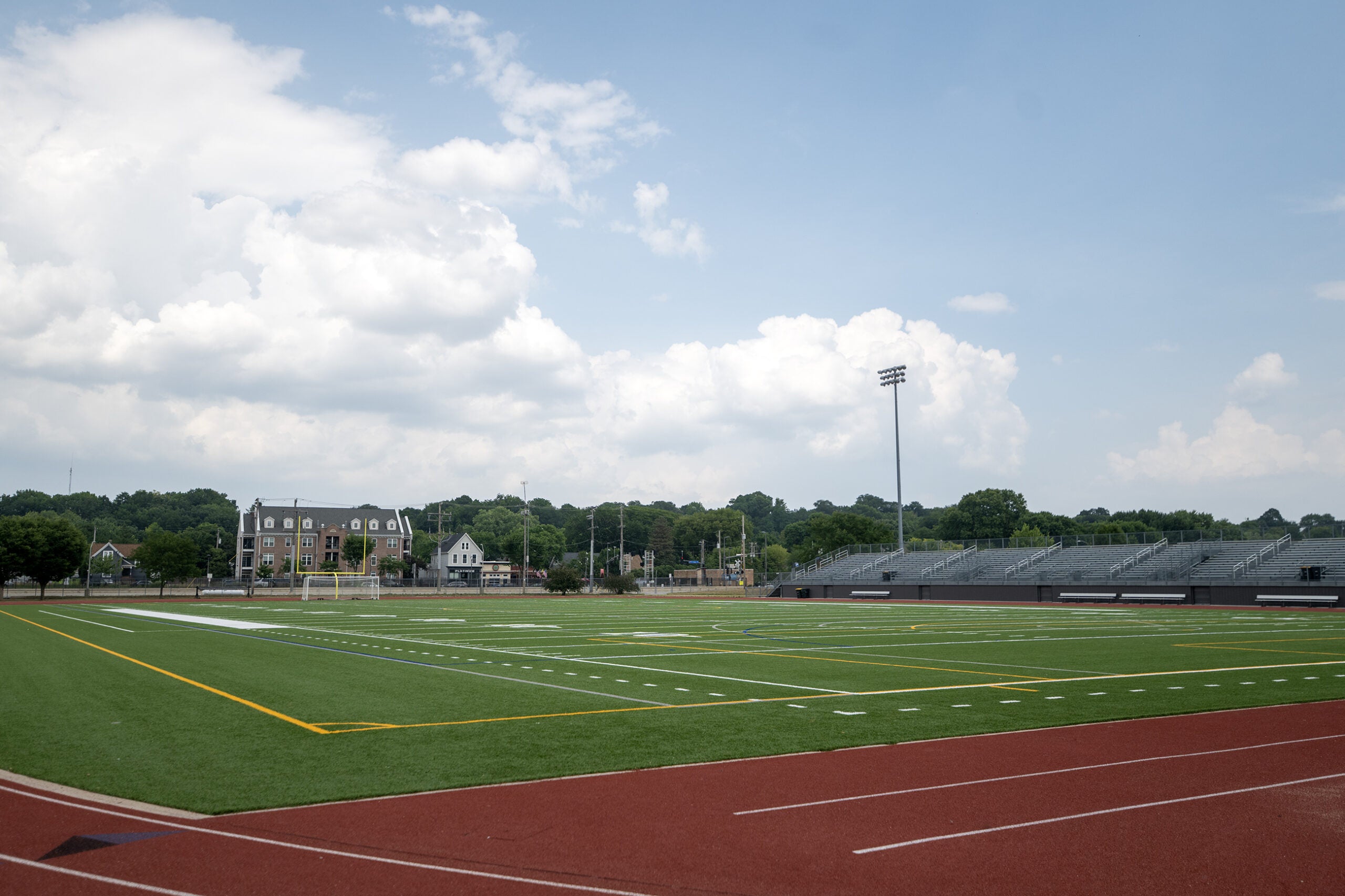
A football field at Hart Park is repaired and used for sporting events and practice Friday, Aug. 17, 2026, in Wauwatosa, Wis. Angela Major/WPR
The storm also caused more than $10 million in damage to Milwaukee Metropolitan Sewerage District infrastructure. Shafer, the executive director of the wastewater treatment facility and flood management agency for 29 municipalities in the Milwaukee area, said the water bent and damaged gate structures and metal lids.
“It was devastating, and we’re still recovering from that devastation,” Shafer said.
A report from Wisconsin Policy Forum found that since 2000, 23 disasters have been declared in the state. The 2025 disaster “was the only time that public assistance was not approved,” according to the report.
From 2000 to 2025, only 2.7 percent of declared disasters across the nation had public aid denied, according to the report.
“The state has stepped in with some money, but the local governments have had to sort of bear the burden of cleaning up,” said Tyler Byrnes, a senior research associate for Wisconsin Policy Forum.
Engle, with Wisconsin Emergency Management, said he was “disappointed” that the state’s request was denied. Engle said the state does offer some disaster assistance through the Wisconsin Disaster Fund. He said the agency has started processing applications for those funds.
‘We’re certainly seeing more extreme events overall’
A 2026 Wisconsin Initiative on Climate Change Impacts, or WICCI, report found that the climate in the state will, “continue to become warmer and wetter, requiring coordinated action across communities, businesses, industries, and natural resource managers.”
Vavrus, who is the co-director of WICCI, said the state is seeing an “upward trend” in days where there’s a minimum of two or more inches of rain.
“We’re certainly seeing more extreme events overall, and we’re expecting more certain kinds of extreme events in the future, particularly more heavy rainfalls,” Vavrus said.
“The main reason we expect heavier rainfalls in a warming climate, as we’ve seen already, is because warmer air can hold more moisture,” Vavrus added. “That’s just a physical fact.”
MMSD ‘accelerating’ flood related projects
In response to the storm, the Milwaukee Metropolitan Sewerage District, or MMSD, is “accelerating” $96 million in projects to help manage flooding. Those projects will, “add 220 million gallons of flood storage along our rivers, keeping that water out of basements,” according to Shafer.
The work includes four large storage basins. Shafer said the projects were moved up into the “immediate future.”
“That puts a heck of a budget issue that we’re trying to deal with right now,” Shafer said. “But we’re going to get those projects done.”
Shafer said green infrastructure like bioswales, rain barrels, rain gardens and permeable pavement is also part of their effort.
In the region, there is over 170 million gallons of green infrastructure, according to Shafer. He said their goal is to get that number to 740 million gallons.
“Every time it rains, there’s 170 million gallons that’s put into green infrastructure, so it’s not going into the tunnel or into the sewers, or it’s not overflowing to the rivers,” Shafer said. “We need to get closer to that 740 (million) number.”
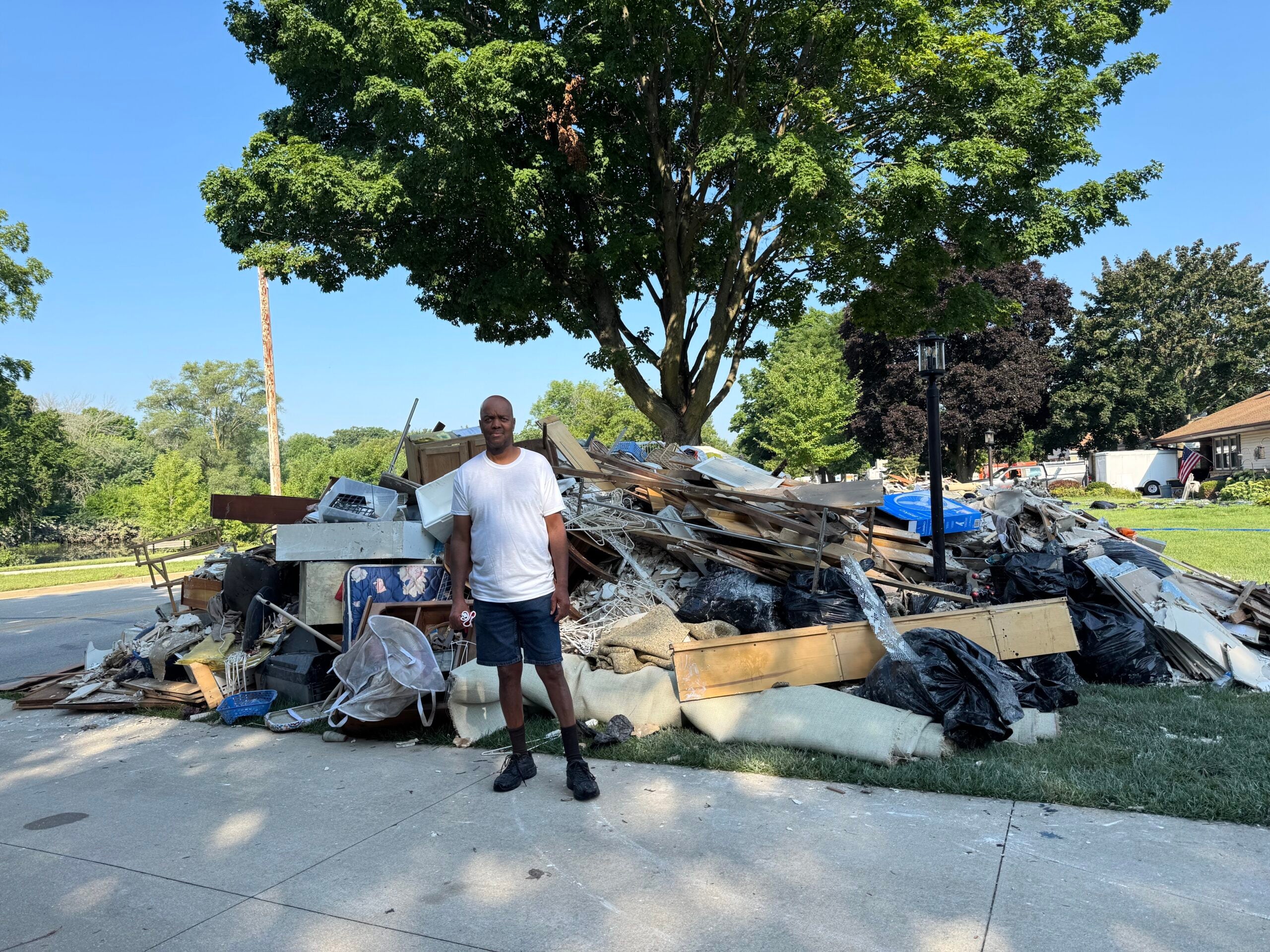
James Moore of Wauwatosa stands in front of damaged items caused by flooding in his basement in August 2025. Evan Casey/WPR
Flooding an ‘increasing risk’ in Wisconsin
Moore said he didn’t have flood insurance at the time of the storm. He does now.
“We could afford flood insurance but I never thought about it,” Moore said.
Sarah Smith, director of public affairs for the Wisconsin Office of the Commissioner of Insurance, said most people in the state get flood insurance through FEMA’s National Flood Insurance Program. She said only around 10,000 residents of Wisconsin have the coverage.
Smith said a standard homeowners’ insurance policy will usually not cover flood-related damage.
“Flooding is certainly an increasing risk here in Wisconsin, so it is a concern for us that not a lot of people know that distinction or have a separate flood insurance policy, which is what they would need to financially protect them in a situation like that,” Smith said.
Smith said more private insurance companies are now offering the coverage. She said people who live in a floodplain are required to have flood insurance.
“The floodplain maps that we have today are not based on increasing climate risks and new areas of concern related to flooding,” Smith said. “It’s just based on historic flooding experience, which, of course, as we’ve seen, isn’t necessarily reflective of the reality we live in now.”
1 year after historic rainfall, projects moving forward to help address future flooding was originally published by Wisconsin Public Radio.
If you think stories like this are important, become a member of Urban Milwaukee and help support real, independent journalism. Plus you get some cool added benefits.
More about the 1000 Year Storm
- Op Ed: Lessons From Milwaukee’s Flooding - Cheron Copeland - Aug 20th, 2026
- ‘We Drained Our Savings,’ The Long Tail Of Milwaukee’s 2025 Floods - Evan Casey - Aug 6th, 2026
- Gov. Evers Slams Trump Administration for Again Denying Federal Disaster Request for Wisconsin Communities Impacted by August Severe Weather - Gov. Tony Evers - Feb 9th, 2026
- Wisconsin Emergency Management August Flood Response and Recovery a Team Effort at Wisconsin Emergency Management - Wisconsin National Guard Public Affairs - Dec 23rd, 2025
- New 24-Hour Precipitation Record Confirmed for Wisconsin - Press Release - Dec 19th, 2025
- HUD Delivers Disaster Aid, Financial Flexibility for Wisconsin Residents Impacted by Natural Disasters - U.S. Department of Housing and Urban Development - Nov 26th, 2025
- Gov. Evers Urges Trump Administration to Reverse Course on Denying Wisconsin Communities Disaster Relief for Damage Caused by Extreme Weather in August - Gov. Tony Evers - Nov 19th, 2025
- One Week Left to Apply for FEMA Individual Assistance and SBA Disaster Loans - David Crowley - Nov 5th, 2025
- U.S. Small Business Administration Extends Deadline for Physical Damage Loans for Wisconsin Businesses, Residences, and Private Nonprofits Impacted by August Severe Weather - Gov. Tony Evers - Nov 4th, 2025
- After Another Denial of FEMA Aid, Congresswoman Gwen Moore Urges Reconsideration - U.S. Rep. Gwen Moore - Oct 30th, 2025
Read more about 1000 Year Storm here