

County To Get a New Plan For Trail Network
County receives grant funding from the state to update its Trails Network Plan.
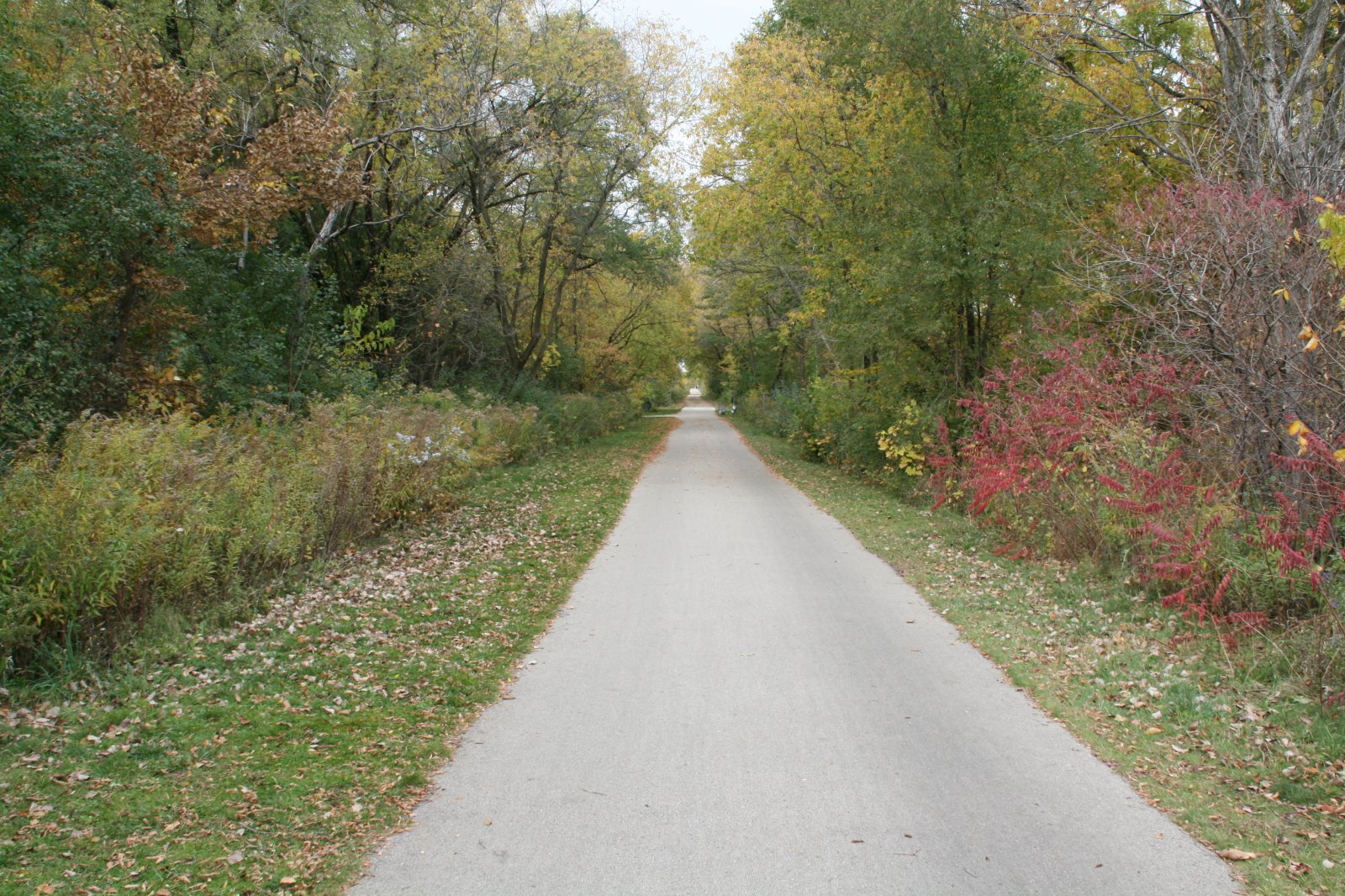
Oak Leaf Trail – Zip Line. Photo taken October 20th, 2020 by Jeramey Jannene.
It’s been nearly 15 years since a countywide plan for bike and pedestrian trails in county parks was updated. New grant funding is providing an opportunity to do that.
Recently, Gov. Tony Evers announced a slate of funding for projects that will create or enhance transportation alternatives around the state. Included in the list was $4.9 million for Milwaukee County projects, of which, a relatively small chunk ($128,000) was allocated for Milwaukee County Parks to update its Trails Network Plan.
The last time this plan was updated was 2007. The purpose of the plan is to chart a long-term course for trail maintenance and development in Milwaukee County. Looking at the old plan, many of the trail projects since it was published came from the network plan. Jessica Wineberg, parks trails coordinator, said 17 of the 19 projects outlined in the plan have been completed, are under construction or have had funding allocated.Some of the projects included in the network plan, like the Kohl Park connection, are being recommended for funding in the 2023 budget, whereas others have been completed and in use for more than a decade, like the extension of the Hank Aaron State Trail to the county line.
The plan is the guiding document for trail projects within the parks department, which oversees more than 135 miles of paved trails. A major focus of the next network plan, Wineberg said, will likely be equity, as there are neighborhoods on the north side and south side of Milwaukee that are home primarily to Black and Hispanic residents that are greatly underserved by trail access.
The department has already been studying how and where to better connect the northwest side to the wider Oak Leaf Trail network. This work, called the Northwest Side Trail Connections Plan, is being completed now and the findings will be incorporated into the larger trails network plan.
“We want there to be a trail network that serves everyone,” Wineberg said.
Wineberg noted that most of the paved trails are paved with asphalt, which degrades much quicker with regular flooding than concrete. An example can be found in the same package of grant funding that will support the new trail plan. The parks department was awarded approximately $574,000 for a flood mitigation project in the Root River Parkway that will involve rebuilding the trail out of the flood plain.
The new plan will also offer the parks department an opportunity to look at areas where it can incorporate next-generation bicycle infrastructure and facilities that offer a trail-like riding experience on a regular roadway. These interventions, like protected bike lanes, have recently become more common in Milwaukee and across the U.S.
The process for developing a new network plan will take a few years, and will involve public input. It will look at gaps in the existing network, the cost to fill those gaps and weigh that against how many people those projects would serve and what the community prefers.
The projects resulting from the planning will not be ranked. The parks department is significantly limited by its budget and has relied on state and federal grants to finance many of the trail network improvements made since the last report was completed. But spending bills passed at the federal level could open up new funding opportunities for trails and other bike and pedestrian infrastructure.Specifically, Wineberg pointed to the Infrastructure Investment and Jobs Act and the Inflation Reduction Act, which earmarked billions for climate-related projects. “It’s a good time to have trail goals,” she said.
Kevin Mills, Rails to Trails vice president for policy, said in 2021 that the infrastructure bill would unleash federal funding for trail projects “on a totally different scale than in the past.” Another policy manager with Rails to Trails said at the time that updating the state’s trail plan would be a good way to bring policymakers, government agencies and constituents together before the funding becomes available.
An updated trail network plan should be a roadmap, Weinberg said, “to give trail access to as many communities as possible, to enjoy nature, health and transportation options while meeting their neighbors.”
A copy of the prior trails network plan is available on Urban Milwaukee.
If you think stories like this are important, become a member of Urban Milwaukee and help support real, independent journalism. Plus you get some cool added benefits.


MKE County
-
Incumbents Sweep County Board Elections
 Apr 7th, 2026 by Graham Kilmer
-
Federal Judge Won’t Vacate Dugan Conviction
 Apr 6th, 2026 by Graham Kilmer
-
Sup. Vincent Faces Challenge in Heated Race for District 11
 Apr 6th, 2026 by Graham Kilmer


















Good, wok Republicans have to be against any public policy related to cycling. Many rural areas benefit greatly from bicycling tourism often in areas represented by elected officials who opposite funding for bike trails. Wisconsin is also home to major companies that are significant players in the bicycling industry: Trek, Pacific Cycle and Saris.