The Otherworld is Home Opens to the Public August 28th
Three interconnected exhibitions present works ranging from fifteenth-century Mali to newly created pieces by contemporary artists working in the United States. August 28 – December 19, 2026
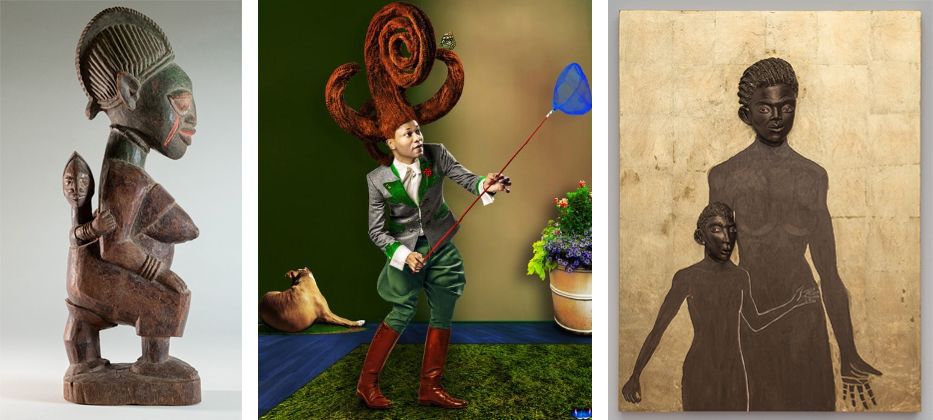
Photos from the Haggerty Museum of Art.
MILWAUKEE — This Fall the Haggerty Museum of Art at Marquette University will host free-to-the-public exhibitions inviting a journey across multiple centuries and continents titled The Otherworld is Home. Inspired by the Yorùbá proverb, “Life is a journey, the otherworld is home” (ayé l’àjò, ọ̀run n’ilé), the museum-wide presentation explores themes of personal reclamation, cultural identity, spiritual passage, and connection across Africa’s many diasporas. Three simultaneous exhibitions—African Art: Ancient Roots, Enduring Values; Iké Udé: Sartorial Anarchy; and Thresholds—offer opportunities to explore the enduring resonance of African artistic traditions and their continued influence on contemporary life.
African Art: Ancient Roots, Enduring Values
“This exhibition and essay explore how, what, and why African works of art . . . work: how they move and affect us; what roles they perform; and the ways they may acquire different purposes, meanings, and values as they travel across oceans and cultural, political, and religious boundaries over time and space,” writes guest curator and scholar of African and African diaspora arts Henry John Drewal.
The ancient, classical arts of Africa embody deeply-rooted beliefs and practices about the visible, tangible world and the invisible, immaterial otherworld of spiritual entities—ancestors, goddesses, gods, and spirits. African artists imagine and create works to represent both worldly and otherworldly subjects—providing material objects to inspire and shape society, and deepen devotional practice. With nearly 40 works from the Haggerty Museum’s collection, this exhibition presents an array of arts addressing worldly and otherworldly matters, as well as forms—primarily masks and divination tools—that serve to bridge the liminal space between worldly and otherworldly realms. Some of the objects in the exhibition are classical works, defined as “traditional in style and form, based on methods developed over a long period of time, and considered to be of lasting value.” They have age and a history of use in Africa. Others have been made by neoclassical African artists of the late 20th and 21st centuries for both local and global audiences. Whether classical or neoclassical, these artists embody and display the refined skills and inventive creativity acquired during lengthy, rigorous apprenticeships that have always been the foundation for Africa’s dynamic artistic traditions, past and present.
African Art: Ancient Roots, Enduring Values was curated by Henry John Drewal, art historian specializing in the arts of the Yorùbá-speaking peoples of West Africa and the African Diaspora.
Support for this exhibition is generously provided by Lilly Endowment Inc.
———–
Iké Udé: Sartorial Anarchy
Artist Iké Udé’s ongoing photographic series Sartorial Anarchy merges clothing and objects from different times and places to upend recognizable signifiers of cultural and individual identity. The Nigerian born artist, now living in New York City, transforms himself into a multifaceted amalgam of many identities in these photographic self-portraits. According to the artist, “In each image, I married disparate costumes from widely diverse traditions, countries, and time frames. And in mixing eras and cultures, I was able to bring harmony, as it were, to their similarly irreconcilable differences.”
Udé’s choice of title (Sartorial Anarchy) portends that the series is about much more than fashion. “Part of my job,” Udé states, “is to keep beautifying Africa for the world, one portrait at a time.” His personas are confident and elegant, secure in their multifaceted, distinctly—but not exclusively—African identities. Udé serves as the designer, scene painter, actor, and photographer of these portrayals and their rich colors, patterns, and textures suggest art historical influences ranging from Vermeer to Jacob Lawrence. The multiple perspectives and representations found in Udé’s work invite us to contemplate the complex nature of the inner and the outer selves.
Sartorial Anarchy was curated by Lynne Shumow, Curator for Academic Engagement, Haggerty Museum of Art.
Support for this exhibition is generously provided in part by Lilly Endowment Inc.
———–
Thresholds
Thresholds brings together the work of Aisha Tandiwe Bell, Portia Cobb, Stephen Hamilton, and Daniel Minter to dynamically explore the depth, complexity, and resilience of Black cultural memory. The artists work at a threshold between the seen and unseen, the present and the ancestral, and the place left behind and the place arrived at. Working across several media, they present their work alongside African works from the Haggerty Museum’s collection to create a “call and response,” a participatory exchange in which one voice calls out and others answer in turn. Building on a shared yet continually unfolding cultural memory, where the past remains active and unresolved, these practices become sites of inspiration, critical reflection, and renewal.
Aisha Tandiwe Bell is a multimedia artist who explores her own diasporic identity as something plural and always in process, giving form to the many selves and masks that Black women carry. Portia Cobb creates videos, photography, and mixed media works rooted in her Gullah Geechee maternal heritage by gathering oral histories and rites that resist what she calls “forced forgetting.” Stephen Hamilton weaves, dyes, and carves by hand using methods he studied in Nigeria, building monumental painted textiles grounded in Yorùbá thought that reclaim craft knowledge. Daniel Minter carves and assembles wood, metal, and found objects within Black Atlantic spiritual traditions, describing his art as a “technology” for reaching the ancestral strength and knowledge.
To encounter the works of these artists in dialogue with works from the Haggerty’s collection is to meet at a threshold where history is a living archive, embodied and rearticulated in the present.
Organized in partnership with the Indigo Arts Alliance, an artist residency and incubator in Portland, ME committed to the artistic development of Black and Brown Artists.
Support for this exhibition is generously provided in part by Lilly Endowment Inc.
Public Programs
Visit the Haggerty Museum of Art’s website for a schedule of free artist conversations, engaging lectures, community days, and more. All events, festivities, and educational programs will be listed with details and registration information on the Museum’s Events page.
Image Credits
Banner images: (left) Atelier of Agbonbiofe Adesina, Èkìtì-Yorùbá, Nigeria, Mother and Child Figure, 20th century, wood, pigment, 17 7/8 x 3 3/4 x 6 1/4 in., gift of Mr. Joseph P. Antonow, 84.34.10, Haggerty Museum of Art, Marquette University; (center) Iké Udé, Nigerian/American, b. 1964, Sartorial Anarchy #26, 2013, inkjet print, 45 3/4 x 36 1/2 in., courtesy of Leila Heller Gallery; (right) Aisha Tandiwe Bell, American, b. 1974, Gold and Shadow, 2020, acrylic, metal leaf, stoneware, cobalt oxide, and glaze on wood, 40 x 30 x 7 in., courtesy of the artist.
About
The Haggerty Museum of Art is located on the campus of Marquette University, adjacent to downtown Milwaukee in the heart of the Near West Side. FREE and open to the public Monday through Saturday, the Haggerty is one of the most accessible arts venues in the city.
The Haggerty Museum of Art at Marquette University is a place where art and ideas come alive—free of charge and open to all. Through innovative exhibitions, arts education experiences, and thought-provoking public programs, we invite both the university campus and the broader Milwaukee community to discover, question, and connect. Working with regional and national artists, collaborating with distinguished faculty across all disciplines, partnering with community organizations, and advancing collections inquiry, the museum is a vital forum for dialogue—to spark reflection, inspire action, and encourage positive change for the greater good.
NOTE: This press release was submitted to Urban Milwaukee and was not written by an Urban Milwaukee writer. While it is believed to be reliable, Urban Milwaukee does not guarantee its accuracy or completeness.
Mentioned in This Press Release


Recent Press Releases by Haggerty Museum of Art
The Otherworld is Home Public Programs Announced for Fall
Jul 30th, 2026 by Haggerty Museum of ArtHighlights include programs exploring the enduring resonance of African artistic traditions and their continued influence on contemporary life.
Presenting a Summer Showcase Featuring Local Artists and a Reflection on America’s 250th Birthday
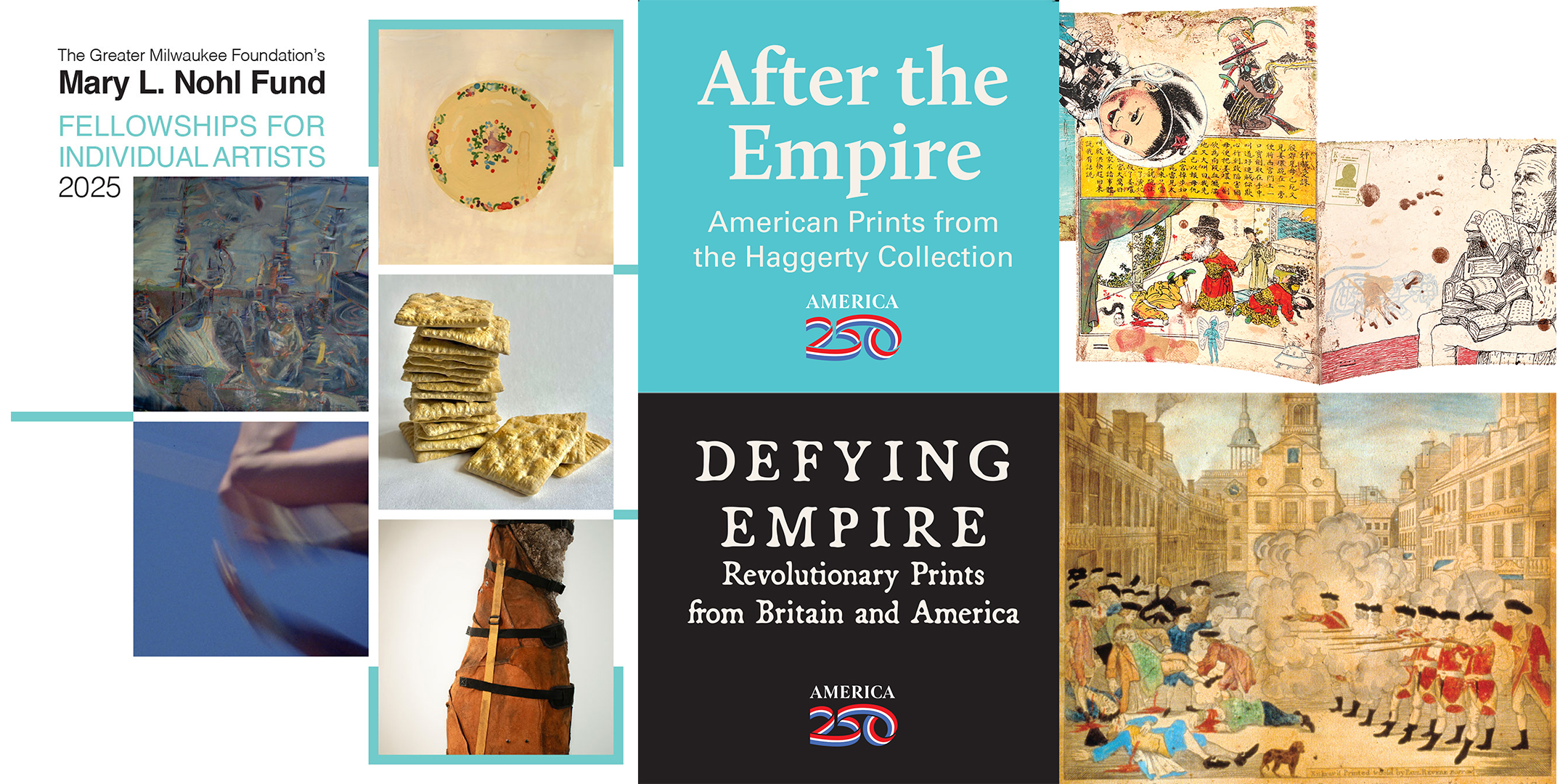
May 11th, 2026 by Haggerty Museum of ArtThe Greater Milwaukee Foundation's Mary L. Nohl Fund Fellowships for Individual Artists 2025; After the Empire: American Prints from the Haggerty Collection; Defying Empire: Revolutionary Prints from Britain and America