

Momentum Grows for Madison Police Body Cameras After Fatal Shooting
Proposals to outfit all Madison officers with body cameras have stalled for more than a decade.
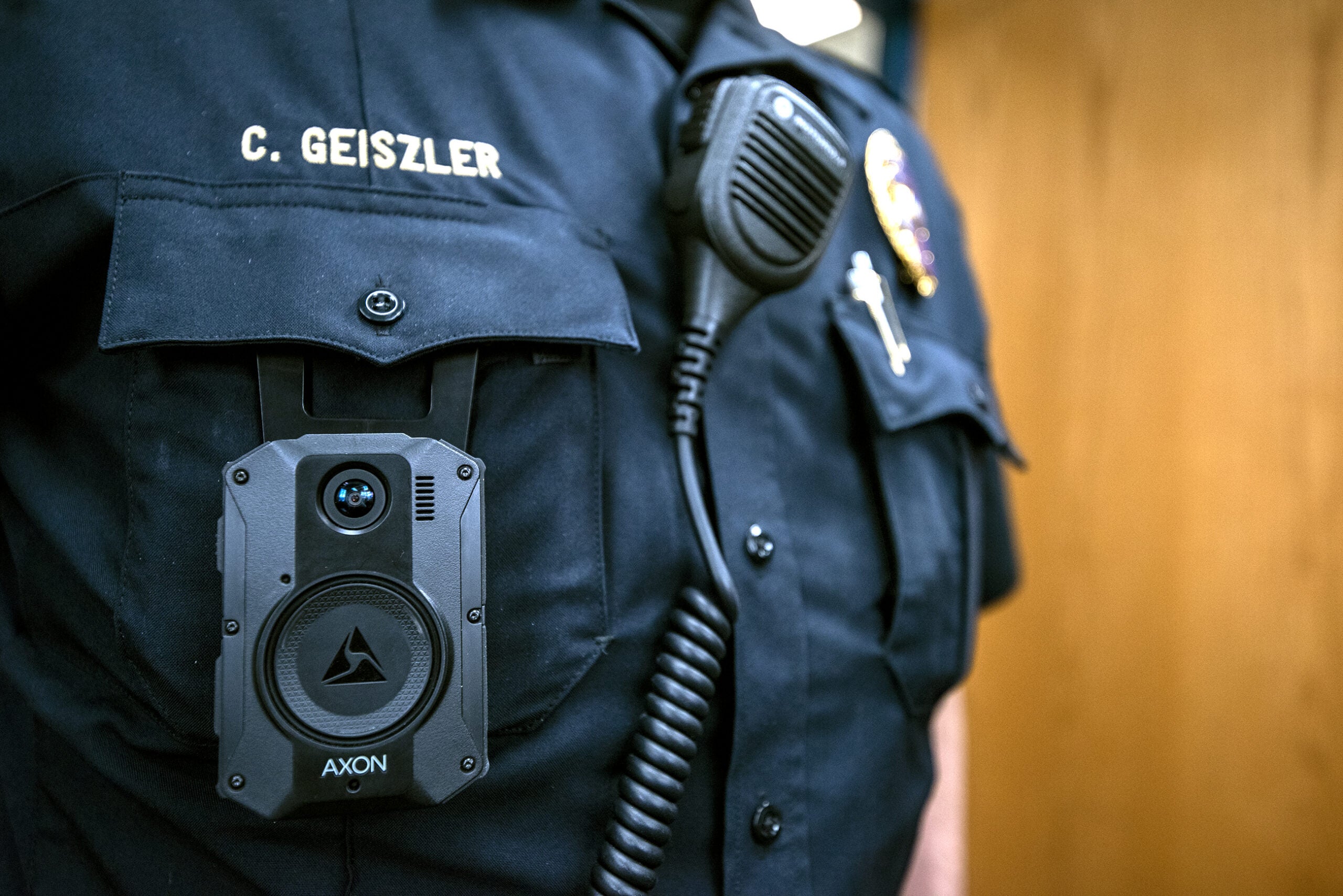
A Wauwatosa police officer wears a body camera while working Tuesday, April 20, 2021. Angela Major/WPR
Most Wisconsin law enforcement agencies use body-worn cameras.
The Madison Police Department, despite being one the largest in the state, does not — at least not department-wide.
That could change, if Common Council members support a budget proposal backed by the mayor and the police department.
Madison’s lack of body cameras has drawn renewed attention in recent days after a Madison officer fatally shot Corey Ruiz, a 38-year-old Black man, on Wednesday of last week. Police say that officer was injured after Ruiz pulled out a knife. Four officers are now on leave pending a Wisconsin Department of Justice investigation.
Currently, the only Madison officers with body-worn cameras are those on the SWAT team and motorcycle unit.
But at a Thursday press conference about the killing of Ruiz, Madison Mayor Satya Rhodes-Conway said she wanted to fund body-worn cameras for the entire police department. She’s backing a three-year phased-in plan, that would lead to full adoption of body cameras by 2029.
That comes after years of contentious debate in the city and multiple failed proposals to broaden the use of body cameras in the city.
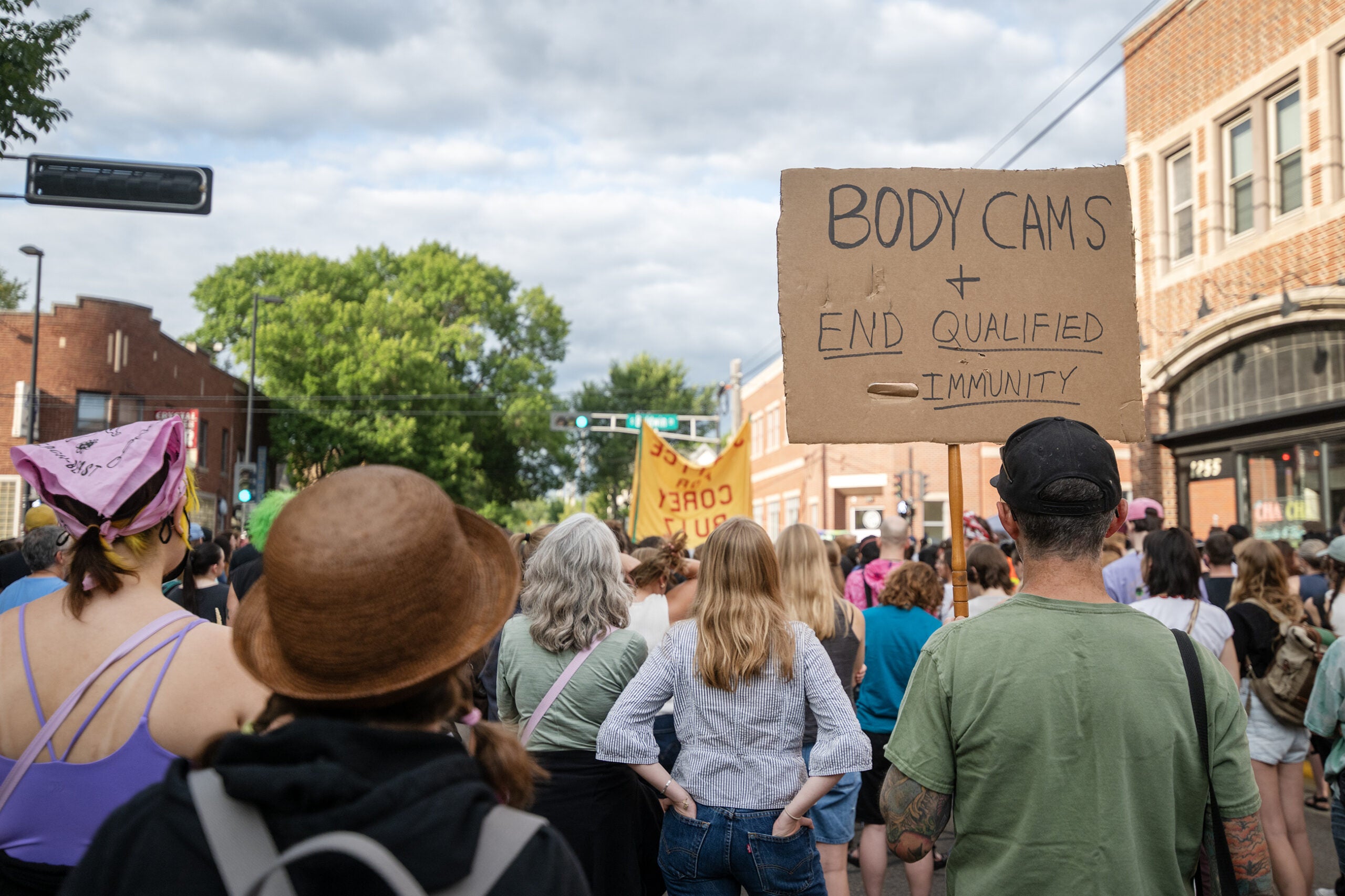
People hold signs as they listen to speakers at a vigil for Corey Ruiz on Thursday, July 23, 2026, in Madison, Wis. One sign calls for police to wear body cameras. Angela Major/WPR
Ruiz family calls for body cameras
Now, following Ruiz’s killing, attorneys for his family have expressed outrage about Madison’s lack of department-wide body cameras.
“We are in a major metropolitan city in the state of Wisconsin, and Madison is one of the few cities that still does not have police body cameras,” attorney B’Ivory Lamarr said. “In 2026, solving a police shooting should not be a mystery.”
Corey Ruiz’s brother, Adam Ruiz, also said body cameras are needed.
“I believe that system is corrupted and us, as the people, we need to stand up and come together to put a stop to this madness,” Adam Ruiz said. “They need body cameras to stop future incidents to stop future incidents from happening.”
Bystanders took video of the shooting, and Ruiz’s attorneys said, given MPD’s lack of body camera, that footage is essential.
“If there wasn’t video, we can only imagine what the narrative would have been,” attorney Ben Crump said. “Thank God for all of those people who had their cell phones out.”
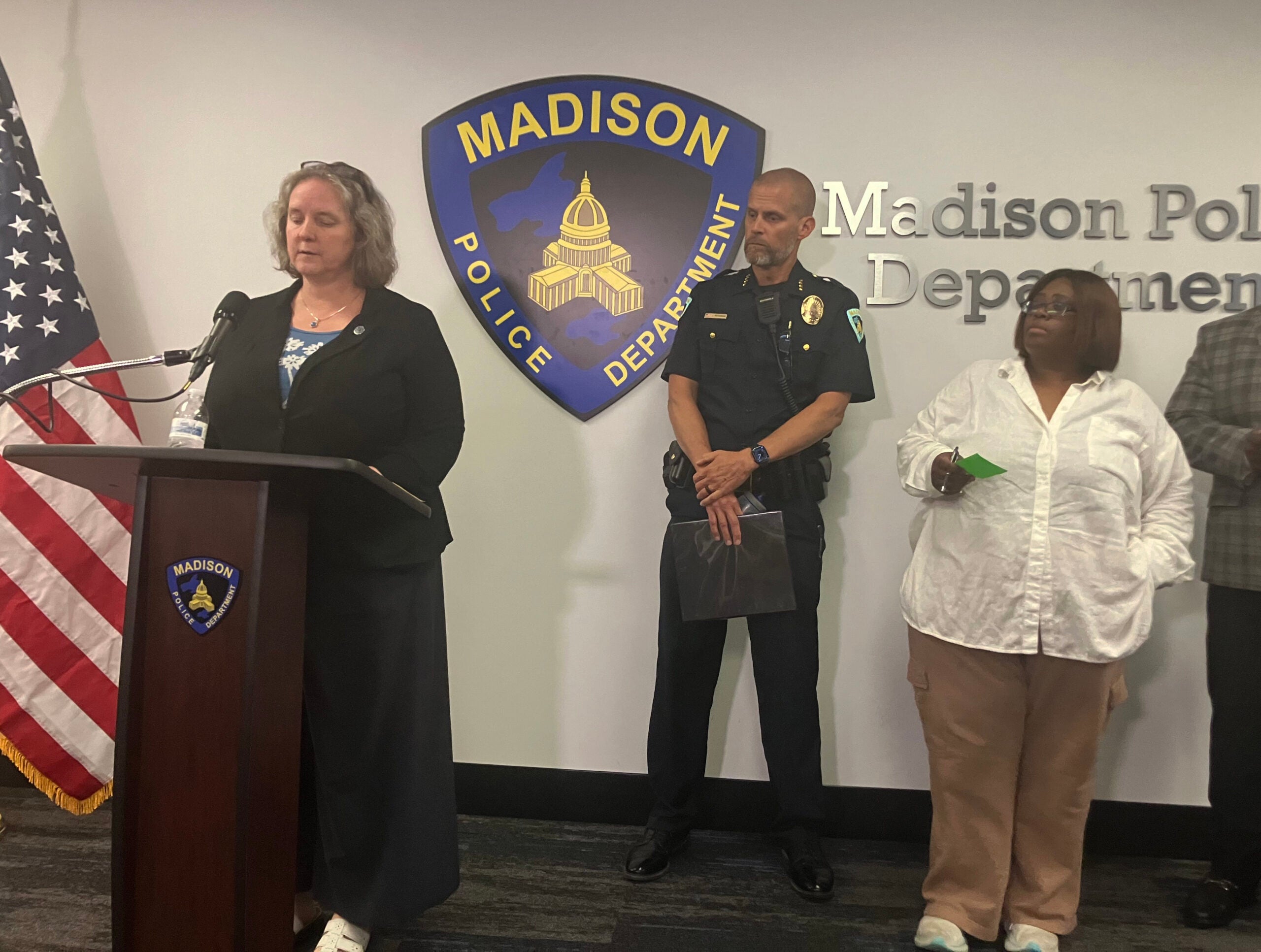
Madison Mayor Satya Rhodes-Conway, left, speaks at a press conference on Thursday, June 23, 2026, regarding the police shooting that killed Corey Ruiz, 38. Next to her stands Madison Police Chief John Patterson and Madison Common Council President Sabrina Madison. Sarah Lehr/WPR
Mayor says cost swayed her decision
Previously, Rhodes-Conway has supported a pilot program that tested out body cameras on a limited basis. But until now, the mayor has not committed to backing a permanent body camera program.
On Thursday, Rhodes-Conway said budget considerations had swayed her decision.
“My main concern has been the cost,” Rhodes-Conway said in response to question from WPR. “When we initially got the estimates from the pilot, there was a very large price tag, and the (police) chief has worked to bring that price tag down in various ways.”
In a budget request submitted earlier this year, Madison’s police department asked for $414,784 over three years to roll out body cameras. That phased approach would start with officers in the city’s north policing district in 2027. By 2029, the cameras would be used across the entire city.
Rhodes-Conway says she plans to back that request from the police department when she submits her own budget proposal later this year. The funding would ultimately need to be approved by Madison’s Common Council.
For more than a decade, Madison body cam proposals have stalled
For more than a decade, Madison’s elected officials have debated whether the city’s entire police force should use body cameras. But efforts to introduce the cameras have been stymied. Over the years, opposition to the cameras has come from some of the Common Council’s more left-wing members, as well as from some local activists.
Some have questioned whether body cameras would actually change police behavior. Other haves raised concerns about privacy and “over-policing.”
The use of body cameras often gains attention in the context of police misconduct. But increasingly, law enforcement officials are using body camera footage as evidence to secure convictions.
During a Common Council meeting in 2023, Madison resident Steve Verburg was among those who spoke out against body cameras.
“What’s happening is this ongoing surveillance ends up worsening over-policing of marginalized communities,” he said.
Another resident, former Common Council candidate Michelle Ellinger Linley, told the council the purpose of body cameras is “not to make our communities safer, but to uphold unnecessary surveillance, tracking and record-keeping of communities at highest risk for exploitation.”
Those remarks came just before Madison’s Common Council voted to approve a pilot to test out body camera’s in the North Police District. That 90-day trial has since ended.
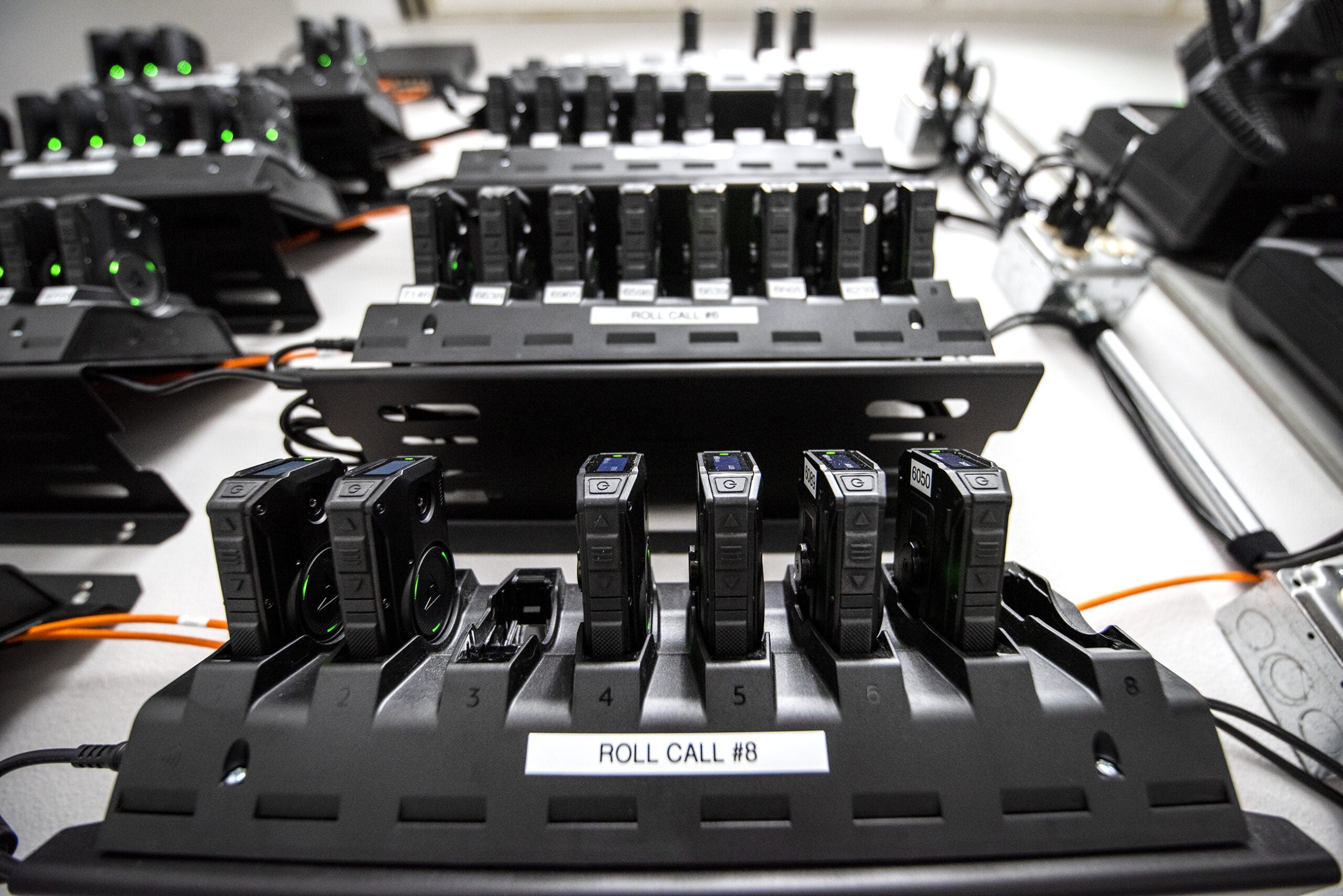
Body cameras are docked onto charging stations Tuesday, April 20, 2021, at the Wauwatosa police department. Angela Major/WPR
Council president: Community now wants body cameras
More recently, in November 2025, Alder Barbara Harrington-Mckinney introduced an amendment that would have redirected just over $400,000 from the Office of the Independent Police Monitor so the city could fund “staffing capacity needs related to implementing body worn cameras.” That amendment failed 17-3.
The amendment would have zeroed-out the police monitor’s annual budget. And some alders complained it was introduced too late in the budget process.
On Thursday, Madison Common Council President Sabrina Madison said she believes a body camera proposal will clear the council in 2026.
“The community, for a while, was not wanting to implement body-worn cameras yet,” Madison said. “That has changed.”
The city’s police cruisers are outfitted with dashboard and backseat cameras. And cellphone videos from bystanders have been circulating online after Wednesday’s shooting.
But DOJ investigators have no way to review body camera footage if that footage doesn’t exist.
In an interview with WPR, Madison said it’s impossible to know whether a body-worn camera would have changed the outcome of Wednesday’s shooting. But she said those cameras can provide additional information.
“Now folks are really having that discussion more often about what is the gap that we’re missing when we don’t have that footage,” Madison said.
Madison Police Department backs body cameras
During Thursday’s news conference, Police Chief John Patterson spoke about tensions in Madison following the killing of Ruiz.
“Everyone in this room can feel the thinness of trust in this city right now,” Patterson said.
He called MPD’s lack of body cameras “another challenge to repairing trust in our community.”
In his budget request submitted earlier this year, Patterson referred to body camera funding as his “No. 1 request.”
Patterson’s predecessor, former Police Chief Shon Barnes, tried to implement department-wide body cameras. Barnes was unable to make that goal a reality before he left to lead Seattle’s police department last year.
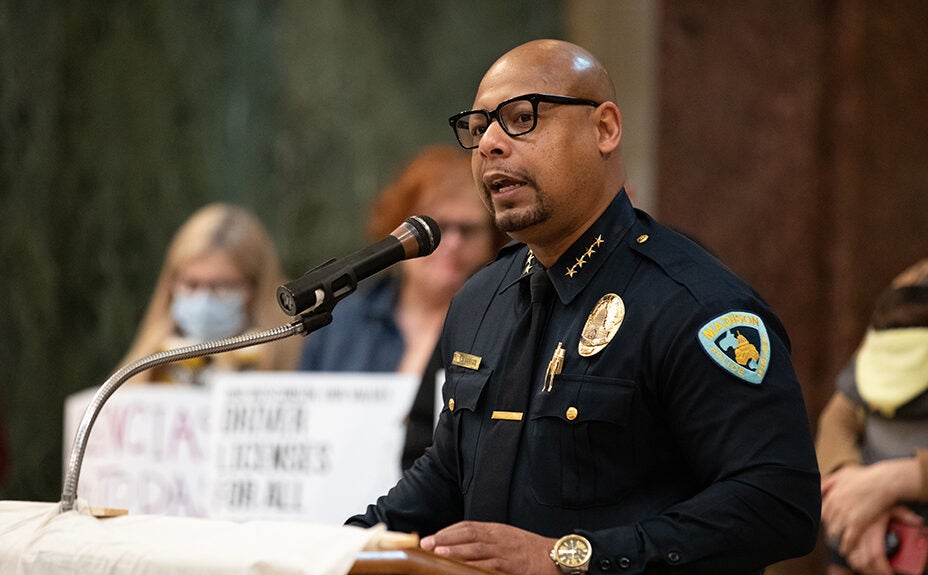
Madison Police Chief Shon Barnes speaks at a press event for the Wisconsin Coalition for Safe Roads inside the Wisconsin State Capitol on Feb. 21, 2023. Amena Saleh / Wisconsin Watch
The Wisconsin Professional Police Association, a union representing police officers, has also advocated for body-worn cameras.
“Unfortunately, because Madison officers are not equipped with body-worn cameras, investigators and the public will not have the benefit of video from the officers’ perspectives in this most recent case,” said the association’s executive director Jim Palmer, referring to the shooting of Ruiz. “Body-worn cameras aren’t perfect and don’t always capture everything an officer sees or experiences, but they can provide critically important additional evidence and context.”
During Madison’s last mayoral election in spring 2023, Rhodes-Conway’s opponent, Gloria Reyes, came out in support of body cameras city-wide. Reyes is a former Madison police detective, who was endorsed by the city’s police union.
At the time, Rhodes-Conway did not categorically oppose the proposal. But she cautioned that body cameras alone cannot solve police violence.
Rhodes-Conway expressed a similar sentiment in the days after the killing of Ruiz.
“(Body cameras) are part of a solution,” Rhodes-Conway said Thursday. “But they are not the solution.”
If the police department’s latest proposal is approved, Madison would purchase a total of 220 of body cameras by 2029.
Momentum grows for Madison police body cameras after fatal shooting was originally published by Wisconsin Public Radio.
If you think stories like this are important, become a member of Urban Milwaukee and help support real, independent journalism. Plus you get some cool added benefits.




















HOW STUPID and these folks are smart????? Madison on top of it. As basic as the day is long Very sad Cameras change behavior of the officers wearing them and may even have some impact on the behavior of those being arrested. No doubt a very disturbed man and yet without restraint the gun is used.
What’s the issue? The mayor claims it’s a matter of money? Body cameras have proven across the country that they protect both the police & people arrested, stopped or questioned. It also clears up doubt in presenting evidence on both sides. How much money is wasted defending accusations made by both prosecutors & defendants? The courts are seriously backlogged. People sometimes have to spend too much time behind bars, at taxpayers expense, because they cannot afford bail. Police are taken off the streets wasting time in court, at taxpayers expense, arguing evidence that could be documented & recorded. Seriously, is there a legitimate argument against body cameras?
Hummmm What is the value of one life?????? Foolish comment by the police chief