
Wisconsin Youth Appeal Dismissal Of Climate Rights Lawsuit
Teens and children ask higher court to revive challenge to state energy laws they call unconstitutional.
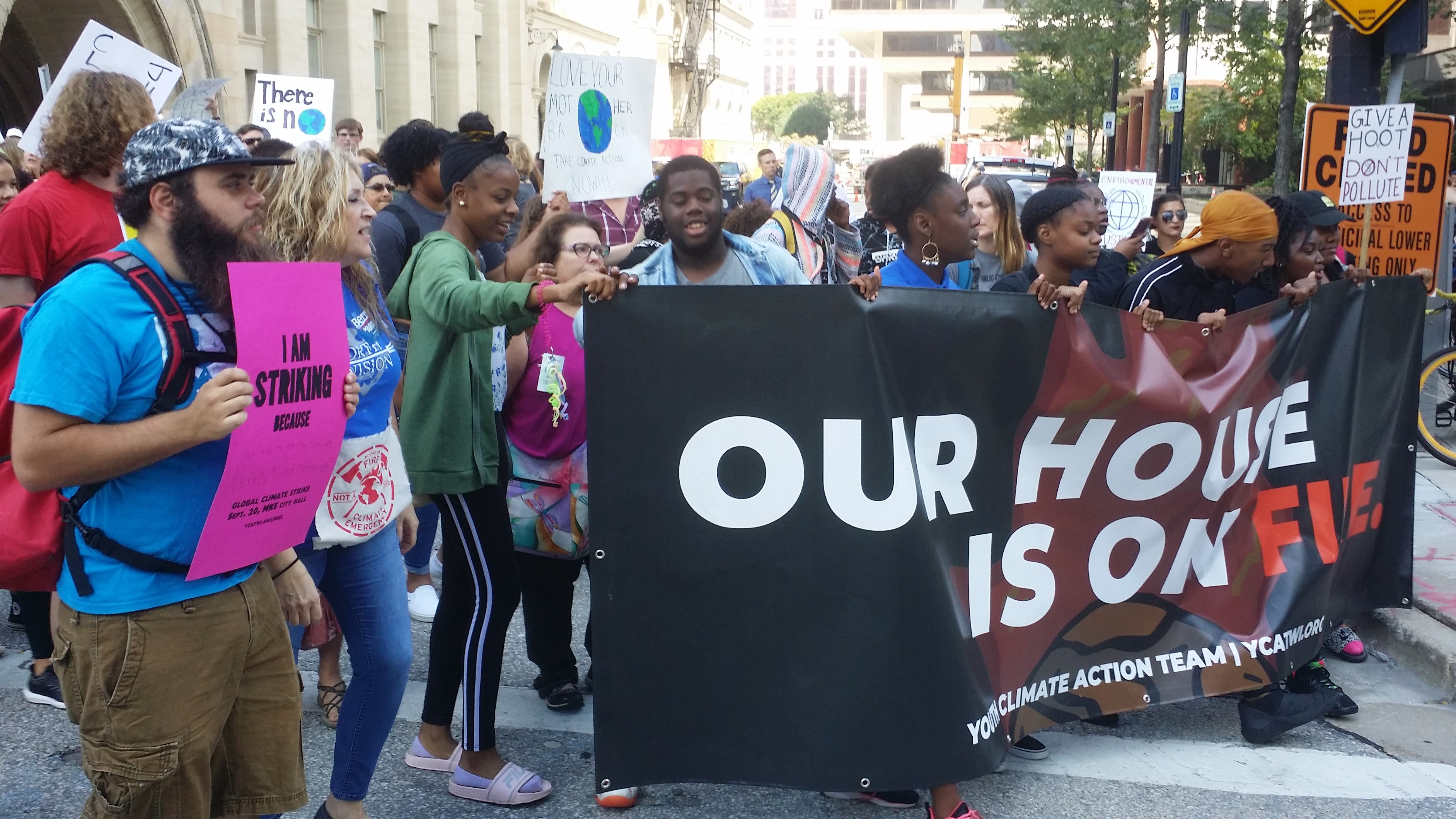
Climate Strike at City Hall. File photo by Jack Fennimore.
A group of young people in Wisconsin are appealing a recent decision to dismiss their legal challenge seeking to strike down state laws that they say worsen the climate crisis and violate their constitutional rights.
While sympathetic to their claims, Dane County Judge Julie Genovese dismissed the case last month, saying they must be resolved through the state’s political process rather than the courts.
Environmental groups Our Children’s Trust and Midwest Environmental Advocates appealed the ruling Friday on behalf of the 15 young people, who sued the Public Service Commission and Wisconsin Legislature in August last year.
Lead plaintiff Kaarina Dunn said her family was forced to leave their home after flooding and storm damage driven by climate change.
“The court said that harm is real, but then refused to protect us,” Dunn said in a statement. “Wisconsin is a state worth fighting for; its rivers, its land, its winters, and every person here has a constitutional right to enjoy it. That is exactly why we are appealing. Wisconsin children deserve more than sympathy. We deserve to have our day in court.”
The groups had asked the court to find that state laws capping renewable energy requirements and barring utility regulators from considering pollution from new fossil fuel plants are unconstitutional.
An attorney for the Legislature did not immediately respond to requests for comment on the ruling. A PSC spokesperson previously said the judge’s order speaks for itself. The Legislature and utility regulators had argued the case presented “nonjusticiable political questions” on energy policy that were better left for lawmakers to decide.
In a statement, MEA’s executive director Tony Wilkin Gibart said the case is about constitutional rights, not political questions.
“The state laws we are challenging are contributing to climate change and causing real, concrete harm to our clients,” Wilkin Gibart said. “That is a direct violation of their rights under the Wisconsin Constitution, which state courts have both the authority and the obligation to address.”
The 15 young people, who ranged in age from 8 to 17 at the time of the lawsuit’s filing, said they were unable to take part in activities that include swimming and skiing because a warming climate had reduced water quality and snowfall. Others said they had been deprived of Indigenous cultural traditions that include harvesting wild rice or fishing for walleye as a result of changing lake levels and warming waters due to climate change.
Supervising Senior Attorney Nate Bellinger with Our Children’s Trust said in a statement that the political question doctrine does not shield unconstitutional laws from review.
“Courts exist to protect people from unconstitutional government conduct–especially children, and especially when the harm is real and ongoing,” Bellinger said.
Most heat-trapping greenhouse gas emissions that contribute to climate warming are caused by the burning of fossil fuels. Coal and natural gas make up 75 percent of electricity generated in Wisconsin.
Gov. Tony Evers has set a goal for the state to produce carbon-free electricity by 2050. However, Wisconsin has seen rising energy demand due in part to data centers that are prompting utilities to invest in new gas-fired power plants and delay closure of coal plants.
A recently released report found Wisconsin’s climate will only continue to grow warmer and wetter with more extreme storms. Climate scientists have found temperatures have increased about 3 degrees Fahrenheit and precipitation has gone up 17 percent since the 1950s.
The lawsuit followed a landmark climate ruling in Montana. Wisconsin is among states that have pursued lawsuits linked to climate change, including Michigan and Hawaii. The U.S. Department of Justice under President Donald Trump has sued to block those lawsuits.
Wisconsin youth appeal ruling to dismiss climate lawsuit was originally published by Wisconsin Public Radio.
If you think stories like this are important, become a member of Urban Milwaukee and help support real, independent journalism. Plus you get some cool added benefits.