

Complaint-Driven System Leaves Milwaukee Renters Waiting For Repairs
Inspectors must wait for calls, then navigate a slow process of orders, fines and court actions.
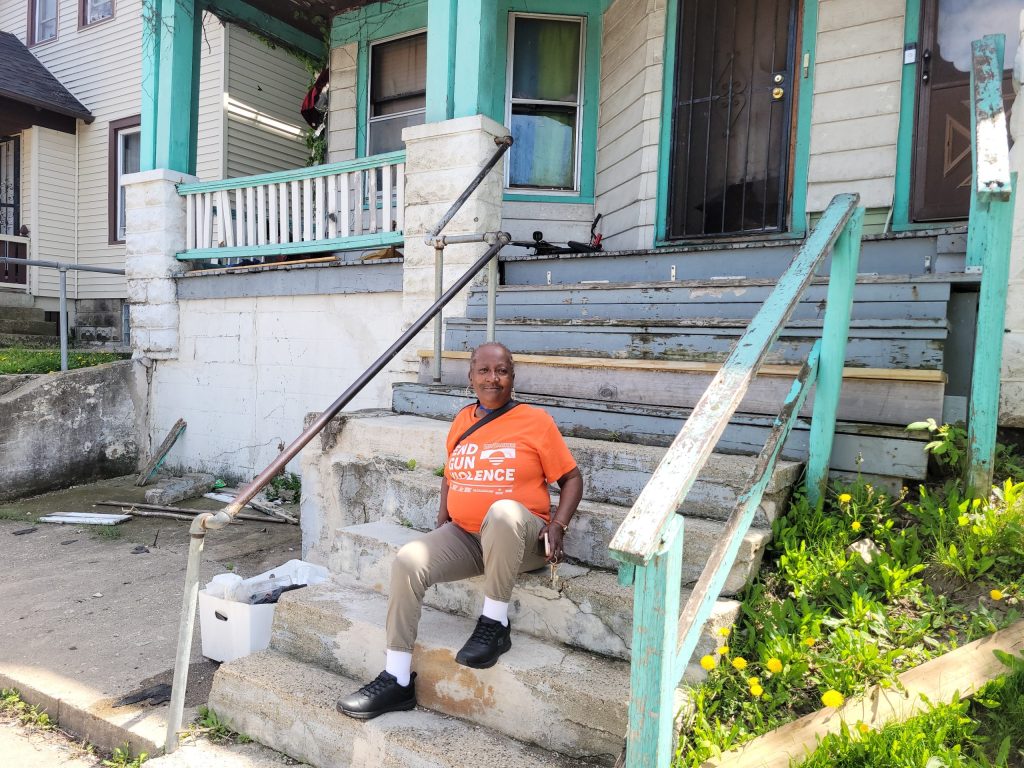
Farina Brooks was forced to leave her home (pictured here) after 35 years due to deteriorating conditions. (Photo by PrincessSafiya Byers / Milwaukee Neighborhood News Service)
After 35 years renting her home, a leaky and unkept roof forced Farina Brooks and her husband to move into a hotel.
It wasn’t a rash decision. For three years, Brooks said, she pleaded with the property management company to fix the roof as water damage spread and conditions inside the home worsened.
City inspectors eventually came, issuing citations and fines. Still, she said, little changed.
“We kept getting the runaround,” Brooks said.
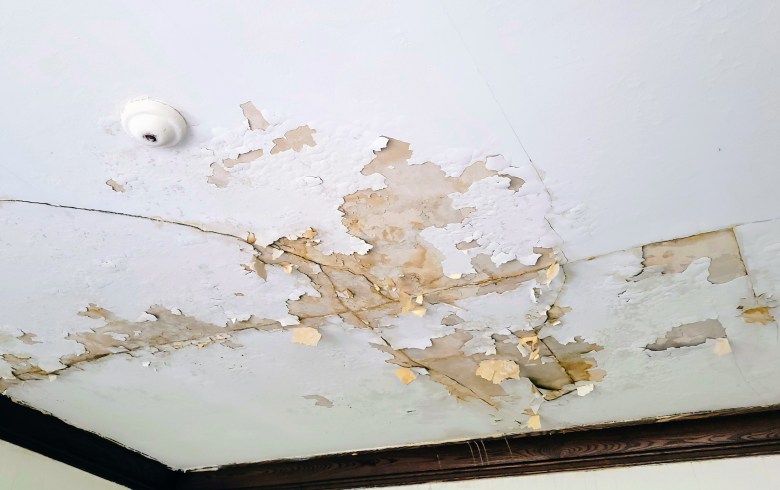
Brooks has had problems with her ceiling for the past three years. The problems came to a head when water started to come into the unit through the light fixtures. (Photo by PrincessSafiya Byers / Milwaukee Neighborhood News Service)
Eventually, she and her husband entered Milwaukee’s rent abatement program. Even that failed to improve conditions, she said.
Now, she said, the couple is burning through their savings to pay for a hotel room while searching for stable housing in an increasingly expensive rental market.
Brooks said the situation was not always this way.
“For the 30 years or so (the landlord) was good, you know, she handled things,” she said.
But in recent years, she said she learned the woman had developed dementia and was placed under a conservatorship, a change Brooks believes coincided with the property’s decline.
Her story reflects a growing frustration shared by many Milwaukee tenants confronting deteriorating housing conditions and asking a question that local officials hear constantly: Why can’t the city force landlords to fix problems with their properties?
City response is limited
According to Milwaukee City Attorney Evan Goyke, the answer lies in a complicated mix of state law, property rights and limited local authority that has steadily narrowed the city’s oversight powers on rental housing during the past decade.
The city has powers to do certain things, but not others, Goyke said.
“The federal government can limit what states can do, and the states can limit what municipal governments can do.”
State Sen. Dora Drake said Wisconsin law requires landlords to maintain rental properties, including making necessary structural and plumbing repairs and complying with local housing codes. But, she said, tenants often face barriers when conditions deteriorate.
“Under most circumstances, a tenant may not refuse to pay rent entirely unless the conditions are so poor as to force a tenant to move out,” Drake said. “If the conditions in the rental premises are poor where the tenant’s health or safety is affected, or the tenant is unable to use part of the premises, the tenant is entitled to reduce the amount of rent proportionately.”
Much of Milwaukee’s housing enforcement is controlled by Wisconsin state law, particularly by legislation passed between 2013 and 2017 that limited how municipalities regulate rental housing.
One major change, specifically state statute 66.0104, pushed cities into complaint-driven inspection systems – meaning inspectors cannot proactively inspect properties for violations unless someone files a complaint.
“The Department of Neighborhood Services can’t just walk up and down the street and say, ‘That house, that house, that house,’ ” Goyke said.
Instead, the city relies heavily on tenants and neighbors to report unsafe conditions to the Department of Neighborhood Services.
Drake said the current system leaves too many renters vulnerable before problems are addressed.
“We need more accountability measures and preventative measures and standards to prevent those situations from getting so bad with tenants,” she said.
Complaint-based enforcement
When tenants report unsafe conditions, Department of Neighborhood Services inspectors investigate and may issue written orders that require repairs within a specified timeframe.
If the violations are not addressed, the city can issue citations and pursue penalties in municipal court. Unpaid judgments can eventually become liens on the property.
But that process can take a long time, especially for a city balancing thousands of complaints with limited staff and funding, according to Goyke.
He said many residents get frustrated because they expect immediate intervention.
The city can escalate serious or repeated violations into lawsuits in Milwaukee County Circuit Court. In extreme cases, courts can appoint a receiver to take over management of a property.
Under receivership, a court-appointed manager can collect rent and use it to make repairs if a landlord has failed to maintain safe conditions.
“It’s a very heavy hammer for the landlord,” Goyke said. “Somebody else is going to step in and fix (the properties) for you.”
Tenant fears and limited options
Housing advocates have long argued that complaint-driven enforcement creates another problem: potential retaliation or displacement of tenants.
Many tenants won’t report poor conditions out of fear.
Goyke said those fears are real, particularly for tenants living in severely deteriorated buildings who worry they could lose housing if the property is condemned.
“I feel terrible that people are placed in a position where they feel they need to live in unsafe conditions because it does beat living outside,” he said.
He encouraged tenants to report violations to DNS and to explore programs such as rent withholding and rent abatement.
Under Milwaukee’s rent withholding program, tenants continue paying rent, but the money is held by the Department of Neighborhood Services until repairs are completed. Rent abatement, meanwhile, allows tenants to reduce rent payments when serious conditions affect habitability.
Legal and service organizations, including the Legal Aid Society of Milwaukee, Legal Action of Wisconsin and Community Advocates, can help tenants understand their rights and options.
Property rights and bad landlords
Residents also frequently question why landlords with poor track records are still able to purchase additional properties, Goyke said.
Goyke said cities generally cannot interfere in private property transactions unless the city has a legal interest in the property, such as unpaid taxes or code enforcement judgments.
“If we do not have an interest in the property, we can’t stop it,” he said.
That limitation stems from longstanding American property rights protections, he added.
“It is not a shortcoming of some ordinance that could be tweaked,” Goyke said. “That question goes to core property rights in America.”
Drake said she has co-authored proposals aimed at expanding rent abatement protections and shielding renters from landlord retaliation.
“We know it happens,” Drake said. “Whether it’s Berrada or other properties that are known to have these stories, those are things that we can do.”
Berrada Properties owns more than 8,000 units and has been named in lawsuits by both tenants and the city attorney.
Drake also said the state should expand access to legal representation for tenants facing eviction or living in unsafe housing.
“We can create an office of civil legal aid to provide a right to appointment of counsel at the state’s expense for tenants in eviction actions,” she said.
Community action
Brooks said she was pushed to leave her home by her daughter and several local community leaders.
“They told me you cannot live here,” she said. “The final straw for me was when water started coming in through the light fixtures.”
Brooks said community leader Ajamou Butler shared a post about her situation that garnered support from the community and helped pay for her first several days in the hotel.
She said local leaders including Butler, Vaun Mayes and state Rep. Sequanna Taylor have supported her through the move. Metcalfe Park Community Bridges and Community Advocates have supported her search for accountability and a new home.
“It was hard accepting help, but it reminded me of how the community shows up,” Brooks said. “This made me worry for the people that don’t know who to call or have people to show up.”
Goyke encouraged residents to vote and stay engaged politically, and also emphasized on-the-ground organizing and collective action to address housing issues.
He pointed to local organizations like Common Ground, the Community Development Alliance and the RON Coalition as examples of groups working to improve housing conditions.
“There’s a lot more that people can do individually that make an impact,” he said.
Goyke described a boarded-up house on his own block that has sat vacant for years, saying neighbors could potentially organize fundraising efforts to help support redevelopment.
“Don’t wait for somebody else to solve your problems,” he said. “There’s a ton of energy in trying to figure out how to do this, and it’s a great time for people to get involved.”
Drake said stronger tenant protections are part of the Wisconsin Legislative Black Caucus agenda this year.
“We know that at the state level, we need to do more to ensure that we’re protecting tenants’ rights,” she said.
This article first appeared on Milwaukee Neighborhood News Service and is republished here under a Creative Commons Attribution-NoDerivatives 4.0 International License.























The City should declare
Reform is needed. Complaint Driven response is an obstacle.
2013 and 2017 regulations fail to balance Tenant – Landlord responsibilities.
New regulations are needed for swift accountability and penalties. Multiple tiers should be indexexted to number of violations and number of properties owned.
Massive owner, Berrada Properties,
views fines as a drop in the bucket. A tiny cost of doing business versus maintaining property up to code.
Receivership
The Farina Brooks family should be reimbursed for lodging costs and damages.
.
The problem and solution lie with the state legislature, which is made up of landlords and kowtows to the real estate lobby. New leadership is required.