
Did the USDOT Just Prioritize Speed Over Safety?
All the city news you can use.
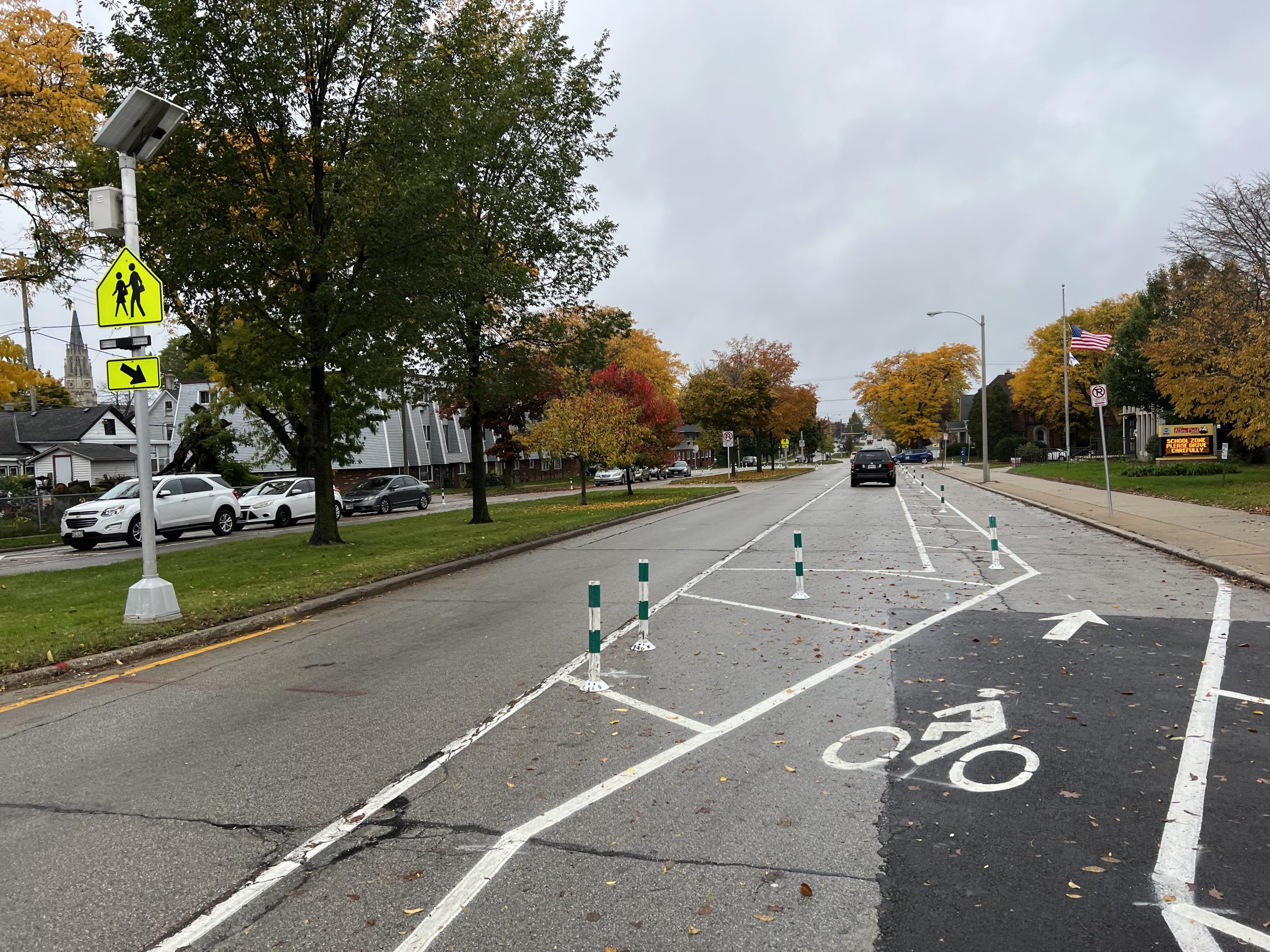
A protected bike lane on W. Lapham Blvd. cut the number of driving lanes in half and reduced speeding by 69%. Photo by Jeramey Jannene.
Every day at The Overhead Wire we sort through over 1,500 news items about cities and share the best ones with our email list. Each week, we take some of the most popular stories and share them with Urban Milwaukee readers. They are national (or international) links, sometimes entertaining and sometimes absurd, but hopefully useful.
Planners on TV: The work of city planners is heavy on process and not the most glamorous which may be why Architects are often the focal point of movies and television. But while most portrayals of planners are not flattering, there are shows that do a fairly good job at showing their strengths. Jake Pitre discusses some of the ones that work including Parks and Recreation and Utopia. (Jake Pitre | Planetizen)
USDOT removes time tested safety recommendations: USDOT has quietly taken out speed cameras, bike lanes, and other safety practices out of a list of proven safety practices shown in decades of research to improve road safety. Experts believe the changes aren’t actually about safety and go against clear evidence while the DOT continues to dig in its heels claiming falsely that taking away space from drivers increases congestion. (Joel Rose | NPR)
Dallas at inflection point: Dallas Texas has been a growth engine for decades but is starting to feel the strain of a slow down as population has dropped for the first time since the pandemic. As companies and sports teams consider leaving for the suburbs, the city worries that population loss will start to limit infrastructure investments. The solution could be making downtown more livable and attracting more residents. (Joshua Fechter | The Texas Tribune)
Circularity in architecture: Much like single use plastic bags, buildings in cities are often poorly constructed and aren’t built to last. Given the enormous amount of emissions that come from the built environment, there’s an imperative to consider the recycling of building materials. There are many strategies that can accomplish this goal including adaptive reuse and reversible architecture, which can be expensive. But given the stakes, it’s possible we can’t afford not to try. (Rick Cook | Common Edge)
Colorado River’s low water: Drought, climate change, and water use have led to Lake Powell and Lake Mead to a 70 year record low water level. Researchers believe the low levels along the river should be taken together considering their interconnected fortunes. The shortage is setting up legal fights over water rights between states for 40 million people. (Alex Hager | Utah Public Radio)
Quote of the Week
The effect was especially strong among independent and unaffiliated voters. That matters because this is not a case of a policy clearly helping one party and hurting the other. The main effect is simply greater engagement. When people receive meaningful financial relief, they become more likely to participate in the political process.
-UVA professor W. Ben McCartney in the Virginia Mercury discussing how political participation increased when people took part in a post great recession mortgage refinance.
This week on the Talking Headways podcast we’re joined by Will Poff-Webster of the Institute for Progress to talk about their new collection of ideas to bring transit project costs down entitled the Transit Abundance Playbook.
Want more links to read? Visit The Overhead Wire and signup.
If you think stories like this are important, become a member of Urban Milwaukee and help support real, independent journalism. Plus you get some cool added benefits.


Urban Reads
-
How Paris Grew Cycling by 240% in 5 Years
 Jul 18th, 2026 by Jeff Wood
-
What’s in the ROAD to Housing Act?
 Jun 27th, 2026 by Jeff Wood
-
Which Urban Areas Do Transit-Oriented Development Best?
 Jun 14th, 2026 by Jeff Wood



















WisDOT did the same thing for I94 East West. Fewer crashes w 8 lanes, but predicted crashes with higher speeds are expected to be more deadly.