

Unvaccinated Residents Drive Measles Outbreak In Southwest Wisconsin
All but one of 25 confirmed or suspected cases lack measles shots, DHS reports.
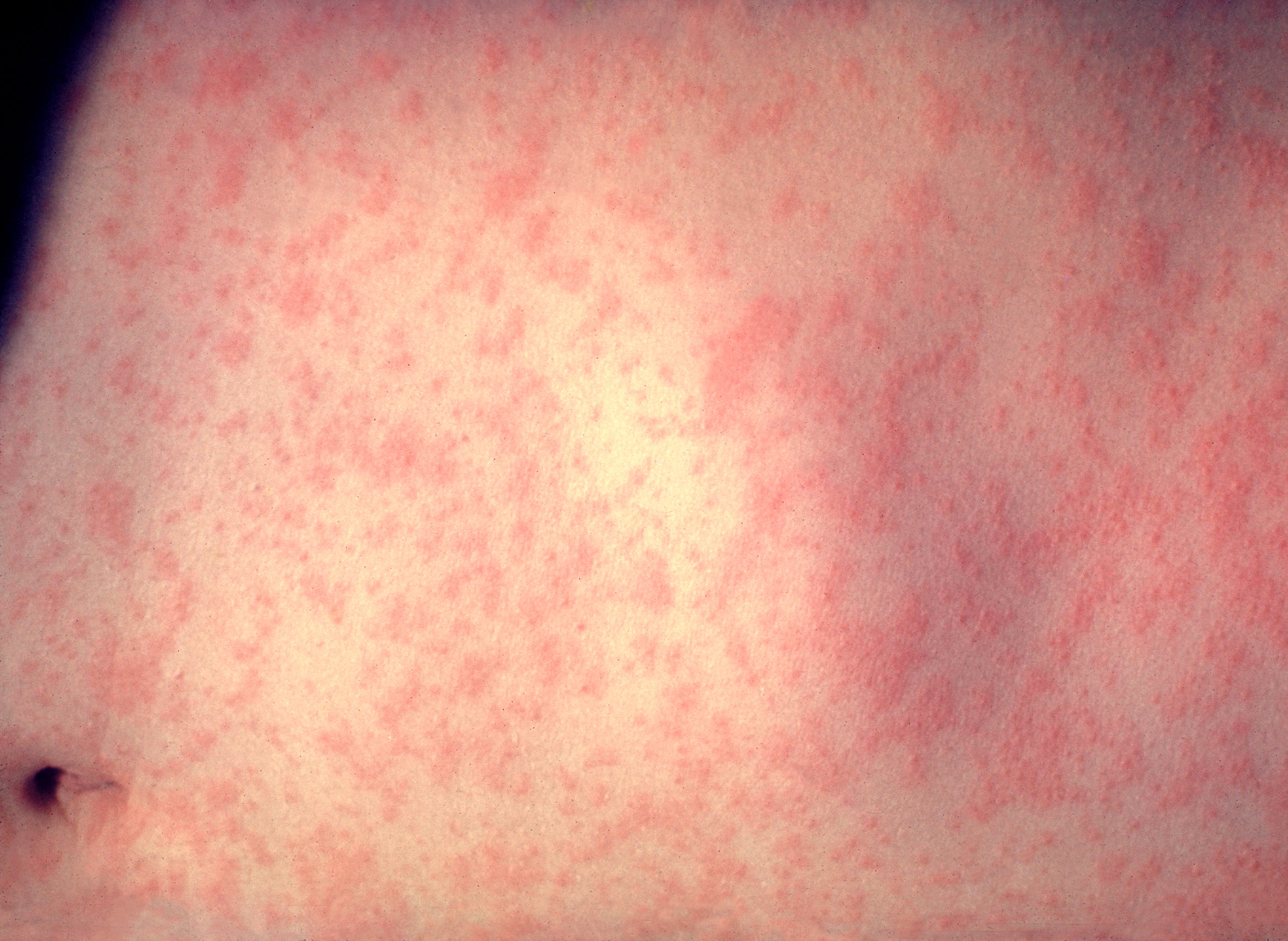
A skin rash is observed on a patient’s abdomen 3-days after the onset of a measles infection. The image was captured at New York Hospital-Cornell Medical Center in 1958. Photo by Heinz F. Eichenwald, MD /CDC Public Health Image Library.
State health officials are investigating an outbreak of 15 measles cases among residents in southwestern Wisconsin, and it’s likely there will be at least a half dozen more.
The surge of cases is up from two reported Tuesday.
Those first two cases were confirmed in an Iowa County resident and a Lafayette County resident. Thirteen new cases in Iowa County were reported Thursday, and were confirmed in testing by a state lab, according to the Wisconsin Department of Health Services.
The agency is reporting there are another six probable cases that have not yet been confirmed through testing.
DHS is closely coordinating with county health departments and receiving support from experts at the U.S. Centers for Disease Control and Prevention, said Dr. Ryan Westergaard, chief medical officer with the DHS Bureau of Communicable Diseases.
“The majority of cases in this outbreak, similar to the large majority of cases in the overall United States outbreak, are occurring among unvaccinated people,” Westergaard said.
According to a DHS dashboard, around 60 percent of cases in Wisconsin this year involve children aged 17 and under. Three of those infected were under the age of four.
All but one of the 25 people with confirmed or suspected cases was unvaccinated.
Health officials have not identified any locations where the public may have been exposed to the highly contagious virus.
Health officials are interviewing people who have been infected to trace the extent of exposure to the virus, which is expected to continue over the coming weeks. Westergaard said the rapid outbreak of cases occurred among people who had not traveled outside Wisconsin, indicating active local transmission.
“That increases our level of concern a bit because that means that there is transmission happening in Wisconsin and there could be and likely are people who have been exposed that we don’t know of yet,” he said.
The agency is advising people to verify their immunization status by checking the Wisconsin Immunization Registry or contacting their local health provider. If people are experiencing symptoms, they’re urged to stay home and call ahead before visiting a clinic or urgent care facility so staff can take precautions to prevent airborne exposure.
Health officials stress that getting two doses of the measles vaccine is the best protection against contracting the virus, especially as children return to school this fall. The vaccine is considered 97 percent effective against the disease. Adults born before 1957 are considered immune to the virus.
On Monday, President Donald Trump announced an executive order that called for separating combination shots, including for the measles or MMR vaccine. Public health experts have condemned the move. In a statement, DHS Secretary Kirsten Johnson said the Monday order doesn’t change the agency’s approach to vaccination.
“We are deeply concerned about the lack of scientific evidence in statements from top federal officials, and potential implications for the health of children in our state,” Johnson said. “Health professionals and parents deserve accurate, credible information. There is no new scientific evidence that justifies changing recommendations that have, and continue to, protect children across the United States.”
The agency has endorsed the childhood vaccine schedule recommended by the American Academy of Pediatrics and the American Academy of Family Physicians. Westergaard said vaccination rates in Wisconsin and nationwide have declined amid distrust in science and misinformation.
The nation is experiencing the highest number of measles cases in 35 years with 2,465 cases, according to the CDC. The country has already surpassed the nearly 2,300 cases reported during all of last year. Wisconsin reported 36 cases in 2025.The first measles cases reported this year occurred in Dane and Waukesha counties. Both were tied to international travel.
Measles spreads from person to person through the air or on surfaces for up to two hours after a sick person coughs or sneezes. If a person comes in contact with someone who is infected with the virus, the CDC said 9 out of 10 people will contract measles unless they’re protected. One in four people are hospitalized after contracting the virus, according to DHS.
Wisconsin health officials investigating measles outbreak in southwest counties was originally published by Wisconsin Public Radio.



















It would be interesting to hear which type of measles is gaining a foothold – -rubella or regular measles.
Get vaccinated folks, and ensure your kids get vaccinated too. You don’t want to end up in the hospital.
Rubella has devastating effects on pregnant women who contract the disease in their first trimester. Rubella can cause severe birth defects, miscarriage, or stillbirth. It is easy to contract the virus. Measles is more dangerous. 1 in 5 unvaccinated individuals will require hospitalization. 1 in 3 of those hospitalized will die from complications.
Parents who choose not to vaccinate their children believe it is a personal decision. However, that decision can have devastating effects on others particularly the elderly and those with compromised immune systems. Vaccinations protect the vaccinated child and contribute to building the herd affect that protects those with weakened immune systems.
Rubella is aka German measles. Generally milder but dangerous for pregnant women. Rubeola aka measles caused by a oaramyxovirus in the same family as canine distemper . Severe disease can cause brain swelling and hospitalization. This article I believe is about rubeola cases.
MMR vaccine is measles, mumps and rubella. Protects against both German and regular measles.