

New Literacy Leader Inherits High Goals, Withheld Funds And Low Scores
DPI’s Kaylee Jackson must navigate Act 20 mandates after a funding fight slowed the state’s reading overhaul.

Books. (Creative Commons Zero – CC0)
A long-time Milwaukee and Madison educator will head Wisconsin’s Office of Literacy, taking over the role as the state tries to address declines in kids’ reading ability.
Kaylee Jackson comes to the Department of Public Instruction after spending three years as the executive director of curriculum and instruction for the Madison Metropolitan School District.
She also was an English teacher at Milwaukee Academy of Science and principal at Carmen Schools of Science and Technology in Milwaukee.
Most recently, Jackson was a reading consultant.
State Superintendent Jill Underly said Jackson has spent her career as a “tireless advocate for students and schools, particularly those serving children who have too often been denied equitable opportunities to succeed.”
“Improving literacy outcomes for every learner in Wisconsin is one of our highest priorities, and Kaylee brings both the expertise and urgency this work requires,” Underly said in a written statement.
Jackson’s appointment comes as DPI will begin placing literacy coaches in about 50 public schools this fall.
The coaches are a key component of Act 20, the reading legislation passed in 2023.
That law mandates changes to early literacy education in public schools for students in pre-kindergarten through third grade.
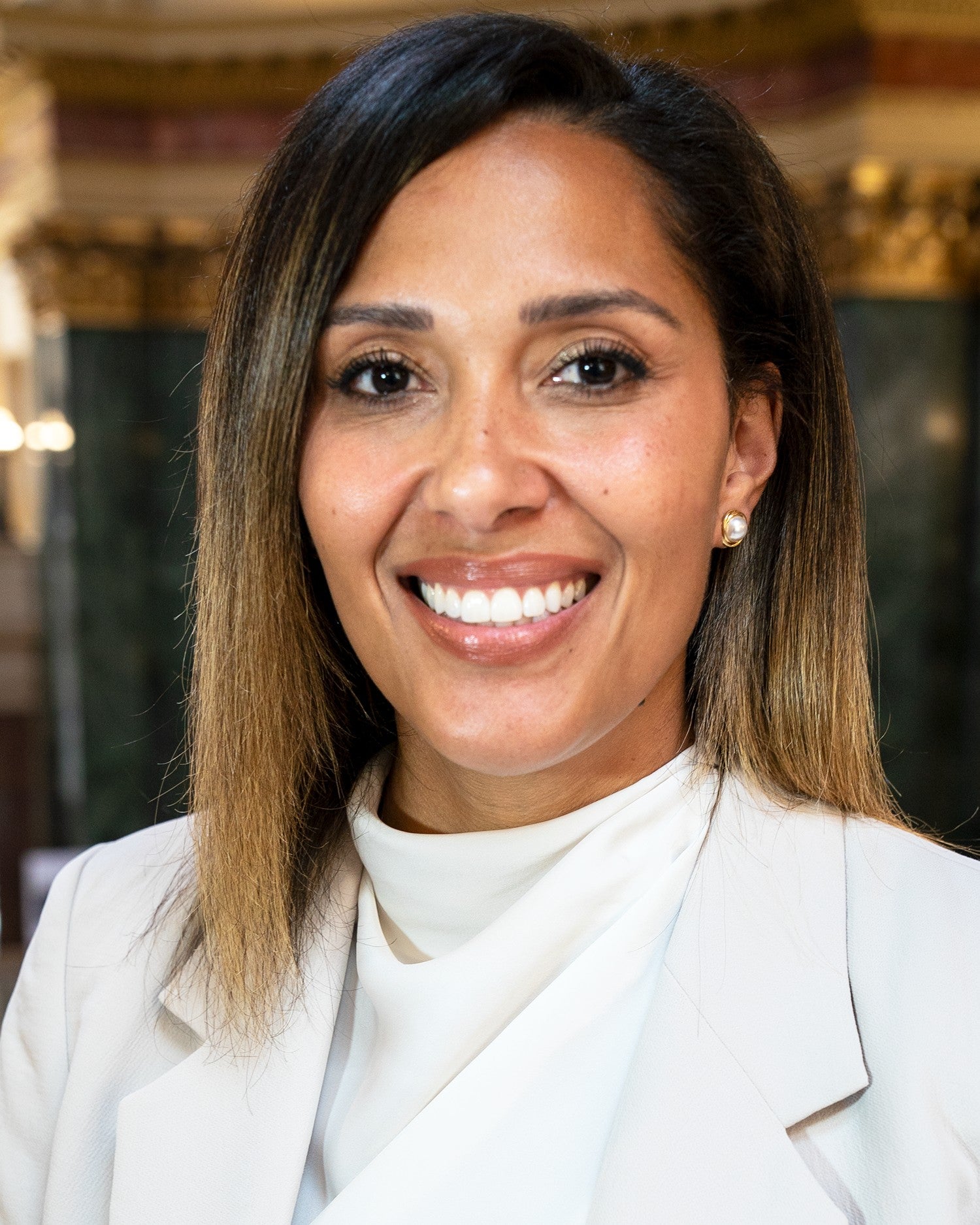
Kaylee Jackson. Photo courtesy DPI
Act 20 requires schools to use approved curriculum, provides professional development to teachers in the science of reading and tests students on their ability. But the changes have been slow to materialize due to political infighting.
As part of the bill, the legislature budgeted $50 million to fund initiatives it required. But the Republican-led Joint Finance Committee withheld the money as part of a dispute with Democratic Gov. Tony Evers, leading to a lengthy legal battle. Last June, the committee released $9 million of the funds to pay for reading coaches.
During an interview this week with WPR, Jackson said Act 20 is a sustained effort and not something that will solve the state’s reading issues in one to three years.
About 36 percent of Wisconsin’s youngest students score below the 25th percentile for reading.
Statewide standardized tests show that fewer than 40 percent of students are considered proficient, and adult literacy rates indicate that over half of Wisconsin adults read below a sixth-grade level.
Jackson said the states that are seeing improved reading scores are seeing the improvement after six or seven years.
‘So what’s going to be necessary is understanding that this is going to be a journey for us,” Jackson said. “And we need the continued support of our schools. We need the continued support of our Legislature and we need continued support from DPI.”
Jackson started her role in May.
Before that, she was offered a job with the Milwaukee Reading Coalition, but the group was unable to move forward with the position due to lack of state funding.
Stephanie Maney-Hartlaub, executive director for City Year Milwaukee, was on the hiring committee of the Milwaukee Reading Coalition.
During an interview with WPR last week, Maney-Hartlaub said that even though Jackson isn’t going to work with Milwaukee specifically, the group feels like they will have an advocate that understands where the city is coming from regarding reading challenges.
“I mean (Jackson) is fantastic,” Maney-Hartlaub said. “At the end of the day, we wanted them to be leading this work because we believe they have the passion, and the know-how to do it. We wanted that for scholars in Milwaukee.”
Jackson says in her first six months, she wants to make sure the coaching program gets off the ground at the schools so teachers are supported.
She also wants to work on communication around Act 20, so families, the Legislature and people across the state know what goals DPI has.
The goal of Act 20 is to have every child reading proficiently by the end of third grade.
“Everybody who has a hand in ensuring that our students within the state of Wisconsin are literate,” Jackson said. “We want to be sure that we have clear communication around the priority, the urgency, and the support necessary to make sure our students are reaching the goal that we have.”
New Wisconsin DPI reading leader says changes to literacy scores will take time was originally published by Wisconsin Public Radio.
If you think stories like this are important, become a member of Urban Milwaukee and help support real, independent journalism. Plus you get some cool added benefits.





















Ahhhhh Let us look at two students the first will be the child who is reading as they enter kindergarten and the child who does not know their letters as they enter kindergarten and then all the children in between
Now let us look at the children who have strong supportive homes and those homes where spanking, hitting being abused are a part of the family routine. Again who will be the successful children and which ones will need lots of help including therapy for those who are being abused.
For every child to be proficient by the end of third grade means that all those who are being abuse will receive the therapy they need by the end of second grade. Children who are being abused, will not, can not learn
Ahhhhh, let’s look at 3 public school districts. The first is a wealthy suburban district, which has sufficient funds to implement Act 20 reading programs; has a majority of students coming from enriched home environments. That district has the funds to hire the best teachers and provide them with the tools and resources to support learners’ learning. The district’s wealth makes it possible to offer a wide variety of courses, including language instruction, and extracurricular activities.
The second district is a rural district with its property taxes revenue lower than those generated in suburban school districts. The tax revenue generated by industry dropped when the employer closed facilities. There are significant number of unemployed or underemployed. This district cannot compete with wealthy suburban districts for the best teachers. The teacher shortage is most acute in rural districts. The number of students in the district is declining. Declining student population and availability of teachers have forced too many rural districts to merge or just outright close. While the outdoor environment is richer than suburban district, the home environments are not. Districts struggle to provide the basic curriculum and do not have the resources to provide a variety of courses and extracurricular activities.
The third district is an urban district. There are high levels of unemployment, homelessness, and incarcerated parents. A student may attend as many as 4 different schools as families seek affordable housing. The realities of home environments mean its students require substantially more instructional support than those in A large number of its students require extra support to succeed. Urban public-school districts are more impacted by Choice Schools that siphon off students requiring less instructional support as well as funding. The public schools are left with students requiring the most resources as well as less funding. And Choice schools are not required to meet the same standards as public schools.
It is so easy to blame the parents and ignore the political games school districts face. It’s so easy to say, “….well in my day…” and ignore the economic and health challenges students face today. It isn’t just students facing abuse in the home, students throughout Wisconsin are shouldered with trauma their parents and grandparents did not face.
Layered on top of all the struggles school districts face, are the RRRs (radical reactionary republicans) who use school funding as a weapon to assert their power. Why are districts struggling? RRRs prioritize their power games over the needs of Wisconsin students.
Well said!!!
Most any teacher who teaches in the Milwaukee area for any length of time can talk about the “miracle intervention” based on having reading coaches positions in the schools. These persons are an extra body to work with students who are behind but never seem to have any unique knowledge. I can never understand why the State for some foundation does not fund a program that looks at students who are reading on grade level with no extra instruction and find out what all of them have in common. It is not done because improving test scores is a huge industry. Looking at real factors that might be found in students who were successful could lead to different programs that do not require the large numbers of positions like “reading coaches”.
STOP For how many years have people been learning how to read is it 3000 or 5000?? READING IS AN INDIVIDUAL SKILL For some it is very easy and for others it is very difficult and even for those who it is difficult there are many reasons for the difficulty.
There seem to be two issues of sorts The first is what IS a “third grade level”? Who sets that standard and is that standard shared with the public so we the public can assess if what the “experts” are calling a “third grade level” is reasonable. Yes let us have a book or two that is set as teh standard for third grade level. Then at least we are all on the “same page”
There are simple test that determine a child’s reading “level” skill level
Let us break it down into three groups of kids Those who are sailing Reading is a piece of cake. Then there are those who are able to read the material that is being presented. Then there are those who for many many different reasons have not been successful at learning how to read.
It will take individual effort to help those children. I will let the reading experts explain how the reasons why some kids struggle and how to help them. One reason that most unfortunately is ignored is that if a child is being ABUSED or has been ABUSED they will often find learning in general much harder and if they are in elementary grades they will not learn how to read.
It is this last group of kids many of whom are also suspended that need the most help and yet they are not getting it today.
Montessori figured it out now 125 years ago as well actually starting to teach reading by the age of 6 earlier than the usual 6+
To teach a child how to read takes a HUMAN who has the skills necessary to work with them till they are successful. Today we only need people to work with those who are not reading at grade level and the vast majority of elementary teachers KNOW how. It is the money for the people (teachers) that is needed and what did the Republican do but how back the money Doubt we need the training.