

Milwaukee’s Overdose Deaths Dropped 42.5% Since 2022
How county's prevention strategies have helped reduce the numbers.
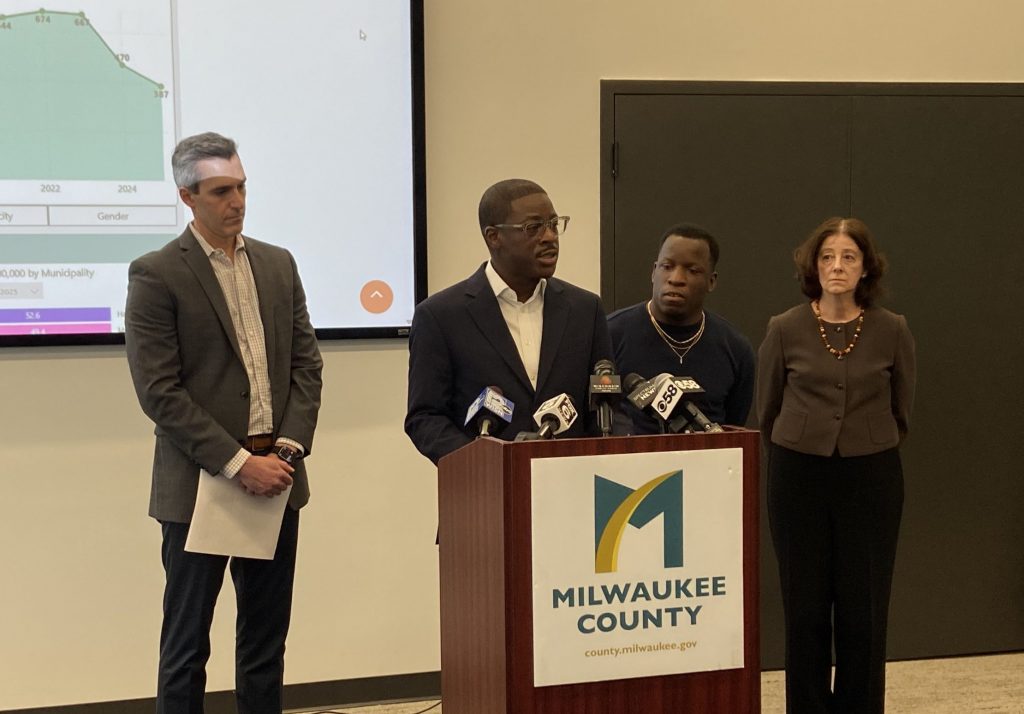
(Left to right) Dr. Ben Weston, County Executive David Crowley, Jeremy Triblett and Medical Examiner Wieslawa Tlomak. Photo taken April 21, 2026 by Graham Kilmer.
Milwaukee County drug overdose deaths have plummeted since reaching a high in 2022, but overdoses remain the cause of death for hundreds of residents each year.
Milwaukee County Executive David Crowley held a news conference Tuesday to highlight the continuing drop in overdose deaths from all drugs. In 2022, there were 674 fatal overdose deaths. Last year, there were 387, marking a 42.5% decline over the past four years.
The decline has been driven by a 54% decrease in the number of deaths caused by opioid overdoses. These drugs, and more specifically the powerful synthetic opioid fentanyl, were responsible for the rise in overdose deaths that began in 2019.
“On one hand, the number represents real progress we’ve made here locally. But that data also tells us that 387 Milwaukee County residents lost their lives to drug overdoses last year. These are our neighbors. These are our loved ones, family members, people who we care about that live in our own community,” Crowley said.
Crowley credited the county’s efforts to increase access to harm reduction supplies, expand access to treatment and invest in new strategies for responding to addiction for the local progress. In 2021, the county won a record $111 million settlement from opioid producers and distributors, which it began investing in addiction treatment, prevention and harm reduction. The latter includes distribution of drug-testing kits and drugs like naloxone that can reverse the effects of an opioid overdose.
Drug overdose deaths have been dropping nationwide in recent years. Nonprofit advocacy organizations, researchers and the U.S. Centers for Disease Control and Prevention say public health interventions and changes in the composition of the drug supply are likely explanations for the decline.
At the height of the overdose crisis in Milwaukee County there were 17 overdose deaths every week, said Ben Weston, chief health policy director for Milwaukee County. Since then, there has been a significant expansion in harm reduction access, including free naloxone vending machines and naloxone in every ambulance, fire truck and police car, he said. Addiction treatments for people entering and exiting incarceration have been expanded; paramedics now dispense the drug buprenorphine, which helps manage the pain of withdrawal and reduces physical cravings; and greater efforts, backed by data, are being made to get more residents into treatment and counseling.
“It’s not one of these programs that has made the difference, it’s the combination of the strategy laid out by Milwaukee County to target opioid use disorder from multiple angles, to leverage evidence-based practices and scale up what is working for the greatest impact,” Weston said.
Jeremy Triblett, prevention integration manager with Behavioral Health Services, noted the county has created programs focused on connecting residents to services and putting harm reduction resources directly into communities with high rates of overdoses, which include vending machines that dispense naloxone and other harm reduction items for free.
Wieslawa Tlomak, Milwaukee County’s chief medical examiner, said every third or fourth death that comes through her office is still a suspected drug overdose. While opioid deaths are declining, drug-related mortality is becoming more complicated as the drug supply changes, she said. In a majority of drug-related deaths, the toxicology report shows the presence of more than one drug.
“This is what we call mixed-drug toxicity, and this is now the rule, not the exception,” Tlomak said.
There is no drug or treatment like naloxone that can reverse the effects of a drug overdose on stimulants like cocaine or methamphetamine or other dangerous drug combinations, Tlomak said.
“In other words, the landscape of overdose deaths has changed; it is more complex, more unpredictable and more difficult to treat,” she said.
Despite the progress made, Tlomak said the problem “reflects a broader public health crisis, one that requires continued awareness, prevention and coordinated response.”
If you think stories like this are important, become a member of Urban Milwaukee and help support real, independent journalism. Plus you get some cool added benefits.
More about the Opioid Crisis
- MKE County: County Bringing Opioid Response into Parks System - Graham Kilmer - Sep 14th, 2026
- DHS Collecting Feedback on How to Save More Lives With Future Opioid Settlement Funds - Wisconsin Department of Health Services - Aug 20th, 2026
- Overdose Deaths Fall Across Wisconsin As Harm Reduction Efforts Grow - Evan Casey - Jul 9th, 2026
- New Billboards Raise Awareness About Dangers of Fentanyl - Edgar Mendez - May 3rd, 2026
- Purdue/Sackler $7.4 Billion Opioid Settlement Goes Into Effect - Wisconsin Department of Justice - May 1st, 2026
- MKE County: Milwaukee’s Overdose Deaths Dropped 42.5% Since 2022 - Graham Kilmer - Apr 22nd, 2026
- Wisconsin Limits Access to Methadone for Opioid Addicts - Addie Costello - Apr 21st, 2026
- How Wisconsin Plans To Spend $31 Million In Opioid Funds - Evan Casey - Apr 10th, 2026
- DHS Announces Plan to Invest $31 Million in Opioid Settlement Funds - Wisconsin Department of Health Services - Apr 9th, 2026
- How Milwaukee Slashed Drug Overdose Deaths - Isiah Holmes - Mar 30th, 2026
Read more about Opioid Crisis here
Political Contributions Tracker
Displaying political contributions between people mentioned in this story. Learn more.


MKE County
-
County HR Director Resigns After Health Care Scandal
 Apr 22nd, 2026 by Graham Kilmer
-
Nicholson-Bovell Elected to 4th Term as Board Chair
 Apr 21st, 2026 by Graham Kilmer
-
Washington Park Pool Demolition Starts This Year
 Apr 15th, 2026 by Graham Kilmer





















Like Mayor Johnson’s Safe Streets initiative, it is great to see a program that has a focused strategy and is effective.