
High Court Rules Pabst Brewing Can Be Held Liable for Workplace Injuries
5-2 decision by WI Supreme Court finds company liable under 1911 'safe place statute.'
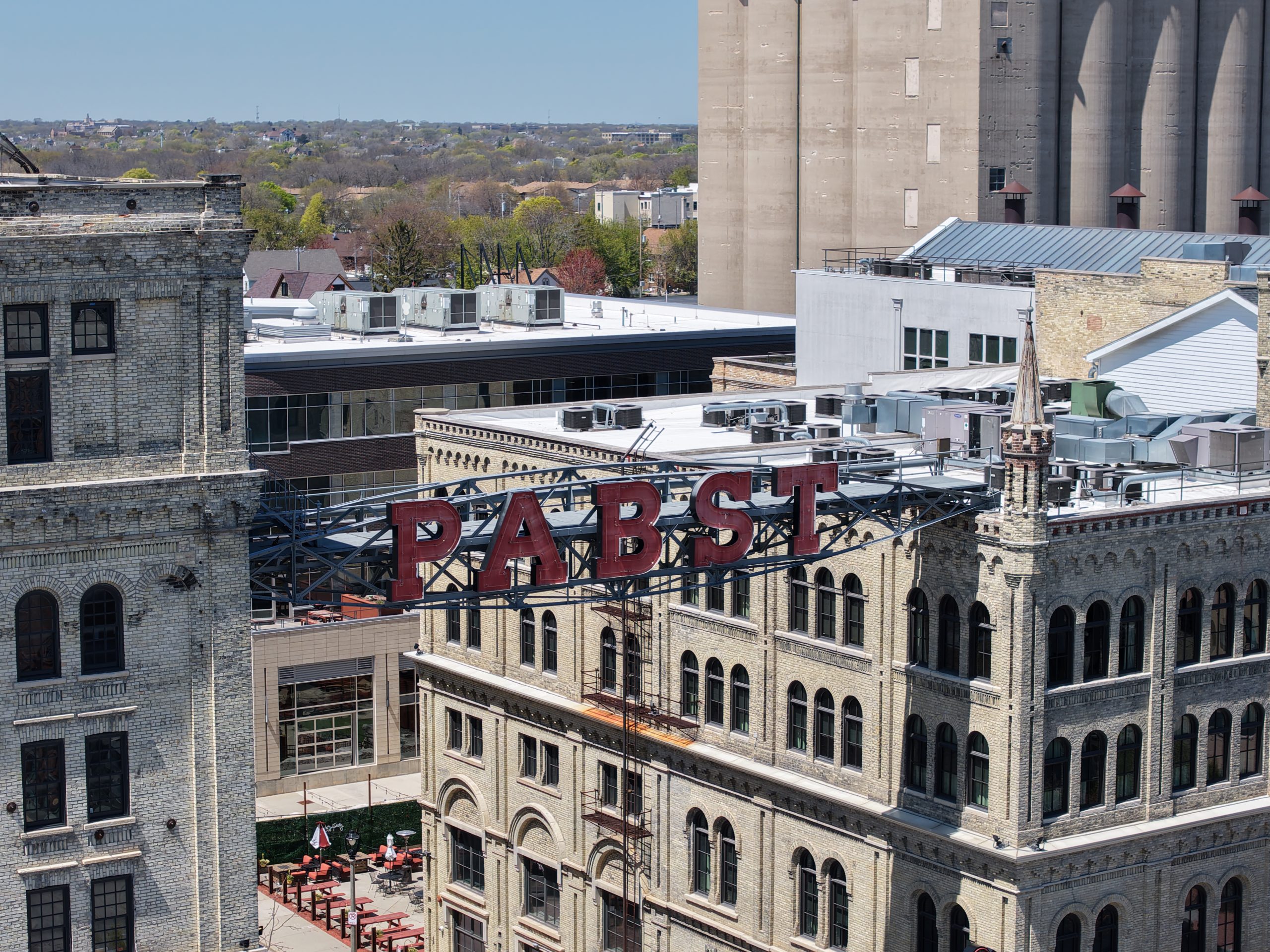
Pabst sign. Photo by Jeramey Jannene.
The Pabst Brewing Company can be held liable for injuries that an independent contractor suffered on the job, and may pay out damages, after a decision from the Wisconsin Supreme Court Wednesday.
The ruling implies that employers broadly are responsible for maintaining a certain level of workplace safety — as spelled out under a unique Wisconsin law — even for independent contractors, whose overall work is subject to different requirements.
The case stems from the death of Gerald Lorbiecki, a steamfitter who was exposed to asbestos while working at a Pabst brewery. A lawsuit filed before his death, and carried on by his estate after he died of cancer, alleged that the release of asbestos over the course of his work was a violation of Wisconsin’s “safe-place statute.”
That law, a relic of Wisconsin’s progressive era in the early 20th century, holds that employers must maintain a safe workplace, doing “every other thing reasonably necessary to protect the life, health, safety, and welfare of such employees and frequenters.” That’s considered a higher threshold of safety than other workplace safety and negligence laws.
In this case, attorneys for Pabst argued that, because they were not Lorbiecki’s employer — and did not control the day-to-day of his work, as they would for an employee — they were also not responsible for decisions that Lorbiecki made that exposed him to asbestos. In an appeal, they argued that it was Lorbiecki’s work methods that created the unsafe conditions, rather than a failure on their part.
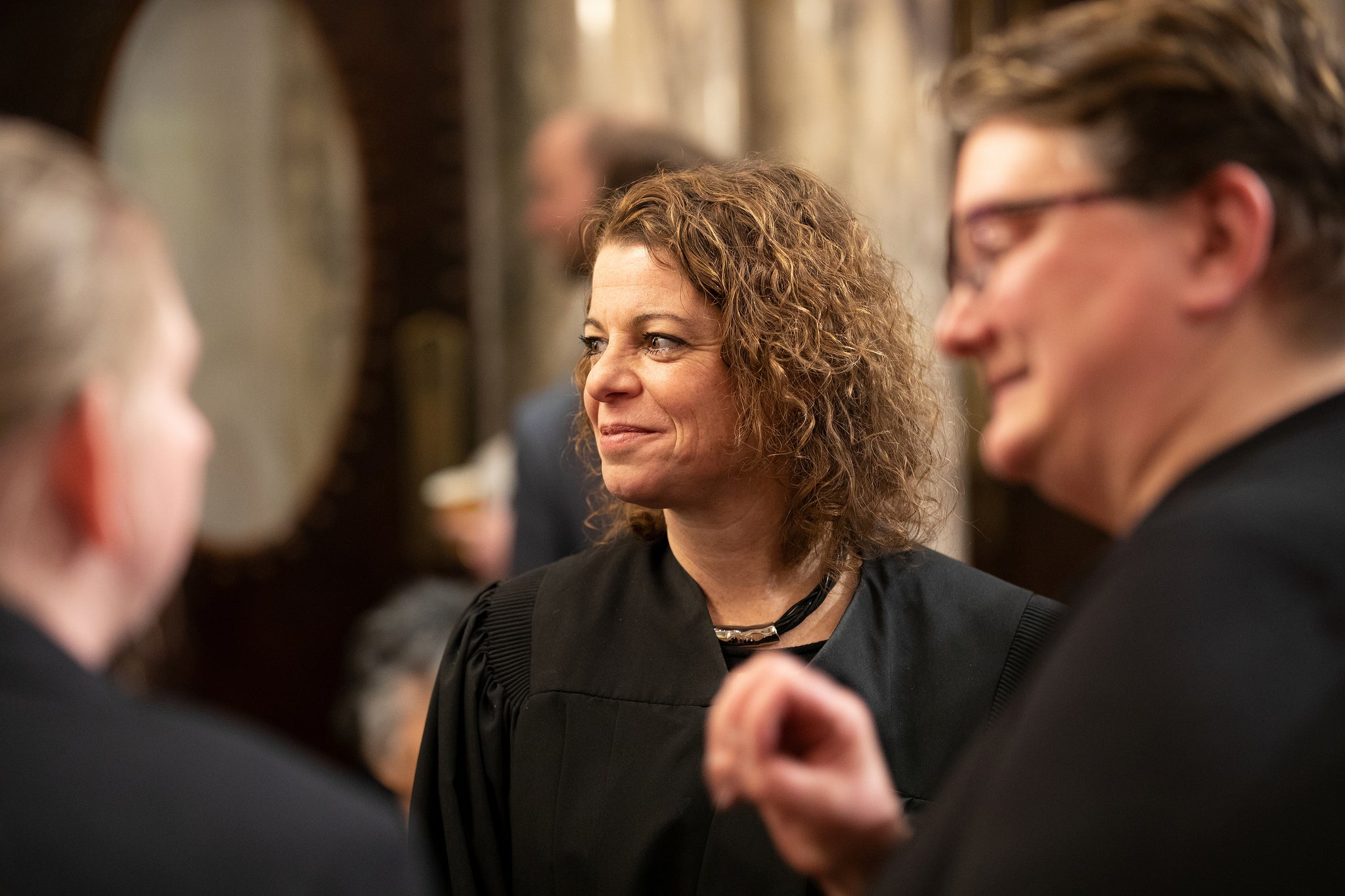
Supreme Court Justice Rebecca Dallet is seen after Gov. Tony Evers’ first State of the State address in Madison, Wisconsin, at the state Capitol building on Jan. 22, 2019. Photo by Emily Hamer/Wisconsin Center for Investigative Journalism
In a majority opinion authored by Justice Rebecca Dallet, and joined by Justices Jill Karofsky, Brian Hagedorn, Janet Protasiewicz and Susan Crawford, the Wisconsin Supreme Court found that Pabst was responsible for the exposure.
“The record here demonstrates that before Lorbiecki worked there, Pabst knew ‘many miles of’ pipes in its facility were insulated with asbestos, and that airborne asbestos was dangerous to human health,” wrote the majority opinion. “As the owner of the brewery, Pabst owed a non-delegable duty under the safe-place statute to frequenters on the premises, a category that includes employees of independent contractors like Lorbiecki.”
In a dissent, Justice Annette Ziegler wrote that Lorbiecki was ultimately responsible for the exposure.
“Gerald Lorbiecki’s injuries, as unfortunate and horrible as they are, resulted from the work that he, as an employee of an independent contractor, performed at his employer’s direction, using the expertise for which the building owner hired his employer,” wrote Ziegler, who was joined in her dissent by Justice Rebecca Bradley.
Ziegler argued that the majority opinion would spark a “sea change” for how similar such cases are treated, allowing “plaintiffs to turn workplace injuries into safe-place violations without proving a level of control or that the hazard preexisted the contractor’s arrival,” while “impart(ing) a strict liability standard for building owners.”
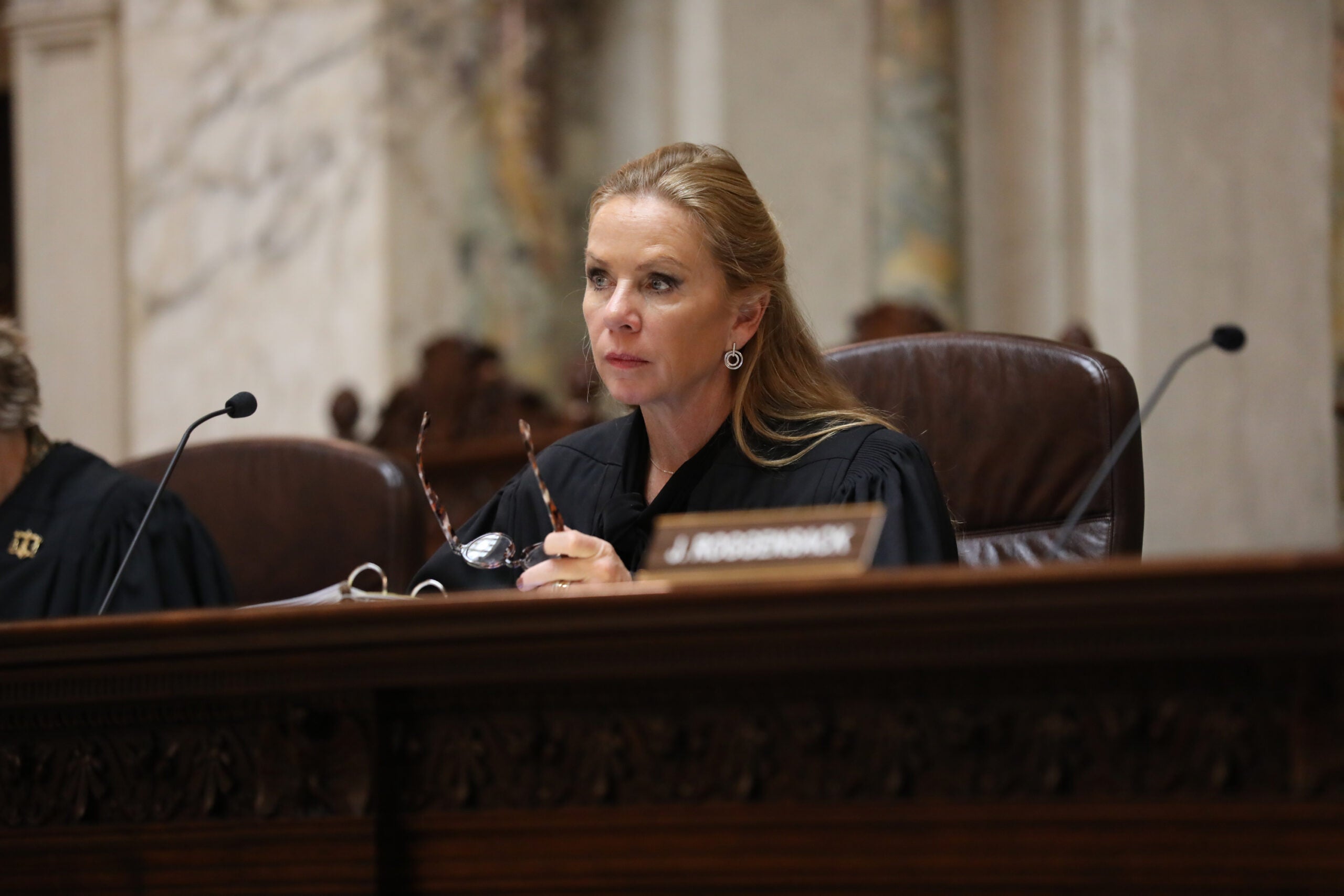
Conservative Chief Justice Annette Ziegler has tried to put the brakes on the Supreme Court liberal majority’s new administrative rules, which have blocked her authority. She is seen in the Wisconsin Supreme Court Hearing Room in Madison, Wis., on Dec. 1, 2022. Coburn Dukehart/Wisconsin Watch
“(U)nder the law, he was an employee of an independent contractor, was injured in the scope of his employment, which required him to ‘hammer and chisel away at asbestos-containing insulation,’” wrote Ziegler. “Prior to that work, nothing indicates that the building was in an unsafe condition.”
Although Pabst was originally founded in Milwaukee, by one of the original Milwaukee beer barons, it is now headquartered in San Antonio, Texas. A spokesperson for the company did not respond to WPR’s request for comment.
The facts of the case
According to the court, Lorbiecki worked as a subcontractor installing and repairing pipes at a Pabst brewery in the 1970s. Those pipes contained asbestos insulation, and Lorbiecki was diagnosed with mesothelioma linked to that exposure in 2017.
Before he died, Lorbiecki filed suit about the exposure. In that decision, Pabst held it did not have a standard duty to Lorbiecki because he was a contractor, but was found liable under the higher standards of the safe-place statute. A jury awarded millions of dollars in compensatory and punitive damages, to be paid out by both Pabst and other companies for whom Lorbiecki had worked.
In an appeal, Pabst argued against the amount and type of damages, and reiterated their claim that they were not liable for Lorbiecki’s work conditions, because, as a contractor, certain functions of how he conducted his work were decided by him and his bosses, not them.
“As Lorbiecki argues, however, this demonstrates at best that Pabst did not control Lorbiecki’s or other contractors’ work, not that it did not retain control over the place where the work was to be performed,” reads the majority opinion.
The opinion further found that Pabst is liable for punitive damages — a higher punishment, tied to intentionality, not mere ignorance. But it sided with Pabst in pushing back against the amount of the damages, based on a state cap. In total, the majority found, that entitled the Lorbiecki estate to just over $2.3 million from Pabst.
Pabst Brewing can be held liable for workplace injuries under ‘safe place statute’ was originally published by Wisconsin Public Radio.
If you think stories like this are important, become a member of Urban Milwaukee and help support real, independent journalism. Plus you get some cool added benefits.