Youth Incarceration Alternatives Running Out of Money
Community-based programs are critical to keeping youth out of juvenile detention facilities.
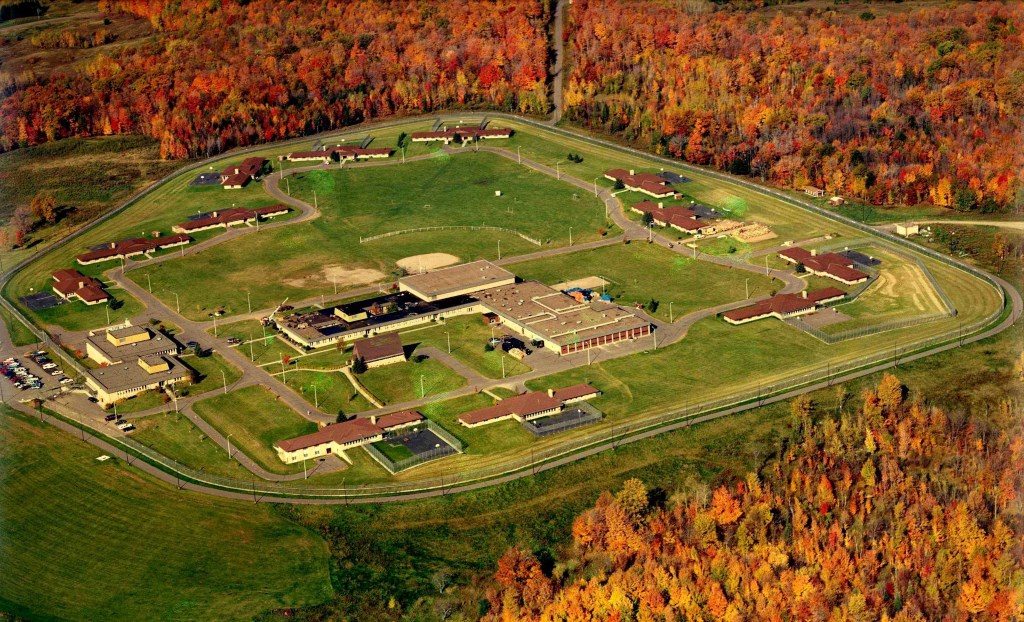
Lincoln Hills School and Copper Lake School. Photo from the Wisconsin Department of Corrections.
In March, the government agency responsible for juvenile corrections in Milwaukee County reported it was likely facing a budget deficit for the year because more children from the county were ending up in state prisons than had been anticipated for the year.
Now, the county’s Department of Health and Human Services (DHHS) is going to the county board seeking funding for two programs critical to keeping children out of detention facilities. Both programs, the department notes, are running deficits due to the increased number of children being served.
The State of Wisconsin assesses a fee to counties for each youth incarcerated in a state facility. That fee was raised to $1,154 in 2022, with another increase coming in July this year.In March, when there were 34 county youth in state facilities like the Lincoln Hills School for Boys and the Copper Lake School for Girls, it was costing the county $39,000 a day, or $1.2 million a month to incarcerate them. This cost is punching a big hole in DHHS’ budget creating a deficit estimated at $4.3 million in April.
As the number of Milwaukee children in state facilities rose, so did the average daily census at the county’s Vel R. Phillips Juvenile Justice Center. At one point in February, the 127-bed facility was short 14 beds.
The Milwaukee County Accountability Program (MCAP) is one for which DHHS is seeking additional resources. It was to serve as the youth justice model at a new county facility that was supposed to be built as part of the state youth justice reforms passed in 2018, but was never created due to inadequate state funding.
DHHS wants to provide Running Rebels with an additional $399,712 to hire three additional personnel to work on transitioning the youth from the 180-day period of incarceration back to their community, and backfill the operating deficit for the program due to the increased number of youth being served by the program.
The second program for which DHHS is seeking additional funding provides temporary supervised care and programming for youth in a non-secure environment. It’s called Shelter Care and it’s often used for youth awaiting court for alleged delinquency instead of sending them to the Vel R. Phillips facility.
This program is provided by Wisconsin Community Services at two shelter care sites, with one on N. 12th St. and another on W. Vine St., for up to five girls and 15 boys.
The program has been operating at a deficit, according to DHHS, while the population at the shelters has remained at or near capacity throughout 2021 and 2022. The department is asking for $138,416 to keep the service up and running.As Urban Milwaukee reported, the issues county officials are facing with youth corrections are largely downstream from the state’s failure to follow through on reform of the juvenile justice system.
That failure is now costing the county more money. In March, DHHS Director Shakita LaGrant-McClain said “I’m really concerned that all the work that we have done, and the credible messengers, youth employment, Bakari [Center]; like all of those things that we are trying to do to invest upstream will go away because we won’t have the funding to do it.”


MKE County
-
Sentencing Date Set in Dugan Case
 Apr 10th, 2026 by Graham Kilmer
-
Pyrotechnics Being Added To July 3 Drone Show
 Apr 9th, 2026 by Graham Kilmer
-
See Designs for New Courthouse
 Apr 9th, 2026 by Graham Kilmer