

The Old is New at MPS
Superintendent's program of Instructional Facilitators intended to creative unified, improved instruction.
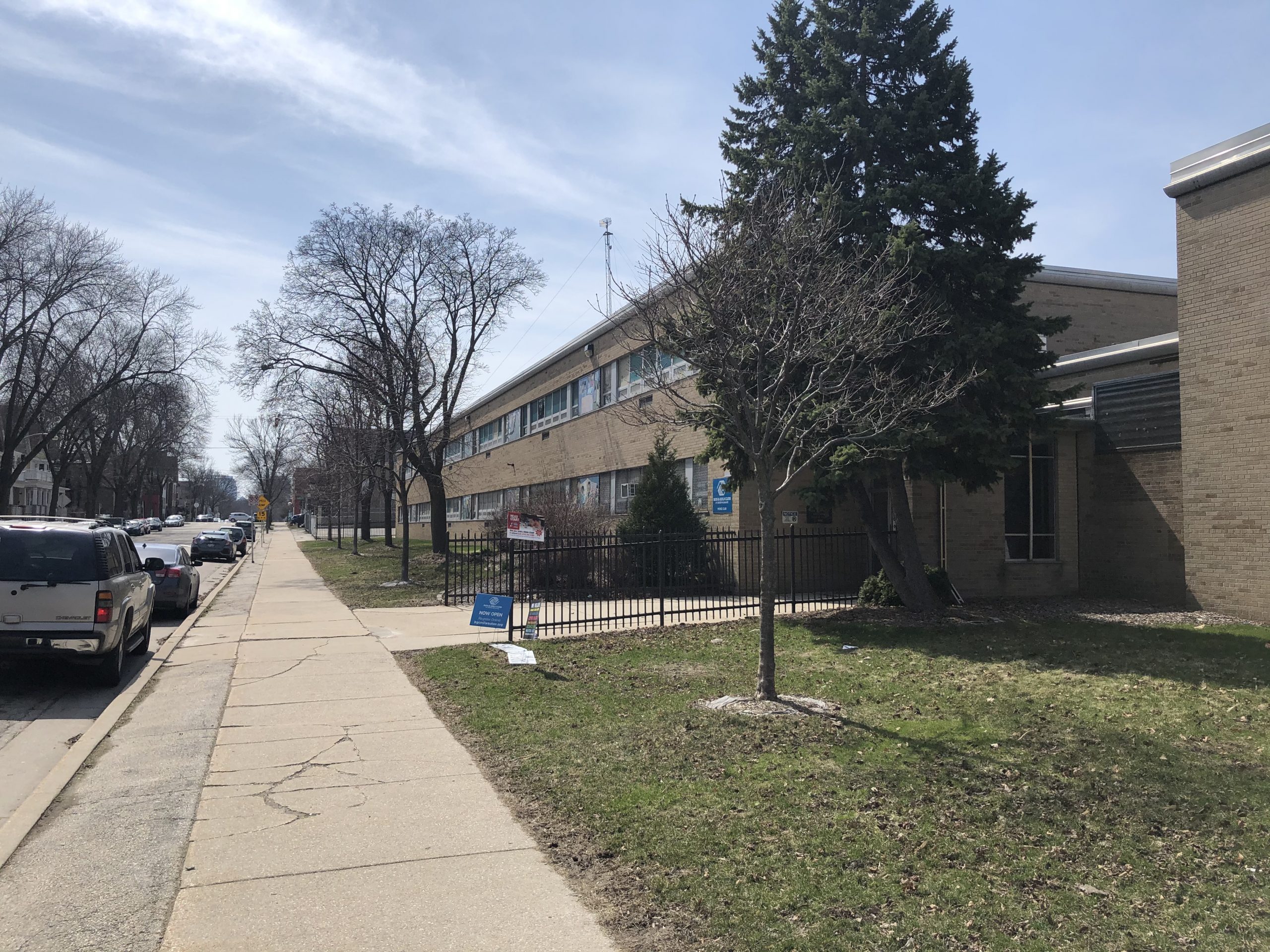
Riverwest Elementary School, 2765 N. Fratney St. File photo taken March 30th, 2021 by Dave Reid.
Milwaukee school superintendent Brenda Cassellius is introducing a new program to Milwaukee Public Schools: instructional facilitators. But the IF program is not entirely new. Instead, Cassellius is reaching into her toolbox for a program she used when she oversaw the Memphis middle schools in the 2000s.
Nor is the concept unknown nationally. The Council of Great City Schools lists other large urban districts utilizing IFs, such as Los Angeles and Chicago. As outlined by Franklin University, “Instructional facilitators develop instructional material, coordinate educational content and incorporate current technology into instruction in order to provide guidelines to educators and instructors for developing curricula and conducting courses. They may train and coach teachers. The role includes educational consultants and specialists, and instructional material directors.”
“It worked for me in Memphis,” Cassellius told Urban Milwaukee. “This district [MPS] used to have something similar.” MPS had SST (school support teachers); the new IF program reflects many of those characteristics.
Currently, the MPS website “offers different programs and services to support” students and schools. All those programs lack coordination with each other. We need to “streamline and focus that work,” Cassellius explained.
To create a single, comprehensive program, MPS had to string together a series of disjointed and overlapping programs. “Each bucket of money required separate approval,” Cassellius said, including a carryover from federal Title I funding of $2 million or $3 million. “We worked with DPI over a four-month period.”
Each previous program operated in different ways in every school. “Multiple principals used them in multiple ways,” said Cassellius. She has instituted a centralized, basic standard of curriculum and support for each school in the district.
Cassellius wants a “coherent program between all our schools… working systemically rather than as individual schools.”
Cassellius would like to have an individual instructional facilitator for each school, but budgetary limitations cap the number of IFs with some schools having to share an IF. Candidates are being vetted centrally through the Office of Academics. IFs will be paid consistent with their status on the teacher pay scale. More than 80 IF employees now come from the current MPS staff. There are still openings for 17 people coming from outside the district. Only three or four former assistant principals elected to be part of the IF program. Cassellius did not roll over the employees from the previous programs into the IF program, requiring them to reapply.
What each school should receive is an IF leader whose strength matches what has been identified as a need in the state report for their school. If a school was weak in reading or math, for example, the IF for that school will focus more closely on those areas.
The job description outlines how IFs will operate:
“Each school will submit a school-based school improvement plan. The instructional facilitator will play a critical role in enabling schools to implement evidence-based strategies.” IFs will develop professional development, coach staff and monitor strategies. They are there to ensure that district and statewide standards are being followed. For example, IFs are to make sure that schools follow Act 20, which requires the science of reading. But most of all, IFs are there to help.
IFs are expected to attend professional development before the beginning of the school year and on an ongoing basis.
While each IF will be evaluated by the principal, Cassellius says there will be a team approach, with input from central office playing a significant role. IFs are strictly prohibited from performing continuous administrative functions, evaluating teachers or handling supervision functions such as field trips and lunchroom duties.
When Cassellius was put in charge of the Memphis middle schools in the mid-2000s, only four schools out of 31 met state standards, she noted, and four years later, 22 of the 31 schools were now meeting the standards. Reading scores were raised by 22%.
She hopes for similar results in Milwaukee. The IF program, Cassellius believes, can play an important part in improving MPS.
If you think stories like this are important, become a member of Urban Milwaukee and help support real, independent journalism. Plus you get some cool added benefits.


K-12 Education
-
Cassellius Seeks to Hire 89 More MPS Teachers
 Jun 15th, 2026 by Terry Falk
-
Teachers Union Loses on School Budget, Wage Hikes
 May 2nd, 2026 by Terry Falk
-
Cassellius Betting on Smaller Class Sizes
Apr 1st, 2026 by Terry Falk




















As the article mentioned, the position of “Instructional Facilitator” has been tried before and has never stood out as a “miracle innovation” for a number of reasons. I support superintendent Cassellius as a competent person with experience, new ideas, and no connection to the old guard administrators whose incompetency caused so many problems. She needs to get the right people in these positions and not have it filled as often happened in the past by a staff member who was tired of the classroom. Their role needs to be clearly defined so that some principals will not try use them as their assistants for matters that they should be handling. Lastly, the staff needs to be engaged in the development of this intervention. Too often in the past, new principals would choose not to work with the staffs, create dissension, and then having an exodus of good teachers. I think a low rate of teacher turnover is a good statistic to measure the competency of an administrator but is never used by the administration.