

Cassellius Seeks to Hire 89 More MPS Teachers
But given decline in state's teacher salaries and benefits, that's not easy.
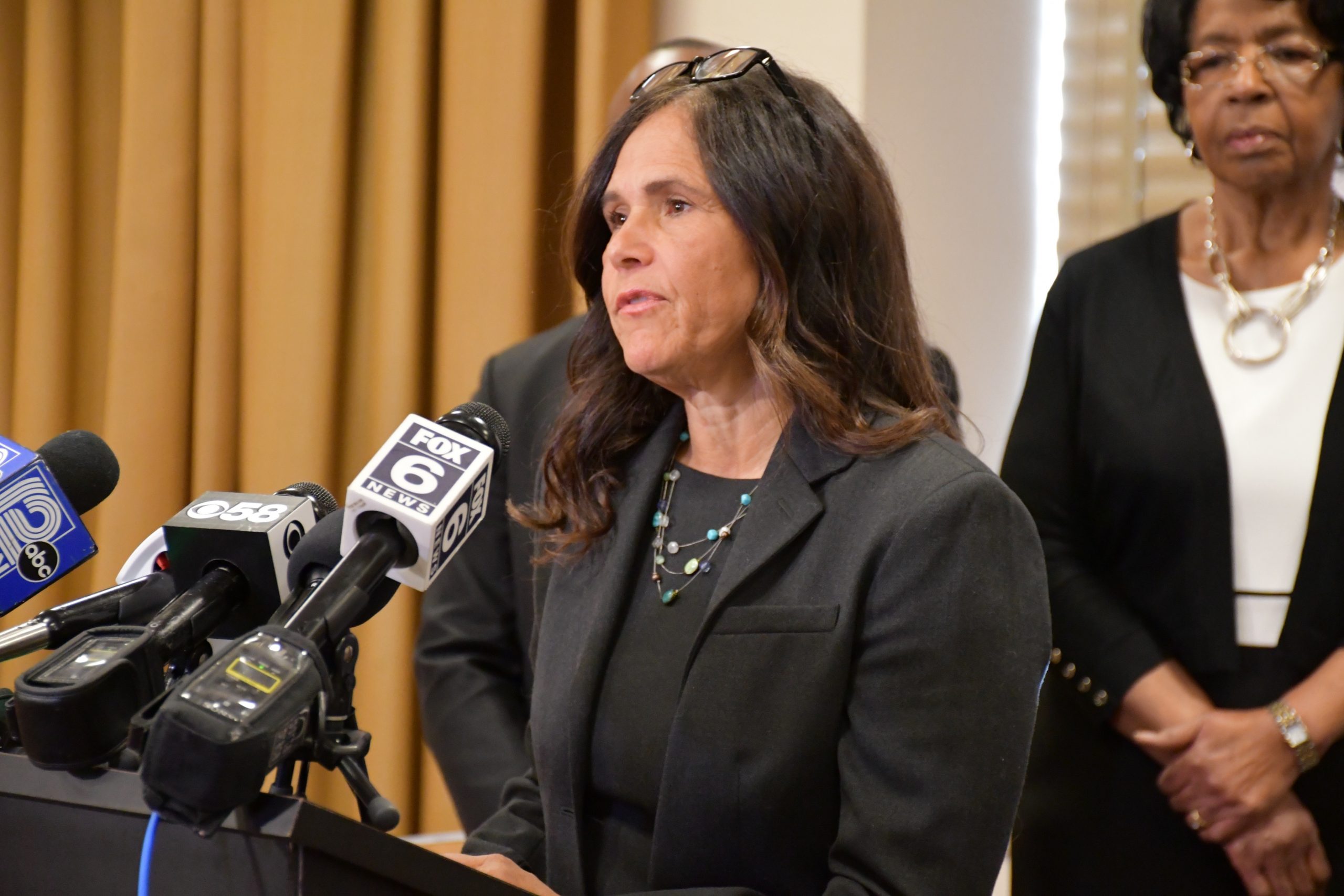
Milwaukee Public Schools Superintendent Brenda Cassellius speaks at an April 3 press conference. File photo by Jeramey Jannene.
Milwaukee superintendent Brenda Cassellius is not simply trying to make sure that every classroom has a certified teacher; she wants to hire 89 more teachers to lower class sizes in a district with shortages of some 100 teachers year after year.
Wisconsin and the nation face a teacher shortage. The Wisconsin Department of Public Instruction outlined the problem in an April 2026 workforce analysis report. It found that Wisconsin colleges and universities are training enough prospective teachers, but from the recent year analyzed, of 5,256 possible teachers, only 3,568 entered the profession. After eight years, only 52.6% are still teaching. For special education, the retention rate is worse at 43.2%. There were no numbers for MPS, but its retention rate has traditionally been even lower.
This was also noted by teachers and union leaders from the Milwaukee Teachers’ Education Association at various school board meetings, as Urban Milwaukee reported, with teachers testifying that they need increased pay or would seek other professions; they need mentors, counselors and psychologists to support their students; and they need support from assistant principals, many of whom were being cut by Cassellius.
How does this compare to other districts in Wisconsin? Dan Rossmiller, the executive director of the Wisconsin Association of School Boards, told Urban Milwaukee that there is no survey of Wisconsin school districts on whether they are meeting their teacher needs. However, because of declining enrollment, school consolidation, and budget constraints, many districts are shedding teachers. “Our attorneys say they have never had so many requests for help with reductions in force,” Rossmiller said.
Rossmiller points to districts near Milwaukee that are closing schools. But cuts in some districts have not alleviated the teacher shortages in urban and rural districts. A 2025 study by Wisconsin Policy Forum found that the five largest Wisconsin districts rely heavily on emergency licenses. Milwaukee, with 5.6% of its teachers on emergency licenses, is actually behind Racine, Madison and Green Bay, in that order.
So, Cassellius has two tough tasks ahead of her: how to hire the additional teachers and retain the ones the district already has. In an interview with Urban Milwaukee, she noted an additional challenge MPS faces: “Teachers are leaving Wisconsin and going elsewhere. So, the question is not just Milwaukee Public Schools attracting them.”
As noted in the DPI workforce analysis report, “In inflation-adjusted dollars, the median teacher compensation in the state in 2010, including salary and benefits, was $110,722. By 2024, that number fell to $88,106.” Median salary dropped from $72,980 to $61,837 during that period, but the salary was worth much less because teachers now pay so much more for their health insurance and pensions: The median value of fringe benefits had dropped from $39,431 to $25,814 during that period.
State superintendent Jill Underly has said that low pay means some teachers have to work second jobs “to stay in the profession.”
Cassellius understands the need to have just wages and benefits for teachers. She points out that steps and lanes with raises after so many years served have been maintained to allow teachers to increase financial compensation through their careers, but she understands that the district can only afford to give half of the cost-of-living increase it has promised at the beginning of the school year, with the rest coming midyear on Jan. 1.
MTEA President Ingrid Walker-Henry told Urban Milwaukee that she fears that, without the full pay raise, some teachers may leave MPS or teaching altogether. “They usually leave because they feel their expertise is not valued, knowing that their pay is not competitive to support themselves and their families,” she noted.
In public testimony at school board meetings, teachers said the loss of specialists and mentors might cause teachers to leave because of a lack of support. But Cassellius said that many of those specialists and mentors have been maintained.
As to the loss of assistant principals, Cassellius points to a new lifeline supporting teachers. “We have what is called an instructional facilitator position, grant funded from the state. We have about 102 positions,” she said. Many facilitators could be former assistant principals, working with teachers to make them more effective educators.
Cassellius spent much of her time with Urban Milwaukee explaining major changes taking place in MPS human resources. She offered high praise for her new department director, Dominick Maniscalco.
“He has a deputy that reports directly to him,” said Cassellius. He “has restructured the talent management team, put in a new position on data and analytics.” She is able to work with the team on efficiencies from posting to application to hire.
“Within 24 hours, if you apply for a job with MPS, you will get a live response from an HR person, not an email, not a voice mail,” Cassellius said. “This is an actual call back from a live person saying ‘Thank you for your interest in Milwaukee Public Schools. We’ve got your application. We’re so excited you are considering us. Here is the timeline.’ Like a case manager.”
HR is throwing a wide net to bring in teachers from all over the country. Cassellius says they have hired 20 international teachers so far.
MPS is also trying to plan ahead on personnel. Cassellius noted the district is predicting student enrollment at schools much earlier, relying on demographic trends to hire and place teachers.
Walker-Henry has noticed the difference. She notes that HR “did not appear to move with a sense of urgency” in the past, but the new HR director “appears to be more responsive.”
“It feels like we are in an upward trajectory,” she said. “Are we hiring at a rate that our members and I feel needs to happen? I don’t think we are there yet, but I do think we are moving forward.”
Cassellius said she still needs to figure out how to staff the 19 most needy schools at MPS. Presently, schools do much of the interviewing of prospective teachers. They are not hired right away. That must change, she said.
“We want to make sure that any new hires coming into the district are going to be placed where we have the highest needs. That is what we still need to figure out.”
If you think stories like this are important, become a member of Urban Milwaukee and help support real, independent journalism. Plus you get some cool added benefits.


K-12 Education
-
Teachers Union Loses on School Budget, Wage Hikes
 May 2nd, 2026 by Terry Falk
-
Cassellius Betting on Smaller Class Sizes
 Apr 1st, 2026 by Terry Falk
-
Crowd Opposes MPS Staff Cuts
Mar 11th, 2026 by Terry Falk





















Hmmm, the “tools” Scooter & And the GOP gave local districts through Act 10 clearly have driven this decline in compensation for educators in WI. The whopping declines in pay and benefits are driving educators out of the state- and who can blame them? The ACT 10 chickens have come to roost and our kids are paying the price.
We must repeal Act 10. Young people simply cannot afford to become teachers today. The education debt is too high, and these student loans are no longer forgivable.