

Minnesota and Canadian Wildfires Bring Hazardous Pollution to Wisconsin
May blanket entire state by Thursday. Wisconsin DNR issues air quality advisory.
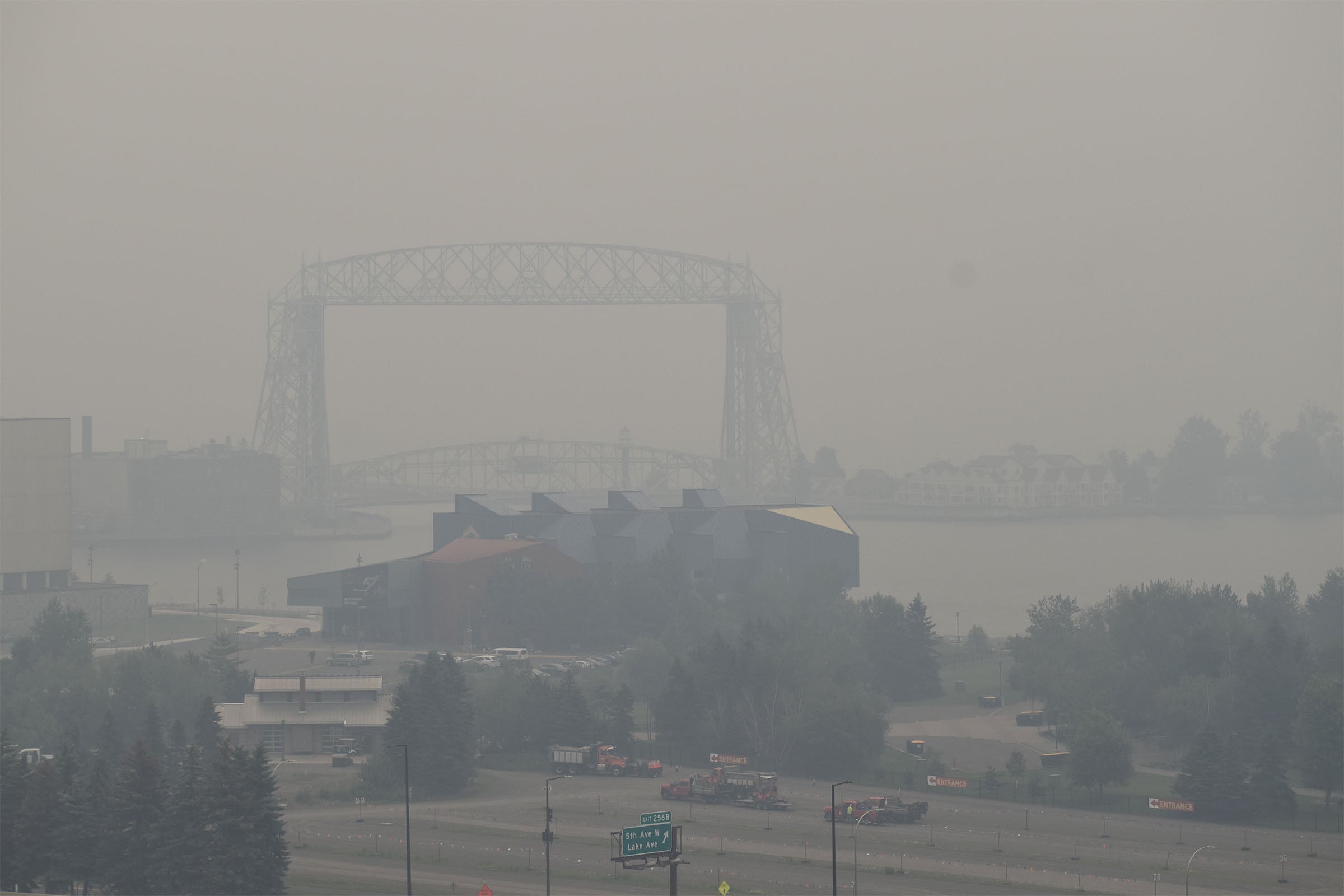
Smoke from wildfires in Canada and Minnesota have already pushed soot pollution past hazardous levels in the Duluth-Superior area Wednesday, July 15, 2026. Danielle Kaeding/WPR
Wildfire smoke from fires blazing in Canada and Minnesota will blanket much of Wisconsin this week, bringing hazardous air quality to northern Wisconsin and statewide effects.
The Wisconsin Department of Natural Resources issued an air quality advisory Tuesday that runs through 11 a.m. Thursday, which could be extended.
In the Twin Ports, smoke blocked view of the Duluth Lift Bridge Wednesday morning as 17 fires burned in northern Minnesota, including three fires in the Boundary Waters Canoe Area Wilderness. The U.S. Forest Service closed all entry points for the wilderness area, which covers almost 1.1 million acres.
Craig Czarnecki, outreach coordinator for the DNR’s air management program, said hot, dry and windy conditions in recent days have rapidly expanded fires. Northwest Wisconsin will be most affected by wildfire smoke Wednesday, especially counties along Lake Superior. He said to expect short-term spikes of hazardous air quality in the region.
“It’s a very rare thing,” Czarnecki said. “I’ve been working for the DNR for six or seven years now, and we’ve never had a hazardous (reading). … A lot of it has to do with the proximity to these fires.”
Some monitors showed air quality index, or AQI, readings for soot pollution as high as 593 in Superior and 784 in Bad River as of 3 p.m. Wednesday. Higher readings mean greater levels of air pollution. A value over 300 is considered hazardous.
On Wednesday morning, volunteers Ellen Kreidler and Brenda Bodin with Friends of the Library were collecting book donations in Superior. Every 10 minutes or so, Kreidler said they ducked inside the Superior Public Library.
“You start to feel like your eyes are burning, and your throat hurts,” Kreidler said. “It’s pretty bad.”
While they’ve dealt with wildfire smoke in recent years, Bodin said it was nothing like this.
“I don’t believe it was this bad,” Bodin said. “You could smell it, but it didn’t block out the sun.”
Superior’s Russ Hendrickson said the smoke reminded him of stories about the 1918 fire near Cloquet, Minnesota. A delivery driver, he said he could barely see anything on his route across the Blatnik Bridge at sunrise.
“You couldn’t see the length of the center span,” Hendrickson said. “The smoke was such that you couldn’t see any of downtown Duluth when I came over.”
Smoke will reach a line stretching from Eau Claire to Sheboygan by noon Wednesday. It will continue to drift south toward La Crosse and Janesville, and smoke is expected to blanket the entire state by Thursday. Air quality statewide will range from unhealthy for sensitive groups to very unhealthy or even hazardous.
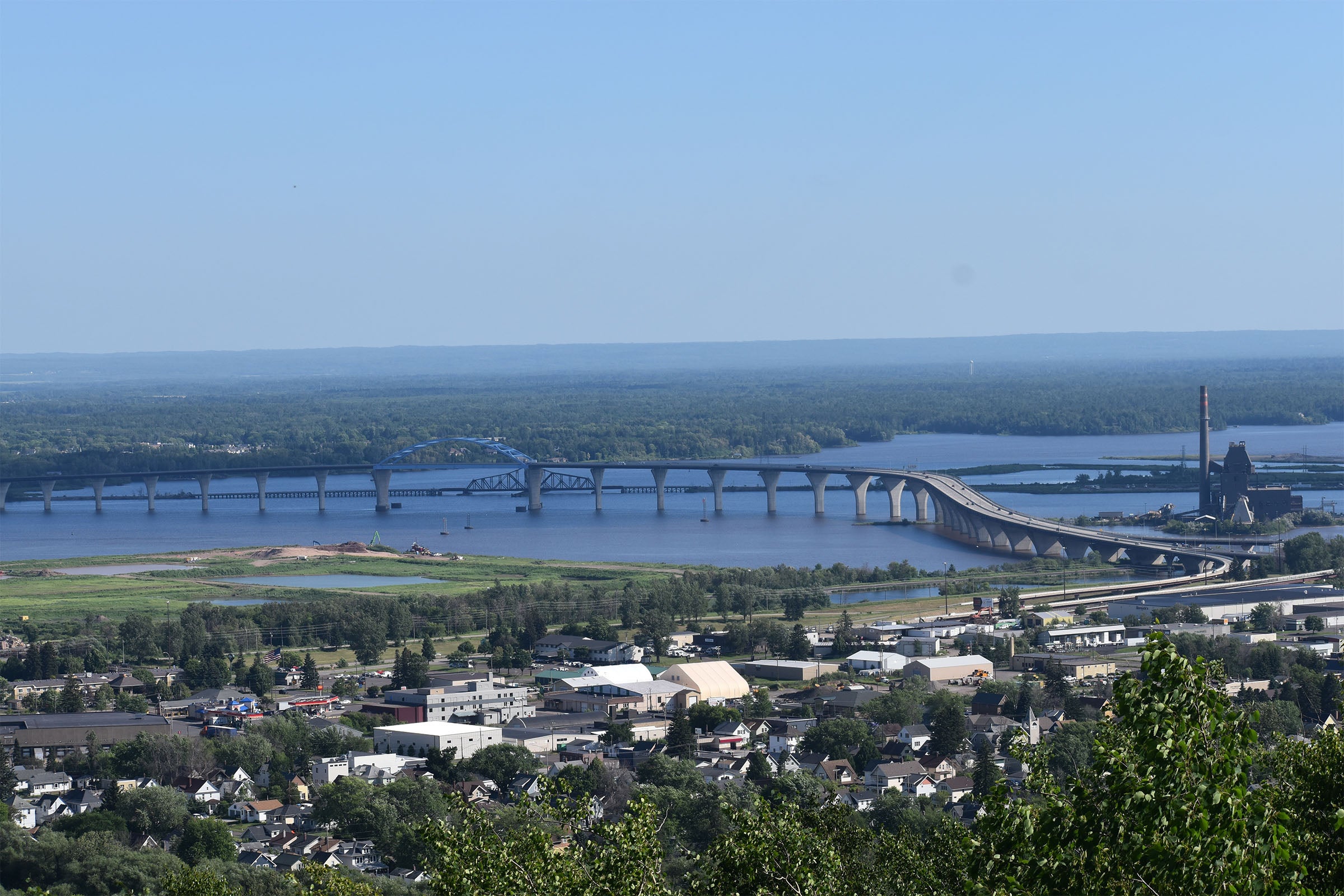
A view of the Bong Bridge that runs between Superior and Duluth on Tuesday, July 14, 2026 at 5 p.m. Danielle Kaeding/WPR
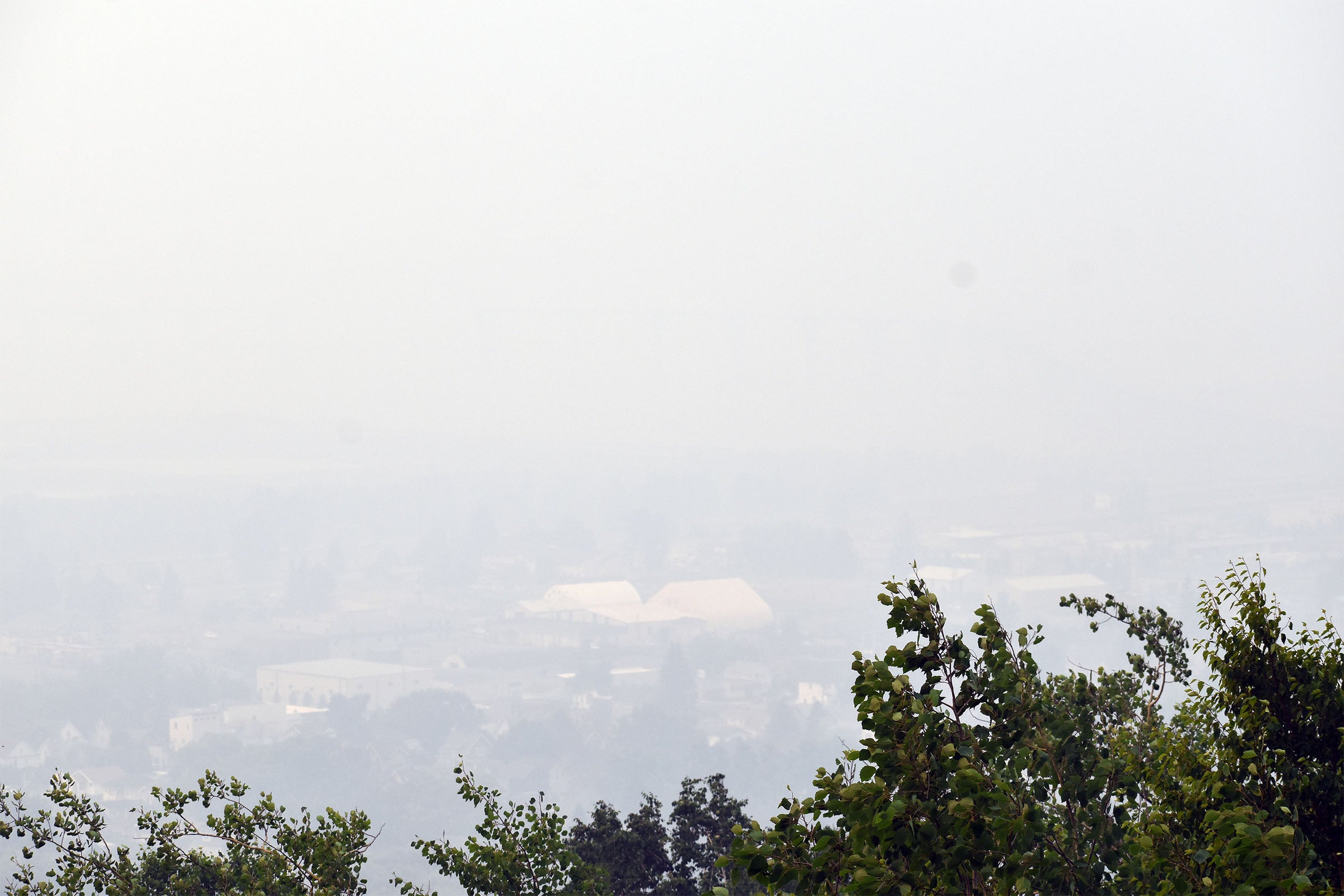
The same view of the Bong Bridge, which is completely obscured by smoke, as of 8 a.m. on Wednesday, July 15, 2026. Danielle Kaeding/WPR
Dr. Joan Schiller is a member of Healthy Climate Wisconsin and retired medical oncologist who worked at the University of Wisconsin’s Carbone Cancer Center. She said wildfire smoke contains tiny particles of pollution smaller than a strand of hair.
“I don’t think people realize how far away you can be from the fire itself and still have health problems, and these health problems typically manifest themselves as respiratory problems, such as exacerbation of COPD or asthma or emphysema,” Schiller said. “They can manifest themselves as cardiovascular problems, increasing heart attacks.”
Children, older adults and those who are pregnant are most at risk. A Clean Wisconsin analysis said around 250 premature deaths are caused by wildfire smoke in Wisconsin each year. The environmental group also found Wisconsin has averaged 9 days of unhealthy air from wildfire smoke since 2020 – up from less than one day in the previous decade.
The DNR advises residents to close windows and doors, run air conditioning units on recirculate, use an indoor purifier or create a temporary air filter and consider wearing an N95 mask outdoors to reduce exposure.
Wisconsin has seen blazing heat in recent days with an extreme heat warning or heat advisory in effect across the state Wednesday. The National Weather Service offices in Duluth and Milwaukee/Sullivan said temperatures will feel close to 100 degrees or more.
Climate change is driving heat and drought that have set the stage for wildfires to burn. Wildfires in Canada have worsened as the nation has seen warmer and shorter winters that have enhanced drought conditions, Amanda Latham, climate outreach specialist with the Wisconsin State Climatology Office. “When we have these really, really dry conditions, and we also start to introduce the warmer conditions during the summer, that really expands the wildfire season,” Latham said. “Oftentimes, it makes it a lot worse than what we’ve seen in in historic records.”
In Canada, around 835 fires are burning with nearly 3,500 so far this year that have consumed around 4.7 million acres. The number of fires is above the 10-year average.
A Minnesota Star Tribune analysis found wildfire activity has increased in Minnesota almost every season since 1992, including a tenfold increase in the average number of fires during summer and fall.
In the Boundary Waters, the largest fire burning is the Thumb Fire, which had grown to around 6,500 acres as of Tuesday afternoon. Authorities have urged Minnesota residents around the Gunflint Trail to be prepared to evacuate at a moment’s notice, and MPR News reported that Forest Service officials estimated 6,000 to 10,000 people were still camping or canoeing in the Boundary Waters Tuesday.
Scientists have warned that more frequent and severe wildfires due to climate change will worsen air quality as longer summers and drier soils have increased the length of the wildfire season.
Last year, wildfire smoke prompted air quality alerts on 22 days in Wisconsin, just one day shy of the record set in 2010. In the last three years, Czarnecki said Wisconsin has issued smoke advisories earlier in the spring, which previously hadn’t occurred since 2011.
Wisconsin sees hazardous levels of pollution as fires burn in Canada and Minnesota was originally published by Wisconsin Public Radio.
If you think stories like this are important, become a member of Urban Milwaukee and help support real, independent journalism. Plus you get some cool added benefits.




















When can we expect another letter from Tom Tiffany, Glenn Grothman, and other GOP reps telling Canada they need to manage their forests better so our vacations aren’t impacted? Apparently their letter last year didn’t work. https://urbanmilwaukee.com/2025/08/05/murphys-law-why-wi-republicans-attacked-canada/