
Milwaukee Can Benefit From Pocket Urbanism
It's all about creating a more connected city.
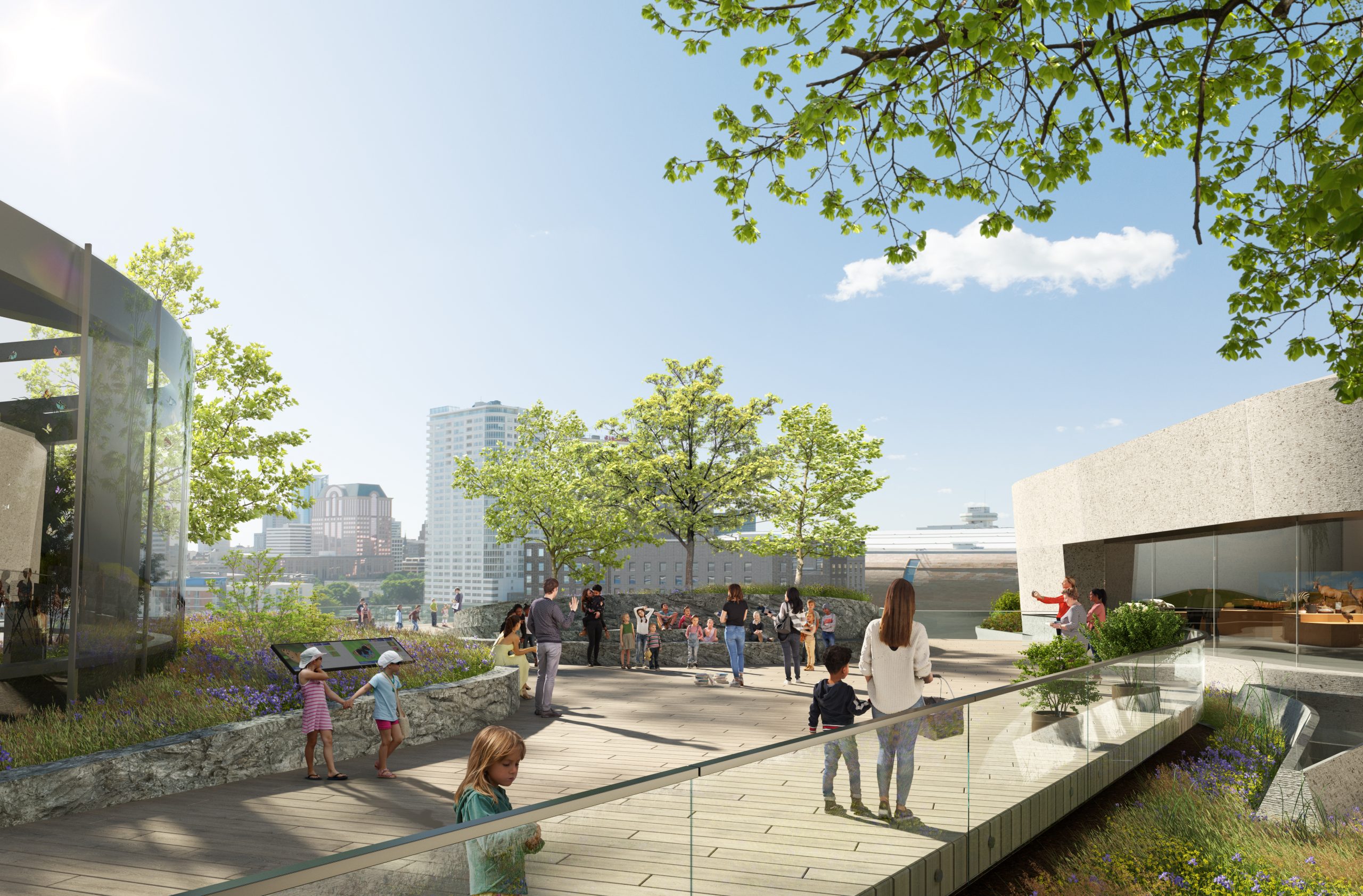
With pocket urbanism, cultural projects like the upcoming Nature and Culture Museum of Wisconsin could anchor new civic districts that balance performance with daily participation. Rendering courtesy of Ennead architects.
Milwaukee is a city that has always punched above its weight. With a strong industrial legacy, a proud civic identity, and a rich architectural history, it has weathered many centuries of change and divestment while keeping its individual spirit intact. But as cities everywhere compete for people, investment, and identity in the 21st century, the question isn’t whether Milwaukee can reinvent itself. It’s whether it can reconnect its past strengths into a future that feels distinctly its own.
That’s where pocket urbanism comes in.
Rather than relying solely on mega-developments or singular architectural gestures, pocket urbanism focuses on strategic, site-specific interventions — places that combine housing, culture, work, and public life in a way that reflects local identity while driving regional growth.
Milwaukee’s riverfront factories, grain elevators, and warehouse districts once fueled the nation’s economy. Today, these same structures offer an architectural foundation for innovation and reuse. Already, we see former industrial areas being transformed into districts for startups, design studios, culinary experimentation and co-living.
The opportunity pocket urbanism offers is larger than any one building. Thoughtful interventions create urban pockets, or zones of experience where people want to spend time, not just pass through. It’s about curating compact, complete neighborhoods where the bones of the city’s past support the spirit of its future. This includes:
- Adaptive reuse of historic structures for housing, education, and civic programming
- Pedestrian-scaled public space that connects neighborhoods to the river and the lake
- Cultural venues and event programming integrated into daily civic life—not siloed off as special occasions
Milwaukee already has the pieces. Pocket urbanism entails assembling them into a more connected whole.
One of Milwaukee’s greatest assets is also one of its most under-leveraged: Lake Michigan. As cities globally compete for talent and investment, proximity to open space and water is becoming a differentiator. But what sets great waterfronts apart isn’t just scenery, it’s accessibility, design, and programming.
Imagine a string of pocket districts along the lake and river: each with its own identity, but connected by transit, trails, and curated experiences. Cafés, galleries, tech hubs, family housing, public lectures, and climate-forward design as the building blocks of a new civic realm. Milwaukee’s Harbor District, Third Ward, and Bronzeville are ripe for this kind of layered development.
The goal isn’t uniformity; it’s diversity, activation, and rhythm.
Similarly, Milwaukee’s cultural institutions, such as the Milwaukee Art Museum, Marcus Performing Arts Center and the future Nature & Culture Museum of Wisconsin, can anchor new civic districts that balance performance with daily participation. These anchors draw visitors, creating a center for housing, retail, and innovation ecosystems to grow around them.
Pocket urbanism enables these goals through precision and place. It doesn’t just ask “what do we build,” but “what do we connect,” “who do we serve,” and “how do we design for human flourishing, not just function?”
Milwaukee is a city that values craft in everything, from its beer, its music, its buildings, and its people. As it grows, the challenge is to preserve that spirit while embracing density, diversity, and dynamism.
With a patchwork of historic neighborhoods, a powerful lakefront, and institutions ready to engage, Milwaukee doesn’t need to compromise to meet the desires of contemporary urban residents. It needs to become more Milwaukee—connected, intentional, and future-facing.
Pocket urbanism is the toolset. Culture, community, and design are the drivers. And Milwaukee is more than ready for what comes next.
Peter Schubert is a Wisconsin native and partner at Ennead Architects, an international architecture firm based in New York and the design team behind Milwaukee’s forthcoming Nature and Culture Museum.
If you think stories like this are important, become a member of Urban Milwaukee and help support real, independent journalism. Plus you get some cool added benefits.


Op-Ed
-
Wisconsin’s Utility Energy Crisis
 Mar 1st, 2026 by Isaiah Ness
-
Pete Buttigieg Comes to La Crosse
 Jan 20th, 2026 by Ruth Conniff
-
Trump Administration Has Abandoned Local Governments
 Dec 28th, 2025 by Sup. Jack Eckblad
















Yeah I agree with these points. Having more “place” feeling on neighborhoods that feel more complete would be great.
I think I agree. But, I’m just a tad unclear about zeroing in on the definition of “pocket urbanism.”
I’m in total agreement with the benefits of non-destinations in cities. Small places. Not on the trodden way but on the “off the beaten path.” An accidental location that allows a visitor or local to happen upon it as if they have just made a discovery. Even a quirky development as part of a destination (like the new Wisconsin Museum of Nature & Culture) that elicits a “cool,” or a knowing smile when encountered as if the visitor has been let in on a secret.
Zoning laws have been a huge barrier to pocket urbanism. These laws also are routing in 19th century Jim Crow. Cities like Minneapolis are in the process of revising–and in cases eliminating–zoning laws so they are not the racist and classist barriers of the past.