
Wisconsin Has 20,000 Bats
Annual bat count by DNR shows some species remain threatened.
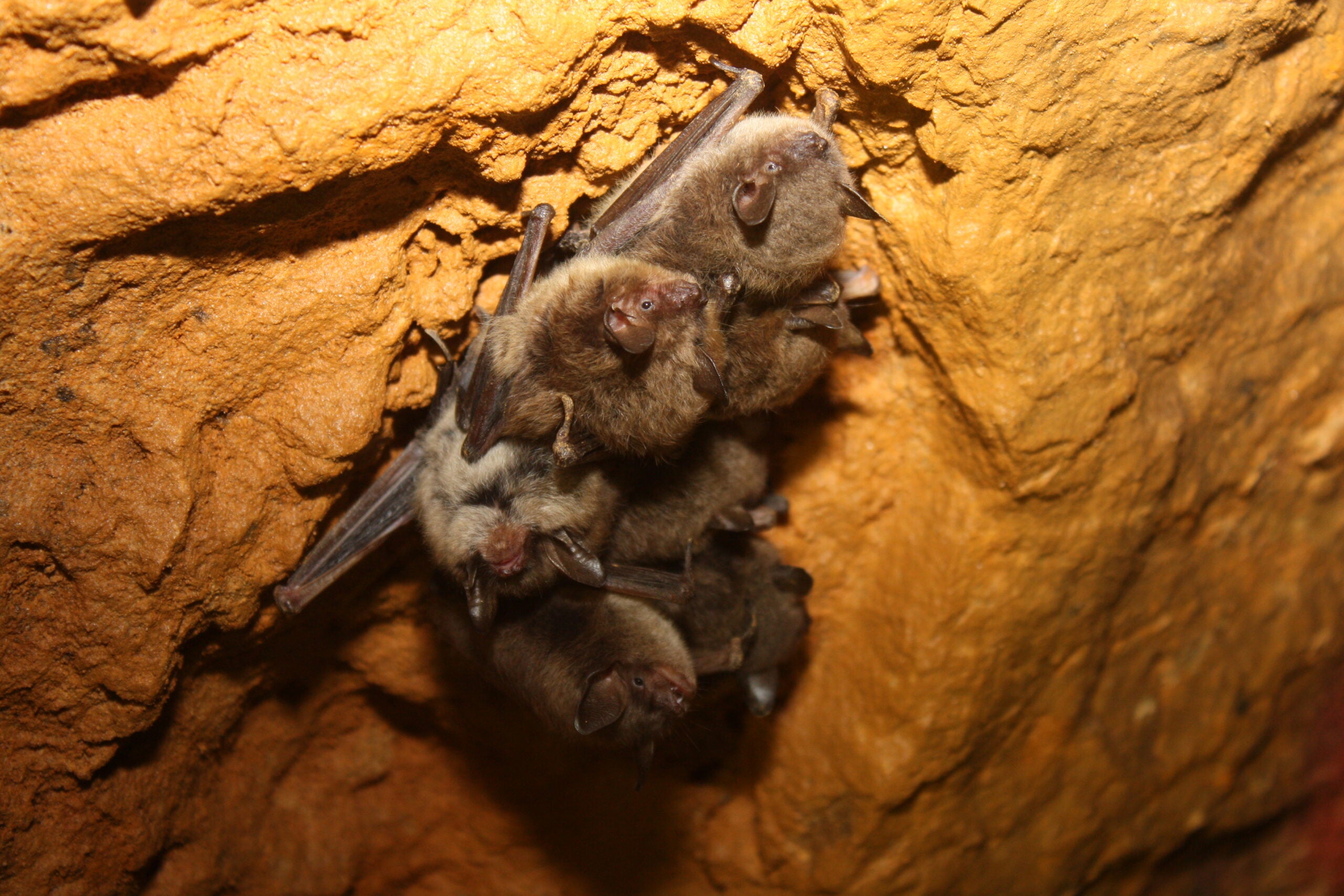
Little brown bats hibernating. Photo courtesy of the Wisconsin Department of Natural Resources
Over 150 scientists and volunteers participated in the Wisconsin Department of Natural Resources’ 12th annual Great Wisconsin Bat Count, tallying 120 roosts and more than 20,000 bats in June and July. Wisconsin is home to eight bat species, four of which remain threatened after this year’s count.
The bats were counted as they took flight from their roosts in bat houses and barns across the state. In the summer months, bats roost in large maternity colonies that are easy to observe. They’re being tracked because ecologists are monitoring the effects of white-nose syndrome, a fatal disease that arrived in the state in 2014.
The bat count results come just in time to raise awareness of international Bat Week, which runs Oct. 24-31. The international festival highlights the critical role that bats play in healthy ecosystems through insect control, pollination and seed dispersal.
Those who want to celebrate can download coloring book pages, learn about the history of forest and cave bats, test bat-friendly recipes (made with ingredients that bats pollinate), or research how to take action in Wisconsin.
Wildlife specialists David Drake and Jamie Nack with the University of Wisconsin-Madison’s Department of Forest and Wildlife Ecology joined WPR’s Lee Rayburn to break down the results of the count and offer advice on how to protect these delicate flying mammals.
By the numbers
There’s still reason to worry about Wisconsin’s bat population after this year’s count. Numbers for both big brown bats and little brown bats were down. Compared to last year, there were about 3,000 fewer little brown bats and 750 fewer big brown bats, Drake said.
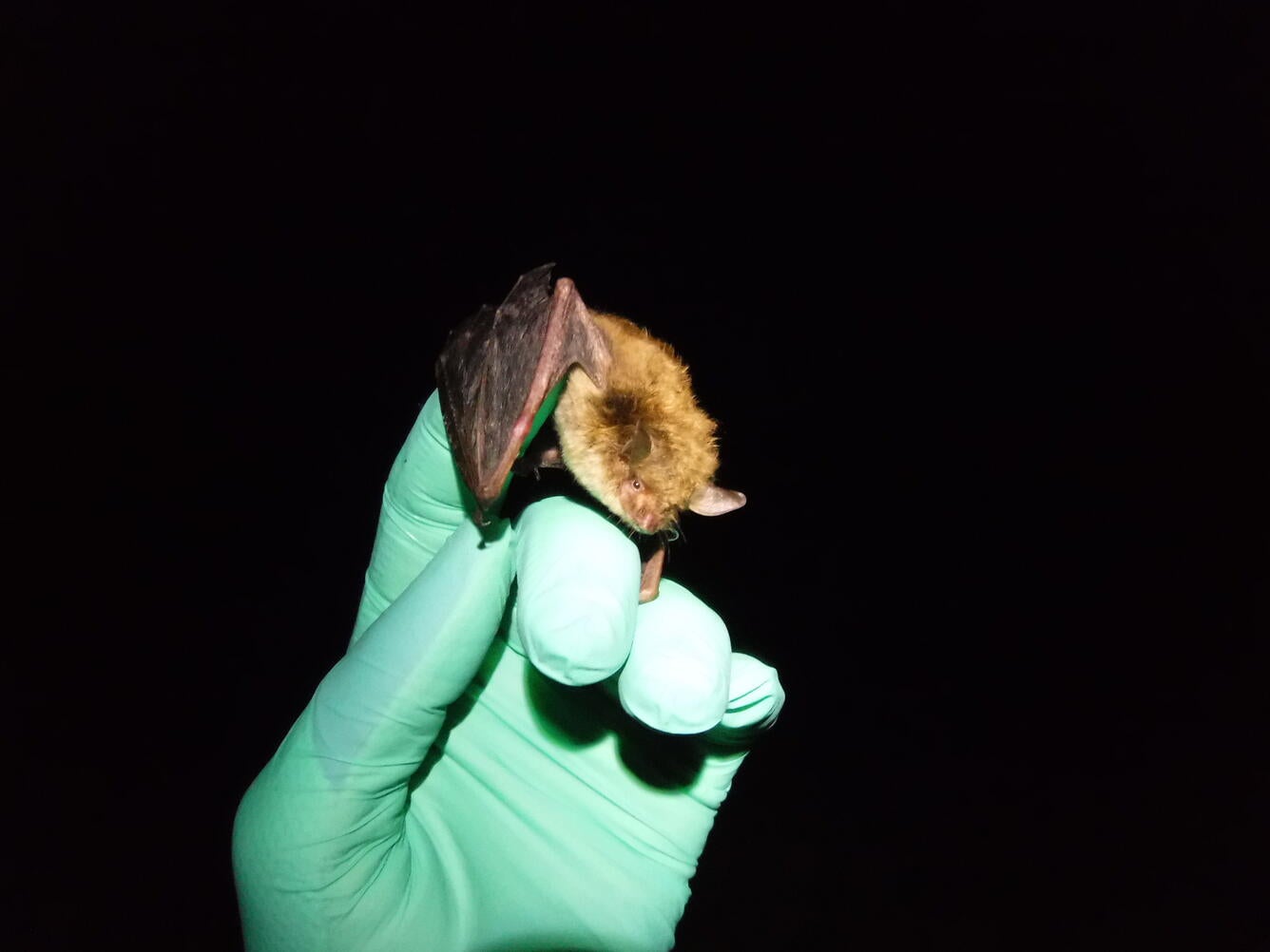
A little brown bat is being released shortly after samples are collected. Kyle George/USGS National Wildlife Health Center
Drake attributed the lower numbers to a few possible factors.
“The DNR is not quite sure if that count is lower because when the count was going on, weather conditions were not terribly favorable for the count,” Drake said.
Cold temperatures in late spring may have also played a role, especially for pregnant bats. The DNR posited that cold temperatures “may have limited food supply and forced [the bats] to use more energy to stay warm on cool nights.”
The first night of the count occurred in late June, before the baby bats, called pups, had taken flight. The second night of the count was scheduled weeks later, after the pups can leave their roost.
By July, hotter summer temperatures can also affect the bat count, according to the DNR. As soon as the juvenile bats can fly, they may seek cooler places, leaving the location where they were counted previously.
“Big brown bats in general seem to be less tied to specific roosts and readily shift around among sites depending on what’s going on with temperature, time of year, and even parasites. Many who note bats leaving in July often record them returning, sometimes in large numbers, later in the season,” a DNR press release noted.
Ongoing concern about white-nose syndrome
For the nearly 17,000 little brown bats that were counted, Drake said that their numbers may have recovered enough that they’re meeting the carrying capacity of the roosts that were monitored. He also didn’t rule out the possibility that there might still be a drop off from white-nose syndrome.
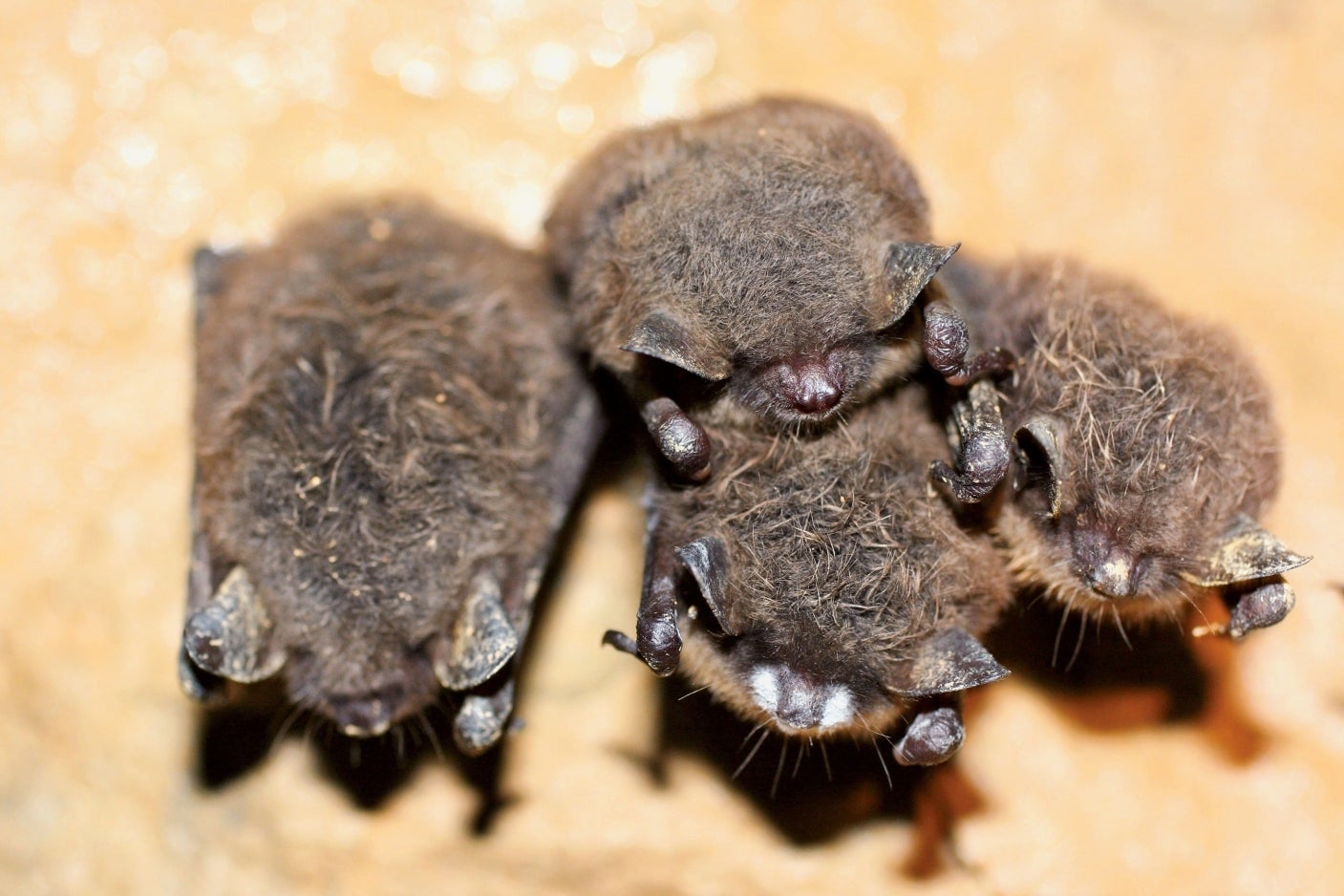
White-nose syndrome on a cluster of little brown myotis in Canoe Creek Mine. Photo courtesy of Michael Schirmacher/Bat Conservation International
The invasive fungus that causes white-nose syndrome has decimated Wisconsin’s cave bat species: big brown bats, little brown bats, northern log-eared bats and tricolored bats. The disease disrupts the bats while they’re hibernating, causing them to wake up and start moving about in the dead of winter. In those cold, dark months, there’s no food supply for them to eat, so they burn through their energy reserves and starve.
Just a few years after it was detected, the disease nearly wiped out all the bats in a Grant County hibernaculum. That healthy colony of nearly 1,000 bats plummeted to only nine individuals, and scientists worried whether whole species would disappear from the state.
The numbers from this year’s bat count tell a complex story of recovery.
“Big brown bats are not rebounding as quickly as little brown bats have, but they seem to be on the rebound. Tricolored bats and the long-eared bats are not rebounding to the extent that either of the brown bat species are,” Drake said.
From house to hibernation
Bats will roost in bat houses, attics or barns during the summer months, but will not overwinter there. Instead, they will move to a hibernaculum or migrate south, Nack said. It’s about this time of year that bats will start making their way to their winter caves, meanwhile Wisconsin’s four forest bat species have already started their flight south.
Jennifer Redell, a conservation biologist with the DNR, told “Wisconsin Life” that Wisconsin mines are home to nearly half of the little brown bats in the U.S. These cave bats will hibernate in places like the Kickapoo Caverns in rural Crawford County.
According to Redell, who is also a hibernacula specialist, “In the spring those bats emerge to spread out across thousands of square miles of forests, fields and neighborhoods in the Midwest. Keeping those hibernating bats safe when they’re here in winter should be of interest to everyone who wants to swat at fewer mosquitoes each summer.”
Bats are a natural form of pest control. In the cornfields of Illinois, researchers studied the damage caused by earworms in fields where bats were excluded compared to fields where bats were allowed to feed. They estimated that bats save farmers around the world $1 billion per year by eating the pests that can otherwise decimate harvests. Other studies estimate that bats save farmers billions more because they also act as crop pollinators.
Look out for your flying neighbors
If you’re interested in attracting bats to your yard, both Bat Conservation International and the Wisconsin DNR offer guides on how to build or set up a bat house. Nack recommended purchasing a BCI certified bat house kit and Drake advised setting them up as high off the ground as you can.
Sometimes bats will find their way into human homes. If you’re concerned about bats roosting your home or property, it’s best to act now, following the guidelines from the DNR.
“Our cave bat species [are] threatened. So in the state, those bats are protected from June 1 to Aug. 15 because that’s when they have flightless young, and so we can’t do exclusion during that time because we want to protect the young” Nack said.
Exclusion is the process of removing bats — not killing them — from undesirable locations, by building them other structures to roost in, installing screens or sealing off access points.
“Now’s the time to act before we get into weather that’s non-favorable to bats,” Drake said. There’s still a short window of time for bats to go find another winter roost.
You can learn all about Wisconsin’s eight bat species at the DNR’s Bat Program website.
Annual Wisconsin bat count shows some species remain threatened was originally published by Wisconsin Public Radio.
If you think stories like this are important, become a member of Urban Milwaukee and help support real, independent journalism. Plus you get some cool added benefits.