
Tiffany Pushes Tax Break That Mostly Helps Wealthy
The truth about the Manufacturing and Agriculture Tax Credit.
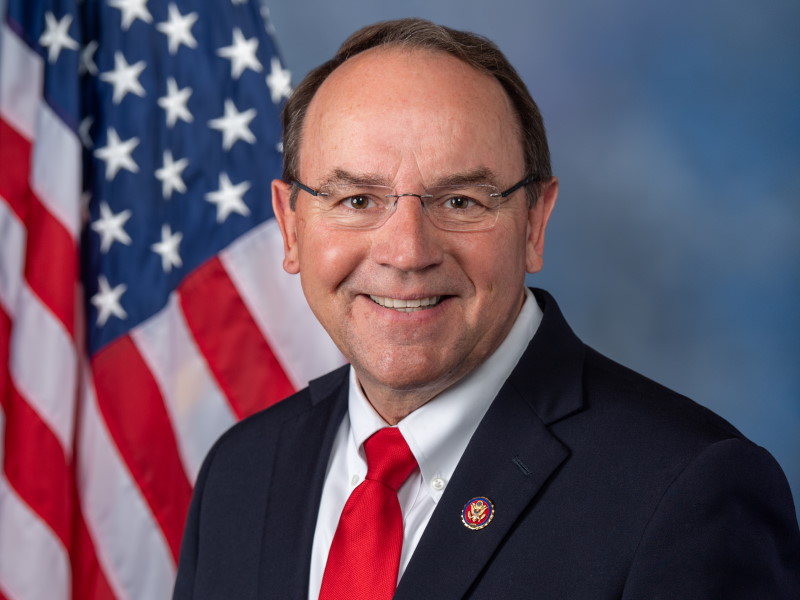
Tom Tiffany. (Public Domain).
The Manufacturing and Agricultural Tax Credit was passed by Republican Gov. Scott Walker and Republican legislators in 2011. Tom Tiffany, then a state representative, voted for it. He is now championing it in his race for governor.
The credit was quietly added to the huge state budget at the last minute with no public notice or debate and paid for with large cuts to education and other programs. It wasn’t applied until 2013 and had a three-year phase-in, so the tax credit’s full impact wasn’t known until 2016, five years after it was passed. In 2018, the nonpartisan Legislative Fiscal Bureau did an analysis of its impact, which showed it skewed heavily toward the wealthy: More than 89% of the tax credit went to claimants with an income of $500,000 or more and nearly 46% went to those making $5 million or more.
You could hardly find a tax credit more perfectly calibrated to benefit the rich. The Fiscal Bureau report got some news coverage, but Walker and the Republican legislative leaders didn’t say much to defend the credit. After all, they had a safely gerrymandered legislature and Walker fully expected to win a third term.
But Walker lost. And among the issues Democrat Tony Evers ran on in his 2018 campaign was his opposition to the tax credit. And in his first budget in 2019, Evers proposed severely scaling it back.
The tax credit had by then cost an estimated $1.4 billion in lost tax revenues, “reducing the resources available for investing in Wisconsin’s families, schools and communities,” noted an op-ed by Wisconsin Budget Project analyst Tamarine Cornelius. Evers’ proposal “would allow manufacturers to use only the first $300,000 of income to claim the credit,” with more than 90% of the revenue gained coming from millionaire taxpayers.
But Republicans condemned Evers’ proposal and removed it from the budget. “Let me be clear with the governor: I will not support raising taxes on our state’s job creators,” said then-Senate Majority Leader Scott Fitzgerald.
“Only a Madison liberal would believe the only way to cut taxes is to raise taxes on others,” said Assembly Speaker Robin Vos.
Lending support for them was a report by UW-Madison economics professor Noah Williams, who runs the Center for Research on the Wisconsin Economy, or CROWE, and served as an adviser to Walker’s unsuccessful run for president and wrote articles with titles like Under Scott Walker, Wisconsin Has Prospered–Keep That In Mind For 2016.
Williams did a 2017 report comparing border counties of Wisconsin with counties across the border in Minnesota, Iowa, Illinois and Michigan and found employment rose 1.26% more in the Wisconsin counties since the tax credit was passed.
But even as Williams was claiming this boost in jobs from the tax credit, a state report showed manufacturing jobs in Wisconsin had declined by 3,776 in the first year after tax credit was fully phased in.
A 2017 column by Urban Milwaukee’s Data Wonk Bruce Thompson blew huge holes in the CROWE study. “Underlying Williams’ analysis is the implicit assumption that comparing contiguous counties eliminates other possible causes of variation in economic activity, leaving only the introduction of the tax credit. In other words, he assumes that the counties are identical except for differing state policies.”
In fact, Thompson used census and economic data to show significant differences between the contiguous counties. He also compared the entire state of Wisconsin with the four other states during this same period and found job growth in Wisconsin was actually 1.23% lower than the average for the four states.
In 2019, Thompson did his own analysis, using a far more sophisticated approach by tracking average job growth in Wisconsin and comparing it to growth in these four states and two others from 1990 to 2018, and found Wisconsin’s growth tracked almost exactly compared to neighboring states before and after the tax credit. Nothing had changed.
The main impact of the tax, his column noted, was to turn those wealthy people getting the tax credit into “free riders,” who “continue to benefit from the state services funded by other taxpayers, while paying little towards their cost.”
That was seven years ago, and CROWE never offered any new analysis until Tiffany’s entrance into the race for governor. Last week, it released a study that simply dusted off the same threadbare methodology, comparing job growth in Wisconsin border counties with contiguous counties in those same four states it used in 2017. The report doesn’t address any of the problems Thompson identified with this approach or his research showing zero impact on job growth.
The analysis was quickly touted by Kurt Bauer, head of Wisconsin Manufacturers & Commerce, which nowadays operates as an arm of the Republican Party, in an op-ed helpfully published by the Milwaukee Journal Sentinel.
In between the release of the report and Bauer’s op-ed, Tiffany toured Vincent Tool Technologies in Chippewa Falls, touted the Manufacturing and Agriculture Tax Credit and bashed his Democratic opponent, David Crowley, charging that “he wants to take away the manufacturing agricultural tax credit. It would be disastrous for Wisconsin.”
Tiffany offered no evidence for either claim. Crowley hasn’t said a word about eliminating the tax credit. And there is no evidence its removal would impact job growth.
What Crowley has said about taxes is that he wants a comprehensive review of the state revenue system with a view to reducing property taxes. When asked where he stands on the Manufacturing and Agriculture Tax Credit, Crowley offered this statement to Urban Milwaukee:
“Wisconsin needs a fair tax system with incentives and credits for companies that create good-paying jobs. But bosses and businesses also need to share in the tax burden, not just workers and homeowners. When elected, I’ll form a Blue Ribbon Commission of Democrats, Republicans, businesses, labor leaders, and tax experts to recommend a balanced, fair tax system.”
Considering the Manufacturing and Agriculture Tax Credit costs the state about $330 million in lost taxes per year, or about $3.3 billion over the past decade, such a commission would have to consider what we are actually getting for that money.
If you think stories like this are important, become a member of Urban Milwaukee and help support real, independent journalism. Plus you get some cool added benefits.
Political Contributions Tracker
Displaying political contributions between people mentioned in this story. Learn more.


Murphy's Law
-
Journal Sentinel Has Lost 87% of Its Readers
 Oct 6th, 2026 by Bruce Murphy
-
The Millionaires of We Energies
 Sep 10th, 2026 by Bruce Murphy
-
Meet Wisconsin’s Richest CEOs
 Sep 8th, 2026 by Bruce Murphy