$100,000 Grant Will Support Kitchen at MacCanon Brown Homeless Sanctuary
Project would expand nonprofit's efforts to address food insecurity in 53206 area.
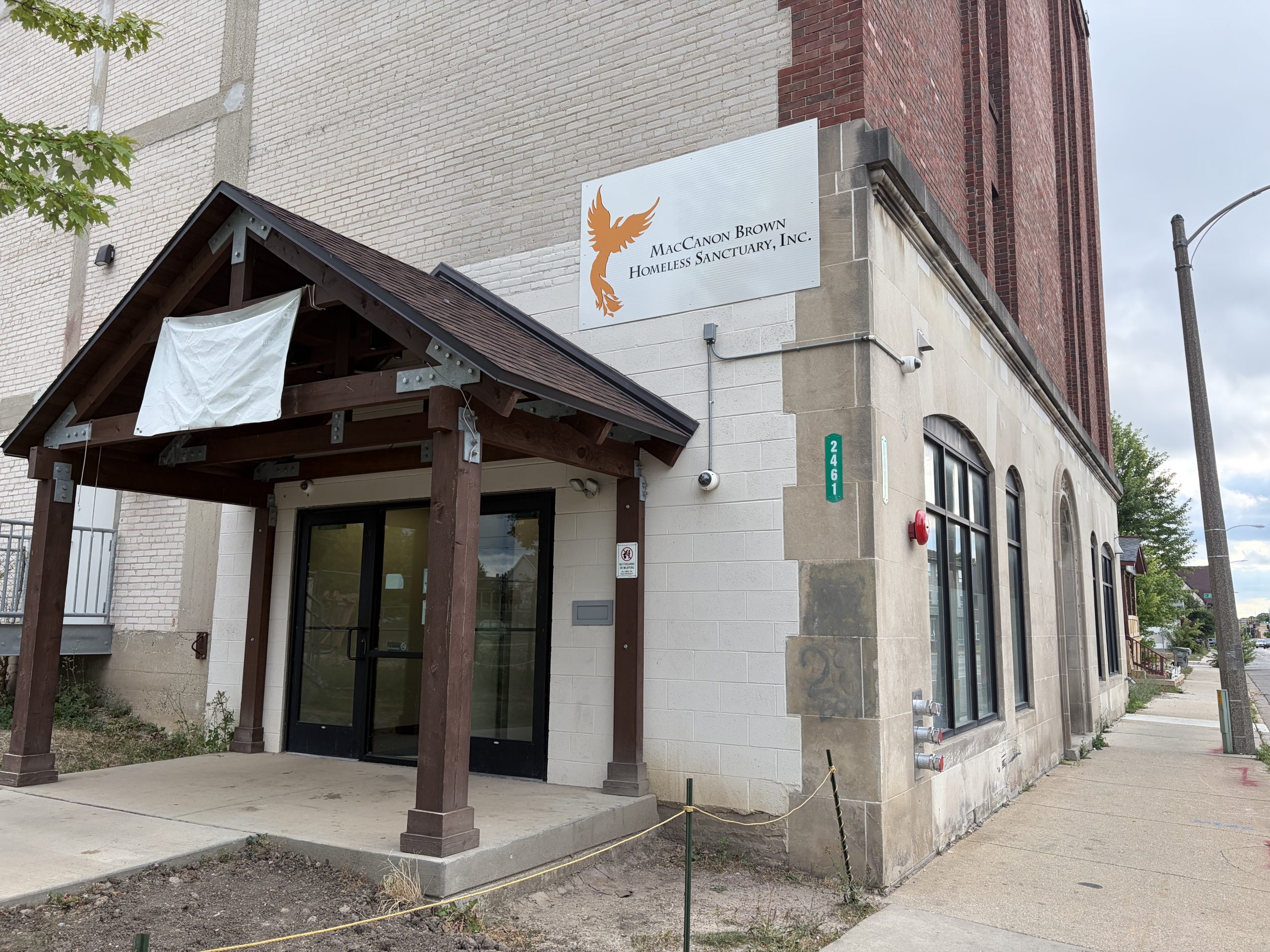
2461 W. Center St. Photo by Sophie Bolich.
For years, volunteers from MacCanon Brown Homeless Sanctuary have served meals, distributed fresh produce and connected with patrons through cooking tips and recipe suggestions.
A new commercial kitchen, supported in part by a $100,000 grant from Impact100 Greater Milwaukee, would help consolidate those services on the third floor of the organization’s northside resource hub, 2461 W. Center St.
Earlier this summer, the sanctuary was one of five local organizations to receive funds through Impact100’s annual charity event, The Big Give. The grant, combined with approximately $350,000 already raised for the project, would cover much of the construction and equipment costs for the new kitchen, which, if all goes well, will be completed by the end of the year.
“When they announced us, it was like major fireworks went off,” said Holly Morse, a board member and adult tutoring program coordinator at the sanctuary. “We were so ecstatic to get this large sum of money.”
Morse and Sister MacCanon Brown, the sanctuary’s co-founder and president, applied for the grant twice before submitting the winning application this year.
“It’s a very thorough application process, so we had many, many meetings about it,” said Morse, who also praised Brown’s tenacity. “She does not give up. I’ve learned so much working alongside her.”
Construction on the 879-square-foot kitchen space is expected to begin in August, with contractors Dahlman Construction Co. and Roman Electric offering discounted or donated work. Once complete, the sanctuary plans to prepare and serve meals out of the kitchen and may also activate the space for community programming, including family cooking classes.
“We want it to be a teaching kitchen,” Morse said. “Food has been our focus since the very beginning.”
That focus extends across numerous services offered by the sanctuary, which also include a year-round food bank, a sustainable gardening program and weekly hot meals at Hephatha Lutheran Church. The sanctuary currently distributes bagged lunches from its Center Street location, but not at the scale it envisions.
“Our goal is to be at our own site with our own kitchen, and ultimately serve a midday meal five days a week,” Brown said, noting that food insecurity is one of the most pressing issues for residents in the 53206 zip code, where the sanctuary operates.
The challenge is compounded by a lack of full-service grocery stores in the area, where many residents lack reliable transportation. “Four grocery stores and a Walgreens closed down recently,” Morse added. “Milwaukee has many beautiful [hunger relief] organizations, but we are in a desert in dire need of food.”
Addressing hunger can also benefit the community across other sectors, said Brown, who held up lead poisoning as an example. “Healthy food is one of the most important parts of the rehabilitation,” she said.
Brown said the meals will be culturally relevant to diners and incorporate produce from the organization’s on-site garden, tended with help from sanctuary patrons, as well as from a planned fourth-floor hydroponic farm.
Founded in 2014, MacCanon Brown Homeless Sanctuary began with “no financial resources” and a commitment not to rely on traditional loans. The sanctuary prides itself on diversity and inclusion, attracting volunteers and patrons from a wide range of racial, cultural and religious backgrounds, Brown said.
“There are so many people,” she added. “We’re talking about 700 active volunteers, many of them behind the scenes, and we’re taking care of hundreds of people.”
The kitchen is part of a long-term plan to transform the sanctuary’s five-story warehouse into a comprehensive resource hub for people experiencing or at risk of homelessness. More than $4 million has already been invested in the industrial building, which formerly resembled “a cold, cement tomb,” according to Brown.
“It has now become quite beautiful and also accommodating to the various programs there,” she said of the building, which houses a welcome center offering needs assessments, health checkups, showers and other services, along with community and office space. Future phases include the commercial kitchen, a hydroponic farm and a medical center.
“We’ve done so much that we are able to offer a real constellation of life-building services to our people,” said Brown, adding that she feels the organization is still in its early development.
“When we connect all the dots, it will be quite the operation,” she said. “You ain’t seen nothing yet.”
Existing members must be signed in to see the interactive map. Sign in.
If you think stories like this are important, become a member of Urban Milwaukee and help support real, independent journalism. Plus you get some cool added benefits.