Low SNAP Error Rate Helps Wisconsin Dodge New Federal Penalties
Staying under a 6% error threshold means the state avoids sharing FoodShare costs with Washington, for now.
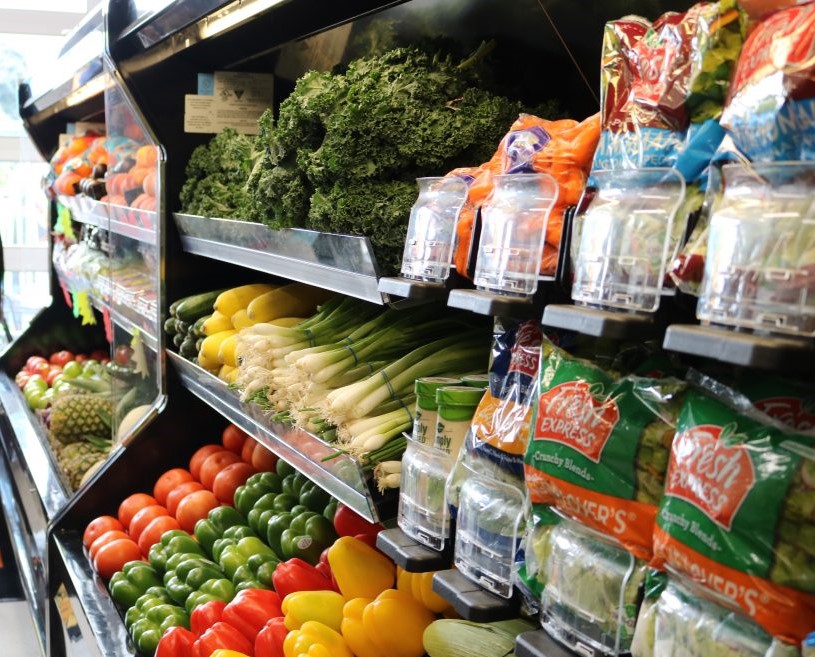
Grocery store shelves. Photo by Sophie Bolich.
The rate at which Wisconsin distributes too much or too little food assistance is among the lowest in the nation, according to data released Wednesday by the U.S. Department of Agriculture.
According to the estimates measuring all states and U.S. territories, Wisconsin’s error rate for the last fiscal year was 5.72 percent. That’s just over half of the nationwide error rate of 10.62 percent.
Just seven other states, and the Virgin Islands, had lower error rates, according to the USDA data.
The USDA’s error rate measures both overpayments and underpayments of federal food assistance dollars, known nationally as the Supplemental Nutrition Assistance Program, or SNAP, and in Wisconsin as FoodShare.
Under a provision of last summer’s One Big Beautiful Bill Act, states that exceed a 6 percent error rate will have to shoulder a share of the cost of the program. The size of that share increases as the error rate grows.
That comes as other changes to the program were implemented, including requiring states to take on more administrative costs, and imposing new work requirements on older people and on families with children above age 13. The federal law also requires regular paperwork to prove exemptions from such requirements for some groups, such as families with special needs children.
President Donald Trump’s administration has called the changes an effort at rooting out fraud and abuse. The USDA says error rates show administrative mistakes that are often rectified.
The new federal consequences will go into effect on Oct. 1, 2027, and states can submit their error rates from either this fiscal year, or next fiscal year, per the USDA. Because Wisconsin’s 2025 error rate was under 6 percent, it can avoid the new fines.
In Wisconsin, the new requirements led to a bipartisan deal on food assistance, passed at the tail end of the legislative session, in which dozens of staff positions were added to the Department of Health Services, which administers the program. The positions were added in an amendment to a bill barring FoodShare recipients from buying candy, soda or energy drinks with their assistance dollars.
Democratic Gov. Tony Evers had requested that staff to implement the new federal changes, arguing in his State of the State address in February that the investment would save the state a larger amount in penalties. All told, the Legislature approved about $72 million in funding for SNAP administrative and staff costs.
Wisconsin’s error rate in 2024 was 4.47 percent, according to the nonpartisan Legislative Fiscal Bureau, which also detailed Wisconsin’s existing quality control mechanisms. That includes regular audits of the distribution of these benefits, and recouping overpayments or reimbursing underpayments accordingly. About half of those cases are then also reviewed by USDA.
In a statement announcing the new error rates for all states, Agriculture Secretary Brooke Rollins said that the data shows a lack of “state accountability.”
“USDA has taken historic action to help interested states curb SNAP waste, and I hope other states, regardless of political leadership, prioritize needy families and the American taxpayer over politics,” she said.
A spokesperson for the Wisconsin DHS did not immediately respond to WPR’s request for comment Wednesday.
More than one in 10 Wisconsinites receive food assistance each month. Roughly 40 percent of those recipients are children.
Wisconsin’s SNAP error rates are low, according to federal review was originally published by Wisconsin Public Radio.
If you think stories like this are important, become a member of Urban Milwaukee and help support real, independent journalism. Plus you get some cool added benefits.