

Bay View Affordable Housing Proposal Faces Uncertain Future
Neighborhood concerns, funding gap and tight timeline could imperil Austin Commons.
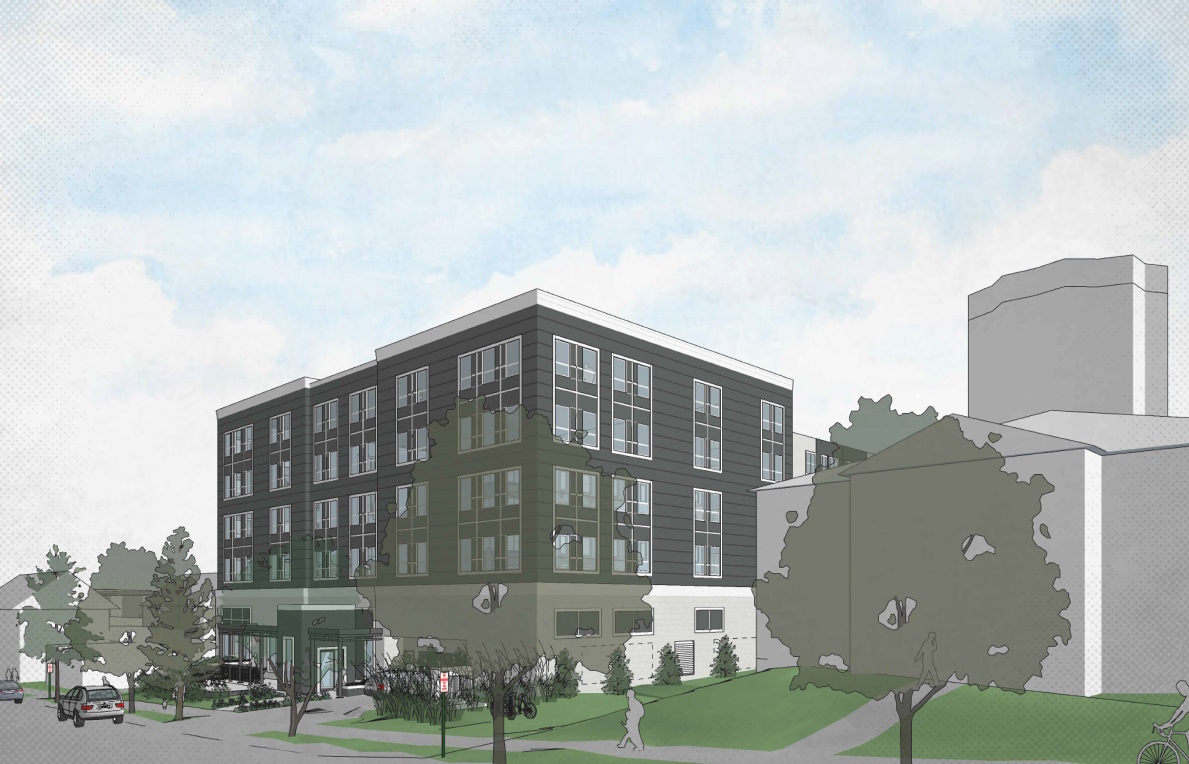
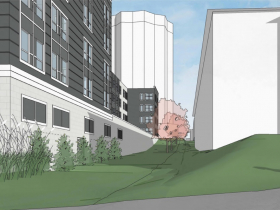
Austin Commons. Rendering by Eppstien Uhen Architects.
A proposal to develop 100 affordable apartments in Bay View faces an uncertain future and a critical timeline over the next two months.
Austin Commons would be a five-story, 100-unit development. Located just south of E. Lincoln Avenue on S. Austin Street, the complex would have a mix of one-, two- and three-bedroom units and be reserved for households making between 30% and 80% of the area median income.
It is being developed by a partnership of Northernstar Companies, a Milwaukee firm led by Brandon Methu, and Madison-based The Commonwealth Companies.
The $33.4 million project is to be primarily funded by a previously approved award of low-income housing tax credits, which, according to Northernstar, have a July 31 deadline to start construction.
But a proposed $2.1 million city subsidy has been delayed by area Alderwoman Marina Dimitrijevic, potentially imperiling the development.
Dimitrijevic, in an interview with Urban Milwaukee, said she is being “open-minded” and “trying to get to yes,” but she still does not support the project at this time.
“I cannot ignore what really has been some pretty strong, consistent neighborhood questions and concerns,” said the alderwoman.
Dimitrijevic has held two community meetings, with a third planned; the Redevelopment Authority of the City of Milwaukee (RACM) has held a hearing on the financing plan, and the Board of Zoning Appeals has held a hearing on a two-foot setback variance.
She said she was “surprised” by the July 31 deadline and wished there had been more community input earlier in the process. Dimitrijevic noted she has been an advocate for affordable housing, including supporting the nearly complete, 576-unit The Corliss development. “We’re literally home to the largest affordable development in the state of Wisconsin, which I’m very proud of,” she said.
But the alderwoman adds that a balance needs to be reached to address neighbors’ concerns about Austin Commons. According to testimony at meetings and written comments submitted to the city, neighbors are primarily concerned with alleged parking and traffic issues.
The issue is slated to come to a head, although it’s not clear exactly when. The proposal is expected to be reviewed by the Common Council before the July 31 deadline. But its passage is far from certain. The funding resolution was introduced to the full council this week without Dimitrijevic’s name as the sponsor.
The development also faces a $750,000 financing gap, according to Dimitrijevic, which will need to be overcome by other sources, including a second possible city subsidy.
Parking at issue
Austin Commons would include 100 interior parking spaces, but several nearby neighbors don’t believe it’s enough.
The development team plans to lease spaces for $100 per month and lower prices if the spaces aren’t used.
“We believe we have more than enough adequate parking,” said Methu on April 16 to the RACM board.
But at least one neighboring business owner isn’t sold.
“Odds are these low-income residents will not buy a parking spot,” said Anders Meyer, co-owner of J.B. Meyer & Sons, 2339 S. Austin St., to the RACM board on April 16. “Parking on the street is always an issue.”
After a community meeting, Dimitrijevic worked with the Department of Public Works to create an additional 100 parking spaces by changing the policy on nearby streets from alternate-side parking to all-day parking on both sides of the street.
Austin Street would also be repaved as part of the development. “It’s one of the worst in my district,” said Dimitrijevic of the street’s condition.
But Dimitrijevic said neighbors are also concerned about the traffic patterns from the new Corliss development, which is not yet complete and is three blocks west, and the Austin Commons development. A third-party traffic study determined there would not be congestion issues, but Dimitrijevic expressed concern that it did not include Corliss traffic.
“This is a tough one that I don’t think I’m going to be able to personally solve,” she said of the congestion concerns.
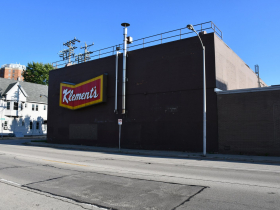
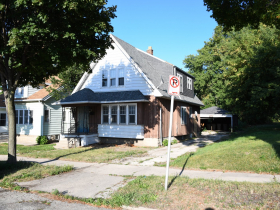
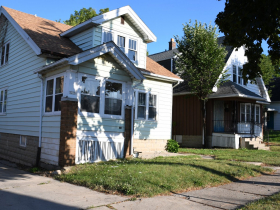
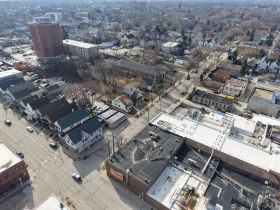
The street used to have more traffic. The development would replace three homes formerly owned by Klement’s Sausage and is across from the now-vacant sausage factory. But Dimitrijevic said the sausage plant brought a different type of traffic pattern.
A Department of Public Works evaluation did not raise concerns about congestion.
Developer seeks more funding
Methu, according to Dimitrijevic, is pursuing an additional $750,000 to close a remaining funding gap on the proposal.
A resolution is expected to be introduced soon, said the alderwoman, from the city’s Community Development Grants Administration to reallocate a portion of the city’s allocation of federal HOME funds to support the Austin Commons development and three others.
But the alderwoman said she wasn’t sure how much would be proposed.
“Our project is progressing well, and we now have full design documents and construction bids in hand. As you know, costs often remain somewhat fluid as projects move toward closing. We will remain on track to close on July 31, provided the resources we have requested from the city are allocated,” said Methu via email.
Zoning not an issue
The development itself does not need design approval. The site is already zoned RM6, which given the lot size, allows for a building with approximately 120 units and requires only 67 parking spaces.
“The site is zoned for multifamily. That is what drew me to identify this site for development,” said Methu to the RACM board.
Dimitrijevic said a bigger discussion is needed about how the city communicates its zoning and what is possible to residents.
Meyer, the neighboring business owner, opposes the building’s design, even though that component is not up for review. “What we don’t need is more cardboard-type apartment buildings,” he said.
A handful of comments have been submitted in support of the development. “I think this is necessary for Milwaukee,” said one commenter, identified as Velly M, at the April 16 RACM meeting.
“This is one of the hardest neighborhoods to do new housing in,” said RACM Commissioner Montavius Jones. “To see an affordable housing development here is very encouraging.”
“I’m trying to get a compromise and a balance,” said the alderwoman in her interview with Urban Milwaukee.
Proposal could move forward
The Common Council is expected to eventually review the proposed tax incremental financing (TIF) subsidy.
The proposal has been formally introduced, said Dimitrijevic, but it will not be heard at the next Zoning, Neighborhoods & Development Committee meeting on June 16. She said that is because it would not give enough time for a third community meeting, which is planned, but has yet to be announced.
Two more meetings remain before the council’s August recess, and the July 31 deadline.
The TIF subsidy, effectively a property tax rebate, would provide the development team with $2.1 million plus interest over a period of no more than 19 years. The structure, commonly used by the city to support affordable housing developments, repays the developer with increased property tax revenue generated by the development.
Because the project would receive more than $1 million in city funding, the development team would be required to have 40% of the project’s construction work hours completed by unemployed or underemployed city residents and 25% of its contracting, by value, performed by disadvantaged small businesses.
In addition to the city subsidy and possible HOME funding allocation, the development is receiving $200,000 in Section 48 tax credits that are being used to fund green infrastructure improvements and $330,000 in Focus on Energy funding. The state housing trust fund is also putting $2 million into the development. There is a $2.9 million deferred developer fee.
Of the 100 units, 37 would be set aside for those making up to 80% of the area median income, 40 units would be reserved for those making up to 50% and 23 at the 30% level. The tax credits require specific units be set aside at specific income levels with rental rates targeted at 30% of a household’s income.
The building would have 40 one-bedroom, 36 two-bedroom and 24 three-bedroom units.
Eppstein Uhen Architects is leading the complex’s design.
Renderings
Photos
Legislation Link - Urban Milwaukee members see direct links to legislation mentioned in this article. Join today
Existing members must be signed in to see the interactive map. Sign in.
If you think stories like this are important, become a member of Urban Milwaukee and help support real, independent journalism. Plus you get some cool added benefits.
More about the Austin Commons development
- Controversial Bay View Affordable Housing Sails Though Council - Jeramey Jannene - Jul 15th, 2026
- Bay View Affordable Development Scores Key Approval, But Objections Remain - Jeramey Jannene - Jul 7th, 2026
- Council Advances Partial Funding For Delayed Bay View Affordable Housing Development - Jeramey Jannene - Jun 26th, 2026
- Bay View Affordable Housing Proposal Faces Uncertain Future - Jeramey Jannene - Jun 4th, 2026
- City Subsidies Proposed For Two Affordable Housing Developments - Jeramey Jannene - Apr 2nd, 2026
- City Will Support Bay View Affordable Housing Development - Jeramey Jannene - Oct 16th, 2025
- Three Milwaukee Affordable Housing Proposals Win State Funding - Jeramey Jannene - May 30th, 2025
- 5 Milwaukee Affordable Housing Projects Vying For State Funds - Jeramey Jannene - Feb 5th, 2025
Read more about Austin Commons development here
Political Contributions Tracker
Displaying political contributions between people mentioned in this story. Learn more.





















Talk is cheap, Alderwoman. Either you care about affordable housing or you don’t. Real political courage is getting your residents to understand why this is important for all areas of the city, including Bay View. Cowering to NIMBYish isn’t leadership. It’s a cop out of what you’ve claimed to stand for.
Thank you to the alderwoman for supporting the preservation of derelict sausage factories, vacant lots and underused surface parking lot. What would Bay View be without these eyesores?
Parking concerns always preclude any meaningful conversation about housing, affordable or not, even if they are completely unfounded. wE NeEd A TrafFic StuDy – why? So you can disagree with it later when it contradicts your preconceived notions? Those houses across from the closed factory are boarded up – its already an eye sore area. What are we protecting here? I understand that people might be afraid of low income activities disrupting the rest of the neighborhood, but the building is going to be mixed income, not some poor house for the habitually unemployed. It deserves a chance, its not that big of building anyways.
A true lack of leadership from Alderwoman Dimitrijevic. Of course there are parking concerns, but how are we going to build a city that is dense, vibrant and supports multiple modes of transportation without increasing the supply of housing (and not maintaining the right of every person to park a car). “Congestion” is a red herring (dog whistle?) for folks already opposed to any affordable housing. Is this your first day in office?
The real problem is the alderwomen. She and her husband own property nearby and they see this as competition. She is not acting on behalf of her constituents, she’s acting on behalf of her own interests. Perhaps more time could be spent on what to do about the boarded up homes nearby.
I applaud the alderwoman for paying attention to her constituants’ concerns. The comment about her family’s rental properties is just a smear… this building would not make any difference on their marketability.
The immediate neighborhood has gotten a significant amount of affordable housing development. There’s no urgency to add more at this time, particularly with a generous government handout to the developer.
I believe Alderwoman Dimitrijevic lacks courage in this matter. But Mayor Johnson and the county board also bear some responsibility for this mess. Both the city and county have a crisis of affordable housing. Yet, between the two, they have vetoed 3 projects in essence because of NIMBY. What the city and county need to do is develop a comprehensive housing plan that includes development criteria that addresses NIMBY concerns. A planning process that includes residents will help address NIMBY. There is already a group attached to city housing who have the skills to facilitate a process to involve residents.
The current piecemeal process will never be able to address the housing crisis, because the projects are all vulnerable to NIMBY. Instead of caving into NIMBY, should lead the effort to develop a comprehensive housing plan. The failure of leadership will prevent Milwaukee from solving its affordable housing crisis.
Dimitrijevic is such a massive disappointment. Completely beholden to NIMBY nonsense. Oh, there aren’t enough parking spaces? There’s 140 parking spaces for 100 units. You’re worried about traffic? The third party study AND DPW both say there’s no problem. I commute through this corridor every single day. During rush hour. There ain’t no way in hell traffic is going to be a problem. Mixed income housing has the same crime level as luxury housing. So you can’t blame that.
Get real. This is textbook NIMBY bullsh*t. People want affordable housing as long as it’s not on their street. How progressive of you. And Dimitrijevic entertains this? Whatever. She has the conviction of a wet noodle.
I would suggest a traffic study for any new business opening on KK south of Lincoln. Require adequate parking before a new license is issued. for any business
Disappointing to see an alder avoid taking the lead on finding ways to build affordable housing in one of the most expensive districts in the city.