Wisconsin Faces Rising Bird Flu Threat As Spring Migration Begins
State has second-most birds hit by avian flu this spring, and vets urge tighter flock biosecurity.
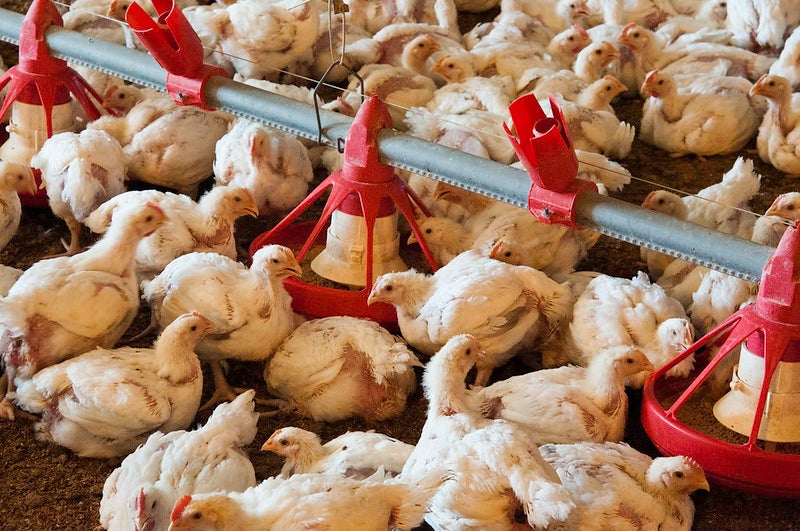
Young broilers eat at a feeder on the Bobby Morgan chicken farm in Luling, Texas on Aug. 23, 2013. Bob Nichols/USDA
Veterinary experts are urging owners of commercial and backyard flocks to take steps to protect their birds as the nation sees an increase in bird flu outbreaks during spring migration.
In the last month, Wisconsin has had the second-highest number of birds affected by the highly pathogenic avian influenza among flocks nationwide, according to federal data. Currently, more than 14.3 million birds have been infected in 84 flocks across the country.
The vast majority of infections in domestic poultry come from exposure to wild birds that have begun their spring migration, said Alan Huddleston, acting chief veterinary officer with the U.S. Department of Agriculture’s Animal and Plant Health Inspection Service.
“With the increased exposure, we do see an uptick or increase in cases of highly pathogenic avian influenza,” Huddleston said. “This spring, we are seeing that same pattern as we have seen since the outbreak first began.”
Around 200 million birds in more than 2,100 flocks have been affected nationwide since the current strain of avian flu was first detected in 2022, the largest outbreak in the nation’s history. More than 11.6 million birds have been infected at around 50 flocks in Wisconsin during the same time span.
Most active outbreaks are among flocks in Pennsylvania and Indiana. Even so, Wisconsin has seen four cases so far this year after five detections in commercial and backyard flocks throughout all of last year.
More than 4.3 million birds in Wisconsin are currently affected, said Heather Roney, a program veterinarian for the Wisconsin Department of Agriculture, Trade and Consumer Protection
“We’re definitely entering a period of increased concern, where we’re concerned that the risk from wild birds sharing this virus with domestic birds is higher than it was in the previous months,” Roney said.
The agency is still investigating the cause of recent outbreaks, including at a Daybreak Foods farm in Jefferson County. But Roney said evidence shows the vast majority of bird flu cases in flocks statewide have been introduced by wild birds since 2022, including cases at Daybreak Foods facilities last fall. Bird flu has been detected among nearly 400 wild birds statewide, according to the Wisconsin Department of Natural Resources.
Veterinary experts say biosecurity measures are critical to protect birds.
Huddleston said they ask flock owners to daily clean up all equipment and clothing, disinfect boots, divide or separate species and learn the signs of sick birds. Wisconsin’s biosecurity guidelines for poultry also recommend a shower-in/shower-out facility and effective waste disposal.
The USDA offers free biosecurity assessments to poultry owners with 500 or more birds among other resources. Huddleston said they’ve seen broad compliance from the industry and reduced risk among commercial flocks since the last bird flu outbreak in 2015. Roney agreed that the industry has changed its operations to enhance biosecurity protocols in response to concerns about spreading the virus between farms.
“Poultry farms have very controlled access, in one gate and out the other. (They’re) logging who’s been there, limiting shared equipment or personnel between poultry farms,” Roney said. “(There’s been) a lot of focus on what comes in and what comes out, and keeping those premises clean to avoid introducing anything new.”
Despite that, the nation has seen a four-fold increase in the number of birds that have died or been culled compared to the 50.5 million birds affected at commercial and backyard flocks in 2015. Huddleston and Roney attribute that to the virus persisting in wild birds year after year.
“There is an ongoing and/or continuous exposure to the virus that we did not see in the 2015, or earlier, outbreaks,” Huddleston said.
For backyard flocks, the state urges owners to register their flocks and keep birds indoors during the spring and fall migration, if possible. They should also avoid introducing new animals for 30 days and use dedicated clothing and boots for tending flocks.
Huddleston also advises people to watch for birds dying over the span of days without prior symptoms, decreased feed and water intake, lethargy, purple discoloration or swelling of their wattles, combs and legs.
There have been 71 cases of bird flu in humans, including one confirmed case in Wisconsin. Two people have died from the virus. Anyone who suspects a bird flu outbreak should contact a state veterinarian or call the USDA at 1-866-536-7593. For wild birds, people can contact the DNR online or call 608-267-0866.
Uptick in bird flu outbreaks expected in Wisconsin and nationwide was originally published by Wisconsin Public Radio.
If you think stories like this are important, become a member of Urban Milwaukee and help support real, independent journalism. Plus you get some cool added benefits.