French Island Wells Show PFAS Pollution
State investigates, gives bottled water to residents of island off-shore from La Crosse.
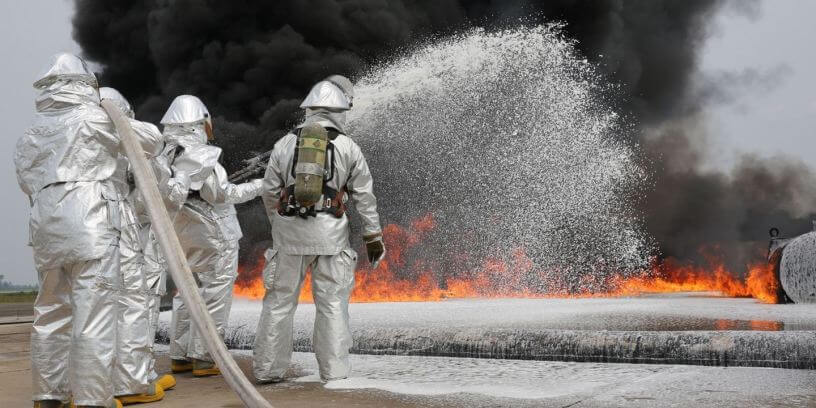
Marines fighting fires with foam, a product that uses PFAS . Photo by Lance Cpl. Shawn Valosin/U.S. Marine Corps.
The Wisconsin Department of Natural Resources (DNR) and several other state agencies are working to provide bottled water to residents of French Island with private drinking wells that may be contaminated with harmful “forever chemicals.”
The island has 1,200 private wells and PFAS chemicals have been found in 180 of them, while other residents await test results.
Last week, six semi-truck loads of bottled water were donated to members of the community by Kwik Trip and Hy-Vee, providing drinking water to nearly 1,000 residents of the island, according to a news release.The DNR is working with water treatment company Culligan to provide residents with five-gallon jugs of clean water.
French Island sits across the Black River from the City of La Crosse. The La Crosse Regional Airport is on the northern part of the island while the Town of Campbell and its 4,300 residents are on the southern part.
The airport is the likely reason PFAS have been found in drinking water across the island because the chemicals are used in firefighting foam commonly used to train and respond to airplane crashes.
The City of La Crosse is providing water to some of the island’s residents but has refused to give water to others. The Milwaukee Journal-Sentinel reported that La Crosse Mayor Tim Kabat directed city workers not to provide bottled water to residents who get water from wells that were contaminated with PFAS but at a levels lower than 20 parts per trillion — despite a recommendation from the DNR not to do so.
The Wisconsin Department of Health Services declared a drinking water advisory for the island last week, enabling the DNR to give people clean water while additional wells are tested.
PFAS, per- and polyfluoroalkyl substances, are a group of man-made chemicals used in a variety of industries for decades that do not break down in the environment. Long term exposure to the chemicals can lead to harmful effects in humans.
Reprinted with permission of Wisconsin Examiner.
More about the PFAS Problem
- Gov. Evers, DNR Celebrate PFAS Awareness Week, Highlight Evers Administration’s Efforts to Ensure Safe, Clean Water Statewide - Gov. Tony Evers - Sep 21st, 2026
- $10 Million Released To Tackle PFAS In Marinette, Peshtigo Wells - Danielle Kaeding - Sep 3rd, 2026
- Gov. Evers, DNR Celebrate Release of $10 Million Pfas Settlement Payment to Help Provide Safe Drinking Water to Affected Communities - Gov. Tony Evers - Sep 1st, 2026
- Gov. Evers, Wisconsin DNR Urge Release of $10 Million to Address PFAS - Danielle Kaeding - Aug 20th, 2026
- Baldwin, Colleagues Demand EPA Drop Its Effort to Weaken PFAS Drinking Water Protections for Millions of Americans - U.S. Sen. Tammy Baldwin - Aug 10th, 2026
- DNR Hosting Listening Session to Gather Feedback About Pfas Law Program Development - Wisconsin Department of Natural Resources - Jun 5th, 2026
- Wisconsin DOJ Reaches Settlement With Tyco Fire Products for Alleged PFAS Violations - Wisconsin Department of Justice - Jun 4th, 2026
- EPA PFAS Rollback Puts Wisconsin Drinking Water Limits In Legal Crosshairs - Danielle Kaeding - May 21st, 2026
- Gov. Evers Delivers Radio Address, Celebrates Release of Over $125 Million to Fight Pfas Statewide - Gov. Tony Evers - Apr 10th, 2026
- Wisconsin Conservation Voters Celebrates Double Win - Wisconsin Conservation Voters - Apr 8th, 2026
Read more about PFAS Problem here