EnglishEspañolDeutschБългарски
Follow Urban Milwaukee on Twitter Like Urban Milwaukee on Facebook Subscribe to Urban Milwaukee via email Subscribe to Urban Milwaukee via RSS

Community & Economic Development Committee Meeting

Jul 19th, 2009 | By | Category: Events

The Community and Economic Development Committee hears matters relating to community development, block grants, job development, business improvement districts, city public relations, industrial land banks and revenue bonds, emerging business enterprises, recreation, cultural arts and the library system.

The Community and Economic Development Committee meetings start at 9:00 pa.m. and are held in the Room 301-B, City Hall, unless otherwise noted.

Agenda


Zoning, Neighborhoods & Development Committee Meeting

Jul 19th, 2009 | By | Category: Events

The Zoning, Neighborhoods and Development Committee reviews issues relating to city development, zoning, historic preservation, incremental tax financing, building codes and housing projects.

The Zoning, Neighborhoods and Development Committee meetings start at 9:00 a.m. and are held in the Room 301-B, City Hall, unless otherwise noted.

Agenda


Hide House Debate. Historic Preservation Or?

Jul 18th, 2009 | By | Category: Hide House

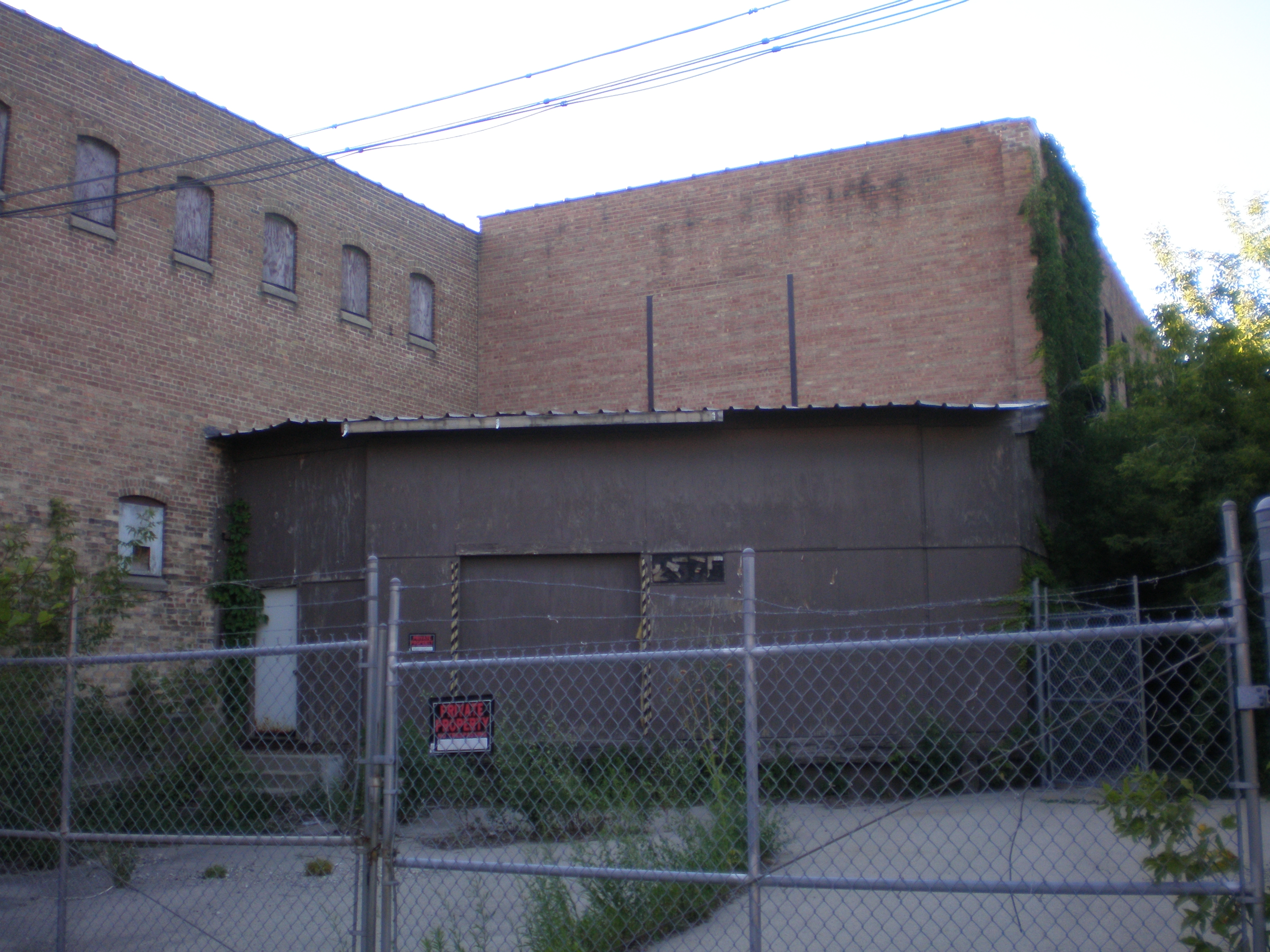
Hide HouseOn Monday July 20th, General Capital will go before the Historic Preservation Commission and request permission to demolish a portion of the Hide House complex.  This demolition would allow for the construction of a 60-unit affordable housing apartment building.  At the previous meeting of the Historic Preservation Commission a nomination for historic status of the entire Hide House complex was requested by Alderman Zielinski, and despite various sections of the complex being of varying ages and having questionable historical importance the entire complex received historic status.

This designation seems questionable.  For one it is questionable as other tanneries throughout Milwaukee with similar histories have not received historic designation.  In fact a few tanneries have been demolished to allow for new development projects.  For example, to make way for Mandel Group’s North End project the Pfister & Vogel Tannery on Water St. was demolished.  Further, the Wisconsin Historical Society didn’t deem the complex worthy of historic status.  Finally, and most importantly this designation is questionable, because of the statements by community residents and actions by leaders in opposition to this project that revolve around its “low-income,” component and issues unrelated to preservation.  For example these are just a few of the comments and quotes on the topic:

This comment was left on the Bay View Compass article “Development struggle at Hide House,” by a user named Paul.

There are a few issues not addressed in this article.

First, No matter what it is called, it is still LOW income. Where else can you get a one bedroom apartment for $300? The going rate in Milwaukee is about $700. Low income usually brings in a bad element, even if it is not intended.

Second, there was standing room only at the hearing, all from the neighborhood and 95% were against this project. In fact, the article failed to mention that the owners had applied for a permit to tear down the building and start begin the process the day before the hearing…this seems like they have some other motive.

Third, this is a fairly landlocked area, and bringing in 60 units with 2 cars each would add a heck of a lot of traffic to my neighborhood, which has a lot of kids.

Finally, I will be presenting a request for a ground contamination study before any work can be done. Tanneries had often used Chromium and Mercury in their processes in the past. This entire site could be contaminated. The last thing we want is for a large number of poor people to get sick and then bring cases against the city for approving this project.

This comment was left on the Journal Sentinel article “Bay View apartments project at former tannery hits road block,” by Susan Robitaille.

Hello,

Just to clarify…

These apartments are not ‘moderate income’, they are most definately LOW income.  The residents were not allowed to speak about the upcoming development… it was merely a meeting (the first we were given by the way), to speak our minds about our feelings about the historic nature of the Hide House.  In response to the person accusing anyone of racism… at what point is poverty a matter of race/color/creed? Not one person around here gives a rip about that sort of thing. There are all colors and cultures in this neighborhood and we celebrate our diversity.

The fear of a low-income housing rental structure in our neighborhood is the issue… along with the fact that there is no outlet to major streets, means we will have more cars racing down our quiet neighborhood.

Be real. Ask yourself if you would want that extra burden of traffic coming into your direct neighborhood… would you want the extra noise associated with that?

If low-income housing is so great… why not welcome it with open arms into your neighborhood? No? I thought not.

This quote is from the Daily Reporter article “Hide House developer seeks local support” said Michael A. Lana, who lives near the Hide House.

Low-income apartments, no matter how they are sugarcoated, will attract “undesirable” people.

These are just a few of the troubling statements being made regarding the Hide House Lofts project.

Another indication that this debate isn’t about historic preservation is that Alderman Zielinski didn’t bring this historic designation forward when General Capital Growth was intent on demolishing this section of the complex to build condominimums on the site.  In fact it wasn’t until the project received WHEDA tax credits that the he nominated the complex for historic preservation.  Further, according to the Bay View Compass, in an email dated June 17, 2009, sent from Alderman Zielinski to the developer, Alderman Zielinksi wrote:

In order to make sure the residents know exactly what you are proposing I am requesting a meeting where your staff can make a presentation to my constituents. Afterward, there can be Q and A etc. If you can convince my constituents that the ‘entire’ building should not be preserved then I will change my position. Whatever my constituents support then that is what I support.

It appears that Alderman Zielinski is saying his stance on the issue is based on constituent vote, not on whether or not this building deserves historic preservation.  This is troubling to say the least.  Now, it is possible that the Hide House complex deserves hisoric status, but these comments and actions makes it clear that the opposition to this development has little to do with historic preservation.  This hurts the process, and does a disservice to our city.


Copenhagen Bicycling Infrastructure Video…. Ideas for Milwaukee.

Jul 17th, 2009 | By | Category: Bicycling, Copenhagen

Over the past forty years Copenhagen has implemented bicycle infrastructure components that have helped make it one of the most bike friendly cities in the world.  This transformation wasn’t quick, but it offers many lessons and ideas that can be utilized in making Milwaukee not just more of a bicycle friendly city, but a better city.

The video below, by UWM graduate student Joe Peterangelo, features many of these components.  Some of the components shown are designed to make riding more enjoyable and safe.  These include, curb separated bike lanes (cycletracks), bicycle traffic lights, and a simple device which allows bicyclists the ability to climb a staircase with their bikes.  It also shows a few examples of bridges designed with both pedestrians and bicyclists in mind.  Further, the video includes shots of two large bike storage facilities which certainly make securing a bicycle more accessible to riders, and facilitates far more people than a similarly sized automobile parking garage.  All of these improvements didn’t occur overnight and, each individually aren’t what make Copenhagen one of the world’s best city for bicyclists, but each add to making the city more bikeable and livable.  Take a look.


Friday Photos Friday, 17. July 2009

Jul 17th, 2009 | By | Category: Friday Photos

Corcoran Lofts

Corcoran Lofts

Corcoran Lofts

Corcoran Lofts

Corcoran Lofts

Corcoran Lofts

Jackson Square Apartments

Jackson Square Apartments

US Bank Parking Garage Demolition

US Bank Parking Garage Demolition


Dorm-Oriented Development (The Future of Urban Shopping Centers?)

Jul 16th, 2009 | By | Category: Hometown Gas Station, Kenilworth Square Apartments, Park East, Transportation, Urban Outfitters, UWM

There might be a new development style taking hold in Milwaukee.  A lot of focus is put on transit-oriented development, and the power of a station to improve the development of a neighborhood, but what about residence halls?  Do they offer similar development when built in an urban setting? At least in one part of Milwaukee’s East Side neighborhood, it appears so.

As review, transit-oriented development according to the Wikipedia is..

A transit-oriented development (TOD) is a mixed-use residential or commercial area designed to maximize access to public transport, and often incorporates features to encourage transit ridership.

What is dorm-oriented development?  I propose it’s the increased commercial development in the parcels immediately surrounding the residence hall, or in the residence hall itself.  It comes primarily in the form of retail establishments ranging from restaurants to clothing stores.

Toppers Pizza, founded in Whitewater, fits better in an urban residence hall than a suburban strip mall.

Toppers Pizza, founded in Whitewater, fits better in an urban residence hall than a suburban strip mall.

There is no doubt that students bring with them a level of purchasing power.  This is no more clear than in Whitewater, Wisconsin where, despite the town’s small size, numerous retail establishments are spread across the site as a result of the University of Wisconsin-Whitewater.  However, dorm-oriented development, I propose, is more than just the mere presence of numerous auto-centric, retail strip malls.  Dorm-oriented development is the urban assimilation of a residence hall into the neighborhood, and the corresponding commercial hub the residence hall creates.

Dorm-oriented development is the mixed-use development of student residence halls.  As opposed to the traditional student silos that were built in the past 50 year, residence halls built with good urbanist principles appear to be a successful way to generate a successful, largely organic retail center.  Not only are they good starting points for a successful retail center, but they appear also to generate a more fluid assimilation into the urban neighborhood than residence hall designs of the past have achieved.

Dorm-Oriented Development Example

Kenilworth Square Apartments as seen from Prospect Avenue.  This side of the facility includes the Peck School of the Arts, American Apparel, and Urban Outfitters.

Kenilworth Square Apartments as seen from Prospect Avenue. This side of the facility includes the Peck School of the Arts, American Apparel, and Urban Outfitters.

The best example of dorm-oriented development in Milwaukee is currently UWM’s Kenilworth Square Apartments.  The facility is built to the curb in a pedestrian friendly nature, features numerous street parking stalls as well as curb bump-outs, is in an already urban neighborhood with some-level of established retail presence (Vox, Yield, Alterra), and most-importantly features outward-designed, first-floor retail stalls.

Unlike a shopping mall, Kenilworth Square Apartments didn’t open overnight with numerous retail establishments.  It took time for the stores to develop.  Anytime Fitness, Urban Outfitters, American Apparel, and Toppers Pizza opened separate from each other over the course of a year.

What makes a residence hall different from an apartment or condo development is the very resident of the building.  The resident is the key to the success of dorm-oriented development.  Take for example New Land Enterprises City Green Apartments, the facility has been open for well over a year, if not two, and still has yet to see a single retail tenant (the same goes for New Land’s Sterling Condominiums near UWM’s Kenilworth building).  There are a lot of reasons this could be possible, it’s hard to imagine a building filled with students having empty retail stalls for that long.

601 Lofts, a condominium development on the corner of Ogden and Jackson, has seen its first-floor retail space fill.  That space is however filled with a radically different type of tenant than Kenilworth Square is, a rug store, art/antique store, and an accounting practice.

The purchasing habits of a full-time student are clearly different from that of a working professional, and the first-floor tenants of such buildings appear to reflect that.  Dorm-oriented development generates something much more akin to a shopping mall and more appealing to a younger crowd.

The future site of the Latitude Apartments by Dermond Property Investments.

The future site of the Latitude Apartments by Dermond Property Investments.

It should be interesting to watch what type of commercial establishments take hold in the Latitude Apartments, a mixed-use Dermond Properties (originally New Land Enterprises) project under construction across the street from the Kenilworth Square Apartments.  Will they continue to reflect the purchasing habits of college students or will they be more geared to the young professionals who work at the nearby hospital (who the apartments were at one time targeted for)?

New Residence Hall Should Breed More Business

The new UWM residence hall being constructed just down the block from the Kenilworth Square Apartments, should hopefully feed off of the success of Kenilworth Square.  The new hall, dubbed Cambridge Commons, will feature first-floor retail as well as being oriented towards pedestrians. Cambridge Commons, like Kenilworth Square Apartments, is located on a high traffic street (North Avenue for the former, Prospect/Farwell for the the latter).

The Downer Garage is now for lease as a retail establishment.

The Downer Garage is now for lease as a retail establishment.

There is evidence already that dorm-oriented development will happen nearby.  Wangard Properties has purchased the former Downer Garage and is looking to lease the facility to a retail tenant.

Perhaps even bigger, and further out, is the purchase of the Columbia facility on the UWM campus by Doug Weas.  Weas developed the Kenilworth Square Apartments, and any development of the Columbia facility is likely to include private dorms as well as retail.  Look for debate around the possible purchase to heat up in late 2009/early 2010.

Of interest also will be the development of a new dorm for MIAD in the Third Ward.  A final site has yet to be selected for the new residence hall.

Not All New Facilities Successful

Placing the new facility directly across the river from the last UWM dorm to be built, RiverView Residence, also should help draw traffic across the bridge to any retail developments.  The RiverView Residence Hall unfortunately does not feature any first-floor retail, nor is it oriented towards the street in a pedestrian-friendly nature (instead aligning with a dead-end side street).

The dorm was not in a great position to capture retail development in the first place because of the lack of any real retail presence outside of a gas station and Pick ‘N’ Save (which turns its back on North Avenue), but it’s still a shame the facility didn’t have more urban design elements.  When the empty lots to the west of the dorm are developed, UWM (and the UWM Real Estate Foundation) will miss the opportunity to generate any revenue from retail establishments located in the RiverView Residence Hall.

Principles for Future Success

Seeing that the orderly, urban development of retail establishments and residence halls is desirable for the modern urban city, how can such a thing be cultivated?  How can residence halls be constructed so that they are a part of the neighborhood instead of a stand-alone silo? How can a retail center be constructed in a a more organic fashion than a traditional shopping mall and better assimilate into the urban neighborhood?

  • The residence hall should be mixed-use to ensure that the area has a constant flow of users, promoting a safe an environment, and most importantly delivering a steady customer base.
  • Retail stalls should be built into the first-floor in various sizes to encourage both small restaurants (Toppers) and larger stores (Urban Outfitters).
  • The building should be built to the curb and pedestrian-oriented.  Amenities around the building should include streetscaping, curb bump-outs, and bike racks.
  • The residence hall should be constructed in an already urban environment.  A residence hall in a cornfield would not generate the desired effects.
  • Parking should be available, as well as transit access.  Free parking is non-essential, as Kenilworth Square proves, but ample street parking does help.
  • Public or private dorms.  There is no reason why such a development couldn’t work with a private development, such as the 2040 Lofts on Marquette’s campus.


Villard Square Receives Strong Support From City Plan Commission

Jul 14th, 2009 | By | Category: City Plan Commission, Villard Square

villardavenueGorman & Company has been working with the Northwest Side Community Development Corporation to construct a mixed-use development on the 3400 block of W. Villard Ave.  The four-story, 47-unit building will also include 12,000 square feet of space to house the Villard Avenue Library.  The file before the City Plan Commission on Monday was an amendment to a previously approved Detailed Planned Development which specified the zoning and design of the proposed building.  The housing component of the building focuses on housing for grandparents who are primary or secondary care givers.  The building’s exterior will primarily be a masonry material, and will use a cement board system.  The third floor will house a children’s play area, and community room.

Paula Kiley, the Director of the Milwaukee Public Library, explained that the new facility will be somewhat smaller than the existing library but that the existing library is just one of seven City of Milwaukee libraries that are in the need a new HVAC system, and would need $750,000 to continue operating.  She went on to add that by using more technology and having one point of service the new library will offer better service despite the smaller facility.  There was some discussion regarding using this mixed-use model for other libraries in the city and she responded indicated that this concept is being looked into and that the “East library is the one that’s got the most consideration.”

Alderman Hamilton spoke in strong support of the project saying that “a lot of business that is generated over their is anchored by the library,” and that “this has been the catalytic project for that area.”  Former Saint Louis Ram, and University of Wisconsin football player Charles Belin spoke with great passion regarding the project saying that this is an “excellent, excellent thing you guys are doing here,” he went on to explain by telling his football story, that “sometimes you’re on the edge of some great thing happening,” and therefore this project should be supported.  This project had previously been approved, but hadn’t moved forward due to a lack of funding.  It has now received $7.8 million in WHEDA tax credits which should allow it to move forward soon.

This revision to the proposal was easily approved, and will now go before the Zoning, Neighborhoods & Development Committee.


Rivianna Proposal Takes A Step Forward

Jul 14th, 2009 | By | Category: City Plan Commission, Rivianna

Rivianna 2The developer, Rivianna LLC, was seeking three approvals for the $80 million Rivianna development proposal at Monday’s City Plan Commission meeting.  The building would contain a maximum of 236 hotel rooms and 186 apartments, and 430 parking spaces, of which 276 parking spaces will be reserved for the residential component.  The two-level riverwalk, will feature the same Ipe wood that is used in the Third Ward’s riverwalk, would allow for three public boat slips, a water taxi slip, and about twenty private boat slips.  It was presented by the developer that proposal would create between 1,000 to 1,200 jobs with 200 to 300 of them being permanent jobs once construction was completed.  Construction would take about thirty months from the time the first shovel is in the ground until completion.  Rivianna LLC is planning to break ground on this project this summer, depending on if they can obtain financing.

Three residents spoke in opposition to the project, primarily due to the buildings height, its perceived negative visual impact, and typical concerns of parking and traffic.  Richard Koenings, of the Marine Terminal Lofts Condominium Association, stated “I’m hugely in favor of development,” but went on to say that he opposes this proposal.  In addition to the residents Alderman Bauman spoke in opposition to the project saying “frankly I do think this is a mistake.”

The City Plan Commissoin voted in support of the proposal with only one vote in opposition.  This proposal will now go before the Zoning, Neighborhoods & Development Committee.


Weekly Bookmarks – Monday, 13. July 2009

Jul 13th, 2009 | By | Category: Bookmarks


Upcoming Events for the Week of July 13th, 2009

Jul 12th, 2009 | By | Category: Weekly Events

Urban Milwaukee’s Upcoming Events & Meetings Calendar should help you keep up to date on important events effecting our neighborhoods, the City of Milwaukee, and our region.

July 13, 2009 9:00 am
The Milwaukee County Economic & Community Development oversees the administration of federal, state and local housing programs in the county, including the Urban Community Development Block Grant Program. Matters pertaining to economic development of Milwaukee County, including the best disposition of county properties, are decided by this Committee. It also makes decisions on the Research [...]
July 13, 2009 1:30 pm
The City Plan Commission (CPC) is the City’s official planning body established under State statute and is responsible for master planning activities. The CPC advises the Common Council on a variety of land development issues including zoning map changes, revisions in the zoning ordinance, subdivision approvals, business improvement districts, street and alley vacations, public land [...]
July 14, 2009 4:00 pm
The Milwaukee Arts Board (MAB) was created to enhance the development, cultural diversity, accessibility and enjoyment of the arts for Milwaukee’s citizens.[...]
July 14, 2009 6:00 pm to 8:00 pm
This public hearing is being held to obtain citizen comments on both the proposed Consolidated Strategy and Plan and the proposed 2010-2014 Funding Allocation Plan.[...]
July 15, 2009 9:00 am
The Public Works Committee is responsible for physical services provided by the city such as street and alley maintenance, waste collection, disposal and recycling, sewer, water and flood control projects, assessments, public buildings, land and waterways.[...]
July 15, 2009 3:00 pm to 5:00 pm
The City of Milwaukee in working to construct a 2010 City of Milwaukee Budget that balances the needs of the community. The public hearing is to inform citizens about the choices city leaders have to weigh in setting priorities for improving Milwaukee.[...]
July 15, 2009 5:30 pm
West Side residents, business owners, and interested parties are
welcome to attend:[...]
July 15, 2009 6:00 pm to 8:00 pm
This public hearing is being held to obtain citizen comments on both the proposed Consolidated Strategy and Plan and the proposed 2010-2014 Funding Allocation Plan.[...]
July 16, 2009 1:30 pm
The Steering and Rules committee, which consists of the Council President and the chairs of the other standing committees, formulate polices and rules for the Common Council, oversees charter schools, and considers extraordinary matters affecting multiple committees.[...]