In Letter to Trump, Baldwin and Senate Democrats Call for Coronavirus Economic Response Focused on Helping Workers and Families Most Harmed
Stimulus should focus on boosting working Americans, not corporate bottom lines
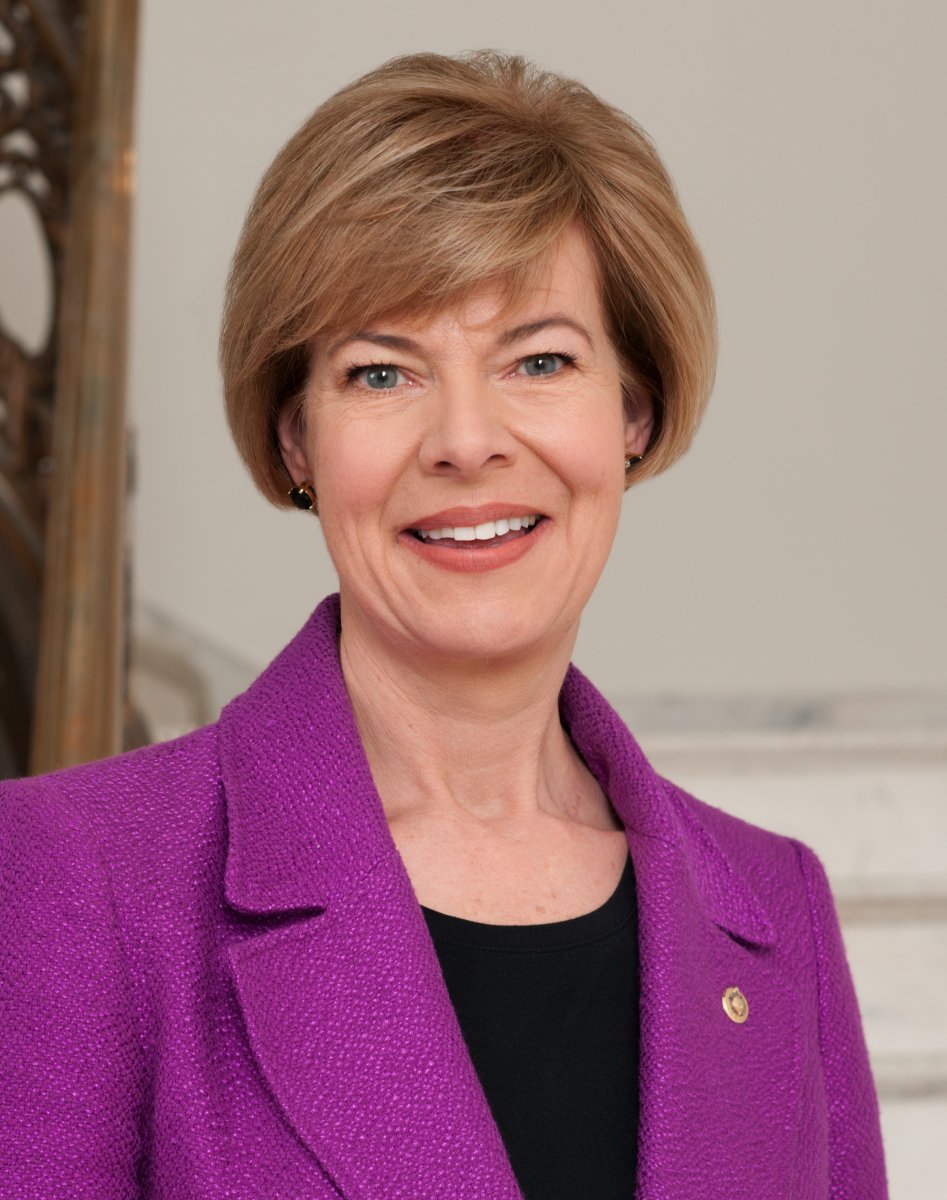
WASHINGTON, D.C. – Today in a letter to President Trump, U.S. Senator Tammy Baldwin and 33 Senate Democrats called for an economic stimulus package focused on helping working Americans and their families who will be most harmed by the outbreak and spread of COVID-19, the novel coronavirus in the United States.
“The spread of COVID-19 will create economic ramifications that will affect individuals, families, and regions differently. While following social distancing guidelines may be important to mitigate the spread of the virus, it creates potentially grave economic challenges for American workers who are not easily able to telework or who do not have access to paid leave. Further limitations on travel, access to more common general services, and cancellation of major events will potentially hurt a large number of Americans who work or depend upon hospitality, travel, tourism, and retail businesses,” wrote the Senators.
The Senators continued, “Thus the goal of any economic stimulus should be directly aimed at the two types of workers who will be most harmed. First, any proposed relief should directly target workers who may have followed medical guidance to self-quarantine because of potential exposure, or those who are required to care for a family member. Second, it should also ensure that workers whose employment or income is significantly jeopardized by industries who may experience the economic slowdown as a consequence of the spread of the virus are appropriately protected. Further, any mechanism to provide relief must predominately be done as a pass through to workers. Our focus should not be on boosting company returns; instead, our focus should be on helping workers, including hourly workers and those workers at small or retail businesses who often don’t have access to short term savings or paid time off.”
In addition to Senator Baldwin (D-WI), the letter was signed by Senators Chuck Schumer (D-NY), Michael Bennet (D-CO), Richard Blumenthal (D-CT), Cory Booker (D-NJ), Sherrod Brown (D-OH), Ben Cardin (D-MD), Tom Carper (D-DE), Bob Casey (D-PA), Catherine Cortez Masto (D-NV), Dick Durbin (D-IL), Dianne Feinstein (D-CA), Kamala Harris (D-CA), Maggie Hassan (D-NH), Mazie Hirono (D-HI), Doug Jones (D-AL), Tim Kaine (D-VA), Amy Klobuchar (D-MN), Ed Markey (D-MA), Bob Menendez (D-NJ), Chris Murphy (D-CT), Patty Murray (D-WA), Jack Reed (D-RI), Jacky Rosen (D-NV), Bernie Sanders (I-VT), Jeanne Shaheen (D-NH), Tina Smith (D-MN), Debbie Stabenow (D-MI), Tom Udall (D-NM), Chris Van Hollen (D-MD), Mark Warner (D-VA), Elizabeth Warren (D-MA), Sheldon Whitehouse (D-RI), and Ron Wyden (D-OR).
The letter is available here and below. An online version of this release is available here.
March 11, 2020
President Donald J. Trump
The White House
Office of the President
1600 Pennsylvania Avenue, N.W.
Washington, D.C. 20500
Dear President Trump:
We welcome the conversation on the impact of the economic consequences of the recent outbreak and spread of COVID-19, the novel coronavirus in the United States. Unfortunately, many of the ideas that have been raised thus far have skewed towards more traditional stimulus measures, such as tax benefits for wealthier individuals and corporations. However, in light of this unique public health crisis, we believe any economic relief package must be crafted to predominately target economic relief for the most affected American workers and their families.
To date, the current U.S. response – while too slow – has been appropriately focused on access to testing and medical care, including the passage of an emergency supplemental that allocates substantial resources to health professionals and communities who are fighting this virus. To address any macroeconomic impact, the Federal Reserve recently made a decision to cut interest rates. And to date, some large businesses have assured their workers that they will not be economically penalized for following the appropriate guidance from public health authorities.However, the spread of COVID-19 will create economic ramifications that will affect individuals, families, and regions differently. While following social distancing guidelines may be important to mitigate the spread of the virus, it creates potentially grave economic challenges for American workers who are not easily able to telework or who do not have access to paid leave. Further limitations on travel, access to more common general services, and cancellation of major events will potentially hurt a large number of Americans who work or depend upon hospitality, travel, tourism, and retail businesses.
Thus the goal of any economic stimulus should be directly aimed at the two types of workers who will be most harmed. First, any proposed relief should directly target workers who may have followed medical guidance to self-quarantine because of potential exposure, or those who are required to care for a family member. Second, it should also ensure that workers whose employment or income is significantly jeopardized by industries who may experience the economic slowdown as a consequence of the spread of the virus are appropriately protected. Further, any mechanism to provide relief must predominately be done as a pass through to workers. Our focus should not be on boosting company returns; instead, our focus should be on helping workers, including hourly workers and those workers at small or retail businesses who often don’t have access to short term savings or paid time off.
Again, we welcome the conversation about federal fiscal relief, and look forward to supporting measures that will put the American worker first and truly help ease the burden of this crisis for the many Americans who continue to be impacted.
NOTE: This press release was submitted to Urban Milwaukee and was not written by an Urban Milwaukee writer. While it is believed to be reliable, Urban Milwaukee does not guarantee its accuracy or completeness.
More about the Coronavirus Pandemic
- Data Wonk: Learning Our Lesson From COVID-19 - Bruce Thompson - Aug 19th, 2026
- Governors Tony Evers, JB Pritzker, Tim Walz, and Gretchen Whitmer Issue a Joint Statement Concerning Reports that Donald Trump Gave Russian Dictator Putin American COVID-19 Supplies - Gov. Tony Evers - Oct 11th, 2024
- MHD Release: Milwaukee Health Department Launches COVID-19 Wastewater Testing Dashboard - City of Milwaukee Health Department - Jan 23rd, 2024
- Milwaukee County Announces New Policies Related to COVID-19 Pandemic - David Crowley - May 9th, 2023
- DHS Details End of Emergency COVID-19 Response - Wisconsin Department of Health Services - Apr 26th, 2023
- Milwaukee Health Department Announces Upcoming Changes to COVID-19 Services - City of Milwaukee Health Department - Mar 17th, 2023
- Fitzgerald Applauds Passage of COVID-19 Origin Act - U.S. Rep. Scott Fitzgerald - Mar 10th, 2023
- DHS Expands Free COVID-19 Testing Program - Wisconsin Department of Health Services - Feb 10th, 2023
- MKE County: COVID-19 Hospitalizations Rising - Graham Kilmer - Jan 16th, 2023
- Not Enough Getting Bivalent Booster Shots, State Health Officials Warn - Gaby Vinick - Dec 26th, 2022
Read more about Coronavirus Pandemic here
Mentioned in This Press Release


Recent Press Releases by U.S. Sen. Tammy Baldwin
Baldwin Calls Out Trump’s Trade War With Canada as Tariffs Hit Wisconsin Dairy, Paper
Sep 8th, 2026 by U.S. Sen. Tammy Baldwin50% tariffs on paper and dairy and 25% tariffs on cheese go into effect today