Fish Consumption Advisory Updated For Parts Of Yahara Chain In Dane County
White Bass Added To Existing Fish Consumption Advisory
MADISON, Wis. – The Wisconsin Department of Natural Resources (DNR) and Department of Health Services (DHS) today announced changes to the existing PFAS consumption advisory for portions of the Yahara Chain of Lakes in Dane County.
Following the initial advisory issued for parts of the Yahara Chain in June 2021, the DNR Bureau of Fisheries Management collected additional fish samples for analysis. Elevated levels of PFOS (perfluorooctane sulfonate), a type of PFAS (per- and polyfluoroalkyl substances), were found in white bass collected from Lake Kegonsa.As a result, the DNR and DHS have developed a new advisory for Yahara Chain waters from Wingra Creek, Starkweather Creek, Lake Monona, Lake Waubesa, Upper and Lower Mud Lake, Lake Kegonsa and the Yahara River downstream to where it meets the Rock River.
In addition to the existing advisories issued in June 2021, the DNR and DHS are now recommending the consumption of one meal per month for white bass.
| SPECIES | CURRENT ADVISORY | NEW ADVISORY |
| White Bass | General/Statewide* | 1 meal/month |
*The general/statewide white bass consumption advice for women <50 and children is 1 meal/month and 1 meal/week for women >50 and men.
PFAS are a group of human-made chemicals used for decades in numerous products, including non-stick cookware, fast food wrappers, stain-resistant sprays and certain types of firefighting foam. These legacy contaminants have made their way into the environment in a variety of ways, including spills of PFAS-containing materials, discharges of PFAS-containing wastewater to treatment plants, and certain types of firefighting foams.
The risk of health problems increases with the amount of contaminated fish you eat. Following consumption advisories will help protect you from excess PFOS exposure and other contaminants found in fish, including mercury and PCBs. A complete list of consumption advisories can be found in the updated Choose Wisely Booklet.
You can find additional fish consumption advice and information on the effects of PFAS on the DNR’s website.
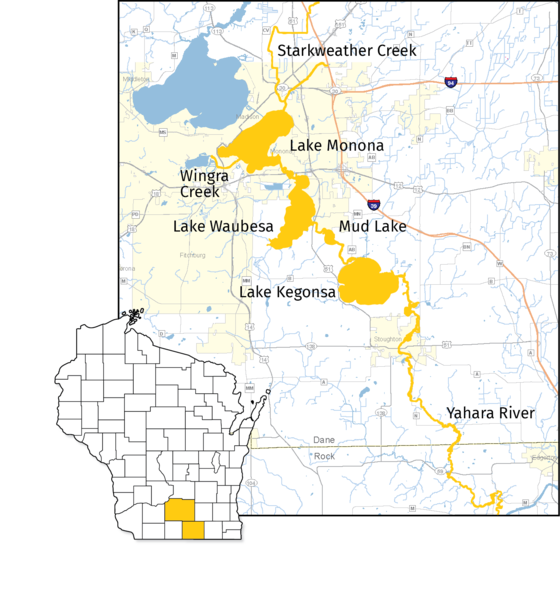
Map from the Wisconsin Department of Natural Resources.
NOTE: This press release was submitted to Urban Milwaukee and was not written by an Urban Milwaukee writer. While it is believed to be reliable, Urban Milwaukee does not guarantee its accuracy or completeness.
More about the PFAS Problem
- Gov. Evers, DNR Celebrate PFAS Awareness Week, Highlight Evers Administration’s Efforts to Ensure Safe, Clean Water Statewide - Gov. Tony Evers - Sep 21st, 2026
- $10 Million Released To Tackle PFAS In Marinette, Peshtigo Wells - Danielle Kaeding - Sep 3rd, 2026
- Gov. Evers, DNR Celebrate Release of $10 Million Pfas Settlement Payment to Help Provide Safe Drinking Water to Affected Communities - Gov. Tony Evers - Sep 1st, 2026
- Gov. Evers, Wisconsin DNR Urge Release of $10 Million to Address PFAS - Danielle Kaeding - Aug 20th, 2026
- Baldwin, Colleagues Demand EPA Drop Its Effort to Weaken PFAS Drinking Water Protections for Millions of Americans - U.S. Sen. Tammy Baldwin - Aug 10th, 2026
- DNR Hosting Listening Session to Gather Feedback About Pfas Law Program Development - Wisconsin Department of Natural Resources - Jun 5th, 2026
- Wisconsin DOJ Reaches Settlement With Tyco Fire Products for Alleged PFAS Violations - Wisconsin Department of Justice - Jun 4th, 2026
- EPA PFAS Rollback Puts Wisconsin Drinking Water Limits In Legal Crosshairs - Danielle Kaeding - May 21st, 2026
- Gov. Evers Delivers Radio Address, Celebrates Release of Over $125 Million to Fight Pfas Statewide - Gov. Tony Evers - Apr 10th, 2026
- Wisconsin Conservation Voters Celebrates Double Win - Wisconsin Conservation Voters - Apr 8th, 2026
Read more about PFAS Problem here
Mentioned in This Press Release


Recent Press Releases by Wisconsin Department of Natural Resources
Celebrate Wisconsin’s Forest Products This Week
Oct 14th, 2026 by Wisconsin Department of Natural ResourcesForest Products Week Is Oct. 18-24