County Executive David Crowley Hosts Roundtable on Combating Opioid Crisis and Saving Lives in Wisconsin
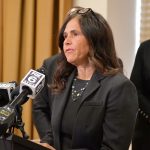
MILWAUKEE – Today, County Executive David Crowley and County Board Chairwoman Marcelia Nicholson-Bovell hosted a roundtable discussion at Safe & Sound with community-based organizations that have received opioid settlement dollars to deliver prevention, treatment, recovery, and harm reduction services to underserved populations.
The roundtable discussion featured representatives from the Milwaukee County Department of Health and Human Services (DHHS), as well as from community organizations including Dryhootch, Benedict Center, Wisconsin Community Services (WCS), Milwaukee Turners, Safe & Sound, Hmong American Friendship Association (HAFA), Vivent Health, Guesthouse of Milwaukee, and Community Advocates to highlight their various projects funded with opioid settlement dollars as part of the Better Ways to Cope (BWTC) initiative. The roundtable conversation also underscored the importance of opioid settlement dollars in the face of uncertain and declining federal funding for behavioral health services both in Wisconsin and across the country.“My administration is deploying opioid settlement dollars to save lives, strengthen families, and build safer, healthier communities. These efforts are critically needed now more than ever,” said County Executive Crowley. “I am proud that we are putting these opioid settlement dollars directly into the hands of community-based organizations so they can provide prevention, treatment, recovery, and harm reduction services for impacted people in Milwaukee County. Looking ahead, we will keep working to combat the opioid epidemic through evidence-based solutions – because lives depend on it.”
“These opioid settlement dollars represent an important opportunity to right long-standing inequities and to meet people where they are with care, dignity, and compassion,” said County Board Chairwoman Nicholson-Bovell. “Today’s roundtable highlighted that when we trust community-based organizations and invest in evidence-based, culturally responsive solutions, we save lives. At a time when federal support is uncertain, Milwaukee County is choosing to lead by centering lived experience, harm reduction, strengthening prevention to support families, heal communities, and stop preventable loss of life.”
So far in 2025, over 300 lives have been lost to drug-related causes in Milwaukee County. The specific effort to combat this trend that was highlighted during today’ roundtable is part of the third cohort of opioid prevention projects that represent a major milestone in Milwaukee County’s multi-year strategy to confront the opioid crisis. These initiatives directly support the County’s strategic plan to achieve equity in all measurable areas by expanding access to life-saving care and support.“Better Ways to Cope is a national model for ‘county to community’ regranting efforts. Together we’ve increased education, decreased harm, normalized healing and reduced stigma,” said Jeremy Triblett, Prevention Integration Coordinator, DHHS Behavioral Health Services (BHS).
In 2023, it was confirmed that Milwaukee County would receive $111 million over 18 years through unprecedented nationwide opioid settlements – the largest amount recovered by any local government in the history of Wisconsin. In total, $34 million has been allocated through three cohorts of funded projects thus far. The projects funded by opioid settlement dollars are informed by input from community stakeholders, service providers, and individuals with lived experience.
The following projects were approved by the Milwaukee County Board of Supervisors for implementation during fiscal years 2026-2028:
- Aging and Disabilities Services Opioid Prevention Project: Deliver outreach to older adults and individuals with disabilities through door-to-door canvassing, harm reduction supply distribution, and engagement with senior living facilities.
- Community Regranting Program: Provide funding to community-based organizations to deliver prevention, treatment, recovery, and harm reduction services to underserved populations.
- Prevention Integration Initiative: Build capacity at DHHS to coordinate prevention education, implement universal screening tools, and support all opioid settlement-funded projects through a dedicated Prevention Integration Manager.
- Harm Reduction Supplies Distribution: Expand access to lifesaving materials through harm reduction vending machines and an online ordering system, reaching high-overdose areas across the county.
- Medical Examiner’s Office Staffing: Support critical positions including a forensic pathologist, medicolegal death investigator, and forensic chemist to improve turnaround time for investigations and data-driven decision-making.
- Housing and Services: Provide housing and services for vulnerable individuals receiving substance use disorder treatment in residential facilities.
- Harm Reduction Data Analytics: Enhance public data dashboards and explore health factors tied to opioid use by integrating EMS and hospital data to inform prevention and treatment strategies.
NOTE: This press release was submitted to Urban Milwaukee and was not written by an Urban Milwaukee writer. While it is believed to be reliable, Urban Milwaukee does not guarantee its accuracy or completeness.
More about the Opioid Crisis
- How Milwaukee Slashed Drug Overdose Deaths - Isiah Holmes - Mar 30th, 2026
- Baldwin Demands Trump Admin Reverse Billions in Cuts From Opioid and Mental Health Programs - U.S. Sen. Tammy Baldwin - Jan 14th, 2026
- Fox Valley Nurse Practitioner Sentenced to Federal Prison for Unlawful Prescribing - U.S. Department of Justice - Dec 29th, 2025
- County Executive David Crowley Hosts Roundtable on Combating Opioid Crisis and Saving Lives in Wisconsin - David Crowley - Dec 16th, 2025
- Co-Chairs Criticize DHS For Lack of Plan, Transparency with Opioid Settlement Funds - Joint Committee on Finance - Oct 21st, 2025
- Opioid Treatment Program Opens First Clinic in Milwaukee - Isiah Holmes - Oct 20th, 2025
- County Executive Crowley, Chairwoman Nicholson Sign Legislation Approving $9 Million for Efforts to Compat the Opioid Crisis - David Crowley - Aug 15th, 2025
- How Are State’s Local Governments Spending Opioid Settlement Payouts? - Addie Costello - Aug 4th, 2025
- MKE County: How County Will Spend $9 Million in Drug Settlement Funds - Graham Kilmer - Jul 29th, 2025
- Milwaukee County Executive David Crowley Announces Over $9 Million for Initiatives to Combat Opioid Epidemic - David Crowley - Jul 17th, 2025
Read more about Opioid Crisis here
Mentioned in This Press Release


Recent Press Releases by David Crowley

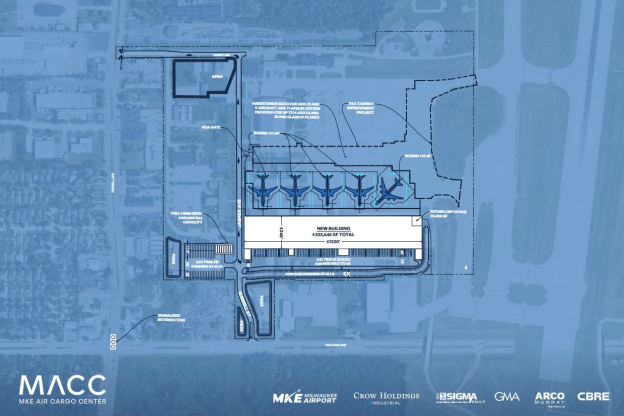
Milwaukee County Executive David Crowley Tours Construction Progress of Air Cargo Facility
Mar 26th, 2026 by David CrowleyProject nearing completion, poised to boost economic growth and cargo operations in Wisconsin