More MPS Students Are Graduating, Going to College
It's good news, but the reasons for it are complicated.
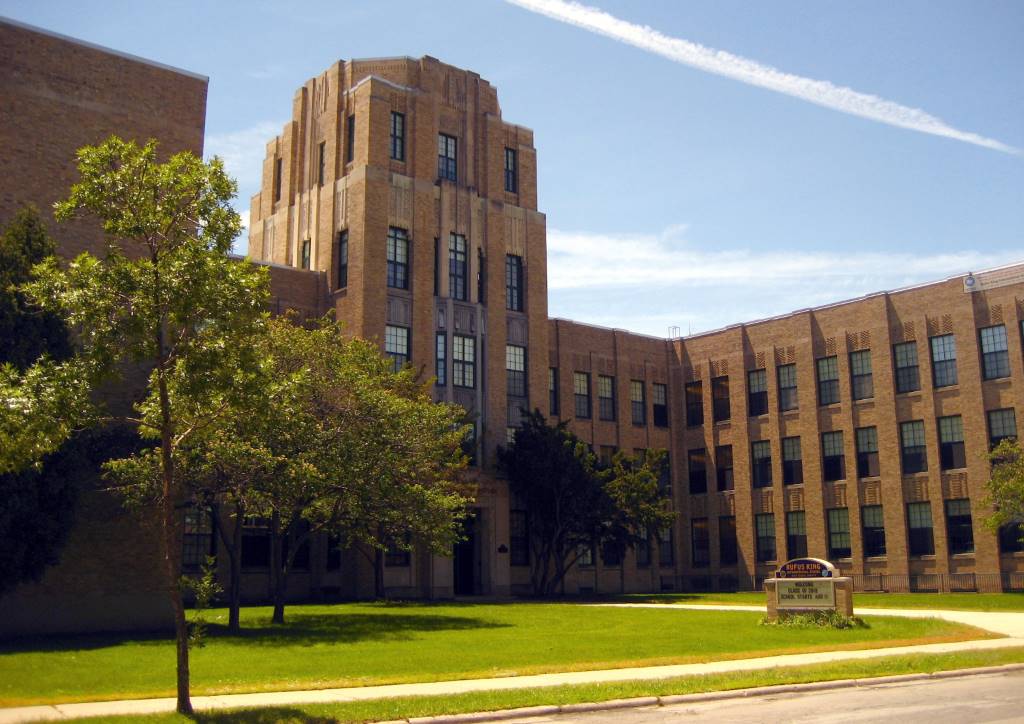
Rufus King. Photo by Christopher Hillard.
We are only weeks away from first-year college students attending their first classes, including many Milwaukee Public Schools graduates. That number is increasing, in part, because the percentage of MPS seniors graduating high school is also increasing.
From 2023 to 2025, the number of MPS grads attending Milwaukee Area Technical College increased by 32%, with 551 new students last year; UW-Milwaukee had an increase of 61%, with 478 students from MPS. This comes on the heels of the Wisconsin Department of Public Instruction (DPI) announcing that the state four-year high school graduation rate for 2024-25 was now at 92%. Although the MPS graduation rate was much lower at 72%, it was the highest ever for all the 16 years DPI has been keeping records.
Why DPI is fixated on a four-year high school graduation rate is somewhat of a mystery. The DPI school report card uses the six-year graduation rate often used by the federal government and other researchers. There is nothing magical about four years, and it gives an unfair representation of the graduation rate for lower-income schools, as the Learning Policy Institute has reported. Research shows that immigrant students not speaking English often take an additional year to finish high school. Disruptions away from school can delay graduation. Families move; students drop out for a time to take care of family members. Other personal crises come into play. These factors play a more significant role for lower-income students and schools that serve them.
The last state report card listed MPS in 2023-24 with a six-year graduation rate of 73.7%. The 2024-25 rate is probably a little higher.
While educators might want to pat themselves on the back for rising graduation rates, we must remember that schools went through a major disruption because of the pandemic. Graduation rates have risen across the nation in the last two years, and researchers attribute much of that increase to the return to in-person education.
“The COVID-19 pandemic was the largest shock to the U.S. education system since K–12 education became universal,” wrote The Grad Partnership in a 2024 research paper entitled “The Immediate Impact of the Pandemic on High School Graduation Rates 2020 to 2022.”
The report goes on to say, “An array of factors linked to the pandemic likely influenced high school graduation rates between 2019 and 2022. Some of these factors were likely to drive down graduation rates. These factors include high school students’ increased disengagement from school due to school closures, emergency remote learning, and absence due to illness, as well as increased need to work to support family, increased mental health challenges, and increased caregiving responsibilities.”
John Hill, MPS director of college and career readiness, concurs that the pandemic had a significant negative impact on student performance. “Learning is social; it is interaction,” he states. During COVID-19, students couldn’t interact with their teachers and peers. Attendance lagged. “It is hard to learn if you don’t come to school,” says Hill. “There is more consistency in the classroom.” Now that students are back, Hill says MPS is working to keep attendance up.
Hill points to other MPS programs adding a few percentage points to the district’s graduation rate. “Students can take a combination of credits earned and GED exams, put them together to get a regular high school diploma. So, if students have all their math credits but don’t have language arts credits, they can take the GED language arts exam.” Students must show language competency at the ninth-grade level or above.
Students can also take online, computer-directed classes for courses they have failed in credit recovery. Before, individual teachers and schools could decide who could take an online course, and the monitoring of what students were doing was lacking. Credit recovery fraud became a national issue some years ago.
Today that decision is made by MPS on a system-wide basis. The school must monitor the students’ progress, and all online tests must be taken with a school official present.
Turning to college attendance, Hill points to programs that get students into higher education. All prospective MPS graduates must fill out the Free Application for Federal Student Aid (FAFSA), which can be used for grants, loans and work-study. Many students don’t realize they may be able to afford postsecondary education, and this application process can help.
A new program introduced in the last two years is Direct Admission. Instead of filling out a complicated application for each individual college, MPS students can fill out a simple application, which is submitted to MATC, 10 UW campuses and Alverno. Not participating in the program currently are three UW campuses: Madison, Eau Claire and La Crosse. But Hill believes that more colleges will participate as college enrollments continue to fall. Hill noted that direct admission does not mean students are automatically admitted. They must meet the college’s minimum requirements, but the MPS grades and transcripts are all automatically sent by MPS, and no letters of recommendation are required.
While it is good news that more MPS students are now going to college, determining how many are graduating can be difficult. Lower-income students typically have lower graduation rates. Hill points to programs like Smart Start, a collaboration of UWM and MATC with MPS to help high school graduates make a better transition to college.
Graduating in four years is not always the norm. Lower-income students are skeptical about taking out student loans. They see people around them underwater with credit card debt, repossessed cars and evictions for unpaid rent. The media is filled with stories of middle-class college graduates with $200,000 in student loan debt questioning whether college was even worth it. So, instead of taking out a college loan, many lower-income students drop out of college for a time, cut the number of classes they are taking and work to gather enough money to finish up.
The research shows that the longer it takes college students to complete coursework to graduation, the less likely they are to make it across the finish line. That, however, is an issue somewhat beyond the control of secondary schools like MPS and for colleges and universities to take up.
If you think stories like this are important, become a member of Urban Milwaukee and help support real, independent journalism. Plus you get some cool added benefits.


K-12 Education
-
MPS May Have a Licensed Teacher for Every Classroom
 Aug 5th, 2026 by Terry Falk
-
MPS Seeks to Hire Chicago Teachers
 Jul 28th, 2026 by Terry Falk
-
The Old is New at MPS
 Jul 27th, 2026 by Terry Falk