Overdose Deaths Fall Across Wisconsin As Harm Reduction Efforts Grow
From Narcan in vending machines to new treatment beds, a statewide push is saving lives after record highs.
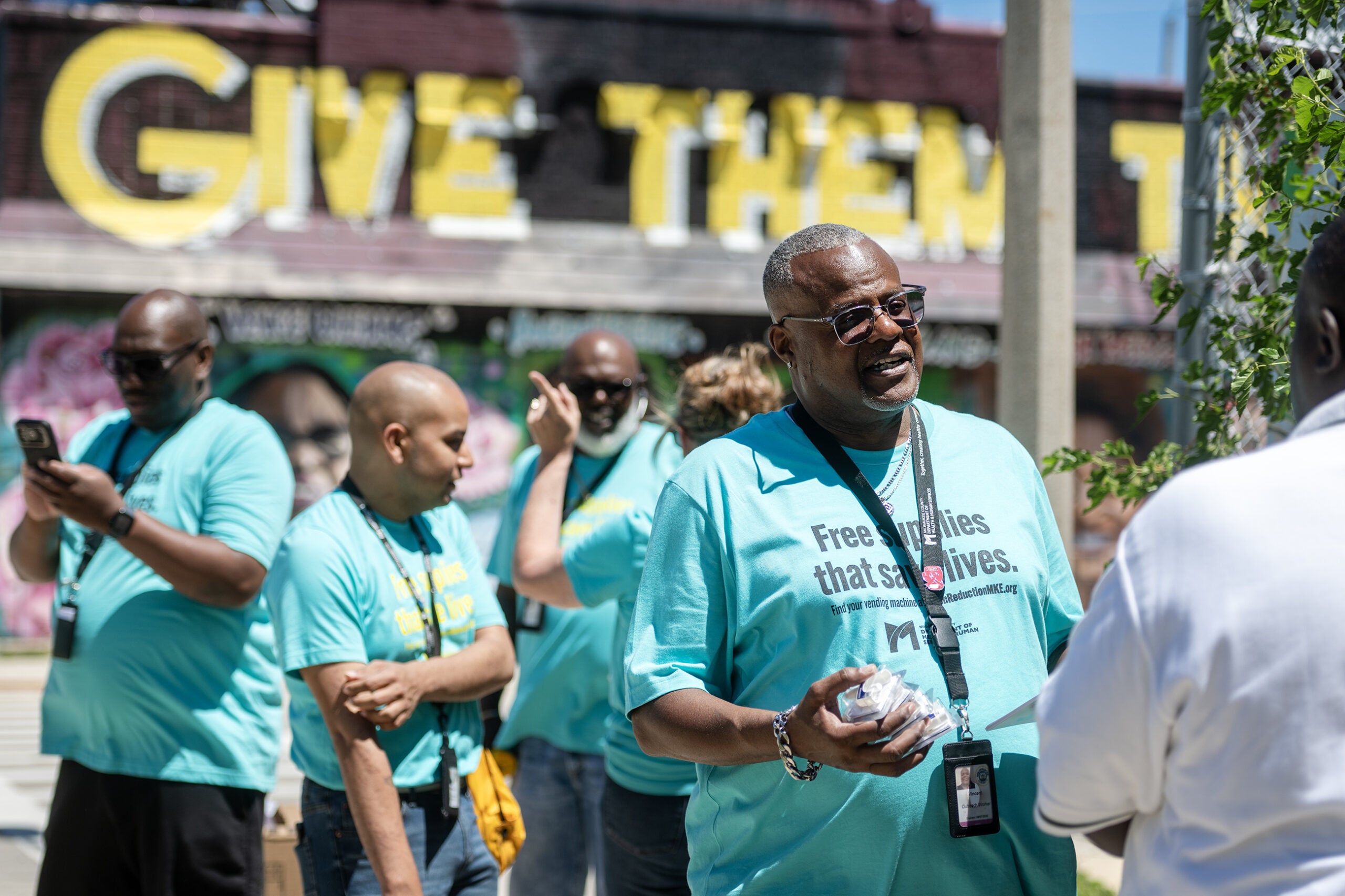
People with Milwaukee County Adult Protective Services speak to Milwaukee residents about harm reduction Friday, June 12, 2026, in Milwaukee, Wis. Angela Major/WPR
After decades of struggling with addiction, Shawn Kress found himself pitching a tent at a park and ride off the interstate in Milwaukee.
His wife and children had left him. And he had already lost his brother to an overdose. Still, in that moment, his focus was on the one thing that seemed to matter.
“That being the lowest I’ve ever been in my life, I still had the drugs, so I was OK,” said Kress, a Milwaukee native. “The addiction still had total hold of me. I just could not veer from the lifestyle.”
But a few months later, he decided to make a change.
“I didn’t want to go back to the tent, I didn’t want to go back to the streets, I didn’t want to use anymore,” Kress said.
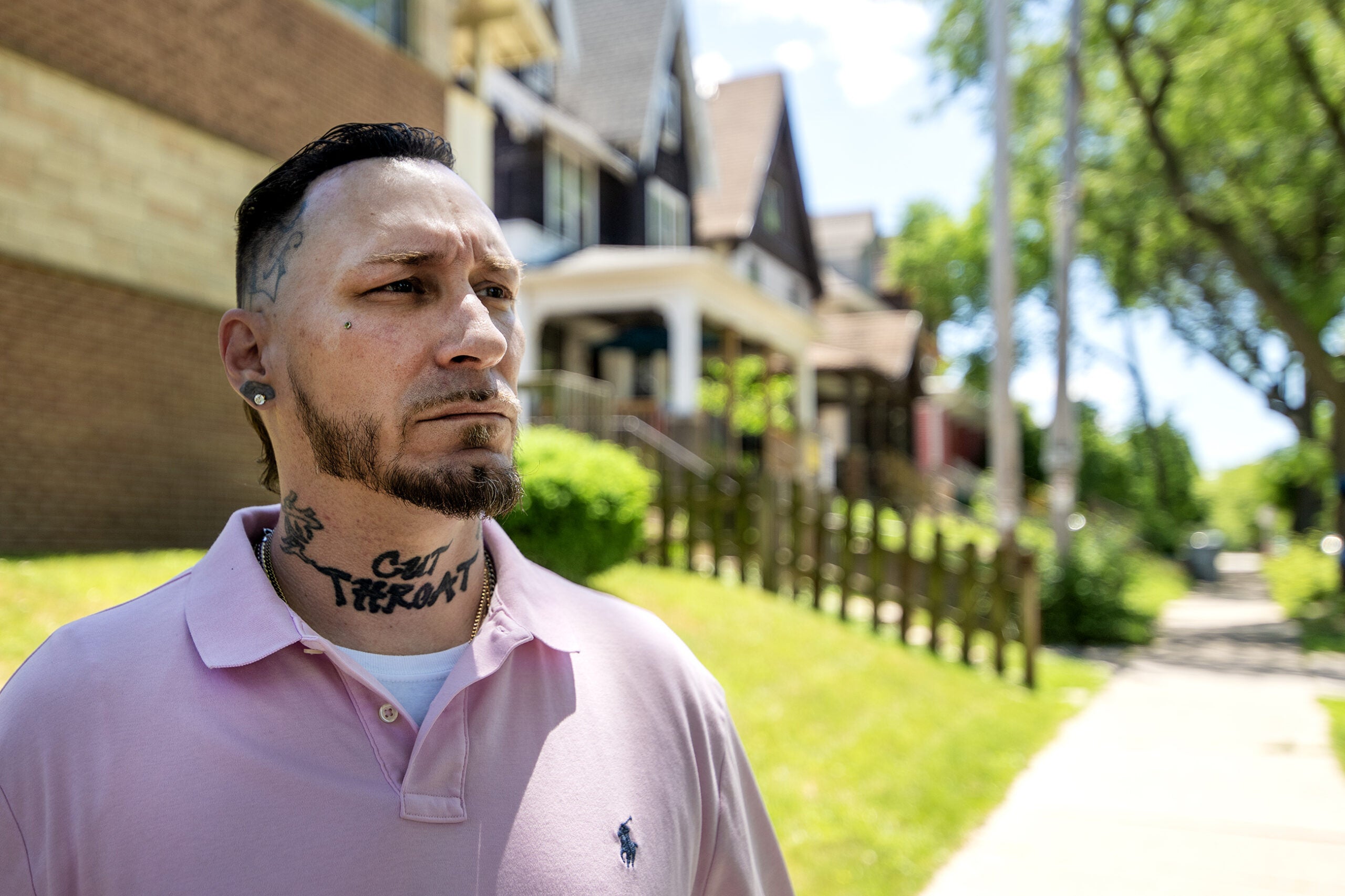
Shawn Kress on Friday, June 12, 2026, in Milwaukee, Wis. Angela Major/WPR
Last year, Kress, 43, went to a detox center and then to Serenity Inns, a substance use disorder residential treatment center in Milwaukee. He said he’s been sober for over 14 months and is now a certified peer support specialist at Serenity Inns.
“I go and I introduce the program to newcomers that are very new, coming in off the streets and showing them that I’m one of the individuals that successfully completed the program,” Kress said.
In Milwaukee County, overdose deaths hit a record high of 674 in 2022. But they have dropped every year since.
Wisconsin also saw a record number of overdose deaths that year, with more than 1,800 people dying of an overdose. That number fell by over 35 percent from 2022 to 2024.
The decline comes as millions of dollars from a national settlement against drug manufacturers and distributors has poured into Wisconsin to help address the opioid epidemic.
In some communities across the state, leaders have pointed to the expanded availability of harm reduction supplies like Naloxone, an opioid overdose reversal medication, as part of the reason behind the drop. Others highlighted work being done to get people into treatment programs and to share information about resources available.
“The reason that I think the overdoses are starting to decline is because of the boots on the ground,” Kress said. “We have resources now that are actually getting into the streets.”
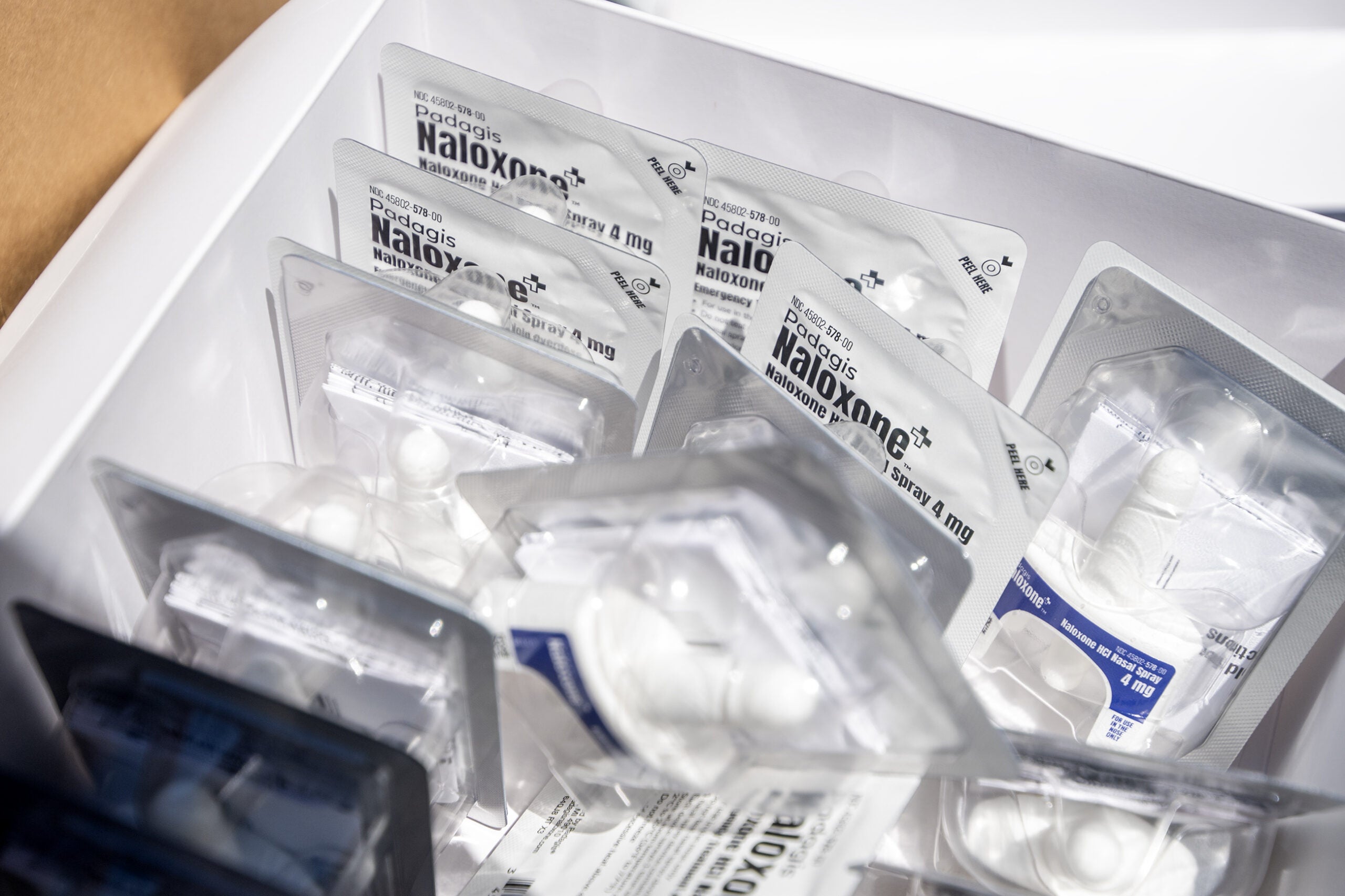
Packages of Naloxone are packed up and ready to be distributed Friday, June 12, 2026, in Milwaukee, Wis. Angela Major/WPR
Wisconsin DHS official says ‘public health ecosystem working as intended’
The first wave of the opioid epidemic began in the 1990s with the increased prescription of opioids, according to the U.S. Centers for Disease Control and Prevention. The second wave, which started in 2010, involved heroin.
The third wave started in 2013, with increases in overdoses that involved synthetic opioids, “particularly those involving illegally made fentanyl and fentanyl analogs,” according to the CDC.
Michelle Haese, the director of substance use initiatives at the Wisconsin Department of Health Services, said in 2014 and 2015, Wisconsin saw around 900 overdose deaths a year. Around 600 or 700 of those deaths involved opioids, according to Haese.
“And from there the trajectory went up sharply,” Haese said. “By 2019 we were at about 1,200 overdose deaths annually, and the pandemic really accelerated that significantly.”
Haese said the proliferation of fentanyl helped fuel that increase. She said fentanyl is often found in other substances like cocaine, heroin and counterfeit pills.
“And often the person who died of an overdose had no idea that they were using it,” Haese said.
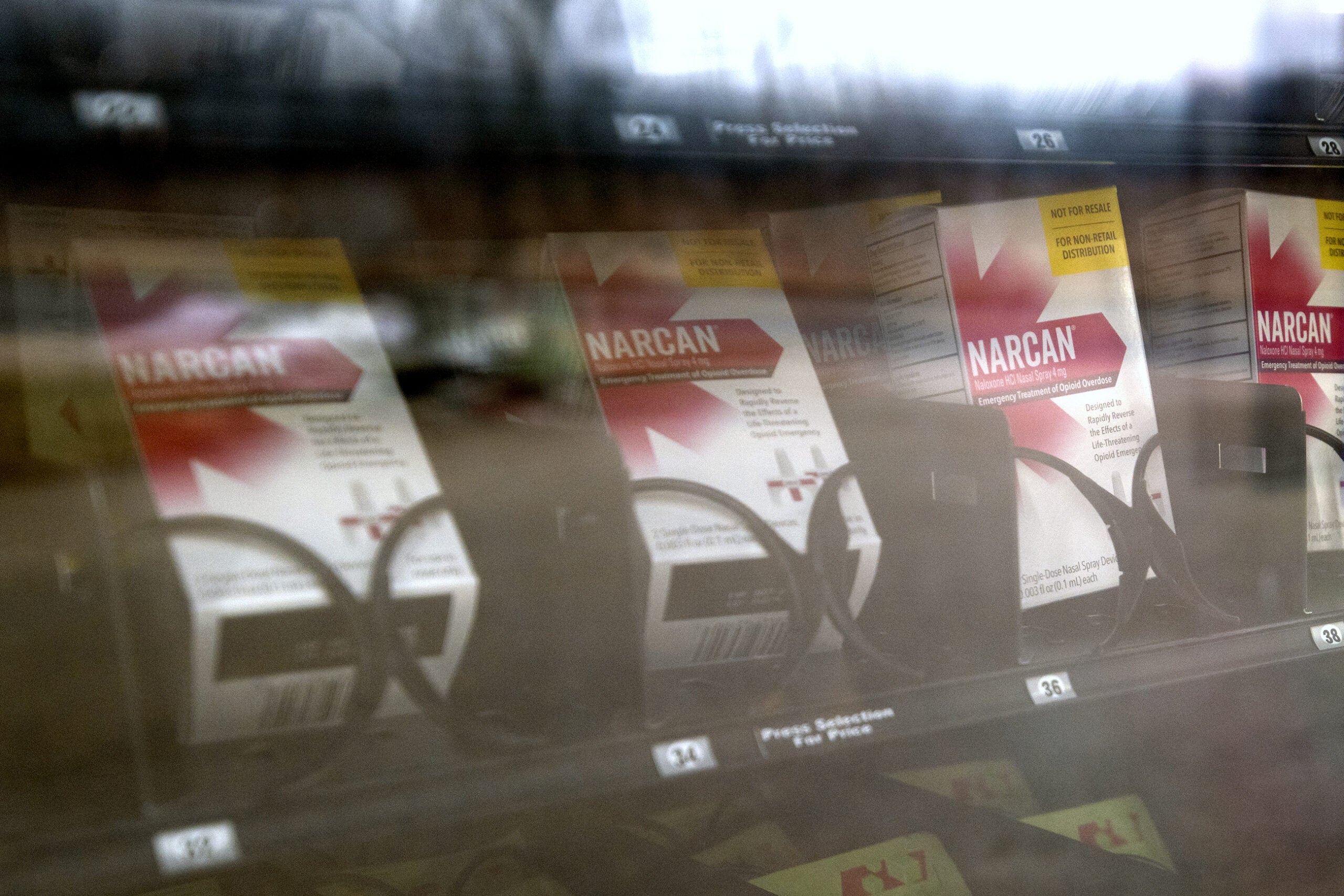
Narcan is for sale in a vending machine outside of the Tellurian Detoxification Center on Wednesday, Jan. 7, 2026, in Madison, Wis. Angela Major/WPR
Overdose deaths in Wisconsin rose from 1,061 in 2016, to 1,830 in 2022. A Wisconsin Department of Health Services report found stress and isolation caused by the coronavirus pandemic may have helped drive the increase.
But in the past few years, the state has seen a sharp decline in overdose deaths, dropping from 1,772 in 2023 to 1,185 in 2024. Haese said there is not just one reason why overdose deaths have dropped in Wisconsin, but she did point to the “cumulative effect of years of investment.”
“This is a public health ecosystem working as intended and that’s finally showing up in the lives that are being saved, and the public health outcomes that we’re seeing in this space,” Haese said.
Haese also said people receiving medications for opioid use disorder — such as Buprenorphine, methadone, and naltrexone — has been helpful. Those are three medications, “that can help people stop or reduce opioid use,” according to the National Institute on Drug Abuse.
“There’s still a long ways to go, we’re cautiously hopeful, but we’re definitely seeing signs of this turning around,” she said.
Overdose deaths have also decreased nationally — data from the National Vital Statistics System found the “age-adjusted drug overdose death rate” fell by 26.2 percent from 2023 to 2024. Overdose statistics from 2025 have not yet been released by the state.

People with Milwaukee County Adult Protective Services pass out Naloxone and share information about harm reduction Friday, June 12, 2026, in Milwaukee, Wis. Angela Major/WPR
‘It’s kind of run like a hotel’
Kress remembers the day he first walked into Serenity Inns in Milwaukee — April 17, 2025.
“It sounds like a hotel, and it’s kind of run like a hotel,” Kress said.
While Kress was at the residential treatment center, he would wake up around 5:30 a.m. to get prepared for the day. After breakfast, he’d work out and take a shower and then get ready for group and individual therapy. He said the therapy helped him with life skills and with addressing past trauma.
“I’ve never really tackled that before in my life,” Kress said.
He said his counselors at the center were in recovery themselves.
“It was a lot easier to be able to trust the process when it first started, because talking to them type of individuals that went through or are relatable to my situation, it definitely helped with the trust issue,” Kress said.
Kress said he wasn’t able to “wander off” from the inpatient facility when he was there. That helped him stay “grounded,” he said. He was also prescribed Buprenorphine.
“That helped me tremendously in any type of craving sense,” Kress, who was at the residential center for around 70 days, said.
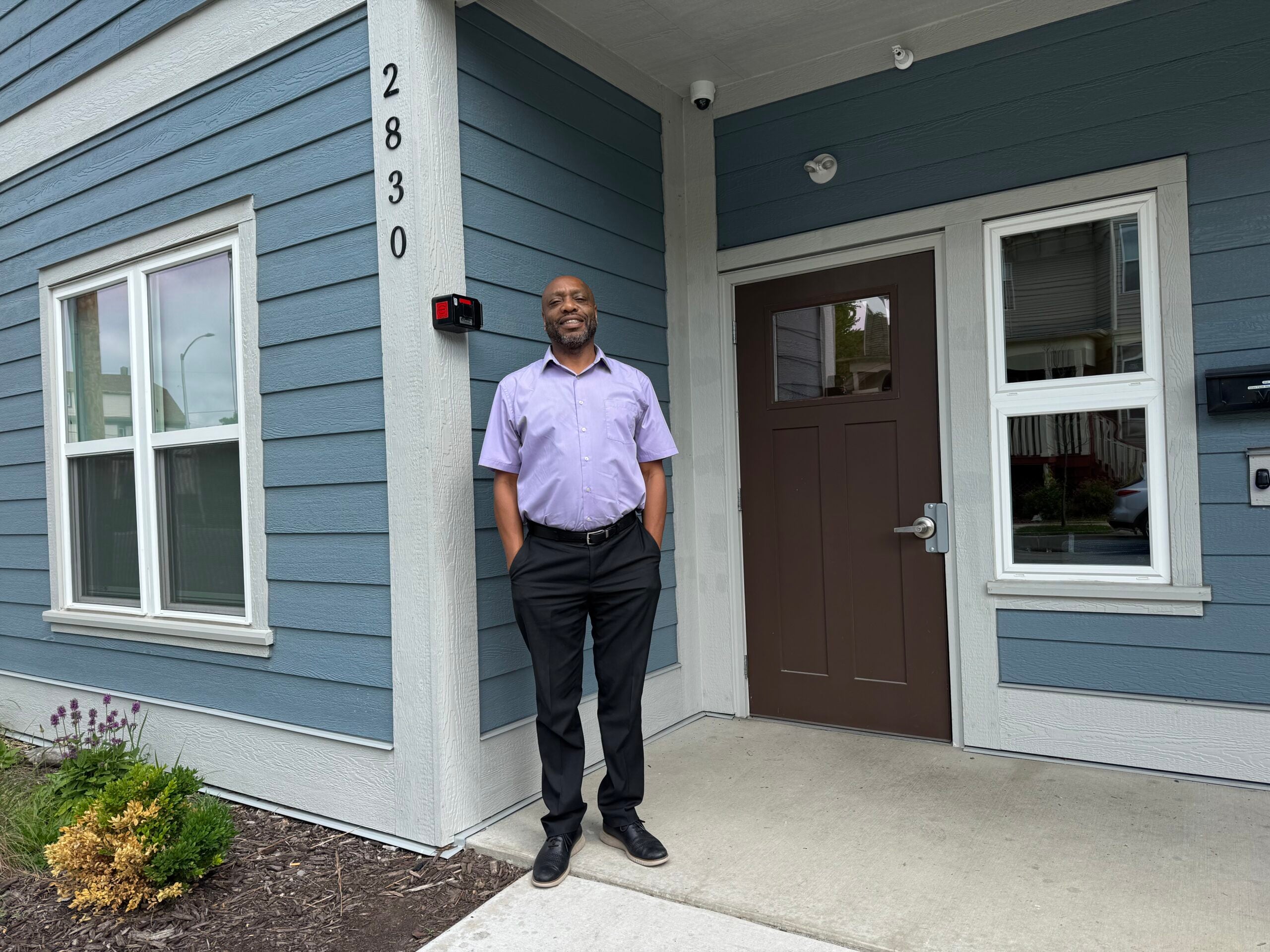
Kenneth Ginlack, president and CEO of Serenity Inns. Evan Casey/WPR
Kenneth Ginlack, CEO of Serenity Inns, said there are three to four group therapy sessions a day and then individual therapy sessions with a counselor. He said they try to identify any childhood trauma.
“A lot of times individuals can stop using or drinking and using drugs, however, if they don’t address the trauma and some of the childhood things that they may have held on to, then they’re more likely to relapse,” Ginlack said.
Ginlack said most men stay at the center for 60 to 90 days. They can then move to transitional living across the street, where they can stay for four to six months. There’s also an alumni house — an apartment building — where most men live for up to 12 months and where there is a weekly group therapy session.
Ginlack said they take referrals from detox centers, emergency departments or even self referrals. There are 14 beds in the residential center, 12 in the transitional living house and 14 at the alumni apartment building.
“That’s why Serenity Inns is very unique, because we try to hold on to the guys as long as we can to make sure that they’re stable in their recovery,” Ginlack said.
Kress said his insurance had lapsed, but he was still able to receive treatment at Serenity Inns.
“Even individuals that do not have insurance, we don’t deny them treatment,” Ginlack said.
“It’s real important for us to continue to get donations and work with private donors,” Ginlack added.
In 2024, Serenity Inns received $200,000 from Milwaukee County through funds that were regranted through the national opioid settlement. Serenity Inns is also one of the county’s residential treatment providers.
Jennifer Wittwer, the director of Milwaukee County’s Community Access to Recovery Services, said Medicaid pays for the clinical treatment at the centers. However, she said Medicaid does not pay for the room and board costs for someone in residential treatment.
“Since Medicaid doesn’t cover that, and most of our clients are indigent, Milwaukee County does offer some support daily — financial support — to cover those room and board costs,” Wittwer said.
“If people don’t have Medicaid and they’re found financially and functionally eligible for services in our system, then Milwaukee County pays for all of it, both the room and board and the care and maintenance,” Wittwer added.

A new United Community Center residential treatment center is set to open in August. Photo courtesy of Safia Ortega, United Community Center
Wisconsin will get nearly $800 million from the national settlement against drug manufacturers and distributors through 2038. The money is being split between the state and 87 local governments in Wisconsin.
Over $2.9 million from the settlement was awarded to the United Community Center for a new substance use disorder residential treatment center in Milwaukee. United Community Center already has a residential treatment facility where 342 people were served last year.
Mara Lovo, human services director for United Community Center, said the new center, which has 16 beds for men, is expected to be open by August. She said their wait list to get people into treatment is “very big.”
“So we’re gonna be able to decrease that waiting list, and that is amazing, right?” Lovo said.
Ginlack said Serenity Inns is also hoping to open another 14-bed residential treatment center in 2028 to help cut down on the waiting list to get people into treatment.
Milwaukee County Executive David Crowley recently announced his plan to use nearly $7.5 million in settlement funds from fiscal years 2027 through 2029. The eight initiatives in his proposal are “aimed at reducing opioid and substance use disorder, expanding treatment and prevention services, and saving lives,” according to a statement from Crowley’s office.
Treatment centers provide other options
Community Medical Services, a medication-assisted treatment facility, has six locations in Wisconsin — four in Milwaukee County, as well as one in Fond Du Lac and one in Madison. Amanda Maria De León, the regional community impact manager for Community Medical Services, said the centers offer Buprenorphine, methadone and naltrexone for people suffering with substance use disorders.
De León said the centers believe in “treatment on demand.”
“So when somebody wants treatment, we want to be able to give them that access immediately,” De León said.
When a person starts treatment at the center, they’re required to come to the clinic every day for their doses until they’ve met a certain threshold of sobriety.
“So that means that all of their urine drug screens are negative for illicit substances, they’re seeing their counselor, they’re compliant with all medical appointments and any blood work or anything that’s required of them,” De León said.
That’s when they’re able to start the medication at home. She said the medication is also paired with counseling.
“Folks can’t come to us just for counseling, nor can they come to us just for medication,” she said.
De León said around 90 percent of their patients are on Wisconsin Medicaid. For those that don’t have insurance, she said staff at the center can help them apply for it.
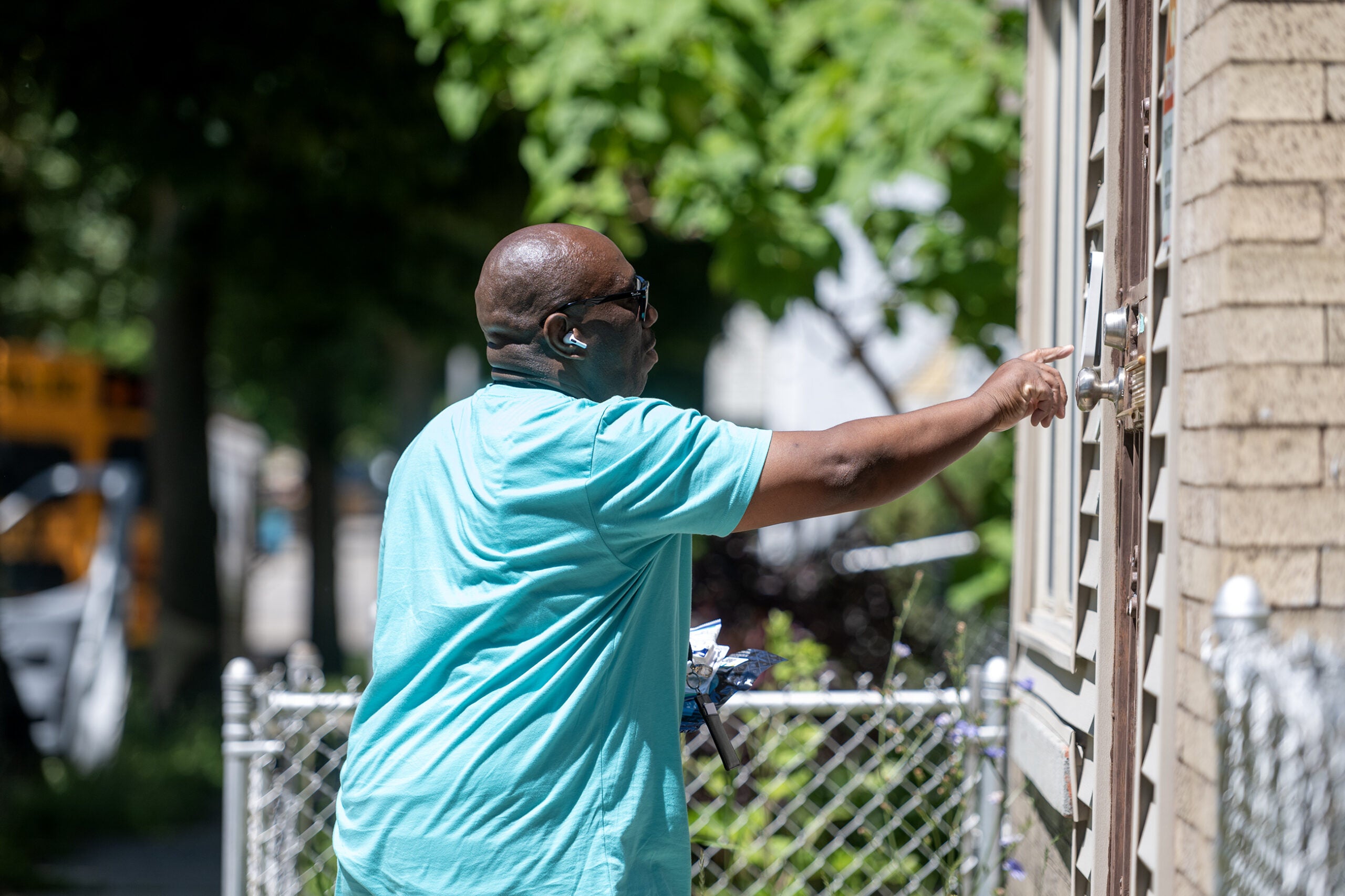
A group from Milwaukee County Adult Protective Services knocked on doors as part of a harm reduction effort Friday, June 12, 2026, in Milwaukee, Wis. Angela Major/WPR
Distribution of Naloxone has increased
Another factor in the decline of opioid toxicity deaths could be the widespread distribution of the opioid overdose-reversing drug Naloxone, also known by the brand name Narcan.
In 2020, 18,600 doses of Narcan were distributed to communities across the state through the Naloxone Direct program, according to an estimate from the Wisconsin Department of Health Services. In 2024, that number grew to an estimated 319,044 doses, and an estimated 275,630 doses in 2025.
“So we’ve moved from a world where this was not talked about and then to a place where Naloxone was scarce and stigmatized, to one where it’s increasingly normal to keep in a glove box or a backpack, and the cultural shift is part of why the death rate is falling,” Haese said.
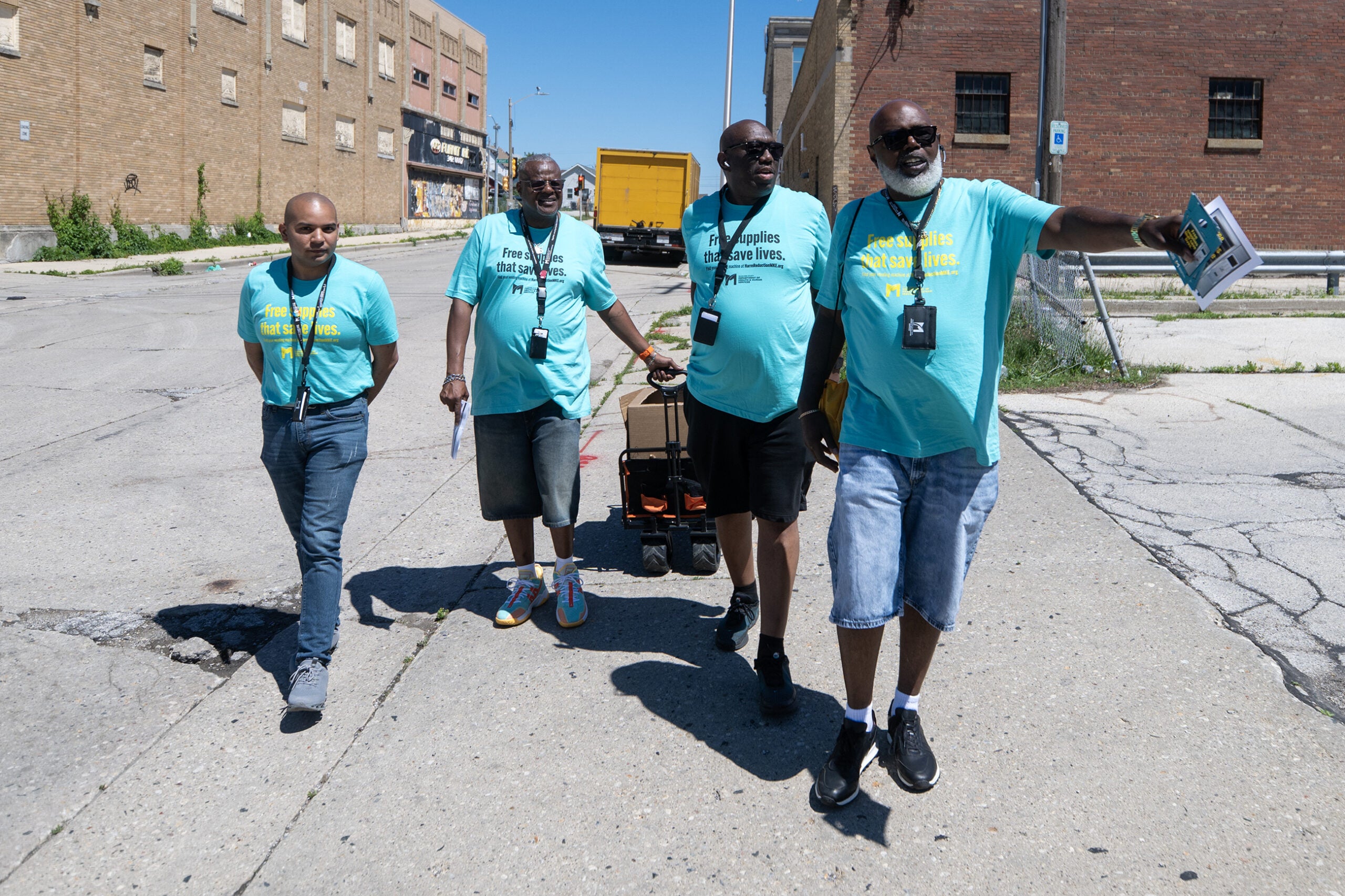
A group from Milwaukee County Adult Protective Services carry a wagon full of Naloxone as they do community outreach Friday, June 12, 2026, in Milwaukee, Wis. Angela Major/WPR
Ricky Person, an opioid prevention coordinator with Milwaukee County Adult Protective Services, visits areas of the county that have been hit the hardest by the opioid epidemic to hand out supplies like Narcan and fentanyl test strips. Through door-to-door visits and at community events, he said he and his team have distributed over 16,000 Naloxone kits since July of 2024.
“The purpose is to save lives,” Person said. “We just want the community to be saturated with harm reduction supplies, because we want these numbers to continue to go down.”
Overdose deaths in Milwaukee County have fallen over the past four years. In April, county leaders announced there were 387 fatal overdoses in 2025, an over 40 percent decline compared to 2022 numbers. Ben Weston, chief health policy advisor for Milwaukee County, said the county has followed national trends when it comes to the decrease.
“We certainly are bolstered by national efforts that have been done over years to decrease the supply of illicit substances, to educate the public, to increase access to harm reduction,” Weston said.
But Weston also pointed to “upstream” elements, like the county investing in housing and “increasing availability of health services, specifically mental health services,” as reasons behind the drop. Weston also said he believes harm reduction tools are working.
“Harm reduction is really the idea of just that, decreasing harm in the moment, decreasing the likelihood that somebody is going to overdose today and giving them the chance to recover,” Weston said.
Last year, more than 75,000 harm reduction supplies — which also includes bags that destroy medications and drugs and medication lock bags — were distributed through free vending machines in Milwaukee County, according to a county spokesperson.
Weston also pointed to the Milwaukee Overdose Response Initiative as another reason behind the decline. That initiative, housed within the Milwaukee Fire Department, includes members of the fire department and peer support specialists.
Lieutenant Jonathan Belott, the Mobile Integrated Healthcare program manager for the department, said the team tries to make contact with someone who has suffered a nonfatal overdose within 24 hours. He said they sometimes respond to that person’s home or a friend or family member’s house.
“Sometimes it’s unhoused people, and if that’s the case, maybe we’ll meet them at a McDonald’s or at the local library,” Belott said. “We’ve gone to their homeless encampments at times. It really doesn’t matter to us where they are, as long as they’re within Milwaukee County, we can go.”
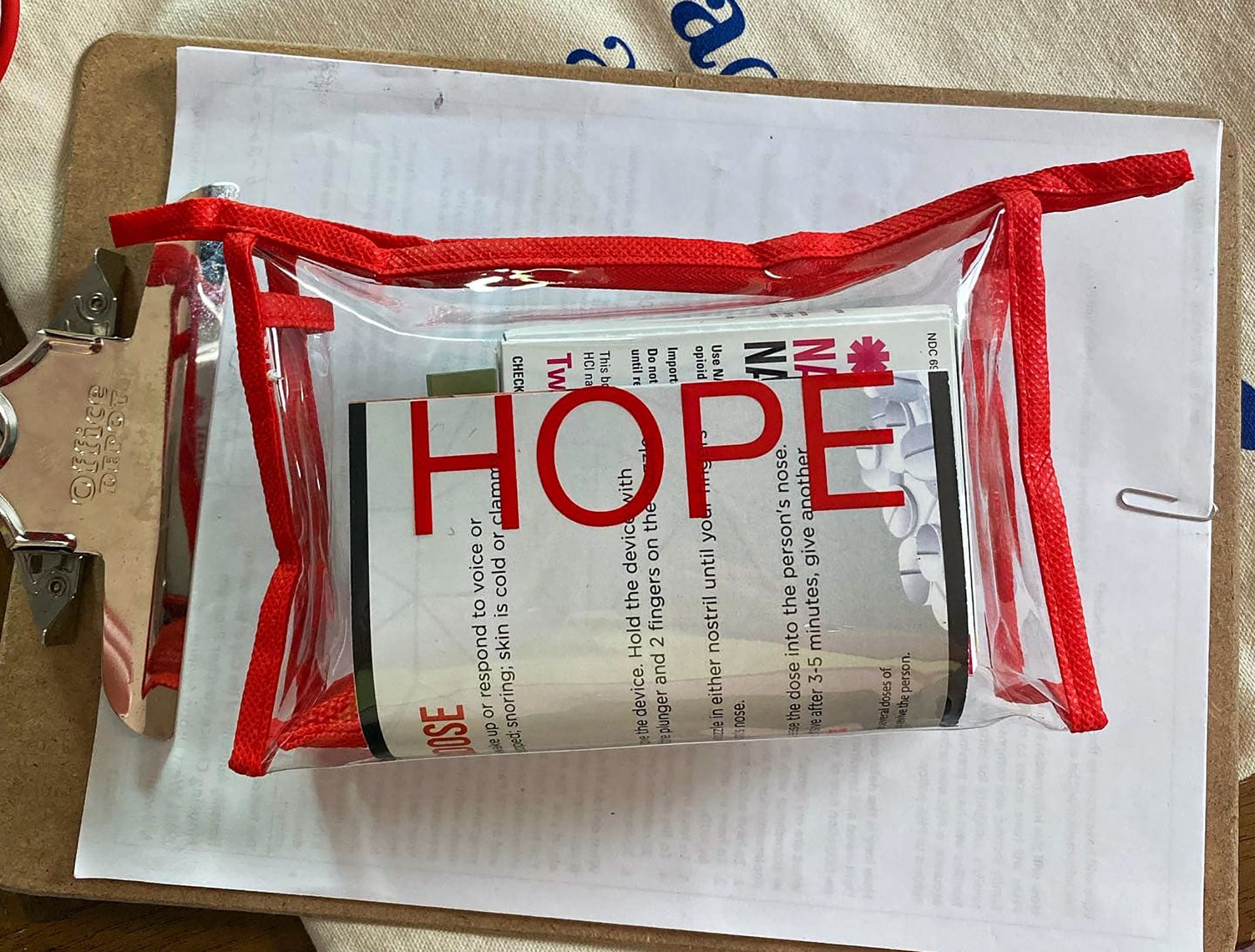
A “Hope Kit” is shown that includes naloxone, CPR face shields, fentanyl testing strips and contact information for groups who seek to reduce drug overdoses in Milwaukee. The kits were developed by the Milwaukee Overdose Response Initiative to decrease the chances of drug overdoses. Photo courtesy of MKE Overdose Prevention
Members of the team share information about resources and treatment available, and hand out Hope Kits with Narcan and fentanyl test strips. Belott said the team can connect people with treatment centers that provide medication assisted treatment.
The team can also help connect a person to a residential treatment center. Belott said the team often encounters people who have overdosed more than once, or people who have “burned all of their bridges in life.”
“They’re never going to disappoint us enough for us to say we’re not going to come back and help you,” Belott said.
However, Belott said Milwaukee County only pays the room and board fee for people who go into residential treatment within the county. He said the county does not cover that cost for people who go into treatment outside of the county.
“We need to be able to send people outside of the county, if there’s no space available,” Belott said.
“So being able to fund that for people who need to go out of the county for treatment would be a really huge benefit for us,” he added.
In an email, Jill Lintonen, a spokesperson for the Milwaukee County Department of Health and Human Services, said Milwaukee County Behavioral Health Services, “only pays for services provided by agencies in Milwaukee County.”
“There are limited funds to support room and board while clients are receiving SUD (substance use disorder) residential treatment, so BHS uses those funds to support agencies that provide these services in Milwaukee County,” Lintonen said.
Wittwer also said Milwaukee County no longer gets a state grant that helped support the work.
“So with that, this year, the room and board support that we give our providers, we’re still giving a daily amount, but it’s a less amount than we were able to support before,” she said.
Other counties also seeing drops
In Walworth County, there were 29 overdose deaths in 2020, with 23 of those deaths involving opioids. That number dropped to 18 in 2025, with 11 deaths involving opioids, according to data provided by the county. Carlo Nevicosi, director of Walworth County Department of Health and Human Services, said opioid settlement funds have helped pay for two substance abuse specialist positions.
In Dane County, where overdose deaths hit a record high of 166 in 2021, the settlement funds have also helped fund a prevention specialist within Dane County Emergency Management. The county is expecting to see around 73 fatal overdoses for 2025 once data is complete, according to Julia Olsen, public health supervisor for Public Health Madison and Dane County.
In Brown County, overdose deaths increased from 59 in 2020 to 69 in 2021. Anna Nick, the public health officer and administrator for Brown County Public Health, said a task force was created in 2022 to address the issue. By 2024 the number of deaths fell to 31. But Nick said county data shows they ticked up again in 2025 to 39.
“While the trend in Brown County is extremely encouraging, we recognize that families are still losing loved ones to opioid overdoses, so that’s why we continue to educate, partner with local organizations, connect people to treatment and recovery support, and really, we continue to do that education around Narcan as well,” Nick said.
After record highs, communities across Wisconsin see decline in overdose deaths was originally published by Wisconsin Public Radio.
If you think stories like this are important, become a member of Urban Milwaukee and help support real, independent journalism. Plus you get some cool added benefits.
More about the Opioid Crisis
- DHS Collecting Feedback on How to Save More Lives With Future Opioid Settlement Funds - Wisconsin Department of Health Services - Aug 20th, 2026
- Overdose Deaths Fall Across Wisconsin As Harm Reduction Efforts Grow - Evan Casey - Jul 9th, 2026
- New Billboards Raise Awareness About Dangers of Fentanyl - Edgar Mendez - May 3rd, 2026
- Purdue/Sackler $7.4 Billion Opioid Settlement Goes Into Effect - Wisconsin Department of Justice - May 1st, 2026
- MKE County: Milwaukee’s Overdose Deaths Dropped 42.5% Since 2022 - Graham Kilmer - Apr 22nd, 2026
- Wisconsin Limits Access to Methadone for Opioid Addicts - Addie Costello - Apr 21st, 2026
- How Wisconsin Plans To Spend $31 Million In Opioid Funds - Evan Casey - Apr 10th, 2026
- DHS Announces Plan to Invest $31 Million in Opioid Settlement Funds - Wisconsin Department of Health Services - Apr 9th, 2026
- How Milwaukee Slashed Drug Overdose Deaths - Isiah Holmes - Mar 30th, 2026
- Baldwin Demands Trump Admin Reverse Billions in Cuts From Opioid and Mental Health Programs - U.S. Sen. Tammy Baldwin - Jan 14th, 2026
Read more about Opioid Crisis here
Political Contributions Tracker
Displaying political contributions between people mentioned in this story. Learn more.