
Lake Michigan Has Record Rise in Water Level in April
Snowmelt and heavy rains raise Great Lakes back to nearly their long-term average.
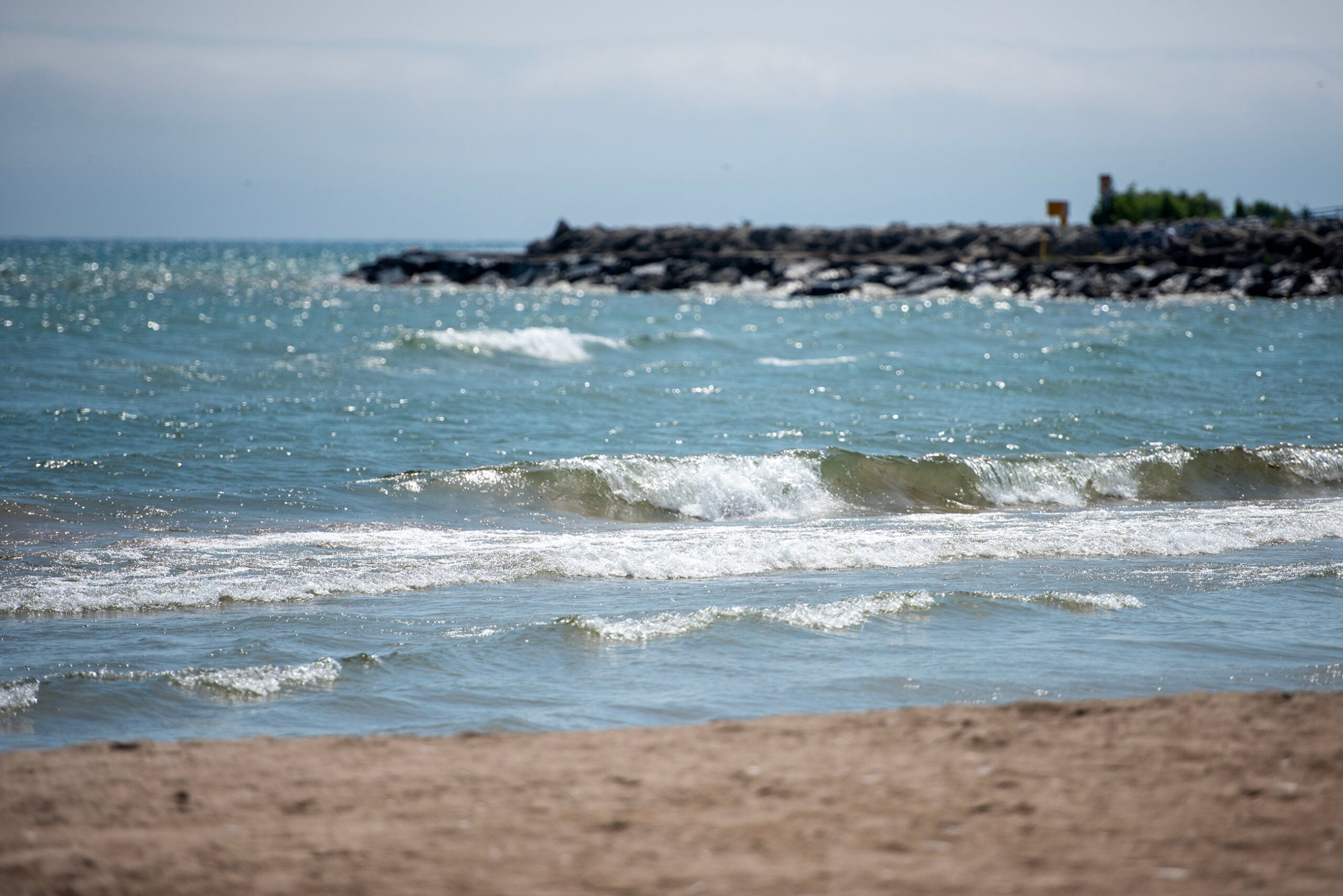
Waves lap up onto the Lake Michigan shore Wednesday, July 9, 2025, in Sheboygan, Wis. Angela Major/WPR
Water levels on lakes Michigan and Huron had their largest surge for the month of April since record-keeping began in 1918, the quick rise driven by snowmelt and heavy rains.
Water levels soared by a record 13.4 inches on the lakes last month, said Keith Kompoltowicz, chief of hydraulics and hydrology for the Detroit District office for the U.S. Army Corps of Engineers. That’s triple their average rise of 4.3 inches in April.
“The lakes are typically rising in the spring due to rainfall and snowmelt runoff, but obviously we hadn’t seen a rise of this magnitude,” Kompoltowicz said.
Lakes Michigan and Huron are treated as one since their water levels rise and fall together because they’re connected at the Straits of Mackinac.
The previous record for the month took place 75 years ago in 1951 when water levels rose close to 10 inches.
The surge came as the Upper Midwest, including Wisconsin, saw its wettest April on record. The region saw twice the normal amount of precipitation. Wisconsin smashed the previous statewide record set in 2008 by more than an inch with an average of 6.53 inches of rain last month.
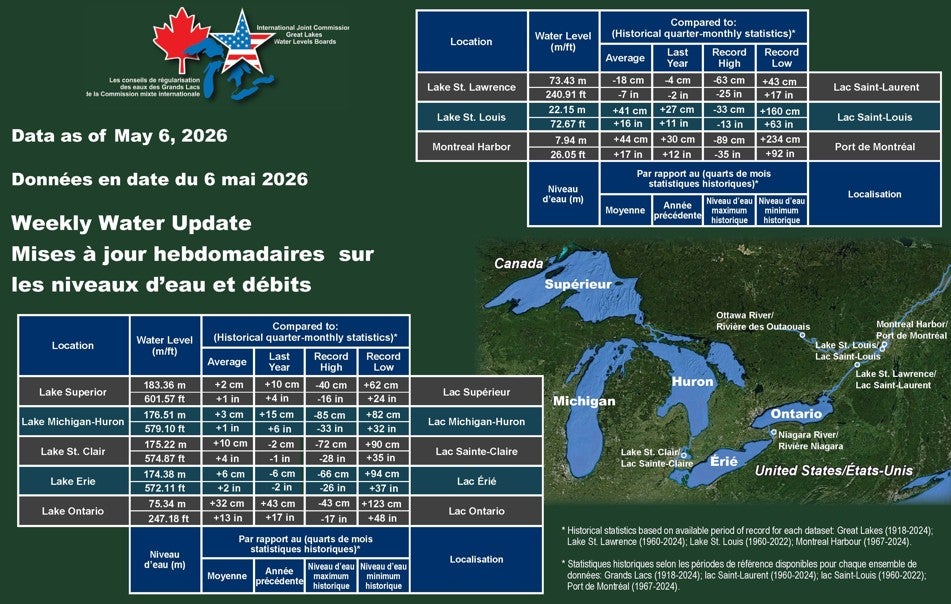
Image courtesy of the U.S. Army Corps of Engineers
All of the Great Lakes saw substantial increases in water levels, but none had record increases for the month except for lakes Michigan and Huron.
Lake Superior saw its second-highest rise in water levels for the month of April due to very wet weather and significant snow pack. Water levels climbed 7.1 inches last month or more than double the average rise of 3.1 inches for April. The increase fell short of the record rise of 11.4 inches set back in April of 2000.
While lake levels rose fast, overall water levels are near average.
“Anytime you see, you know, these very large rises, that could potentially cause some alarm, but we’re not anywhere near record highs. We’re not anywhere near record lows,” Kompoltowicz said.
Except for Lake Ontario, all of the Great Lakes are within 2 inches of their seasonal long-term average despite recent surges in water levels.
As of May 6, Lake Ontario was more than a foot above average at 247.18 ft. Water levels on Lakes Michigan and Huron were at 579.10 ft. Lake Superior is sitting at 601.57 ft. Levels on Lake Erie reached 572.11 ft.
For this time of year, Lakes Michigan and Huron last swelled to a record high in 2020 when water levels were nearly three feet higher. The record low for the beginning of May was set back in 1964.
Meanwhile, it’s been 40 years since Lake Superior reached a record high for this time of year. At the beginning of May, the lake last dropped to a record low 100 years ago.
Over the next six months, lakes Michigan and Huron, as well as Lake Superior, are expected to remain within two inches of the long-term average.
Snowmelt and heavy rains spur record rise on lakes Michigan and Huron in April was originally published by Wisconsin Public Radio.
If you think stories like this are important, become a member of Urban Milwaukee and help support real, independent journalism. Plus you get some cool added benefits.