Bipartisan Deal Would Fund WisconsinEye After Shutdown
Senate passes bill including nearly $600,000 and seeks competitive bids for future broadcast rights.
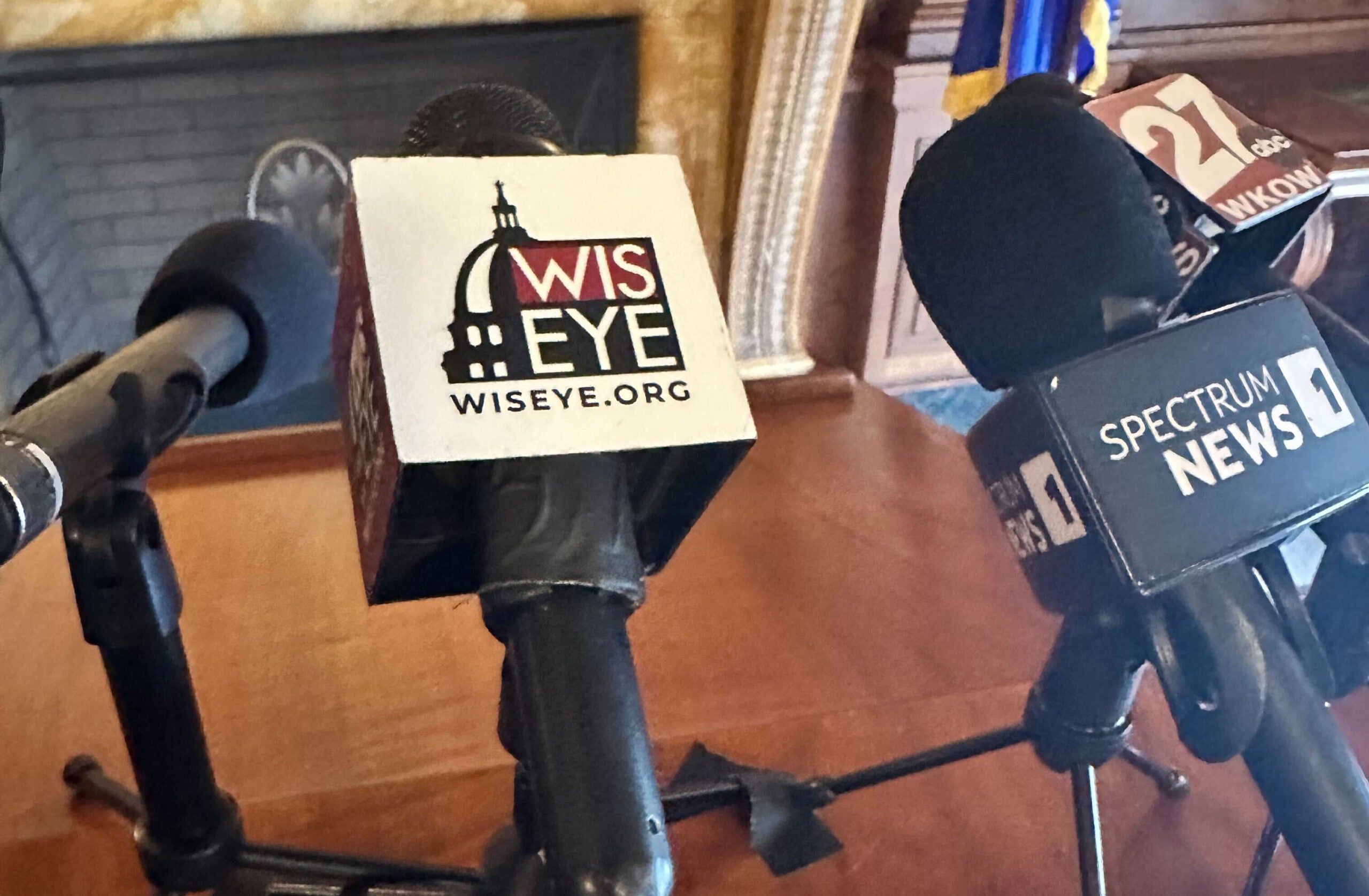
A WisconsinEye microphone is displayed at a podium during a press conference in the state Capitol on Feb. 2, 2026. Anya van Wagtendonk/WPR
In a bipartisan about face, the Wisconsin Senate passed a bill Wednesday that includes nearly $600,000 in funding for WisconsinEye, the state’s version of C-SPAN.
But before it can be signed into law, it needs to pass both houses of the Legislature. The state Assembly already passed a different bill to fund WisconsinEye last week, and it plans to adjourn for the year on Thursday.The competing bills were introduced after WisconsinEye, which has been operating mostly on private donations since 2007, ran out of money and went off the air in December. Without the nonprofit broadcasting the Legislature’s hearings, some Democrats attempted to stream proceedings with their phones and said Republican committee chairs blocked them from doing so.
Last week, state Sen. Julian Bradley, R-New Berlin, introduced a bill requiring WisconsinEye and any other takers to submit bids for the right to broadcast the Legislature’s business. Senate Democrats initially balked at the legislation because it didn’t include any money.
Things changed Wednesday when Bradley amended his bill to include $585,630 over 12 months for WisconsinEye, while still requiring the nonprofit to submit a competitive bid to lawmakers.
Bradley acknowledged Democrats in the Senate had different ideas for how to help WisconsinEye, referencing an earlier proposal introduced by Sen. Mark Spreitzer, D-Beloit.
“The senator and I are both authors of separate bills, different approaches,” said Bradley. “But no matter what we realized, transparency is the most important thing.”
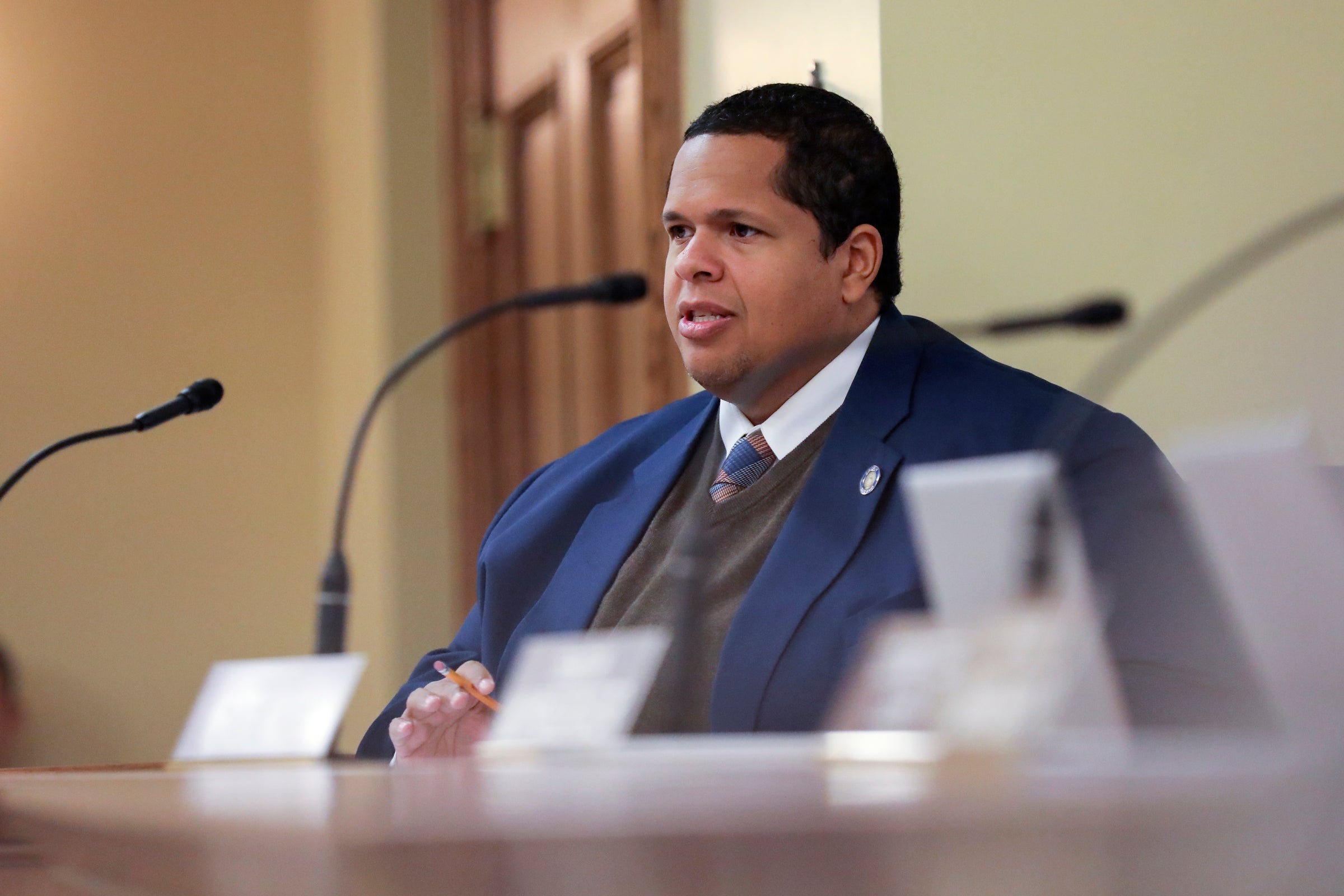
Sen. Julian Bradley, R-Franklin, is seen during a meeting of the Committee of Judiciary and Public Safety at the Wisconsin State Capitol in Madison, Wis., on Oct. 14, 2021. Coburn Dukehart/Wisconsin Watch
Spreitzer lauded Bradley for being willing to change his mind on WisconsinEye funding.
“In a day where we have plenty of partisan squabbles going on, this is a bipartisan bright spot where we actually came together and had a conversation in committee and then worked out amendments on the floor,” said Spreitzer.But the Senate’s kumbaya moment comes with a catch. Bradley’s amended bill has to clear the state Assembly before it can be signed into law by Democratic Gov. Tony Evers. While that could happen Thursday, it’s no guarantee.
The WisconsinEye legislation that passed the Assembly last week was introduced in January by Assembly Speaker Robin Vos, R-Rochester, and Assembly Minority Leader Greta Neubauer, D-Racine. It would create a $10 million endowment with interest payments supplementing WisconsinEye’s budget.
As of Wednesday, the Assembly had not considered Bradley’s bill, and the Senate hadn’t considered the Senate legislation. Vos is planning to end the Assembly’s session on Thursday, which means if both chambers can’t coalesce this week WisconsinEye could go off the air again in March.
Senate pulls bill extending state land conservation fund, leaving Stewardship program in doubt
With the Legislature winding down its session, a flurry of bills have been moving quickly between the chambers. But a bill to extend a decades-old land conservation program may have hit the end of the road.
During Wednesday’s floor session, Senate Majority Leader Devin LeMahieu, R-Oostburg, removed a bill from the calendar that would have spent around $28 million to extend the the Warren Knowles–Gaylord Nelson Stewardship program.
The package was introduced in June by Sen. Patrick Testin, R-Stevens Point. It would have extended the program, which has purchased and preserved land for public use since 1989, by two years. Testin told WisPolitics it was pulled because he wasn’t able to get at least 17 Senate Republicans to support the bill.
Democrats attempted to amend an unrelated bill with language that would extend the stewardship program with new funding, but Republicans blocked a vote on that plan.
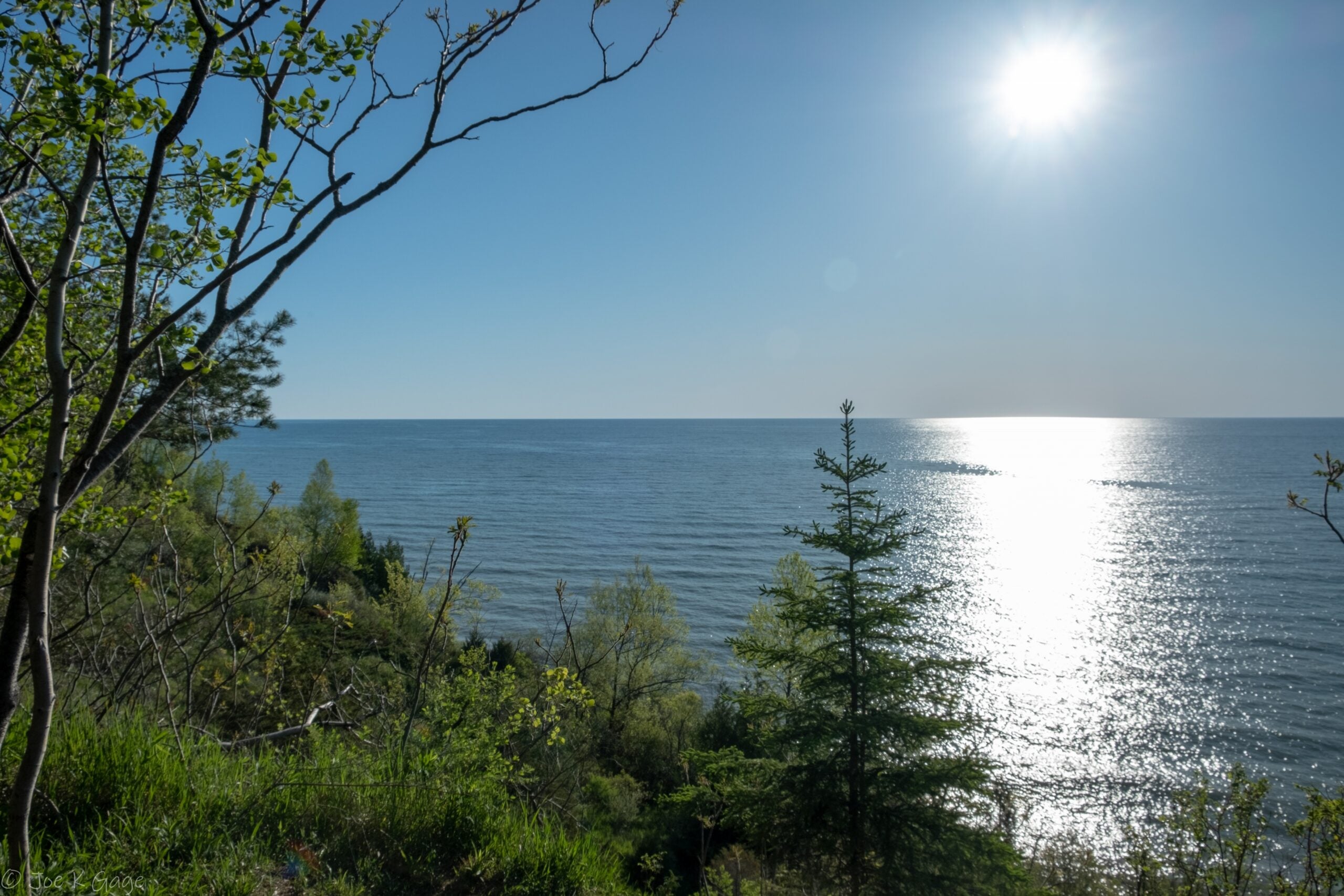
A view of Lake Michigan from Lion’s Den Gorge Nature Preserve near Grafton. The Ozaukee County Park, one of the few remaining undeveloped bluffs along Lake Michigan, was preserved with funding from the Knowles-Nelson Stewardship Program. Joseph Gage/ CC BY-SA 2.0
Senate passes bills to restrict ‘foreign adversaries’ in Wisconsin
Republicans in the state Senate did pass a handful of bills aimed at blocking foreign governments from buying land and harassing dissidents in Wisconsin, along with a measure barring insurance companies from knowingly covering organ transplants obtained via “forced organ harvesting.”
The bills echo ongoing GOP concerns about countries like China interfering in Wisconsin.The land ownership bill passed by the Senate originated in the Assembly. It would block China, Cuba, Iran, North Korea, Russia and Venezuela from owning any property in the state.
The other three bills came from state Rep. Clint Moses, R-Menomonie. Those measures would increase criminal penalties for “transnational repression” of Wisconsin residents by agents of foreign governments or a “foreign terrorist organization,” ban Wisconsin research facilities from using genetic sequencing technology produced by foreign adversaries like China and block insurance companies from paying for organ transplants if the organ comes from China or other countries known to have participated in “forced organ harvesting.”
Those proposals head next to Evers’ desk.
Senate passes bipartisan bill to fund WisconsinEye was originally published by Wisconsin Public Radio.
If you think stories like this are important, become a member of Urban Milwaukee and help support real, independent journalism. Plus you get some cool added benefits.