

Where Do 9 Candidates for Governor Stand on Data Centers?
Hong calls for moratorium, Hughes, Schoemann see 'opportunity.'
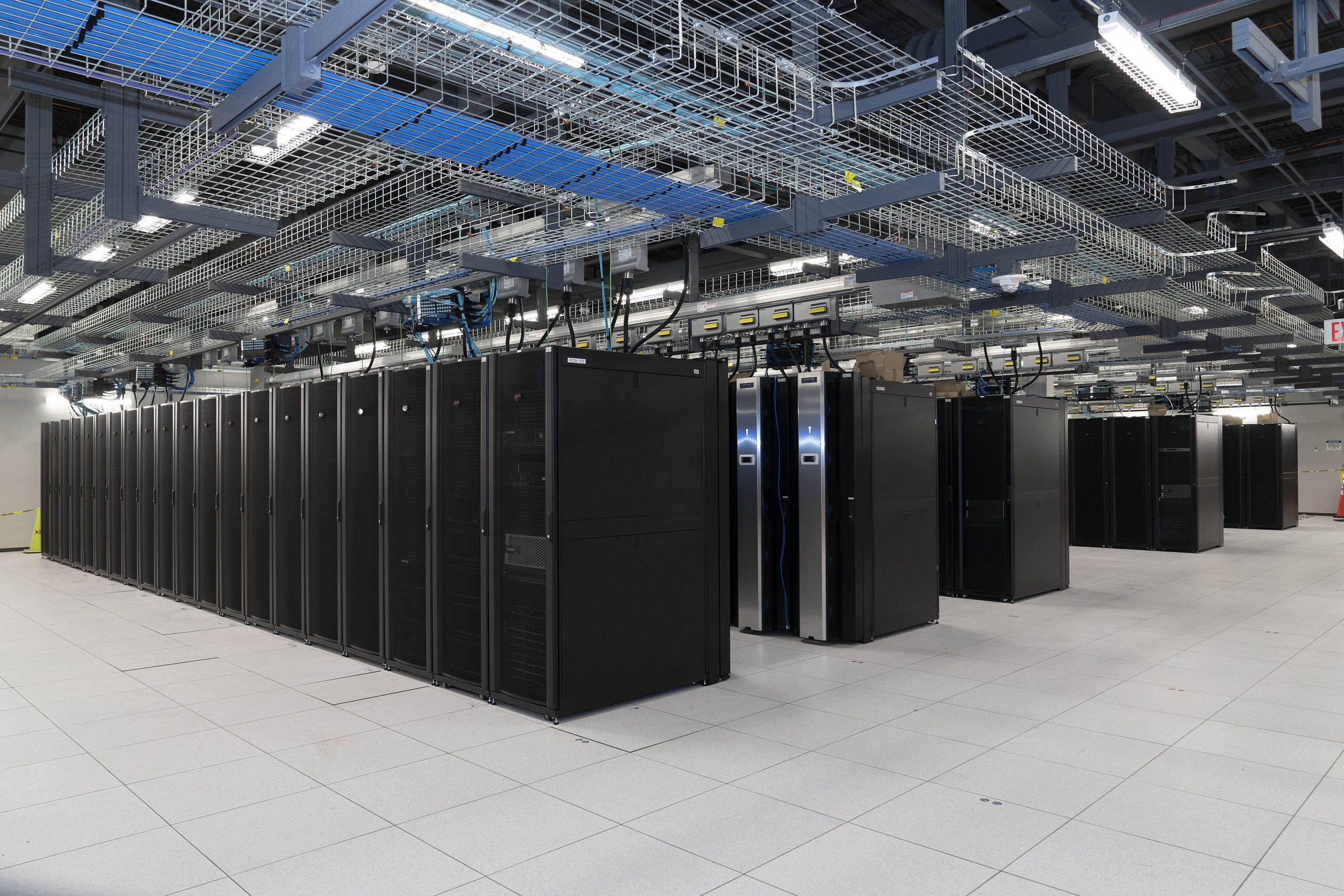
Data center. (CC0)
Dozens of data centers have been built in communities across Wisconsin, with more planned or in process. In many of these communities, the proposed data centers have sparked significant local opposition.
Both Democrats and Republicans in the Legislature have proposed bills to regulate the growth of data centers as community leaders across the state have asked for more direction from the state government on the approval of what are often massive facilities.
So far, the state has had little input on data center construction outside of a provision in the 2023-25 state budget which exempted data center construction projects from paying sales taxes.
The Democratic bill, introduced last year by Sen. Jodi Habush Sinykin (D-Whitefish Bay) and Rep. Angela Stroud (D-Ashland), would require data centers to report the level of energy and water they’re using, fund the development of renewable energy projects and ensure the cost of increased energy demands aren’t passed on to regular consumers.
The Republican bill, introduced this month, also requires the Public Service Commission to prevent energy use and infrastructure costs from being passed on to consumers, requires the data center to use a closed-loop water cooling system to limit the amount of water needed and includes provisions that would require the data center company to cover the cost of restoring the land it’s built on if the data center is closed or unfinished. The bill also includes a provision that requires any renewable energy created to power the data center be sourced on site.
Last year, the issue of data centers was a common theme on the campaign trail in Virginia’s gubernatorial race, as voters respond to the effects of hosting more of the centers than any other state.
Here in Wisconsin, communities are grappling with how to make agreements with the big tech companies hoping to build the data centers, how to avoid the broken promises at the top of mind of many Wisconsinites after the Foxconn development in Mount Pleasant failed to live up to its lofty initial projections and how to manage the often huge demands the data centers make on local water supplies and energy.
Despite those challenges, the construction of a data center can offer benefits to local governments — mostly by boosting property tax revenue from a development that won’t consume many local government services.
Unlike many other issues, the question of data center development has not become politically polarized, with a range of positions among candidates of both parties.
“Data centers are a new issue that has not taken on a partisan edge in the public mind,” Barry Burden, a political science professor at UW-Madison, said. “This is likely to change because among politicians Democrats are more skeptical about data centers and Republicans are more enthusiastic about them. If this partisan divide continues or even becomes sharper, the public is likely to begin mimicking the positions taken by party leaders. But at least for a while the issue is likely to cut across party lines.”
In Wisconsin’s crowded open race for governor, most of the candidates told the Wisconsin Examiner they were supportive of some level of statewide regulation on data centers.
Democrat Missy Hughes’ campaign did not respond to a request for comment for this article. Her public comments on the issue are included below.
Mandela Barnes
The former lieutenant governor said in a statement to the Examiner that it’s important that data center construction not increase utility rates, not damage the environment and use Wisconsin union labor. He also said the companies developing the centers need to meaningfully work with the communities they’re trying to build in.
“A lot of communities feel left out of conversations about what is going on in their own backyard and that is not fair,” Barnes said. “Any development of this scale must meaningfully engage local communities and address their concerns and input throughout their proposal. We must also ensure that data center projects do not drive up utility rates for Wisconsinites or contribute to harmful pollution, and that they invest in training and hiring Wisconsin workers to staff these facilities.”
Joel Brennan
The former secretary of the Department of Administration said in a statement from his campaign that the desire of tech companies to move fast is in opposition to the government’s need to engage the public transparently.
“Wisconsinites shouldn’t have to foot the bill for AI or data center projects, period. At a time when affordability is a challenge in every community, taxpayers shouldn’t be on the hook for construction, operations, or higher utility costs. No one should have to worry about affording their heating bill because a data center has driven up energy prices,” he said. “It’s reasonable for people to have concerns about AI, and I share those concerns. The technology is moving fast, and companies often prioritize speed. Government’s responsibility is different: transparency, accountability, community engagement, and coordination with local communities who stand to be impacted by these projects. Data centers can create jobs and support local economies, but only if they’re done right — protecting taxpayers and our natural resources, and ensuring that the benefits truly serve Wisconsin communities.”
David Crowley
At a gubernatorial candidate forum in November, Crowley was mostly supportive of data center development, saying the government shouldn’t be picking “winners and losers” and instead “make sure that this is fertile ground for entrepreneurs and businesses to either stay or move right here to the state of Wisconsin.”
In a statement to the Examiner, a campaign spokesperson said Crowley wants to encourage investment in Wisconsin’s economy while enforcing stringent environmental regulations, making sure companies pay the cost of increased energy use and giving local governments the power to say no to a data center project.
“Growth that drives up rates or drains local resources is not innovation. It’s a bad deal,” the spokesperson said. “Communities will have clear authority to condition or deny projects based on energy and water use, demand transparency, and community benefit agreements, because the people who live with these projects deserve the final say. Crowley’s approach is simple: Wisconsin will lead in technology and economic growth without raising utility bills, without sacrificing our natural resources, and without letting Big Tech write the rules. Development will be transparent, accountable, and judged by whether or not it delivers real benefits to the people who live in Wisconsin.”
Francesca Hong
In a policy framework released last week, the Madison-area representative to the state Assembly called for a moratorium on the construction of new data centers while the state works out how to responsibly manage their effects. Hong also wants to end sales tax and use tax exemptions for data centers, require the construction of more renewable energy sources and increase environmental protections on data centers. She is also a co-sponsor on the Democrats’ data center bill in the Legislature.
In an interview with the Examiner, Hong said Wisconsin’s political leaders have a responsibility to listen to local opposition to data centers.
“Our communities deserve long-term investments and contributions to their local communities,” she said. “The bipartisan opposition that is building coalitions against AI data centers means that elected officials have a responsibility to get more data on data centers, which is what informed our decision to support a moratorium on the construction of new data centers.”
Hong said that on the campaign trail she has heard from voters who want Wisconsin to be “a hostile environment for AI data centers.” She added that it’s a bipartisan issue, which presents an opportunity to her as a Democratic socialist running for governor.
“I think there’s an opportunity here, not only for us to engage the left and bring them into electoral politics here in Wisconsin, but actually build that coalition amongst voters who are across the political spectrum and recognizing that as working class people, they’re getting screwed and they’re stressed, and they’re right to demand that their government do more to hold corporate power accountable,” she said.
Missy Hughes
At the November forum hosted by the Wisconsin Technology Council, Hughes, who as the former head of the Wisconsin Economic Development Corporation was involved in efforts to build the Microsoft data center at the former Foxconn site, promoted their positive potential for the state.
“To have some of these data centers land here in Wisconsin, provide incredible property tax and revenue for the communities that are really determining how to pay their bills, how to build new schools, how to build new fire departments, it’s an opportunity for those communities to access some of that investment and to benefit from it,” she said, adding that a data center isn’t right for every community and local pushback should be considered.
Sara Rodriguez
A spokesperson for the current lieutenant governor said that she would issue an executive order to freeze utility rates while state officials develop a long-term data center plan.
That long-term plan would include ways to prevent energy costs from increasing while making sure local residents get a say.
“Sara strongly believes data center projects should be developed collaboratively with local communities. That means early community input, clear communication, and transparent planning to reduce misinformation and ensure projects make sense locally,” the spokesperson said. “Data centers aren’t the right fit for every community, but when done right they can bring real benefits — including jobs, redevelopment of otherwise unusable land, and new revenue that can help local governments lower taxes for residents, as we’ve seen in places like Janesville.”
The campaign added that agreements with local governments must include provisions to prevent developers from bailing out and abandoning communities.
“Sara also believes all details must be negotiated up front in binding agreements. If utilities make grid investments or communities commit resources, developers must be on the hook if a project is delayed or canceled,” the spokesperson said. “Families and local governments shouldn’t be left holding the bag. Wisconsin can support growth and innovation, but only if it’s fair, transparent, and doesn’t raise costs for working families.”
Kelda Roys
The Madison-area state senator is a co-sponsor of the Democrats’ data center bill and in an interview with the Examiner, said that as governor she’d support regulation that follows a similar framework to the legislation.
“I think there needs to be a statewide strategy with guardrails that protect our workers, our environment and our consumers from massive price increases,” she said. “I’m very skeptical of this idea that the biggest and richest and most powerful companies in the world should get to just come in and pick off local communities and local elected leaders one by one and make these sweetheart deals in the dark that screw over the public. And I think in the absence of statewide standards and transparency, that is what is happening.”
She said the state should use its sway to insert itself as a negotiating party in agreements with data center developers in an effort to keep energy costs low, reduce environmental impact and protect Wisconsin workers.
She also said that the state government doing something to ease the budget crunch facing local governments will put those local officials in a better position when deciding whether or not to allow a data center to be constructed.
“Part of the reason that we’re having this problem is that we have put local governments in an impossible situation because of the fiscal mismanagement and the harm of Republican politicians,” she said. “Communities will have more bargaining power when they don’t feel like, ‘Gosh, we’re desperate for more revenue, and our hands are really tied by the state. This is the only option,’ right? They will be in a stronger negotiating position if this is a nice to have, but not a necessary to have. And that’s the position that we want communities to be in. I want Wisconsinites to be able to have a say in our communities’ future, to be able to have an open and transparent process where we can say, ‘actually, we don’t think that this site is an appropriate one for a data center.’”
Josh Schoemann
The Washington County executive said at the November candidate forum there is an “abundance of opportunity” with data centers but that the state needs to be “very, very strategic and smart about where” data centers are built. In a statement from his campaign, he said the state needs to prioritize developing nuclear power to provide enough energy for data centers and everyday Wisconsinites.
“I have great optimism about the potential for data centers and AI for Wisconsin, but it must be people focused,” he said. “Our lack of sufficient energy supply and distribution is a real threat to strategic growth and personal property rights. Growing up in Kewaunee, we had clean and efficient nuclear power right in our community. We need to get back to nuclear energy as a large part of a diverse energy portfolio — not just for data centers, but for the multitude of new homes we need for people, as well as more innovation and industry.”
Tom Tiffany
The Republican congressman and frontrunner in the party’s primary has often opposed the development of large solar farms in and around his northern Wisconsin district, arguing they’ve taken too much of the region’s farmland out of commission.
In a statement from his campaign, Tiffany said the development of data centers should be handled “responsibly.”
“As demand for internet infrastructure continues to grow, data centers present new opportunities for economic development, but like any innovation, they must be developed responsibly,” he said. “Wisconsin families and small businesses should not be left footing the bill for increased electricity demand, local residents deserve a seat at the table when decisions are made about these projects, and taxpayer subsidies should not be used to build data centers on productive farmland. Growth should be responsible and transparent, without shifting costs onto existing ratepayers.”
What do Wisconsin gubernatorial candidates think about data center development? was originally published by the Wisconsin Examiner.
If you think stories like this are important, become a member of Urban Milwaukee and help support real, independent journalism. Plus you get some cool added benefits.
Political Contributions Tracker
Displaying political contributions between people mentioned in this story. Learn more.






















I appreciated the viewpoints of Joel Brennan and Francesca Hong. (Very impressed with Brennan’s comments, I hadn’t heard much about him). Kelda Roys seems OK. The other Democrats seemed your typical political b.s. Of course one Republican, Josh Schoemann, loves the idea of going nuclear!
The best article I have read on this is on the Family Farm Defenders website entitled “Big Data is a Bad Idea! Why AI Factory Farms Will Not Save Rural America”.