
Wisconsin Has Planted 54 Million Trees Since 2021
But Gov. Evers' goal of 100 million by 2030 may fall short without state stewardship program.
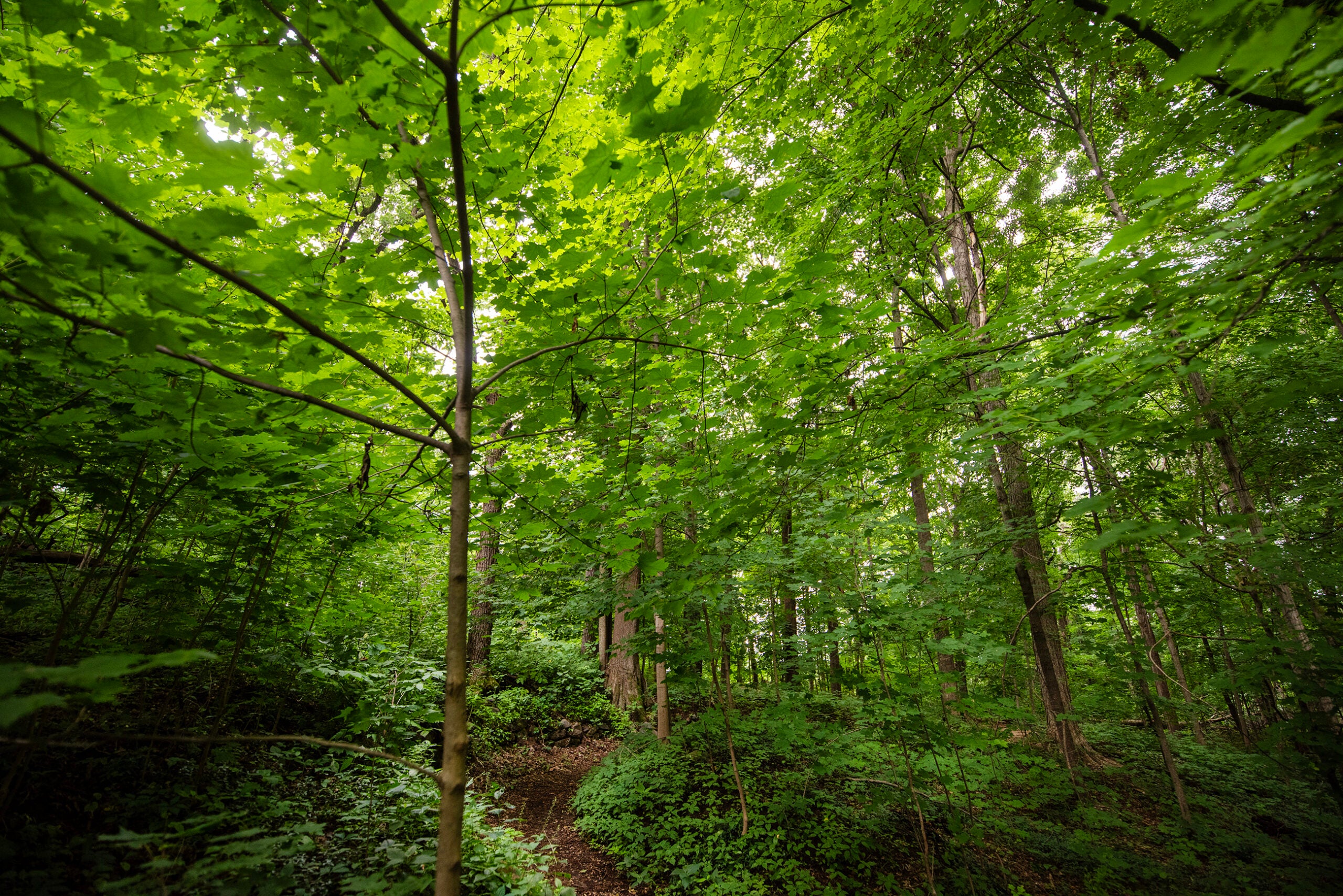
Trees shade a pathway Thursday, July 17, 2025, at Owen Conservation Park in Madison, Wis. Angela Major/WPR
Wisconsin is more than halfway toward its forest conservation and tree planting goals, Gov. Tony Evers announced ahead of Earth Day.
Evers announced on Earth Day 2021 that the state would plant 75 million trees and conserve 125,000 acres of forest. In 2024, the governor issued an executive order increasing Wisconsin’s goal to 100 million trees by the end of 2030. It’s achieved 54 percent of that goal. In a statement, Evers said he is “incredibly proud” of the initiative’s progress.
Evers also announced a new partnership with the state’s college savings plan Edvest 529 and international nonprofit Neighborhood Forest to give away thousands of trees to families in Wisconsin through Arbor Day.
According to the governor’s office, the state has protected almost 68 percent of its forest conservation goal with more than 7,800 acres conserved last year.
Conservation advocates questioned Wisconsin’s ability to meet its conservation goals by the end of the decade if lawmakers don’t reauthorize the Knowles-Nelson Stewardship program, which bears the name of Earth Day founder Gaylord Nelson.
The program is often used to unlock federal money under the federal Forest Legacy Program by providing state matching funds, said Charles Carlin, director of strategic initiatives for the nonprofit land conservation group Gathering Waters. He said the Stewardship program is the only stable source of state funding and highlighted uncertainty with federal funding and donations.
“I would expect that our progress towards that 125,000-acre goal, or really any other conservation land goals, are going to slow to a crawl without Knowles-Nelson providing that sort of foundational financial support to get it done,” Carlin said.
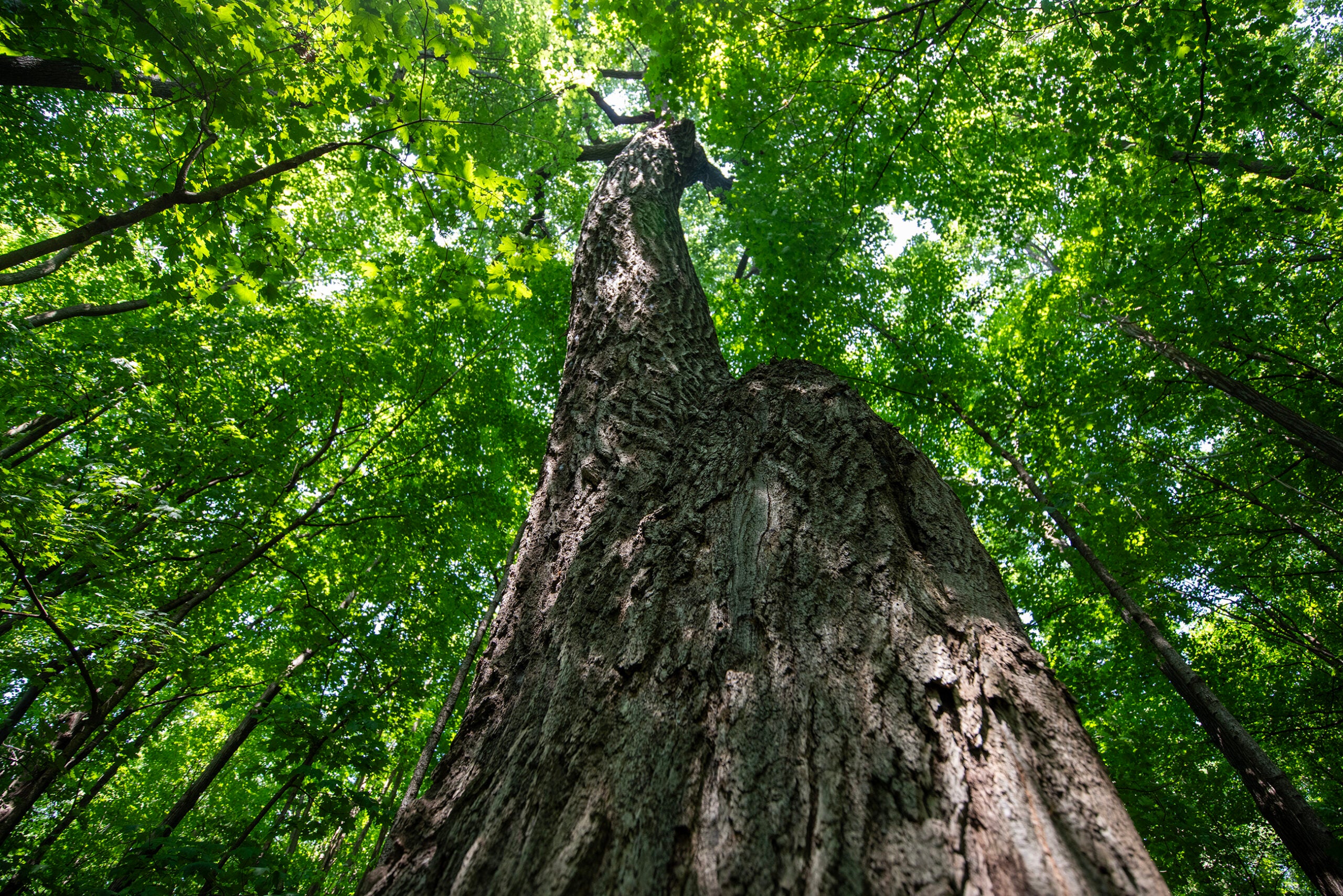
The largest red oak tree in the state stands tall Monday, July 21, 2025, near the Mendota Mental Health Institute in Madison, Wis. Angela Major/WPR
Can the state meet its goals as the Stewardship program is set to expire?
For nearly four decades, the Stewardship program has provided funding to purchase public lands for conservation, which was renamed to honor the two conservation leaders and former governors.
But Stewardship funding is set to expire in June unless Evers and lawmakers reach a deal to reauthorize the program. It’s currently funded at about $33 million per year. The state Senate failed to take up bills to extend it before the year’s legislative session expired.
DNR Secretary Karen Hyun told WPR she’s hopeful that the program will continue. If not, she said it would be more difficult for the state to conserve lands that are a priority for the agency.
“But even without Stewardship funding, we’re going to continue to explore all the avenues and all the tools that we can possibly have,” Hyun said.
The program had long enjoyed bipartisan support until recent years. Republicans have pointed to a 2024 Wisconsin Supreme Court ruling that blocked legislative or “pocket vetoes” of funds for conservation projects as a reason for the impasse on its reauthorization.
Last month, Senate President Mary Felzkowski, R-Tomahawk, told WPR’s “Wisconsin Today” that the program was part of ongoing negotiations between GOP Assembly Speaker Robin Vos and Wisconsin’s Democratic governor over funding tax relief and special education. She’s among Republicans who have expressed concerns that the program takes too much private land off the tax rolls in northern Wisconsin or adds to the state’s debt.
“I am not against the purchase of public land, but I want to see it purchased in areas that benefit the people … that have the greatest need,” Felzkowski said, urging more conservation near urban areas.Evers spokesperson Britt Cudaback said conversations are ongoing. GOP leaders didn’t respond to requests for comment.
The Nature Conservancy has used the Stewardship program as a key source of funding to protect more than 240,000 acres of land. Alex Madorsky, the group’s associate director of government relations, also questioned the state’s ability to meet its goal and draw down federal funds without Stewardship funding.
Madorsky said conservation of forestland is important not only for the state’s lands, waters and outdoor recreation. He said it also sustains the $41.4 billion forest industry.
“The more we protect trees to advance ecosystems and for people to enjoy nature, the easier it is for us to continue to have a well maintained forestry industry in this state,” Madorsky said.
Wisconsin has planted more than 54M trees since 2021, but forest conservation goals at risk was originally published by Wisconsin Public Radio.
If you think stories like this are important, become a member of Urban Milwaukee and help support real, independent journalism. Plus you get some cool added benefits.