
Supervisor Wants Financial Projections for Act 10 Repeal
Conservative Sup. Steve Taylor says Act 10 repeal will harm county's finances.
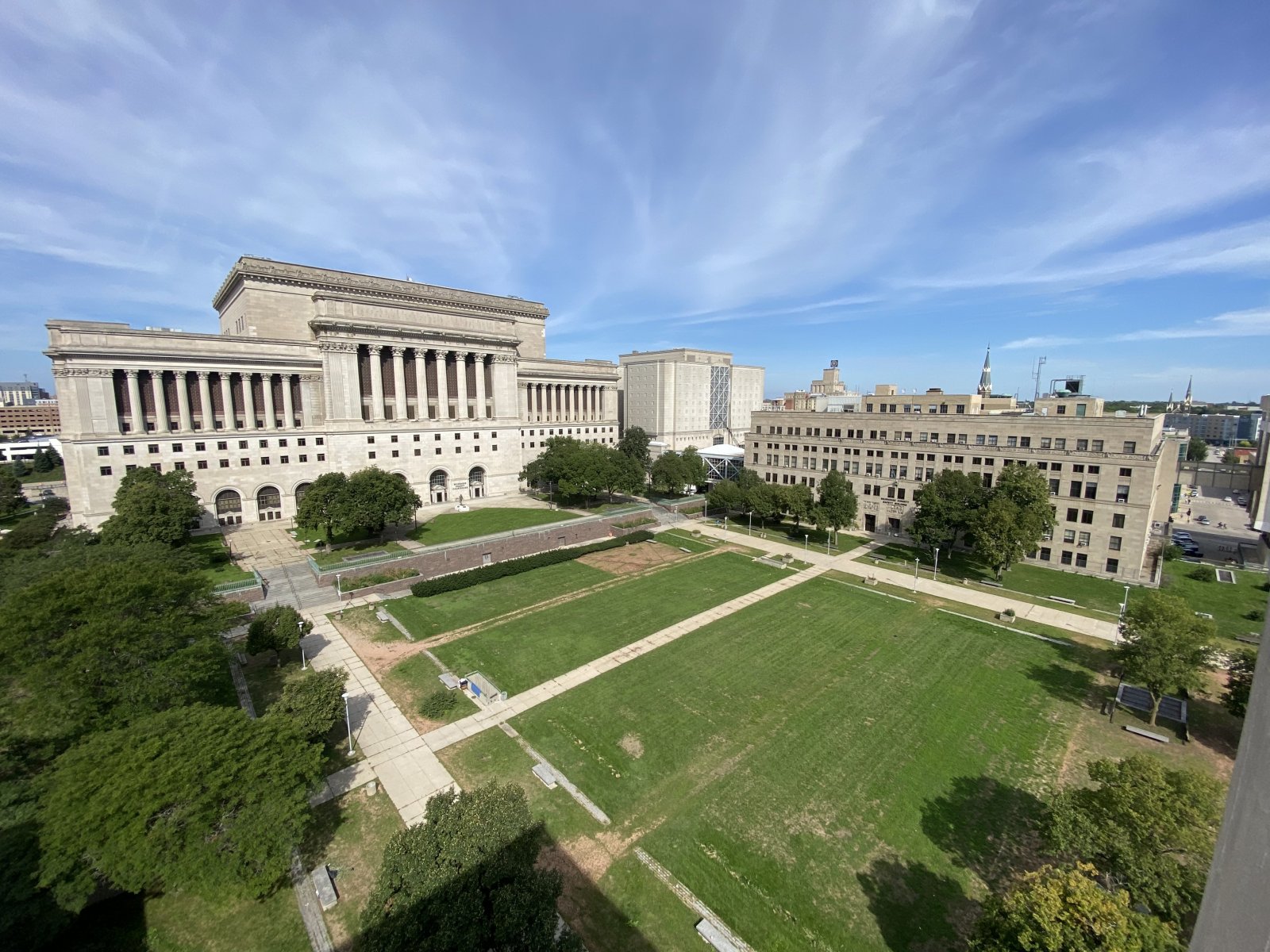
Milwaukee County Courthouse complex. (Left to right) the historic courthouse, the jail and the Safety Building. Photo by Graham Kilmer.
Since 2011, Democrats and labor leaders have waited for an opportunity to repeal Wisconsin Act 10, a state law curtailing collective bargaining rights for public sector unions.
With Milwaukee County Executive David Crowley‘s election as governor and Democratic control of both chambers of the Legislature, the moment seems to have arrived. Sup. Steve Taylor, a conservative member of the Milwaukee County Board of Supervisors, seems to think so.
He has authored a resolution preemptively calling for an analysis of how repeal of Act 10 would impact the county’s finances. His resolution asks the budget office for ongoing assessments of the county’s “financial and operational preparedness” for a repeal of Act 10.
If Act 10 is repealed, public sector unions would once again be able to bargain over health care and have bargaining rights restored for compensation and working conditions. Police, fire and transit unions were exempt from Act 10 bargaining restrictions.
“Many of my colleagues hoped for a Democratic ‘trifecta,’ believing the outcome would bring us more revenue,” Taylor said in a statement announcing his Act 10 resolution. “They got their wish, but repealing Act 10 will redirect those dollars to employee salaries and benefits rather than the services taxpayers are requesting. The state’s projected $3 billion surplus will be gone before you know it, and the rest of the wish list will fall on the backs of taxpayers.”
Research since passage of Act 10 has found the primary policy justifications for the law don’t stand up to scrutiny, namely that public employees were overcompensated, that state pension funds needed additional support or that the state needed to take on unions to close budget deficits. But the cost of reversing the legislation has never been clear.
The resolution tasks the county’s budget office, lawyers and the Department of Human Resources with reporting updates on legislative actions and court decisions. The Wisconsin Supreme Court has taken up a legal challenge to Act 10. It asks for analysis of potential impacts and how the county would pay for them. The analysis would include a breakdown of how the county would absorb any potential impacts with and without additional funding support from the state.
The county board will take up the resolution in December. If it is passed, the first reports on potential Act 10 impacts would arrive in March. Taylor said he believes repealing Act 10 would undermine county efforts to lower property taxes and invest in transit, parks and public health.
“Repealing Act 10 will undoubtedly affect Milwaukee County’s finances as well as its taxpayers,” Taylor said. “This resolution seeks to determine exactly how much it will cost us.”
Legislation Link - Urban Milwaukee members see direct links to legislation mentioned in this article. Join today
If you think stories like this are important, become a member of Urban Milwaukee and help support real, independent journalism. Plus you get some cool added benefits.
Political Contributions Tracker
Displaying political contributions between people mentioned in this story. Learn more.


MKE County
-
Don’t Put Your Golf Clubs Away!
 Nov 18th, 2026 by Graham Kilmer
-
Controversial Trail in Jackson Park Neighborhood Completed
 Nov 18th, 2026 by Graham Kilmer
-
State Rep. Goodwin Running for Milwaukee County Executive
 Nov 17th, 2026 by Graham Kilmer